Kirjojen hintavertailu. Mukana 11 244 527 kirjaa ja 12 kauppaa.

Kirjahaku

Etsi kirjoja tekijän nimen, kirjan nimen tai ISBN:n perusteella.

1000 tulosta hakusanalla Michael Angelo Williams

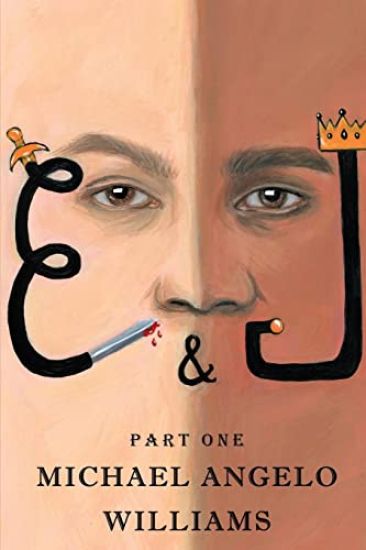
E&j

E&j

Michael Angelo Williams

Angelo Achievers
2021
pokkari
Society is left appalled when the black couple, Mr. and Mrs. Jones have twin boys... one Black and one white The novel E&J revolves around the fictional tale of two interracial twin brothers named Esau and Jacob - or E and J. The twins experience a unique upbringing as interracial brothers coming from same-race parents in an African-American-dominant neighborhood. The disparity and struggle the boys face is a reflection of society's truth, portrayed through the twins' behaviors, the career paths they choose, their love life, friendships and their life challenges. How will the twins mediate with all that life throws at them?E&J is centered at the heart of African American culture, shedding light on criminal operations and prostitution nightlife. The book, however, travels beyond these themes with a focus on teenagehood, family values, as well as racism and reverse racism.Michael does not shy away from raising the question of socialization and carves into the matter of racism. His belief is that truth prevails all, hence the spiritual side and carnal acts of many African Americans that causes division within a nation of people is exposed in this novel. fictional to nonfictional and interracial to fraternal twins
Plough Quarterly No. 17- The Soul of Medicine

Plough Quarterly No. 17- The Soul of Medicine

Stephanie Sadaa; John M. Perkins; Sarah Williams; Mark Schloneger; Angela Franks; Clare Stober; Daniel Way; Michael Egnor; Reuben Zimmerman; Nicanor Austriaco; Augustine of Hippo; Teresa de Cartagena

Plough Publishing House
2018
pokkari
We need a vision of how medicine might serve the good of the whole human person: the body’s health, but also the health of that “piece of divinity in us.” Medicine, so long as you don’t need it, is a tangential part of life, just one more profession among others. Until that is, a loved one suffers an accident or falls sick. Then, suddenly, medicine is quite literally, a matter of life or death. Medicine is also big business. Doctors have been reclassified as “service providers,” and patients are “clients.” Such commercialism breeds false incentives and inequalities, even in nations. We need a vision of how medicine might serve the good of the whole human person: the body’s health, but also the health of that “piece of divinity in us.” We need love and reverence for humans as they are, not humans as technology may someday engineer them to be. Jesus, the healer from Nazareth, showed what it means to love the imperfect, the frail, the average. The glory of the medical profession is that it is dedicated to these works of mercy. In today’s money-driven healthcare industry, such tasks are often poorly rewarded. Yet they’re at the heart of medicine’s original mission. Also in this issue: original poetry by Suzanne Harlan Heyd; reviews of new books by Barbara Ehrenreich, Ryan T. Anderson, Beth Macy, and David R. Montgomery and Anne Biklé; and art by Tim Lowly, Michelangelo, Julian Peters, Wanjin Gim, Scott Goldsmith, Jan Mostaert, Suleiman Mansour, Cécile Massie, Peter Doig, Erin Hanson, and Jason Landsel. Plough Quarterly features stories, ideas, and culture for people eager to put their faith into action. Each issue brings you in-depth articles, interviews, poetry, book reviews, and art to help you put Jesus’ message into practice and find common cause with others.
My NDE beneath the SEA

My NDE beneath the SEA

Michael William Angeloh

Createspace Independent Publishing Platform
2016
pokkari
Is there Life after Death..? For most of recorded history, people from all places across our little blue planet have asked the question; "What will happen to me when I die..?" This Book reveals the published manuscripts, of my drowning episode, or NDE (Near Death Experience) on August 28, 1966, in Santa Cruz California, which just happens to be on a Sunday, the same day it occurred, exactly fifty years ago, to the day. If you've ever wondered what your last day on earth might be like, then read on my friend. My name is Michael William AngelOh, and this is my own true, and personal, NDE story, which has been transcribed directly from my own Personal Diaries, which I have entitled; "My NDE beneath the SEA". (Second Printing: Newly Revised Edition)
Considerations for Integrating Women into Closed Occupations in U.S. Special Operations Forces

Considerations for Integrating Women into Closed Occupations in U.S. Special Operations Forces

Thomas S. Szayna; Eric V. Larson; Angela O'Mahony; Sean Robson; Agnes Gereben Schaefer; Miriam Matthews; J.Michael Polich; Lynsay Ayer; Derek Eaton; William Marcellino; Lisa Miyashiro; Marek Posard; James Syme; Zev Winkelman; Cameron Wright; Megan Zander-Cotugno; William Welser

RAND
2016
pokkari
Integrating women into special operations forces poses potential challenges for unit cohesion. The integration of women raises issues of effectiveness, in terms of physical standards and ensuring the readiness, cohesion, and morale essential to high-performing teams. This report assesses those challenges and provides analytical support for validating occupational standards for positions controlled by U.S. Special Operations Command.
Functional or dysfunctional : the law as a cure?

Functional or dysfunctional : the law as a cure?

Jr. Coffee; Rowan Russell; Angela Itzikowitz; Philip R Wood; Kern Alexander; Jesper Lau Hansen; Erica Johansson; Klaus J. Hopt; William Blair; Michael D. Green; Brandon Jones; Ross Cranston; Brigitte Haar; Eiríkur Jónsson

Stockholm Centre for Commercial Law
2014
nidottu
On August 29–30 2014 the Marianne and Marcus Wallenberg Foundation in co-operation with the Stockholm Centre for Commercial Law arranged an International legal symposium under the heading “Functional or dysfunctional – the law as a cure? Risks and liability in the financial markets”. The symposium was held in honor of the 50th anniversary of the Marianne and Marcus Wallenberg Foundation. The topic of the symposium mirrors a particular interest of the activities of the SCCL covering regulatory as well as liability questions thus dealing with legal subjects which have also relevance to the Foundation. After World War II financial markets have gradually undergone huge differences depending on new financial devices, new financial markets and new financial actors evolving together with changes in regulation and supervision. These are circumstances which have together created new frames for the financial industry. Table of contents: - Extraterritorial Financial Regulation: Why E.T. Can’t Come Home by John C. Coffee, Jr. - Generally on Risks and Liability – Directors’ Liability Under the Law and Regulation in Australia by Rowan Russell - South African Company Law – Directors’ Duty of Care and Skill and the Introduction of the Business Judgment Rule: Answering the Critics by Angela Itzikowitz - International legal risk for banks and corporates by Philip R Wood - Macro-prudential regulation from an English and European Perspective – The Legal and Institutional Dimension by Kern Alexander - Comment on the session on the risks and liabilities of financial markets by Jesper Lau Hansen - Handling Risks in Financial Markets Regulation: EMIR and the problem with CCPs being Too Big to Fail by Erica Johansson - Responsibility of Banks and Their Directors, Including Liability and Enforcement by Klaus J. Hopt - Is there a role for culture and ethics in financial regulation? By William Blair - Tort Law to the Rescue? By Michael D. Green & Brandon Jones - The (non)-liability of banks under English law by Ross Cranston - Implementing liability on the basis of model case procedures – the example of the German Capital Markets Model Case Act (“KapMuG”) by Brigitte Haar - Tort cases in Iceland after the bank crash in 2008 by Eiríkur Jónsson
Michelangelo, God's Architect

Michelangelo, God's Architect

William E. Wallace

PRINCETON UNIVERSITY PRESS
2019
sidottu
The untold story of Michelangelo's final decades—and his transformation into one of the greatest architects of the Italian RenaissanceAs he entered his seventies, the great Italian Renaissance artist Michelangelo despaired that his productive years were past. Anguished by the death of friends and discouraged by the loss of commissions to younger artists, this supreme painter and sculptor began carving his own tomb. It was at this unlikely moment that fate intervened to task Michelangelo with the most ambitious and daunting project of his long creative life.Michelangelo, God's Architect is the first book to tell the full story of Michelangelo's final two decades, when the peerless artist refashioned himself into the master architect of St. Peter’s Basilica and other major buildings. When the Pope handed Michelangelo control of the St. Peter’s project in 1546, it was a study in architectural mismanagement, plagued by flawed design and faulty engineering. Assessing the situation with his uncompromising eye and razor-sharp intellect, Michelangelo overcame the furious resistance of Church officials to persuade the Pope that it was time to start over.In this richly illustrated book, leading Michelangelo expert William Wallace sheds new light on this least familiar part of Michelangelo’s biography, revealing a creative genius who was also a skilled engineer and enterprising businessman. The challenge of building St. Peter’s deepened Michelangelo’s faith, Wallace shows. Fighting the intrigues of Church politics and his own declining health, Michelangelo became convinced that he was destined to build the largest and most magnificent church ever conceived. And he was determined to live long enough that no other architect could alter his design.
Michelangelo, God's Architect

Michelangelo, God's Architect

William E. Wallace

Princeton University Press
2021
pokkari
The untold story of Michelangelo’s final decades—and his transformation into the master architect of St. Peter’s BasilicaAs he entered his seventies, Michelangelo despaired that his productive years were over. Anguished by the death of friends and discouraged by the loss of commissions to younger artists, this supreme Renaissance painter and sculptor began carving his own tomb. It was at this unlikely moment that Michelangelo was given charge of the most ambitious and daunting project of his long creative life—the design and construction of St. Peter’s Basilica. In this richly illustrated book, William Wallace tells for the first time the full story of Michelangelo's final two decades—and of how the artist transformed himself into one of the greatest architects of the Renaissance.
Michelangelo and Titian

Michelangelo and Titian

William E. Wallace

PRINCETON UNIVERSITY PRESS
2026
sidottu
From the acclaimed author of Michelangelo, God’s Architect, a dual biography of two towering artists of the Renaissance, whose decades-long rivalry spurred both to greater heightsIn 1529, Michelangelo was in Venice when he first met Titian, Venice’s famed painter of princes, gods, and goddesses. Coming face-to-face with Titian’s drama-infused, richly colored works, the creator of David and the Sistine Chapel ceiling realized he had met a worthy opponent. Twenty-five years later, Titian came to Rome to paint the pope, and the two met again. Painting in the Vatican, Titian experienced the full power of Michelangelo’s work and vowed to surpass the achievements of his older contemporary.Michelangelo and Titian is the untold story of history’s greatest artistic rivalry, a competition between two monumental figures more admiring of one another than either would ever admit. William Wallace brings the world of the sixteenth century to life, and in particular its culture of gossip and intrigue. Wallace challenges the established narrative of this relationship as mostly one-sided, with the younger artist in competition with the reigning master. He shows how the artists moved in overlapping courtly and papal circles, sharing the patronage, power, and sometimes friendship of the most important people of their era, including members of the Medici, Este, and Farnese families. Wallace traces how, over the span of some forty years, this unspoken rivalry was reciprocal and mutually beneficial, with each learning from the other’s brilliance, quietly seeking to best the other’s work and secure his own legacy.An extraordinary achievement, Michelangelo and Titian is a richly textured account of two supremely gifted rivals who inspired each other to test the limits of their creative genius, and in doing so created some of the most soaring works of art the world has ever known.
Michelangelo

Michelangelo

William E. Wallace

Universe Publishing
2009
sidottu
With an engaging text by renowned Michelangelo scholar William E. Wallace, Michelangelo: The Complete Sculpture, Painting, Architecture brings together in one exquisite volume the powerful sculptures, the awe-inspiring paintings, and the classical architectural works of one of the greatest artists of all time. Including everything from his sculptures Pietàs and David to his beautiful paintings of the Sistine Chapel and the Doni Tondo, the book provides an opportunity to view Michelangelo’s work as never before, and to more fully understand the artist who, through his work, spoke of his life and times. The frescoes are specially printed on onion skin paper to recreate the actual appearance of light reflecting off of the plaster walls. The stunning black-and-white photography of the sculptures is printed in four colors to bring out the rich details of the marble.
Michelangelo

Michelangelo

William E. Wallace

Cambridge University Press
2011
pokkari
In this vividly written biography, William E. Wallace offers a new view of the artist. Not only a supremely gifted sculptor, painter, architect and poet, Michelangelo was also an aristocrat who firmly believed in the ancient, noble origins of his family. The belief in his patrician status fueled his lifelong ambition to improve his family's financial situation and to raise the social standing of artists. Michelangelo's ambitions are evident in his writing, dress and comportment, as well as in his ability to befriend, influence and occasionally say 'no' to popes, kings and princes. Written from the words of Michelangelo and his contemporaries, this biography not only tells his own stories, but also brings to life the culture and society of Renaissance Florence and Rome. Not since Irving Stone's novel The Agony and the Ecstasy has there been such a compelling and human portrayal of this remarkable yet credible human individual.
Becoming Michelangelo

Becoming Michelangelo

Alan Pascuzzi; William E. Wallace

Skyhorse Publishing
2022
pokkari
Michelangelo’s genius is revealed as never before by the man who became Michelangelo’s last apprentice— an American artist and art historian whose family helped carve Mount Rushmore. Many believe Michelangelo's talent was miraculous and untrained, the product of “divine” genius—a myth that Michelangelo himself promoted by way of cementing his legacy. But the young Michelangelo studied his craft like any Renaissance apprentice, learning from a master, copying, and experimenting with materials and styles. In this extraordinary book, Alan Pascuzzi recounts the young Michelangelo’s journey from student to master, using the artist’s drawings to chart his progress and offering unique insight into the true nature of his mastery. Pascuzzi himself is a practicing artist in Florence, Michelangelo’s city. When he was a grad student in art history, he won a Fulbright to “apprentice” himself to Michelangelo: to study his extant drawings and copy them to discern his progression in technique, composition, and mastery of anatomy. Pascuzzi also relied on the Renaissance treatise that “Il Divino” himself would have been familiar with, Cennino Cennini's The Craftsman’s Handbook (1399), which was available to apprentices as a kind of textbook of the period. Pascuzzi’s narrative traces Michelangelo’s development as an artist during the period from roughly 1485, the start of his apprenticeship, to his completion of the Sistine Chapel ceiling in 1512. Analyzing Michelangelo’s burgeoning abilities through copies he himself executed in museums and galleries in Florence and elsewhere around the world, Pascuzzi unlocks the transformation that made Michelangelo great. At the same time, he narrates his own transformation from student to artist as Michelangelo’s last apprentice.
Becoming Michelangelo

Becoming Michelangelo

Alan Pascuzzi; William E. Wallace

Skyhorse Publishing
2022
pokkari
Michelangelo’s genius is revealed as never before by the man who became Michelangelo’s last apprentice— an American artist and art historian whose family helped carve Mount Rushmore. Many believe Michelangelo's talent was miraculous and untrained, the product of “divine” genius—a myth that Michelangelo himself promoted by way of cementing his legacy. But the young Michelangelo studied his craft like any Renaissance apprentice, learning from a master, copying, and experimenting with materials and styles. In this extraordinary book, Alan Pascuzzi recounts the young Michelangelo’s journey from student to master, using the artist’s drawings to chart his progress and offering unique insight into the true nature of his mastery. Pascuzzi himself is a practicing artist in Florence, Michelangelo’s city. When he was a grad student in art history, he won a Fulbright to “apprentice” himself to Michelangelo: to study his extant drawings and copy them to discern his progression in technique, composition, and mastery of anatomy. Pascuzzi also relied on the Renaissance treatise that “Il Divino” himself would have been familiar with, Cennino Cennini's The Craftsman’s Handbook (1399), which was available to apprentices as a kind of textbook of the period. Pascuzzi’s narrative traces Michelangelo’s development as an artist during the period from roughly 1485, the start of his apprenticeship, to his completion of the Sistine Chapel ceiling in 1512. Analyzing Michelangelo’s burgeoning abilities through copies he himself executed in museums and galleries in Florence and elsewhere around the world, Pascuzzi unlocks the transformation that made Michelangelo great. At the same time, he narrates his own transformation from student to artist as Michelangelo’s last apprentice.
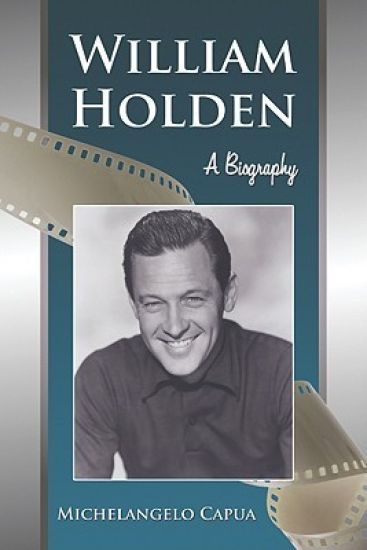
William Holden

William Holden

Michelangelo Capua

McFarland Co Inc
2009
pokkari
William Holden was a Hollywood star whose career spanned four decades, more than 70 films and three Academy Award nominations. "Golden Holden" won an Oscar for his role in Stalag 17 and, after films like Sunset Blvd., he became one of Hollywood's most powerful stars in the late 1950s. His personal life included international adventures and romances with such stars as Audrey Hepburn and Grace Kelly, yet he suffered from alcoholism and clinical depression. This biography covers his entire life and career, from boyhood through his greatest successes, short decline, re-emergence in The Wild Bunch, and his legacy of support for African wildlife.