Kirjojen hintavertailu. Mukana 11 706 493 kirjaa ja 12 kauppaa.

Kirjahaku

Etsi kirjoja tekijän nimen, kirjan nimen tai ISBN:n perusteella.

1000 tulosta hakusanalla Michael G. Brennan

The Sidneys of Penshurst and the Monarchy, 1500–1700

The Sidneys of Penshurst and the Monarchy, 1500–1700

Michael G. Brennan

Ashgate Publishing Limited
2006
sidottu
The Sidneys rank amongst the most influential families in early modern England, and can count amongst their number many leading lights of the Tudor and Stuart period. From the Elizabethan poet and soldier Philip, to the republican Algernon, the Sidney family were intimately bound up with the political, cultural and courtly life of early modern England. Taking a broadly chronological approach, this volume offers an overview of the Sidneys across several generations. By analysing various individuals and their writings, an intriguing new perspective is offered, not only on the culture of English politics, but also on the self-perception and ambitions of a leading renaissance family. During the Tudor period their long and fruitful (but sometimes problematical) association with the Dudley family in court and royal affairs is reassessed with regard to their relations with Edward VI, Mary I and Elizabeth I. During the Stuart period the Sidneys intimacy and loyalty to James I, Queen Anne and Charles I is contrasted to their more neutral (even hostile) attitudes to Charles II and James II. Against the backdrop of this shifting royal favour and religious and political upheaval, the Sidneys' political and domestic tactics used to preserve the family's reputation, estates and property are explored. The first book length study of the Sidney family's relationship with the English monarchy, this work will be welcomed by all those with an interest in English political and cultural history. Drawing upon both historical and literary sources it offers an absorbing insight into the self-perceptions of a leading renaissance family and how they adapted to the vicissitudes of the sixteenth and seventeenth century world.
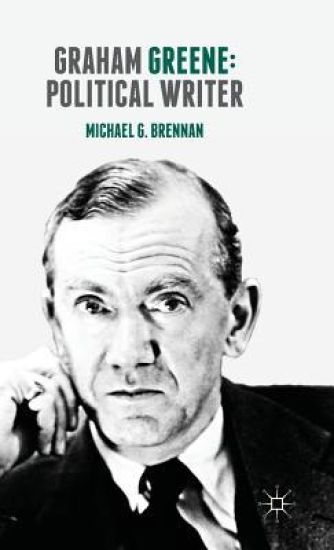
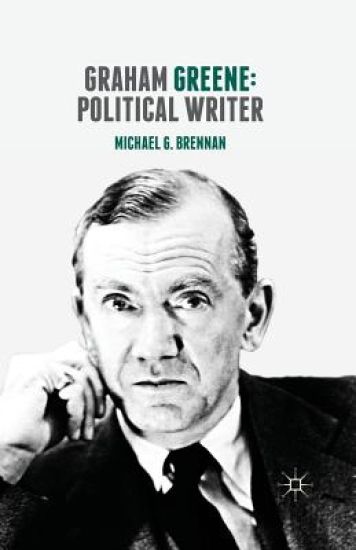
Graham Greene: Political Writer

Graham Greene: Political Writer

Michael G. Brennan

Palgrave Macmillan
2016
sidottu
Graham Greene remarked that 'politics are in the air we breathe, like the presence or absence of a God' (The Other Man). This study is the first to provide a detailed consideration of the impact of his political thought and involvements on his writings both fictional and factual. It also offers the first detailed consideration of Greene's involvements in espionage and British intelligence from the 1920s until the late-1980s. It incorporates material not only from his major fictions but also from his prolific journalism, letters to the press, private correspondence, diaries and working manuscripts and typescripts, as well as consideration of the diverse political involvements and writings of his extended family network. It shows how the full range of Greene's writings was inspired and underpinned by his fascination with the essential human duality of political action and religious belief, coupled with an insistent need as a writer to keep the political personal.
Graham Greene: Political Writer

Graham Greene: Political Writer

Michael G. Brennan

Palgrave Macmillan
2016
nidottu
Graham Greene remarked that 'politics are in the air we breathe, like the presence or absence of a God' (The Other Man). This study is the first to provide a detailed consideration of the impact of his political thought and involvements on his writings both fictional and factual. It also offers the first detailed consideration of Greene's involvements in espionage and British intelligence from the 1920s until the late-1980s. It incorporates material not only from his major fictions but also from his prolific journalism, letters to the press, private correspondence, diaries and working manuscripts and typescripts, as well as consideration of the diverse political involvements and writings of his extended family network. It shows how the full range of Greene's writings was inspired and underpinned by his fascination with the essential human duality of political action and religious belief, coupled with an insistent need as a writer to keep the political personal.
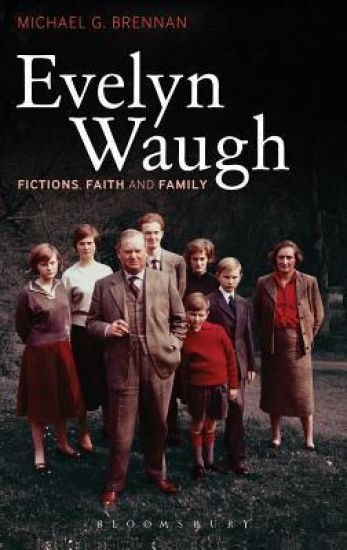
Evelyn Waugh

Evelyn Waugh

Michael G. Brennan

Bloomsbury Academic USA
2013
nidottu
Evelyn Waugh: Fictions, Faith and Family is a wide-ranging survey of the prolific literary career of one of the most popular English writers of the 20th century. Michael G. Brennan here identifies three major themes as central to any understanding of Waugh's work: Catholicism, society and the concept of family. From Decline and Fall (published in 1928) to his final writings, this book draws not only on the major novels and short stories but also Waugh's substantial journalistic output, his private journals and correspondences and unpublished draft manuscripts. Through this comprehensive and systematic exploration, Brennan demonstrates the sustained creative importance of Catholicism to Waugh's literary work. In addition, the book goes on to consider how Evelyn Waugh's descendants - his son Auberon and his grandson Alexander Waugh - have echoed and developed these literary concerns in their own writing.
Evelyn Waugh

Evelyn Waugh

Michael G. Brennan

Bloomsbury Academic USA
2013
sidottu
Evelyn Waugh: Fictions, Faith and Family is a wide-ranging survey of the prolific literary career of one of the most popular English writers of the 20th century. Michael G. Brennan here identifies three major themes as central to any understanding of Waugh's work: Catholicism, society and the concept of family. From Decline and Fall (published in 1928) to his final writings, this book draws not only on the major novels and short stories but also Waugh's substantial journalistic output, his private journals and correspondences and unpublished draft manuscripts. Through this comprehensive and systematic exploration, Brennan demonstrates the sustained creative importance of Catholicism to Waugh's literary work. In addition, the book goes on to consider how Evelyn Waugh's descendants - his son Auberon and his grandson Alexander Waugh - have echoed and developed these literary concerns in their own writing.
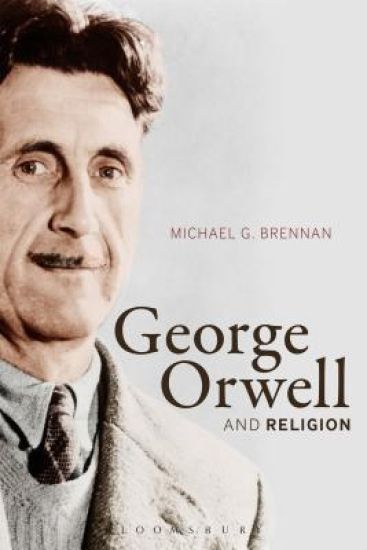
George Orwell and Religion

George Orwell and Religion

Michael G. Brennan

Bloomsbury Academic
2016
nidottu
In his attitude toward religion, George Orwell has been characterised in various terms: as an agnostic, humanist, secular saint or even Christian atheist. Drawing on the full range of his public and private writings - from major works such as Keep the Aspidistra Flying, 1984 and Down and Out in Paris and London to his shorter journalism and private letters and journals - George Orwell and Religion is a major reassessment of Orwell's life-long engagement with religion. Exploring Orwell's life and work, Michael Brennan illuminates for the first time how this profound engagement with religion informed the intensely humanitarian spirit of his writings.
George Orwell and Religion

George Orwell and Religion

Michael G. Brennan

Bloomsbury Academic
2016
sidottu
In his attitude toward religion, George Orwell has been characterised in various terms: as an agnostic, humanist, secular saint or even Christian atheist. Drawing on the full range of his public and private writings - from major works such as Keep the Aspidistra Flying, 1984 and Down and Out in Paris and London to his shorter journalism and private letters and journals - George Orwell and Religion is a major reassessment of Orwell's life-long engagement with religion. Exploring Orwell's life and work, Michael Brennan illuminates for the first time how this profound engagement with religion informed the intensely humanitarian spirit of his writings.
Graham Greene

Graham Greene

Michael G. Brennan

Continuum International Publishing Group Ltd.
2010
sidottu
This is a new and comprehensive reconsideration of Graham Greene's use of Catholic and theological issues in his fictions and other writings from the 1920s until the 1980s. This major new reconsideration of Graham Greene's writings, from the 1920s until the 1980s, focuses both on his best known novels and his less familiar works, including his short stories, plays, poetry, film scripts and reviewing, journalism and personal correspondence. It explores the major issues of Catholic faith and doubt, particularly in relation to his portrayal of secular love and physical desire, and examines the religious and secular issues and plots involving trust, betrayal, love and despair. Although Greene's female characters have often been underestimated, Brennan argues that while sometimes abstract, symbolic and two-dimensional, these figures often prove central to an understanding of the moral, personal and spiritual dilemmas of his male characters. Finally, he reveals how Greene was one of the most generically ambitious writers of the twentieth century, experimenting with established forms but also believing that the career of a successful novelist should incorporate a great diversity of other categories of writing. Offering a new and original perspective on the reading of Greene's literary works and their importance to English twentieth-century fiction, this will be of interest to anyone studying Greene.
Graham Greene

Graham Greene

Michael G. Brennan

Continuum International Publishing Group Ltd.
2010
nidottu
This is a new and comprehensive reconsideration of Graham Greene's use of Catholic and theological issues in his fictions and other writings from the 1920s until the 1980s. This major new reconsideration of Graham Greene's writings, from the 1920s until the 1980s, focuses both on his best known novels and his less familiar works, including his short stories, plays, poetry, film scripts and reviewing, journalism and personal correspondence. It explores the major issues of Catholic faith and doubt, particularly in relation to his portrayal of secular love and physical desire, and examines the religious and secular issues and plots involving trust, betrayal, love and despair. Although Greene's female characters have often been underestimated, Brennan argues that while sometimes abstract, symbolic and two-dimensional, these figures often prove central to an understanding of the moral, personal and spiritual dilemmas of his male characters. Finally, he reveals how Greene was one of the most generically ambitious writers of the twentieth century, experimenting with established forms but also believing that the career of a successful novelist should incorporate a great diversity of other categories of writing. Offering a new and original perspective on the reading of Greene's literary works and their importance to English twentieth-century fiction, this will be of interest to anyone studying Greene.
The Correspondence (c. 1626–1659) of Dorothy Percy Sidney, Countess of Leicester

The Correspondence (c. 1626–1659) of Dorothy Percy Sidney, Countess of Leicester

Michael G. Brennan; Noel J. Kinnamon

Ashgate Publishing Limited
2010
sidottu
The letters of Dorothy Percy Sidney, Countess of Leicester, dating predominantly from about 1636 until 1643, cover a wide range of issues and vividly illustrate her centrality to her illustrious family's personal and public affairs. These c.100 letters are here for the first time fully transcribed and edited. The edition includes a biographical and historical introduction, setting the context of the Sidneys' family and political activities at the time of Dorothy's marriage to Robert in 1615 and then tracing the major events and involvements of her life until her death in 1659. A key to the cipher used in the letters to disguise identities of individuals is also supplied. Following the introduction is the complete text of each of Dorothy Percy Sidney's letters to her husband, Robert, second Earl of Leicester, and to and from William Hawkins, the Sidney family solicitor, along with several others, including letters from Dorothy to Archbishop Laud and the Earl of Holland. Her husband's account of her last moments in 1659, and testamentary directions relating to her will, are also included. The letters are arranged in chronological order and supported by a series of footnotes that elucidate their historical context and briefly to identify key individuals, places, political issues and personal concerns. These notes are further supported by selective quotations from Dorothy's incoming correspondence and other related letters and documents. A glossary supplies more detailed information on 'Persons and Places.' Dorothy Percy Sidney's letters eloquently convey how, even with her undoubted personal potency and shrewd intelligence, the multifaceted roles expected of an able and determined aristocratic early modern Englishwoman-especially when her husband was occupied abroad on official business-were intensely demanding and testing.
The Ashgate Research Companion to The Sidneys, 1500-1700

The Ashgate Research Companion to The Sidneys, 1500-1700

Michael G. Brennan; Mary Ellen Lamb

TAYLOR FRANCIS LTD
2024
nidottu
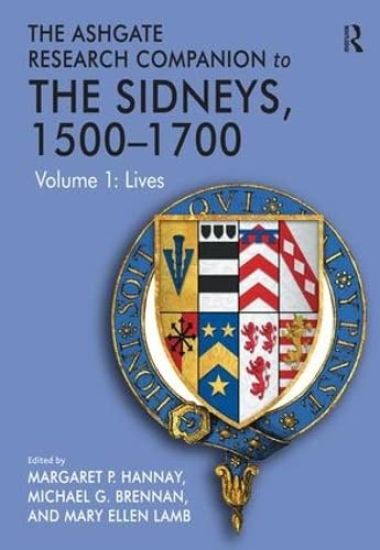
Few families have contributed as much to English history and literature-indeed, to the arts generally-as the Sidney family. This two-volume Ashgate Research Companion assesses the current state of scholarship on family members and their impact, as historical and literary figures, in the period 1500-1700. Volume 1: Lives, begins with an overview of the Sidneys and politics, providing some links to court events, entertainments, literature, and patronage. The volume gives biographies to prominent high-profile Sidney women and men, as well as sections assessing the influence of the family in the areas of the English court, international politics, patronage, religion, public entertainment, the visual arts, and music. The focus of the second volume is the literary contributions of Sir Philip Sidney; Mary Sidney Herbert, Countess of Pembroke; Lady Mary Wroth; Robert Sidney, Earl of Leicester; and William Herbert, Earl of Pembroke.
The Correspondence (c. 1626–1659) of Dorothy Percy Sidney, Countess of Leicester

The Correspondence (c. 1626–1659) of Dorothy Percy Sidney, Countess of Leicester

Michael G. Brennan; Noel J. Kinnamon

TAYLOR FRANCIS LTD
2024
nidottu
The letters of Dorothy Percy Sidney, Countess of Leicester, dating predominantly from about 1636 until 1643, cover a wide range of issues and vividly illustrate her centrality to her illustrious family's personal and public affairs. These c.100 letters are here for the first time fully transcribed and edited. The edition includes a biographical and historical introduction, setting the context of the Sidneys' family and political activities at the time of Dorothy's marriage to Robert in 1615 and then tracing the major events and involvements of her life until her death in 1659. A key to the cipher used in the letters to disguise identities of individuals is also supplied. Following the introduction is the complete text of each of Dorothy Percy Sidney's letters to her husband, Robert, second Earl of Leicester, and to and from William Hawkins, the Sidney family solicitor, along with several others, including letters from Dorothy to Archbishop Laud and the Earl of Holland. Her husband's account of her last moments in 1659, and testamentary directions relating to her will, are also included. The letters are arranged in chronological order and supported by a series of footnotes that elucidate their historical context and briefly to identify key individuals, places, political issues and personal concerns. These notes are further supported by selective quotations from Dorothy's incoming correspondence and other related letters and documents. A glossary supplies more detailed information on 'Persons and Places.' Dorothy Percy Sidney's letters eloquently convey how, even with her undoubted personal potency and shrewd intelligence, the multifaceted roles expected of an able and determined aristocratic early modern Englishwoman-especially when her husband was occupied abroad on official business-were intensely demanding and testing.
The Ashgate Research Companion to The Sidneys, 1500-1700

The Ashgate Research Companion to The Sidneys, 1500-1700

Michael G. Brennan; Mary Ellen Lamb

Ashgate Publishing Limited
2015
sidottu
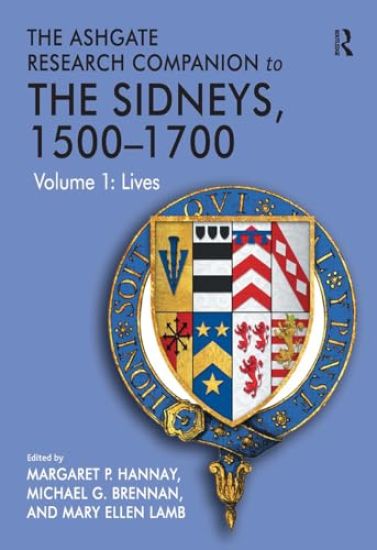
Few families have contributed as much to English history and literature-indeed, to the arts generally-as the Sidney family. This two-volume Ashgate Research Companion assesses the current state of scholarship on family members and their impact, as historical and literary figures, in the period 1500-1700. Volume 1: Lives, begins with an overview of the Sidneys and politics, providing some links to court events, entertainments, literature, and patronage. The volume gives biographies to prominent high-profile Sidney women and men, as well as sections assessing the influence of the family in the areas of the English court, international politics, patronage, religion, public entertainment, the visual arts, and music. The focus of the second volume is the literary contributions of Sir Philip Sidney; Mary Sidney Herbert, Countess of Pembroke; Lady Mary Wroth; Robert Sidney, Earl of Leicester; and William Herbert, Earl of Pembroke.
The Ashgate Research Companion to The Sidneys, 1500-1700, 2-Volume Set

The Ashgate Research Companion to The Sidneys, 1500-1700, 2-Volume Set

Margaret P. Hannay; Michael G. Brennan; Mary Ellen Lamb

Routledge
2015
muu
Few families have contributed as much to English history and literature-indeed, to the arts generally-as the Sidney family. This two-volume Ashgate Research Companion assesses the current state of scholarship on family members and their impact, as historical and literary figures, in the period 1500-1700. Volume 1: Lives, begins with an overview of the Sidneys and politics, providing some links to court events, entertainments, literature, and patronage. The volume gives biographies to prominent high-profile Sidney women and men, as well as sections assessing the influence of the family in the areas of the English court, international politics, patronage, religion, public entertainment, the visual arts, and music. The focus of the second volume is the literary contributions of Sir Philip Sidney; Mary Sidney Herbert, Countess of Pembroke; Lady Mary Wroth; Robert Sidney, Earl of Leicester; and William Herbert, Earl of Pembroke. Volume 2: Literature, begins with an exploration of the Sidneys' books and manuscripts and how they circulated, followed by an overview of the contributions of family members -Sir Philip Sidney; Mary Sidney Herbert, Countess of Pembroke; Lady Mary Wroth; Robert Sidney, Earl of Leicester; and William Herbert, Earl of Pembroke - in the genres of prose romance, drama, poetry, psalms and prose. These essays outline major controversies and areas for further research, as well as conducting literary analysis.
Foundations for Advancing Animal Ecology

Foundations for Advancing Animal Ecology

Michael L. Morrison; Leonard A. Brennan; Bruce G. Marcot; William M. Block; Kevin S. McKelvey

Johns Hopkins University Press
2020
sidottu
A look at how wildlife professionals can modernize their approaches to habitat and population management with a fresh take on animal ecology.How can we maximize the probability that a species of wild animal will persist into the future? This audacious book proposes that advancing animal ecology—and conservation itself—demands that we reenvision our basic understanding of how animals interact with their environments and with each other. Synthesizing where we are and where we need to go with our studies of animals and their environs, Foundations for Advancing Animal Ecology asserts that studies of animal ecology should begin with a focus on the behaviors and characteristics of individual organisms. The book examines• the limitations of classic approaches to the study of animal ecology• how organisms organize into collections, such as breeding pairs, flocks, and herds• how the broader biotic and abiotic environment shapes animal populations, communities, and ecosystems• factors underlying the distribution and abundance of species through space and time• the links between habitat and population• why communication between researchers and managers is key• specific strategies for managing wild animal populations and habitats in an evolutionary and ecosystem contextThroughout, the authors stress the importance of speaking a common and well-defined language. Avoiding vague and misleading terminology, they argue, will help ecologists translate science into meaningful and lasting actions in the environment. Taking the perspective of the organism of interest in developing concepts and applications, the authors always keep the potentially biased human perspective in focus. A major advancement in understanding the factors underlying wildlife-habitat relationships, Foundations for Advancing Animal Ecology will be an invaluable resource to professionals and practitioners in natural resource management in public and private sectors, including state and federal agencies, non-governmental organizations, and environmental consultants.
Applications for Advancing Animal Ecology

Applications for Advancing Animal Ecology

Michael L. Morrison; Leonard A. Brennan; Bruce G. Marcot; William M. Block; Kevin S. McKelvey

Johns Hopkins University Press
2021
sidottu
Practical guidance for wildlife professionals working to improve study design, data analysis, and the application of results to habitat and population management.Winner of the Wildlife Society Publications Book Award by The Wildlife SocietyDespite major advances in sampling techniques and analytical methods, many animal ecologists conduct research that is primarily relevant to a specific time and place. They also tend to focus more on the statistical analyses and nuances of modeling than actual study design. Arguing that studies of animal ecology should always begin with a focus on the behaviors and characteristics of individual organisms, including how they form into distinct biological populations, Applications for Advancing Animal Ecology takes a fresh and critical look at the field. Building from its companion volume, Foundations for Advancing Animal Ecology, this practical book presents readers with the principal methods used to observe animal behavior. Teaching them to assess resource abundance categories of species-environmental relationships models, it also explores• major aspects of measuring animal habitat: what to measure and how to measure it;• common sampling and estimation methods to assess population parameters;• when to measure and how to analyze data;• problems that will confront ecologists in the coming years—and how to gather information to adequately address them; and• how the experimental approach can be used to advance the science of animal ecology.Throughout the book, the authors stress the importance of speaking a common and well-defined language. Avoiding vague and misleading terminology, they assert, will help ecologists translate science into meaningful and lasting actions in the environment. Taking the perspective of the organism of interest in developing concepts and applications, the authors always keep the potentially biased human perspective in focus. They also provide a selection of suggested research projects, cautions, and caveats. A major advancement in understanding the factors underlying wildlife–habitat relationships, Applications for Advancing Animal Ecology will be an invaluable resource to natural resource management professionals and practitioners, including state and federal agencies, non-governmental organizations, and environmental consultants.
The American Southeast at the End of the Ice Age

The American Southeast at the End of the Ice Age

David G. Anderson; Derek T. Anderson; Katherine McMillan Barry; Kara Bridgman Sweeney; Samuel O. Brookes; Adam M. Burke; Stephen B. Carmody; Philip J. Carr; William A. Childress; I. Randolph Daniel; Ryan Duggins; Grayal E. Farr; Michael K. Faught; Brendan Fenerty; Jay D. Franklin; Lauren M. Franklin; J. Christopher Gillam; Joseph A. M. Gingerich; Jessi J. Halligan; Kandace D. Hollenbach; Vance T. Holliday; Thomas A. Jennings; K. C. Jones; Shawn A. Joy; Jerald Ledbetter; Greg J. Maggard; Steven M. Meredith; D. Shane Miller

THE UNIVERSITY OF ALABAMA PRESS
2022
sidottu
The definitive book on what is known about the Late Pleistocene and Early Holocene archaeological record in the Southeast The 1996 benchmark volume The Paleoindian and Early Archaic Southeast, edited by David G. Anderson and Kenneth E. Sassaman, was the first study to summarize what was known of the peoples who lived in the Southeast when ice sheets covered the northern part of the continent and mammals such as mammoths, saber-toothed cats, and ground sloths roamed the landscape.The American Southeast at the End of the Ice Age provides an updated, definitive synthesis of current archaeological research gleaned from an array of experts in the region. It is organized in three parts: state records, the regional perspective, and reflections and future directions. Chapters survey a diversity of topics including the distribution of the earliest archaeological sites in the region, chipped-stone tool technology, the expanding role of submerged archaeology, hunter-gatherer lifeways, past climate changes and the extinction of megafauna on the transitional landscape, and evidence of demographic changes at the end of the Ice Age. Discussion of the ethical responsibilities regarding the use of private collections and the relationship of archaeologists and the avocational community, insight from outside the Southeast, and considerations for future research round out the volume.
Selected Papers Of Michael G Rossmann With Commentaries: The Development Of Structural Biology
About 50 publications out of more than 500 have been selected from the work of Michael Rossmann covering the years from 1958 to 2012. These include his early work with Max Perutz on hemoglobin and the first protein structures to his current work on the structures of small icosahedral and large polymorphic viruses. These papers describe not only some of the first protein and virus structures, but also the crystallographic and electron microscopic technologies. Furthermore, the author's interests include evolution and protein folding.The selected papers are a personal history of structural biology and especially of structural virology. The papers describe many of the basic techniques of structural biology such as isomorphous replacement, anomalous dispersion of X-rays, the molecular replacement method, X-ray diffraction data processing and combining crystallographic data with electron microscopic images.The book covers much of the historical development of the modern flourishing field of structural biology in terms of the authors' own contributions.