Kirjojen hintavertailu. Mukana 11 342 296 kirjaa ja 12 kauppaa.

Kirjahaku

Etsi kirjoja tekijän nimen, kirjan nimen tai ISBN:n perusteella.

1000 tulosta hakusanalla Michael G. Titelbaum

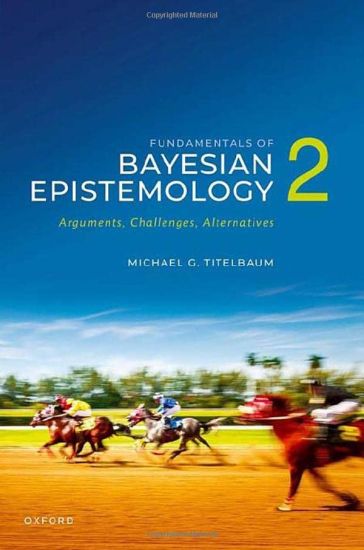
Fundamentals of Bayesian Epistemology 2

Fundamentals of Bayesian Epistemology 2

Michael G. Titelbaum

Oxford University Press
2022
sidottu
Bayesian ideas have recently been applied across such diverse fields as philosophy, statistics, economics, psychology, artificial intelligence, and legal theory. Fundamentals of Bayesian Epistemology examines epistemologists' use of Bayesian probability mathematics to represent degrees of belief. Michael G. Titelbaum provides an accessible introduction to the key concepts and principles of the Bayesian formalism, enabling the reader both to follow epistemological debates and to see broader implications Volume 1 begins by motivating the use of degrees of belief in epistemology. It then introduces, explains, and applies the five core Bayesian normative rules: Kolmogorov's three probability axioms, the Ratio Formula for conditional degrees of belief, and Conditionalization for updating attitudes over time. Finally, it discusses further normative rules (such as the Principal Principle, or indifference principles) that have been proposed to supplement or replace the core five. Volume 2 gives arguments for the five core rules introduced in Volume 1, then considers challenges to Bayesian epistemology. It begins by detailing Bayesianism's successful applications to confirmation and decision theory. Then it describes three types of arguments for Bayesian rules, based on representation theorems, Dutch Books, and accuracy measures. Finally, it takes on objections to the Bayesian approach and alternative formalisms, including the statistical approaches of frequentism and likelihoodism.
Fundamentals of Bayesian Epistemology 2

Fundamentals of Bayesian Epistemology 2

Michael G. Titelbaum

Oxford University Press
2022
nidottu
Bayesian ideas have recently been applied across such diverse fields as philosophy, statistics, economics, psychology, artificial intelligence, and legal theory. Fundamentals of Bayesian Epistemology examines epistemologists' use of Bayesian probability mathematics to represent degrees of belief. Michael G. Titelbaum provides an accessible introduction to the key concepts and principles of the Bayesian formalism, enabling the reader both to follow epistemological debates and to see broader implications Volume 1 begins by motivating the use of degrees of belief in epistemology. It then introduces, explains, and applies the five core Bayesian normative rules: Kolmogorov's three probability axioms, the Ratio Formula for conditional degrees of belief, and Conditionalization for updating attitudes over time. Finally, it discusses further normative rules (such as the Principal Principle, or indifference principles) that have been proposed to supplement or replace the core five. Volume 2 gives arguments for the five core rules introduced in Volume 1, then considers challenges to Bayesian epistemology. It begins by detailing Bayesianism's successful applications to confirmation and decision theory. Then it describes three types of arguments for Bayesian rules, based on representation theorems, Dutch Books, and accuracy measures. Finally, it takes on objections to the Bayesian approach and alternative formalisms, including the statistical approaches of frequentism and likelihoodism.
Fundamentals of Bayesian Epistemology 1

Fundamentals of Bayesian Epistemology 1

Michael G. Titelbaum

Oxford University Press
2022
sidottu
Bayesian ideas have recently been applied across such diverse fields as philosophy, statistics, economics, psychology, artificial intelligence, and legal theory. Fundamentals of Bayesian Epistemology examines epistemologists' use of Bayesian probability mathematics to represent degrees of belief. Michael G. Titelbaum provides an accessible introduction to the key concepts and principles of the Bayesian formalism, enabling the reader both to follow epistemological debates and to see broader implications Volume 1 begins by motivating the use of degrees of belief in epistemology. It then introduces, explains, and applies the five core Bayesian normative rules: Kolmogorov's three probability axioms, the Ratio Formula for conditional degrees of belief, and Conditionalization for updating attitudes over time. Finally, it discusses further normative rules (such as the Principal Principle, or indifference principles) that have been proposed to supplement or replace the core five. Volume 2 gives arguments for the five core rules introduced in Volume 1, then considers challenges to Bayesian epistemology. It begins by detailing Bayesianism's successful applications to confirmation and decision theory. Then it describes three types of arguments for Bayesian rules, based on representation theorems, Dutch Books, and accuracy measures. Finally, it takes on objections to the Bayesian approach and alternative formalisms, including the statistical approaches of frequentism and likelihoodism.
Fundamentals of Bayesian Epistemology 1

Fundamentals of Bayesian Epistemology 1

Michael G. Titelbaum

Oxford University Press
2022
nidottu
Bayesian ideas have recently been applied across such diverse fields as philosophy, statistics, economics, psychology, artificial intelligence, and legal theory. Fundamentals of Bayesian Epistemology examines epistemologists' use of Bayesian probability mathematics to represent degrees of belief. Michael G. Titelbaum provides an accessible introduction to the key concepts and principles of the Bayesian formalism, enabling the reader both to follow epistemological debates and to see broader implications Volume 1 begins by motivating the use of degrees of belief in epistemology. It then introduces, explains, and applies the five core Bayesian normative rules: Kolmogorov's three probability axioms, the Ratio Formula for conditional degrees of belief, and Conditionalization for updating attitudes over time. Finally, it discusses further normative rules (such as the Principal Principle, or indifference principles) that have been proposed to supplement or replace the core five. Volume 2 gives arguments for the five core rules introduced in Volume 1, then considers challenges to Bayesian epistemology. It begins by detailing Bayesianism's successful applications to confirmation and decision theory. Then it describes three types of arguments for Bayesian rules, based on representation theorems, Dutch Books, and accuracy measures. Finally, it takes on objections to the Bayesian approach and alternative formalisms, including the statistical approaches of frequentism and likelihoodism.
Quitting Certainties

Quitting Certainties

Michael G. Titelbaum

Oxford University Press
2012
sidottu
Michael G. Titelbaum presents a new Bayesian framework for modeling rational degrees of belief, called the Certainty-Loss Framework. Subjective Bayesianism is epistemologists' standard theory of how individuals should change their degrees of belief over time. But despite the theory's power, it is widely recognized to fail for situations agents face every day--cases in which agents forget information, or in which they assign degrees of belief to self-locating claims. Quitting Certainties argues that these failures stem from a common source: the inability of Conditionalization (Bayesianism's traditional updating rule) to model claims' going from certainty at an earlier time to less-than-certainty later on. It then presents a new Bayesian updating framework that accurately represents rational requirements on agents who undergo certainty loss. Titelbaum develops this new framework from the ground up, assuming little technical background on the part of his reader. He interprets Bayesian theories as formal models of rational requirements, leading him to discuss both the elements that go into a formal model and the general principles that link formal systems to norms. By reinterpreting Bayesian methodology and altering the theory's updating rules, Titelbaum is able to respond to a host of challenges to Bayesianism both old and new. These responses lead in turn to deeper questions about commitment, consistency, and the nature of information. Quitting Certainties presents the first systematic, comprehensive Bayesian framework unifying the treatment of memory loss and context-sensitivity. It develops this framework, motivates it, compares it to alternatives, then applies it to cases in epistemology, decision theory, the theory of identity, and the philosophy of quantum mechanics.
Quitting Certainties

Quitting Certainties

Michael G. Titelbaum

Oxford University Press
2014
nidottu
Michael G. Titelbaum presents a new Bayesian framework for modeling rational degrees of belief, called the Certainty-Loss Framework. Subjective Bayesianism is epistemologists' standard theory of how individuals should change their degrees of belief over time. But despite the theory's power, it is widely recognized to fail for situations agents face every day--cases in which agents forget information, or in which they assign degrees of belief to self-locating claims. Quitting Certainties argues that these failures stem from a common source: the inability of Conditionalization (Bayesianism's traditional updating rule) to model claims' going from certainty at an earlier time to less-than-certainty later on. It then presents a new Bayesian updating framework that accurately represents rational requirements on agents who undergo certainty loss. Titelbaum develops this new framework from the ground up, assuming little technical background on the part of his reader. He interprets Bayesian theories as formal models of rational requirements, leading him to discuss both the elements that go into a formal model and the general principles that link formal systems to norms. By reinterpreting Bayesian methodology and altering the theory's updating rules, Titelbaum is able to respond to a host of challenges to Bayesianism both old and new. These responses lead in turn to deeper questions about commitment, consistency, and the nature of information. Quitting Certainties presents the first systematic, comprehensive Bayesian framework unifying the treatment of memory loss and context-sensitivity. It develops this framework, motivates it, compares it to alternatives, then applies it to cases in epistemology, decision theory, the theory of identity, and the philosophy of quantum mechanics.
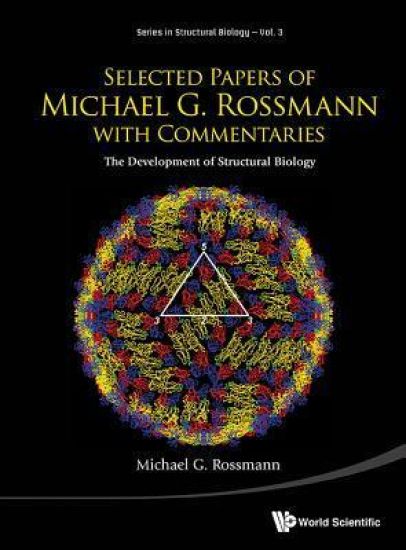
Selected Papers Of Michael G Rossmann With Commentaries: The Development Of Structural Biology
About 50 publications out of more than 500 have been selected from the work of Michael Rossmann covering the years from 1958 to 2012. These include his early work with Max Perutz on hemoglobin and the first protein structures to his current work on the structures of small icosahedral and large polymorphic viruses. These papers describe not only some of the first protein and virus structures, but also the crystallographic and electron microscopic technologies. Furthermore, the author's interests include evolution and protein folding.The selected papers are a personal history of structural biology and especially of structural virology. The papers describe many of the basic techniques of structural biology such as isomorphous replacement, anomalous dispersion of X-rays, the molecular replacement method, X-ray diffraction data processing and combining crystallographic data with electron microscopic images.The book covers much of the historical development of the modern flourishing field of structural biology in terms of the authors' own contributions.
Doo-Wop! and The G-Clefts: The Saga of America's Last Original Doo-Wop Group from the 1950s Still Performing
In 1956 the G-Clefs recorded their first hit "Ka Ding Dong". It ranked #24 on the Billboard charts that year. Their biggest hit came later in 1961 with "I Understand" reaching #9 also on the Billboard's top 100. In 1997 PBS featured singing groups like the G-Clefs to appear on their televised production that made Doo-Wop popular again throughout the entire country. This is the story of the G-Clefs during that same time period. There are numerous unpublished photographs and stories documenting their return to the spotlight with all the fame and disappointments that only a Doo-Wop singing group like theirs could possibly experience. For the first time ever, this is a comprehensive history of the very still popular music of Doo-Wop and "The saga of America's last original Doo-Wop group from the 1950s still performing." A collection of stories correlating the singing group's come back during the 1990s with a series of performances when Doo-Wop gained national attention once again. Their guitar player Mike Devlin tells of this adventure as he recalls the ups and downs the group had over a ten year period during that time. Numerous illustrations included. ADDITIONAL SPECIAL INCLUSION: Doo-Wop and The G-Clefs: In Their Own Words. Through an interview a self-description of the G-Clefs recalling the very beginning of their introduction to music which lead to their involvement as professional entertainers following a 20 year career that spanned from the 1950s to the 1970s. Full of personal stories and illustrations.
Michael LaFosse's Origami Airplanes

Michael LaFosse's Origami Airplanes

Michael G. LaFosse; Richard L. Alexander

Tuttle Publishing
2016
nidottu
**2017 Creative Child Magazine Book of the Year Award Winner**Make the best paper airplanes around with this easy-to-follow origami book. No scissors, tape or glue required!Enthralled with origami from a young age, world-renowned origami and paper crafter Michael LaFosse has used those skills to design and perfect paper planes for decades. In Michael LaFosse's Origami Airplanes, LaFosse presents 28 original paper origami models that incorporate innovative functional and aesthetic details like faceted flaps, ailerons, canards and spoilers that really work. The sense of proportion and balance, and an ingenious nose and fuselage locking system, define these signature models—which are instant classics. Readers accustomed to folding simple darts and wings will be thrilled and challenged by the folding maneuvers in these pages. Michael LaFosse's Origami Airplanes comes with great value—included are: 28 fun and challenging projects Step-by-step instructions Expert tips on techniques and folds Easy-to-follow video tutorials Videos are also streamable or downloadable onlineGreat for paper airplane enthusiasts, fans of unique origami works, and parents with kids. In addition to teaching the skills to create the planes, this unique paper craft book provides expert advice on:How to select and prepare the best folding paper for each plane.How to balance aesthetics, performance and fun when designing your own planes.Helpful tips on control surfaces, and how to manipulate them for the best flights.Tips on launching different types of planes to get the best possible glide.A discussion of aerodynamics and how it relates to paper airplane performance.Paper airplane models include:The classic Lock Nose Dart The stealthy Flying Fox The innovative Art Deco Wing The speedy F-102 Delta Jet And many more…All media content is alternatively accessible on the Tuttle Publishing website.
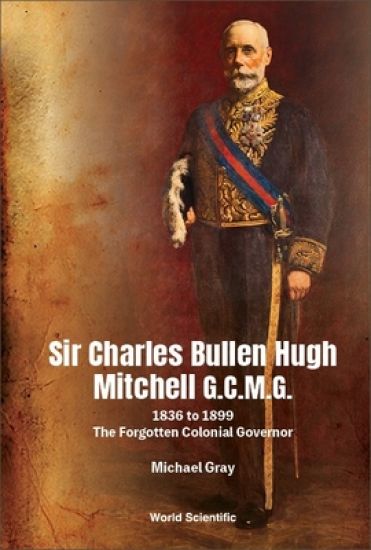
Sir Charles Bullen Hugh Mitchell G.c.m.g.: 1836 To 1899 - The Forgotten Colonial Governor
This is the first known biography of Sir Charles Bullen Hugh Mitchell G C M G, former Governor of the Straits Settlements and District Grand Master of the freemasons in the Eastern Archipelago.The book traces his early life as an officer in the Royal Marines, where he served for 15 years, ending up with the rank of Lieutenant Colonel, as well as his long, distinguished career in the Colonial Service, serving Queen Victoria in many countries including Natal in Southern Africa during and after the Zulu Wars, British Honduras, British Guiana, Fiji and Singapore.It is his time in Singapore that is given extensive treatment in the book. Having been sworn in as Governor and Commander-in-Chief of The Straits Settlements and their Dependencies (the 'Colony') on 1 February 1894, Mitchell inherited a colony, which was in very serious financial difficulty. With his prudent financial management, the governor brought the Colony back to a strong financial position and completed many projects. He was also instrumental in the implementation of the Federation of Malay States and was its first High Commissioner.His governorship was cut short when he died suddenly at the Colony's Government House (the current Istana) on 7 December 1899 and was buried in Singapore.However, his legacy was written out by his successor Sir Frank Swettenham who would take credit for the Colony's achievements. To this end, this book will go towards correcting the history of Singapore and Malaya at that time.The book also contains one of the very few public accounts of freemasonry in Singapore during the 19th Century and those of prominent freemasons participating in the colonial administration and commercial sector in the Colony.
Sir Charles Bullen Hugh Mitchell G.c.m.g.: 1836 To 1899 - The Forgotten Colonial Governor
This is the first known biography of Sir Charles Bullen Hugh Mitchell G C M G, former Governor of the Straits Settlements and District Grand Master of the freemasons in the Eastern Archipelago.The book traces his early life as an officer in the Royal Marines, where he served for 15 years, ending up with the rank of Lieutenant Colonel, as well as his long, distinguished career in the Colonial Service, serving Queen Victoria in many countries including Natal in Southern Africa during and after the Zulu Wars, British Honduras, British Guiana, Fiji and Singapore.It is his time in Singapore that is given extensive treatment in the book. Having been sworn in as Governor and Commander-in-Chief of The Straits Settlements and their Dependencies (the 'Colony') on 1 February 1894, Mitchell inherited a colony, which was in very serious financial difficulty. With his prudent financial management, the governor brought the Colony back to a strong financial position and completed many projects. He was also instrumental in the implementation of the Federation of Malay States and was its first High Commissioner.His governorship was cut short when he died suddenly at the Colony's Government House (the current Istana) on 7 December 1899 and was buried in Singapore.However, his legacy was written out by his successor Sir Frank Swettenham who would take credit for the Colony's achievements. To this end, this book will go towards correcting the history of Singapore and Malaya at that time.The book also contains one of the very few public accounts of freemasonry in Singapore during the 19th Century and those of prominent freemasons participating in the colonial administration and commercial sector in the Colony.
Shooting Incident Reconstruction

Shooting Incident Reconstruction

Michael G. Haag; Lucien C. Haag

Academic Press Inc
2011
sidottu
Shooting Incident Reconstruction, Second Edition, offers a thorough explanation of matters from simple to complex to help the reader understand the factors surrounding ballistics, trajectory, and shooting scenes. Forensic scientists, law enforcement, and crime scene investigators are often tasked with reconstruction of events based on crime scene evidence, along with the subsequent analysis of that evidence. The use and misuse of firearms to perpetrate crimes from theft to murder necessitates numerous invitations to reconstruct shooting incidents. The discharge of firearms and the behavior of projectiles create many forms of physical evidence that, through proper testing and interpretation by a skilled forensic scientist, can establish what did and what did not occur. Written by the world's most well-respected shooting scene and ballistics experts, the book addresses the terminology, science, and factors involved in reconstructing shooting incident events to solve forensic cases. It covers the full range of related topics including: the range from which a firearm was discharged; the sequence of shots in a multiple discharge shooting incident; the position of a firearm at the moment of discharge; and the position of a victim at the moment of impact. The probable flight path of a projectile and the manner in which a firearm was discharged are also discussed. Case studies illustrate real-world application of technical concepts, supported by over 200 full-color diagrams and photographs. This book will be of value to practicing forensic scientists (firearm and toolmark examiners), ballistics experts, crime scene personnel, police departments, forensic consultants (generalists), attorneys and judges, medical examiners (coroners), and forensic pathologists.
Insider Threat

Insider Threat

Michael G. Gelles

Butterworth-Heinemann Inc
2016
nidottu
Insider Threat: Detection, Mitigation, Deterrence and Prevention presents a set of solutions to address the increase in cases of insider threat. This includes espionage, embezzlement, sabotage, fraud, intellectual property theft, and research and development theft from current or former employees. This book outlines a step-by-step path for developing an insider threat program within any organization, focusing on management and employee engagement, as well as ethical, legal, and privacy concerns. In addition, it includes tactics on how to collect, correlate, and visualize potential risk indicators into a seamless system for protecting an organization’s critical assets from malicious, complacent, and ignorant insiders. Insider Threat presents robust mitigation strategies that will interrupt the forward motion of a potential insider who intends to do harm to a company or its employees, as well as an understanding of supply chain risk and cyber security, as they relate to insider threat.