Kirjojen hintavertailu. Mukana 11 244 527 kirjaa ja 12 kauppaa.

Kirjahaku

Etsi kirjoja tekijän nimen, kirjan nimen tai ISBN:n perusteella.

1000 tulosta hakusanalla Michael J Gerhardt

The Federal Impeachment Process

The Federal Impeachment Process

Michael J Gerhardt

University of Chicago Press
2019
pokkari
Twenty years after President Clinton's impeachment proceedings, talk of impeachment is again in the air. But what are the grounds for impeaching a sitting president? Who is subject to impeachment? Is impeachment effective as a safeguard against presidential misconduct? What challenges does today's highly partisan political climate pose to the impeachment process, and what, if any, meaningful alternatives are there for handling presidential misconduct? For more than twenty years, The Federal Impeachment Process has served as the most complete analysis of the constitutional and legal issues raised in every impeachment proceeding in American history. Impeachment, Michael J. Gerhardt shows, is an inherently political process designed to expose and remedy political crimes--serious breaches of duty or injuries to the Republic. Subject neither to judicial review nor to presidential veto, it is a unique congressional power that involves both political and constitutional considerations, including the gravity of the offense charged, the harm to the constitutional order, and the link between an official's misconduct and duties. For this third edition, Gerhardt updates the book to cover cases since President Clinton, as well as recent scholarly debates. He discusses the issues arising from the possible impeachment of Donald Trump, including whether a sitting president may be investigated, prosecuted, and convicted for criminal misconduct or whether impeachment and conviction in Congress is the only way to sanction a sitting president; what the "Emoluments Clause" means and whether it might provide the basis for the removal of the president; whether gross incompetence may serve as the basis for impeachment; and the extent to which federal conflicts of interest laws apply to the president and other high ranking officials. Significantly updated, this book will remain the standard work on the federal impeachment process for years to come.
Lincoln's Mentors

Lincoln's Mentors

Michael J. Gerhardt

HARPERCOLLINS PUBLISHERS INC
2022
nidottu
A brilliant and novel examination of how Abraham Lincoln mastered the art of leadership“Abraham Lincoln had less schooling than all but a couple of other presidents, and more wisdom than every one of them. In this original, insightful book, Michael Gerhardt explains how this came to be." –H.W. Brands, Wall Street JournalIn 1849, when Abraham Lincoln returned to Springfield, Illinois, after two seemingly uninspiring years in the U.S. House of Representatives, his political career appeared all but finished. His sense of failure was so great that friends worried about his sanity. Yet within a decade, Lincoln would reenter politics, become a leader of the Republican Party, win the 1860 presidential election, and keep America together during its most perilous period. What accounted for the turnaround?As Michael J. Gerhardt reveals, Lincoln’s reemergence followed the same path he had taken before, in which he read voraciously and learned from the successes, failures, oratory, and political maneuvering of a surprisingly diverse handful of men, some of whom he had never met but others of whom he knew intimately—Henry Clay, Andrew Jackson, Zachary Taylor, John Todd Stuart, and Orville Browning. From their experiences and his own, Lincoln learned valuable lessons on leadership, mastering party politics, campaigning, conventions, understanding and using executive power, managing a cabinet, speechwriting and oratory, and—what would become his most enduring legacy—developing policies and rhetoric to match a constitutional vision that spoke to the monumental challenges of his time.Without these mentors, Abraham Lincoln would likely have remained a small-town lawyer—and without Lincoln, the United States as we know it may not have survived. This book tells the unique story of how Lincoln emerged from obscurity and learned how to lead.
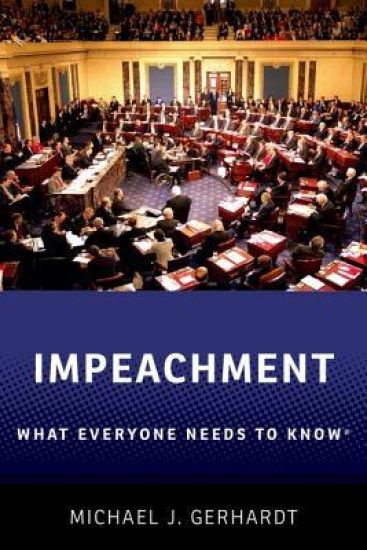
Impeachment

Impeachment

Michael J. Gerhardt

Oxford University Press Inc
2018
nidottu
Impeachment: What Everyone Needs to Know® is the step back and deep reflection on the law of impeachment that everyone needs now. Written in an accessible and lively question-and-answer format, it offers a timely explanation of the impeachment process from its very meaning to its role in politics today. The book defines the scope of impeachable offenses, and how the Constitution provides alternative procedures and sanctions for addressing misconduct in office. It explains why the only two presidential impeachments, those of Andrew Johnson and Bill Clinton, failed to lead to conviction, and how the impeachments of federal judges illuminate the law and politics of the process. As a legal expert and the only joint witness in the impeachment proceedings against President Clinton, author Michael J. Gerhardt also explores a question frequently asked-will Donald Trump be impeached? This book does not take a side in the debate over the possible impeachment of the president; instead, it is a primer for anyone eager to learn about impeachment's origins, practices, limitations, and alternatives.
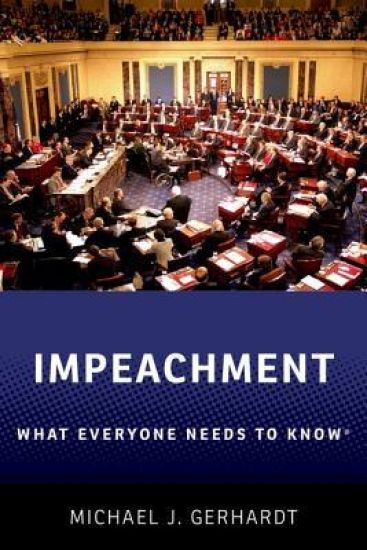
Impeachment

Impeachment

Michael J. Gerhardt

Oxford University Press Inc
2018
sidottu
Impeachment: What Everyone Needs to Know® is the step back and deep reflection on the law of impeachment that everyone needs now. Written in an accessible and lively question-and-answer format, it offers a timely explanation of the impeachment process from its very meaning to its role in politics today. The book defines the scope of impeachable offenses, and how the Constitution provides alternative procedures and sanctions for addressing misconduct in office. It explains why the only two presidential impeachments, those of Andrew Johnson and Bill Clinton, failed to lead to conviction, and how the impeachments of federal judges illuminate the law and politics of the process. As a legal expert and the only joint witness in the impeachment proceedings against President Clinton, author Michael J. Gerhardt also explores a question frequently asked-will Donald Trump be impeached? This book does not take a side in the debate over the possible impeachment of the president; instead, it is a primer for anyone eager to learn about impeachment's origins, practices, limitations, and alternatives.
The Power of Precedent

The Power of Precedent

Michael J. Gerhardt

Oxford University Press Inc
2008
sidottu
The role that precedent plays in constitutional decisionmaking is a perennially divisive subject among scholars of law and American politics. The debate rages over both empirical and normative aspects of the issue: To what extent are the Supreme Court, Congress, and the executive branch constrained by precedent? To what extent should they be? Taking up a topic long overdue for comprehensive treatment, Michael Gerhardt connects the vast social science data and legal scholarship to provide the most wide-ranging assessment of precedent in several decades. The Power of Precedent clearly outlines the major issues in the continuing debates on the significance of precedent and evenly considers all sides. For the Supreme Court, precedents take many forms, including not only the Court's past opinions, but also norms, historical practices, and traditions that the justices have deliberately chosen to follow. In these forms, precedent exerts more force than is commonly acknowledged. This force is encapsulated in the implementation and recognition of what Gerhardt calls the "golden rule of precedent," a major dynamic in constitutional law. The rule calls upon justices and other public authorities to recognize that since they expect others to respect their own precedents, they must provide the same respect to others' precedents. Gerhardt's extensive exploration of precedent leads him to formulate a more expansive definition of it, one that encompasses not only the prior constitutional decisions of courts but also the constitutional judgments of other public authorities. Gerhardt concludes his study by looking at what the future holds for the concept, as he examines the decisions and attitudes toward precedent exhibited by the shift from the Rehnquist to the Roberts Court. Authoritative and incisive, Gerhardt presents an in-depth look at this central yet understudied phenomenon at the core of all constitutional conflicts and one of undeniable importance to American law and politics. Ultimately, The Power of Precedent vividly illustrates how constitutional law is made and evolves both in and outside of the courts.
The Forgotten Presidents

The Forgotten Presidents

Michael J. Gerhardt

Oxford University Press Inc
2014
nidottu
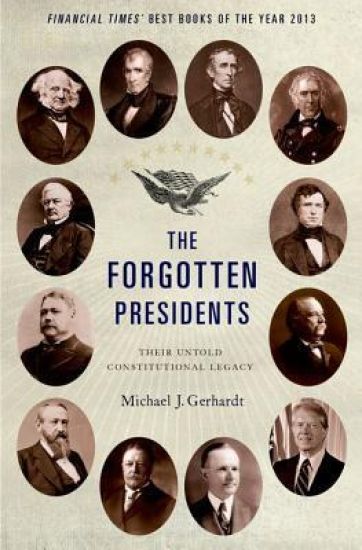
Their names linger in memory mainly as punch lines, synonyms for obscurity: Millard Fillmore, Chester Arthur, Calvin Coolidge. They conjure up not the White House so much as a decaying middle school somewhere in New Jersey. But many forgotten presidents, writes Michael J. Gerhardt, were not weak or ineffective. They boldly fought battles over constitutional principles that resonate today. Gerhardt, one of our leading legal experts, tells the story of The Forgotten Presidents. He surveys thirteen administrations in chronological order, from Martin Van Buren to Franklin Pierce to Jimmy Carter, distinguishing political failures from their constitutional impact. Again and again, he writes, they defied popular opinion to take strong stands. Martin Van Buren reacted to an economic depression by withdrawing federal funds from state banks in an attempt to establish the controversial independent treasury system. His objective was to shrink the federal role in the economy, but also to consolidate his power to act independently as president. Prosperity did not return, and he left office under the shadow of failure. Grover Cleveland radically changed his approach in his second (non-consecutive) term. Previously he had held back from interference with lawmakers; on his return to office, he aggressively used presidential power to bend Congress to his will. Now seen as an asterisk, Cleveland consolidated presidential authority over appointments, removals, vetoes, foreign affairs, legislation, and more. Jimmy Carter, too, proves surprisingly significant. In two debt-ceiling crises and battles over the Panama Canal treaty, affirmative action, and the First Amendment, he demonstrated how the presidency's inherent capacity for efficiency and energy gives it an advantage in battles with Congress, regardless of popularity. Incisive, myth-shattering, and compellingly written, this book shows how even obscure presidents championed the White House's prerogatives and altered the way we interpret the Constitution.
The Power of Precedent

The Power of Precedent

Michael J. Gerhardt

Oxford University Press Inc
2011
nidottu
The role that precedent plays in constitutional decision making is a perennially divisive subject among scholars of law and American politics. The debate rages over both empirical and normative aspects of the issue: To what extent are the Supreme Court, Congress, and the executive branch constrained by precedent? To what extent should they be? Taking up a topic long overdue for comprehensive treatment, Michael Gerhardt connects the vast social science data and legal scholarship to provide the most wide-ranging assessment of precedent in several decades. Updated to reflect recent legal cases, The Power of Precedent clearly outlines the major issues in the continuing debates on the significance of precedent and evenly considers all sides. For the Supreme Court, precedents take many forms, including not only the Court's past opinions, but also norms, historical practices, and traditions that the justices have deliberately chosen to follow. In these forms, precedent exerts more force than is commonly acknowledged. This force is encapsulated in the implementation and recognition of what Gerhardt calls the "golden rule of precedent," a major dynamic in constitutional law. The rule calls upon justices and other public authorities to recognize that since they expect others to respect their own precedents, they must provide the same respect to others' precedents. Gerhardt's extensive exploration of precedent leads him to formulate a more expansive definition of it, one that encompasses not only the prior constitutional decisions of courts but also the constitutional judgments of other public authorities. Gerhardt concludes his study by looking at what the future holds for the concept, as he examines the decisions and attitudes toward precedent exhibited by the shift from the Rehnquist to the Roberts Court. Authoritative and incisive, Gerhardt presents an in-depth look at this central yet understudied phenomenon at the core of all constitutional conflicts and one of undeniable importance to American law and politics. Ultimately, The Power of Precedent vividly illustrates how constitutional law is made and evolves both in and outside of the courts.
The Forgotten Presidents

The Forgotten Presidents

Michael J. Gerhardt

Oxford University Press Inc
2013
sidottu
In The Constitutional Legacy of Forgotten Presidents, eminent constitutional scholar Michael Gerhardt covers the presidencies of thirteen "forgotten" presidents and shows why their presidencies were far more consequential than most believe. Through engaging chapters on Martin Van Buren, Chester Arthur, William Howard Taft, and Jimmy Carter (among others), Gerhardt explains how forgotten presidencies have ushered in some most important constitutional changes in American history. From the early nineteenth century onward, the lesser presidents played an important role in shaping major developments such as the growth of federal power at the expense of the states and the expansion of executive authority vis-à-vis Congress. Gerhardt claims that the problem with forgotten presidents, such as Millard Fillmore and Franklin Pierce, was not that they were weak, ineffective, or indecisive but rather that they had remarkably strong constitutional convictions that provoked stronger, often overwhelming political opposition. These presidents are forgotten because they sacrificed their political fortunes for the sake of defending constitutional commitments that often placed them on the losing side of history. By revealing these often-untold presidential legacies, Gerhardt debunks some of the most widely-believed myths about the American presidency. Most importantly, perhaps, is his assertion that Abraham Lincoln and Andrew Jackson, two of the most famous American presidents of the nineteenth century, were not the only strong presidents in their era. Gerhardt's analysis also points to another startling conclusion about the American presidency: that the presidency's gradual pull is institutional and not the product of individual great men's wills. A powerfully insightful study, The Constitutional Legacy of Forgotten Presidents will reshape our understanding of American political and legal history.
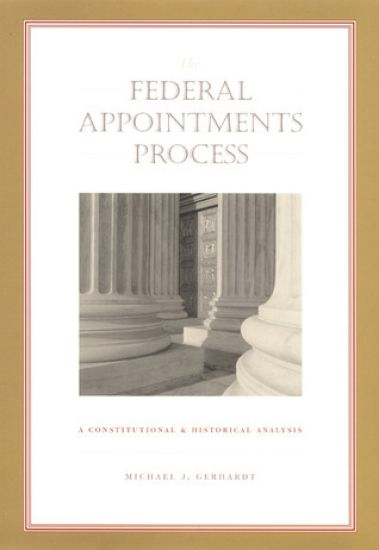
The Federal Appointments Process

The Federal Appointments Process

Michael J. Gerhardt

Duke University Press
2001
sidottu
Although the federal appointment of U.S. judges and executive branch officers has consistently engendered controversy, previous studies of the process have been limited to particular dramatic conflicts and have tended to view appointments in a vacuum without regard to other incidents in the process, other legislative matters, or broader social, political, and historical developments. The Federal Appointments Process fills this gap by providing the first comprehensive analysis of over two hundred years of federal appointments in the United States, revealing crucial patterns of growth and change in one of the most central of our democratic processes.Michael J. Gerhardt includes each U.S. president’s performance record regarding appointments, accounts of virtually all the major confirmation contests, as well as discussion of significant legal and constitutional questions raised throughout U.S. history. He also analyzes recess appointments, the Vacancies Act, the function of nominees in the appointment process, and the different treatment received by judicial and nonjudicial nominations. While discussing the important roles played by media and technology in federal appointments, Gerhardt not only puts particular controversies in perspective but also identifies important trends in the process, such as how leaders of different institutions attempt to protect-if not expand-their respective prerogatives by exercising their authority over federal appointments. Employing a newly emerging method of inquiry known as “historical institutionalism”-in which the ultimate goal is to examine the development of an institution in its entirety and not particular personalities or periods, this book concludes with suggestions for reforms in light of recent controversies springing from the longest delays in history that many judicial nominees face in the Senate.Gerhardt’s intensive treatment of the subject will be of interest to students and scholars of political science, government, history, and legal studies.
The Federal Appointments Process

The Federal Appointments Process

Michael J. Gerhardt

Duke University Press
2003
pokkari
Although the federal appointment of U.S. judges and executive branch officers has consistently engendered controversy, previous studies of the process have been limited to particular dramatic conflicts and have tended to view appointments in a vacuum without regard to other incidents in the process, other legislative matters, or broader social, political, and historical developments. The Federal Appointments Process fills this gap by providing the first comprehensive analysis of over two hundred years of federal appointments in the United States, revealing crucial patterns of growth and change in one of the most central of our democratic processes.Michael J. Gerhardt includes each U.S. president’s performance record regarding appointments, accounts of virtually all the major confirmation contests, as well as discussion of significant legal and constitutional questions raised throughout U.S. history. He also analyzes recess appointments, the Vacancies Act, the function of nominees in the appointment process, and the different treatment received by judicial and nonjudicial nominations. While discussing the important roles played by media and technology in federal appointments, Gerhardt not only puts particular controversies in perspective but also identifies important trends in the process, such as how leaders of different institutions attempt to protect-if not expand-their respective prerogatives by exercising their authority over federal appointments. Employing a newly emerging method of inquiry known as “historical institutionalism”-in which the ultimate goal is to examine the development of an institution in its entirety and not particular personalities or periods, this book concludes with suggestions for reforms in light of recent controversies springing from the longest delays in history that many judicial nominees face in the Senate.Gerhardt’s intensive treatment of the subject will be of interest to students and scholars of political science, government, history, and legal studies.
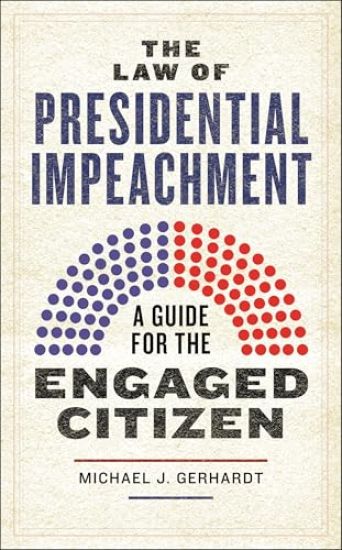
The Law of Presidential Impeachment

The Law of Presidential Impeachment

Michael J. Gerhardt

NEW YORK UNIVERSITY PRESS
2024
sidottu
A clear and comprehensive overview of presidential impeachment from a leading expert in the field As a result of Donald Trump's presidency, impeachment was once again thrust into the spotlight of American political discussion. However, its history goes back to the very founding of the nation, when American colonists, remembering their grievances against their former king, entrenched the process in their new Constitution. The Law of Presidential Impeachment breaks down both the law and politics of this process, providing a comprehensive, nonpartisan, and up-to-date explanation of the Constitution's various mechanisms for holding presidents accountable for their misdeeds. Based on a lifetime of scholarly research, as well as unique experience as a witness and consultant in the impeachment trials of Bill Clinton and Donald Trump, Michael J. Gerhardt's new book takes the reader back to the basics of presidential impeachments. Rather than provide reasons for or against impeaching particular presidents, he explains the law and procedures that govern impeachment, examining a number of significant, yet under-explored, issues and themes. Gerhardt offers new perspectives on the subject, arguing that it cannot be properly understood in a vacuum, but must instead be viewed in the context of its coordination with such other mechanisms as criminal prosecutions, censure, elections, congressional oversight, and the Fourteenth and Twenty-Fifth Amendments. The Law of Presidential Impeachment will be an invaluable, accessible guide for future generations, giving them a succinct yet remarkably nuanced understanding of this core aspect of our executive branch and overarching governmental system.
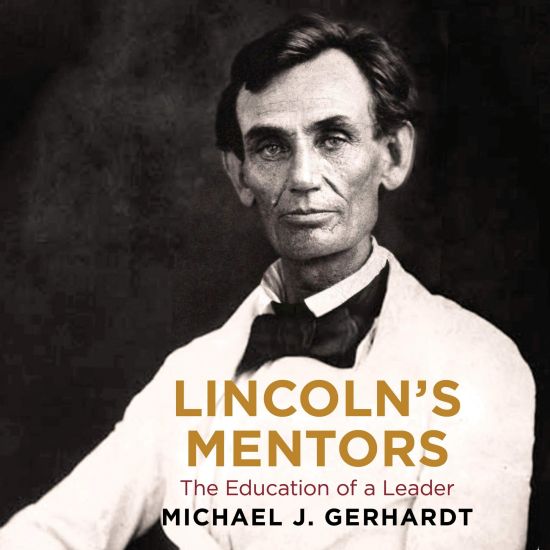
Lincoln's Mentors: The Education of a Leader
A brilliant and novel examination of how Abraham Lincoln mastered the art of leadership, revealing how five men mentored an obscure lawyer with no executive experience to become America's greatest president"Gerhardt has devised an ingenious solution for demystifying America's most enigmatic president: examining the key people who influenced Lincoln as he developed his own unique skills and leadership style." -Russell L. Riley, UVA's Miller CenterIn 1849, when Abraham Lincoln returned to Springfield, Illinois, after two seemingly uninspiring years in the U.S. House of Representatives, his political career appeared all but finished. His sense of failure was so great that friends worried about his sanity. Yet within a decade, Lincoln would reenter politics, become a leader of the Republican Party, win the 1860 presidential election, and keep America together during its most perilous period. What accounted for the turnaround?As Michael J. Gerhardt reveals, Lincoln's reemergence followed the same path he had taken before, in which he read voraciously and learned from the successes, failures, oratory, and political maneuvering of a surprisingly diverse handful of men, some of whom he had never met but others of whom he knew intimately--Henry Clay, Andrew Jackson, Zachary Taylor, John Todd Stuart, and Orville Browning. From their experiences and his own, Lincoln learned valuable lessons on leadership, mastering party politics, campaigning, conventions, understanding and using executive power, managing a cabinet, speechwriting and oratory, and--what would become his most enduring legacy--developing policies and rhetoric to match a constitutional vision that spoke to the monumental challenges of his time.Without these mentors, Abraham Lincoln would likely have remained a small-town lawyer--and without Lincoln, the United States as we know it may not have survived. This book tells the unique story of how Lincoln emerged from obscurity and learned how to lead.
Lincoln's Mentors: The Education of a Leader

Lincoln's Mentors: The Education of a Leader

Michael J. Gerhardt

Harpercollins
2021
mp3 cd-levyllä
A brilliant and novel examination of how Abraham Lincoln mastered the art of leadership, revealing how five men mentored an obscure lawyer with no executive experience to become America's greatest president"Gerhardt has devised an ingenious solution for demystifying America's most enigmatic president: examining the key people who influenced Lincoln as he developed his own unique skills and leadership style." -Russell L. Riley, UVA's Miller CenterIn 1849, when Abraham Lincoln returned to Springfield, Illinois, after two seemingly uninspiring years in the U.S. House of Representatives, his political career appeared all but finished. His sense of failure was so great that friends worried about his sanity. Yet within a decade, Lincoln would reenter politics, become a leader of the Republican Party, win the 1860 presidential election, and keep America together during its most perilous period. What accounted for the turnaround?As Michael J. Gerhardt reveals, Lincoln's reemergence followed the same path he had taken before, in which he read voraciously and learned from the successes, failures, oratory, and political maneuvering of a surprisingly diverse handful of men, some of whom he had never met but others of whom he knew intimately--Henry Clay, Andrew Jackson, Zachary Taylor, John Todd Stuart, and Orville Browning. From their experiences and his own, Lincoln learned valuable lessons on leadership, mastering party politics, campaigning, conventions, understanding and using executive power, managing a cabinet, speechwriting and oratory, and--what would become his most enduring legacy--developing policies and rhetoric to match a constitutional vision that spoke to the monumental challenges of his time.Without these mentors, Abraham Lincoln would likely have remained a small-town lawyer--and without Lincoln, the United States as we know it may not have survived. This book tells the unique story of how Lincoln emerged from obscurity and learned how to lead.
The Law of Presidential Impeachment

The Law of Presidential Impeachment

Michael J. Gerhardt

NEW YORK UNIVERSITY PRESS
2026
pokkari
A clear and comprehensive overview of presidential impeachment from a leading expert in the field As a result of Donald Trump's presidency, impeachment was once again thrust into the spotlight of American political discussion. However, its history goes back to the very founding of the nation, when American colonists, remembering their grievances against their former king, entrenched the process in their new Constitution. The Law of Presidential Impeachment breaks down both the law and politics of this process, providing a comprehensive, nonpartisan, and up-to-date explanation of the Constitution's various mechanisms for holding presidents accountable for their misdeeds. Based on a lifetime of scholarly research, as well as unique experience as a witness and consultant in the impeachment trials of Bill Clinton and Donald Trump, Michael J. Gerhardt's new book takes the reader back to the basics of presidential impeachments. Rather than provide reasons for or against impeaching particular presidents, he explains the law and procedures that govern impeachment, examining a number of significant, yet under-explored, issues and themes. Gerhardt offers new perspectives on the subject, arguing that it cannot be properly understood in a vacuum, but must instead be viewed in the context of its coordination with such other mechanisms as criminal prosecutions, censure, elections, congressional oversight, and the Fourteenth and Twenty-Fifth Amendments. The Law of Presidential Impeachment will be an invaluable, accessible guide for future generations, giving them a succinct yet remarkably nuanced understanding of this core aspect of our executive branch and overarching governmental system.
Plough Quarterly No. 8

Plough Quarterly No. 8

Gerhard Lohfink; Navid Kermani; Denise Uwimana; C.S. Lewis; Richard J. Foster; John Stott; Laurie Klein; Neil Shigley; Michael Yandell; Matthew Loftus; Eberhard Arnold

Plough Publishing House
2016
pokkari
From Jordan to Germany, the influx of refugees is straining goodwill to the breaking point. This issue of Plough Quarterly focuses on the second half of Jesus’ Great Commandment: Love your neighbor as yourself. We found love of neighbor demonstrated by Christians and Muslims in ISIS-controlled Syria, and by volunteers who continue to welcome refugees despite growing public hostility. Here in election-year America, how do we as citizens live out love of neighbor in relation to immigrants? To the unborn threatened by abortion, and to their mothers? To prisoners, especially those held in solitary confinement for unconscionable terms and those on death row? To the victims of crime, and to the law enforcement officers charged with keeping the peace? To our youth, who are the ones most gravely harmed by our culture’s gender confusion? On all these fronts and many others, love of neighbor makes claims on us. But shouldn’t it start within the fellowship of believers, the church? When this happens, we can bear one another’s burdens – for example, those of the soldier returning from war, or the coworker battling an addiction. Perspectives from Navid Kermani, Neil Shigley, Denise Uwimana, Gerhard Lohfink, Michael Yandell, Teresa of Ávila, C.S. Lewis, John Stott, Matthew Loftus, Nathaniel Peters, Eberhard Arnold, Richard J. Foster, and Annemarie Wächter are sure to stimulate reflection and discussion. Then there’s new poetry by Laurie Klein, book reviews, a children’s story by Laura E. Richards, and world-class art by Dean Mitchell, Aristarkh Lentulov, Alex Vogel, Michael D. Fay, Paula Modersohn-Becker, Marc Chagall, Vasilij Ivanovic Surikov, and Sekino Jun’ichiro. Plough Quarterly features stories, ideas, and culture for people eager to put their faith into action. Each issue brings you in-depth articles, interviews, poetry, book reviews, and art to help you put Jesus’ message into practice and find common cause with others.
Michael J. Shapiro
Michael J. Shapiro’s writings have been innovatory with respect to the phenomena he has taken to be political, and the concomitant array of methods that he has brilliantly mastered. This book draws from his vast output of articles, chapters and books to provide a thematic yet integrated account of his boundary-crossing innovations in political theory and masterly contributions to our understanding of methods in the social sciences. The editors have focused on work in three key areas:DiscourseShapiro was one of the first theorists to demonstrate convincingly, and in a manner that has had a long-standing impact on the field, that language is not epiphenomenal to politics. Indeed, he shows that language is constitutive of politics. From his frequently-cited article on metaphor from the early 1980s to recent work on discourse and globalization, Shapiro has shown that politics happens not only with and through the use of language, but within discourse as a material practice.CultureGabriel Almond and Sidney Verba’s (1963) famous work on ‘The Civic Culture’ established a long-held but ultimately counterproductive relationship between culture and politics, one in which culture is an independent variable that has effects on politics. Samuel Huntington’s (1998) (in)famous polemic, ‘The Clash of Civilizations’, only pushes this relationship to its breaking point. Shapiro’s rich and numerous writings on culture provide a powerful and important antidote to this approach, as Shapiro consistently shows (across wide-ranging contexts) that politics is in culture and culture is in politics, and no politically salient approach to culture can afford to turn either term into a causal variable.ViolenceWhile violence is surely not a theme foreign to political studies, no one has done more or better work in contemporary political theory to bring violence into play as a central term of political thought and to expand our understanding of violence. By reconceptualizing and reinterpreting this term, Shapiro’s work has helped us to rethink the very boundaries between political theory and international relations as putatively separate subfields of political science. And it explains why both political theorists interested in International Relations and International Relations scholars concerned with a broader understanding of international politics must both start with Shapiro’s work as required reading.
Michael J. Shapiro
Michael J. Shapiro’s writings have been innovatory with respect to the phenomena he has taken to be political, and the concomitant array of methods that he has brilliantly mastered. This book draws from his vast output of articles, chapters and books to provide a thematic yet integrated account of his boundary-crossing innovations in political theory and masterly contributions to our understanding of methods in the social sciences. The editors have focused on work in three key areas:DiscourseShapiro was one of the first theorists to demonstrate convincingly, and in a manner that has had a long-standing impact on the field, that language is not epiphenomenal to politics. Indeed, he shows that language is constitutive of politics. From his frequently-cited article on metaphor from the early 1980s to recent work on discourse and globalization, Shapiro has shown that politics happens not only with and through the use of language, but within discourse as a material practice.CultureGabriel Almond and Sidney Verba’s (1963) famous work on ‘The Civic Culture’ established a long-held but ultimately counterproductive relationship between culture and politics, one in which culture is an independent variable that has effects on politics. Samuel Huntington’s (1998) (in)famous polemic, ‘The Clash of Civilizations’, only pushes this relationship to its breaking point. Shapiro’s rich and numerous writings on culture provide a powerful and important antidote to this approach, as Shapiro consistently shows (across wide-ranging contexts) that politics is in culture and culture is in politics, and no politically salient approach to culture can afford to turn either term into a causal variable.ViolenceWhile violence is surely not a theme foreign to political studies, no one has done more or better work in contemporary political theory to bring violence into play as a central term of political thought and to expand our understanding of violence. By reconceptualizing and reinterpreting this term, Shapiro’s work has helped us to rethink the very boundaries between political theory and international relations as putatively separate subfields of political science. And it explains why both political theorists interested in International Relations and International Relations scholars concerned with a broader understanding of international politics must both start with Shapiro’s work as required reading.
Michael J. Fox: A Little Golden Book Biography

Michael J. Fox: A Little Golden Book Biography

Lori Haskins Houran

RANDOM HOUSE USA INC
2025
sidottu
Get inspired by Michael J. Fox, the beloved Back to the Future actor from Canada who is helping people all around the world, with this collectible Little Golden Book featuring full-color illustrations on every page Michael moved to California--1,300 miles away from home--to be a Hollywood star Actor Michael J. Fox is known for playing Alex P. Keaton on TV's Family Ties and Marty McFly in the Back to the Future movies. The talented actor became a determined activist after being diagnosed with Parkinson's Disease and starting a foundation to help find a cure. Michael J. Fox: A Little Golden Book Biography will inspire readers of all ages. Look for more Little Golden Book biographies: - Bruce Springsteen- Dwayne Johnson- Steve Martin- Zendaya- Harry Styles