
Kirjahaku
Etsi kirjoja tekijän nimen, kirjan nimen tai ISBN:n perusteella.
1000 tulosta hakusanalla Michael J Oliver

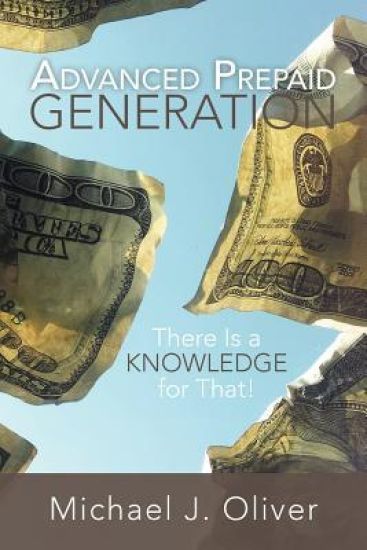
This book explains that humans have the super-intelligence to unite 8 billion people by synchronizing labor and enhancing benefits and rewards. It introduces the 449 Formula that would eliminate poverty and upgrade the lifestyle and living conditions of this and future human generations on our magnificent life-sustaining Planet Earth.


First published in 1997, this volume responds to the Conservative intention of conducting economic policy along monetarist lines after winning the General Election in May 1979. Michael J. Oliver argues that the monetarist strategy was rejected for several reasons during the 1980s, including the recession of the early 1980s, the change in attitude to the role of the exchange rate and disagreements between politicians and policy-makers. It is shown that the disputes between Chancellor Nigel Lawson, Lady Thatcher and her economic adviser, Sir Alan Walters, are central to explaining why macroeconomic policy-making evolved considerably from the mid-1980s.This book is the first attempt by an economic historian to apply a social learning model to the post-1979 period. By adopting an inter-disciplinary approach, Oliver has made both an accessible addition to the debate on the conduct of economic policy since 1979 and a major contribution to the growing interest in social learning amongst social scientists.
First published in 1997, this volume responds to the Conservative intention of conducting economic policy along monetarist lines after winning the General Election in May 1979. Michael J. Oliver argues that the monetarist strategy was rejected for several reasons during the 1980s, including the recession of the early 1980s, the change in attitude to the role of the exchange rate and disagreements between politicians and policy-makers. It is shown that the disputes between Chancellor Nigel Lawson, Lady Thatcher and her economic adviser, Sir Alan Walters, are central to explaining why macroeconomic policy-making evolved considerably from the mid-1980s.This book is the first attempt by an economic historian to apply a social learning model to the post-1979 period. By adopting an inter-disciplinary approach, Oliver has made both an accessible addition to the debate on the conduct of economic policy since 1979 and a major contribution to the growing interest in social learning amongst social scientists.
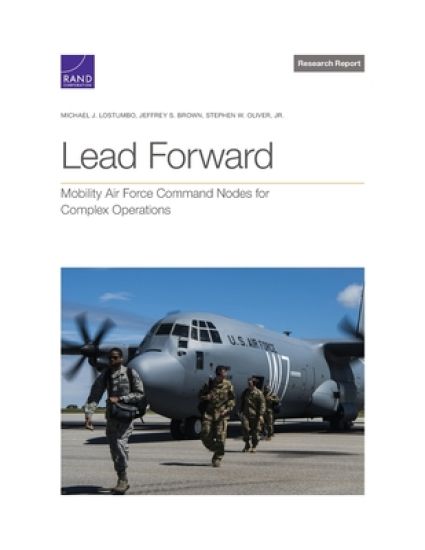
To address the command and control challenges of a future conflict with Russia or China, in which command elements and communications networks could be attacked, the United States Air Force needs to consider how to reorganize its forces so that they can operate in degraded environments. In this report, the authors examine how options for the design of wing-level command and control elements for Air Mobility Command forces can meet such new demands.

Defense Institution Building in Africa
Michael J. McNerney; Stuart E. Johnson; Stephanie Pezard; David Stebbins; Renanah Miles; Angela O'Mahony; Chaoling Feng; Tim Oliver
RAND
2016
pokkari
This report assesses U.S. efforts in defense institution building (DIB) in Africa and suggests possible improvements to planning and execution. It defines DIB and reviews some best practices from DIB and security sector reform experiences. It also highlights how DIB activities serve U.S. official strategic guidance for Africa.
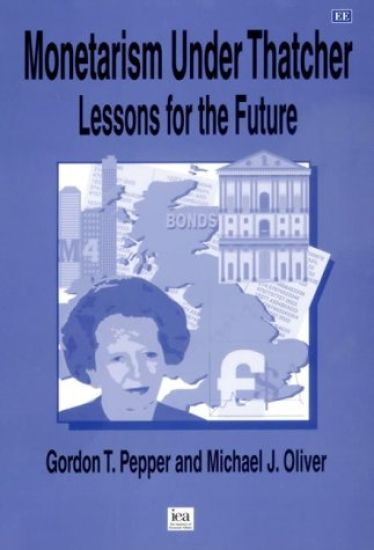
This authoritative book analyses the recent problems associated with the UK's monetary system and suggests a long-term solution to control bank lending in the future. It draws on extensive historical material, discussions with former senior officials and politicians, and the perceptive insights of Gordon Pepper, an advisor to Margaret Thatcher when the foundations of monetary control were being laid, to revisit and re-examine the monetarist experiment of the 1980s.The authors argue that, in spite of the instinct of the Prime Minister, the authorities never attempted to control the supply of money in the 1980s and only paid lip service to controlling the demand for money. Extraordinary behaviour of bank lending was a significant cause of the Barber boom in the mid-1970s, of the Lawson boom of the 1980s and of the depth of the recession in the early 1990s. They assert that varying interest rates is an ineffective tool to manage lending and controversially propose that the only enduring solution is to control the banks' reserves. The authors forcefully argue that should the UK not become a member of the European Single Currency the debate surrounding monetary base control will need to be reopened.By reassessing a significant era in British economic policy and suggesting a strategy for the future, this book will be of great interest to economic historians, monetary and political economists, policymakers and investment advisers.
What do unions do and why do they do it? Do they seek to maximise profit for their members, or to obtain better working conditions that benefit society as a whole? Derek H. Aldcroft and Michael J. Oliver here provide one of the first sustained studies of the effects of union activities in terms of economic performance and the impact on the business world. From the rise of the British mass trade union movement in the 1870s to the present day, the book examines the main trends in union development and structure, and the core strategies unions have used to achieve their objectives: the use of strikes, work rules and restrictive practices; workers’ attitudes to innovation; the wage bargaining process. Important assessments are made of the influence of these strategies on investment, innovation, economic growth, and the cost of structure and competitiveness of the UK economy.
Exchange Rate Regimes in the Twentieth Century
Derek H. Aldcroft; Michael J. Oliver
Edward Elgar Publishing Ltd
2001
nidottu
This book provides the first comprehensive and accessible account of the evolution of exchange rate regimes in the twentieth century. It presents a chronological, non-technical history and in doing so manages to link the past with the present to shed new light on the merits of different exchange rate systems.Since the golden age before the First World War, the international monetary system has experienced several changes in exchange rate regimes, alternating between fixed and floating rate systems interspersed with managed or dirty floats. The authors examine and assess the evolution of exchange rate regimes since the First World War to the present day. They discuss the forces that have brought about change in order to determine how different regimes affected the economic environment. They consider the merits or otherwise of the respective regimes and assess the evidence and arguments for and against fixed and floating exchange rate systems.Exchange Rate Regimes in the Twentieth Century provides a coherent and manageable analysis of a complex subject. It will prove invaluable to both undergraduates and postgraduates studying economic history, international economics and international studies.

Exchange Rate Regimes in the Twentieth Century
Derek H. Aldcroft; Michael J. Oliver
Edward Elgar Publishing Ltd
1998
sidottu
This book provides the first comprehensive and accessible account of the evolution of exchange rate regimes in the twentieth century. It presents a chronological, non-technical history and in doing so manages to link the past with the present to shed new light on the merits of different exchange rate systems.Since the golden age before the First World War, the international monetary system has experienced several changes in exchange rate regimes, alternating between fixed and floating rate systems interspersed with managed or dirty floats. The authors examine and assess the evolution of exchange rate regimes since the First World War to the present day. They discuss the forces that have brought about change in order to determine how different regimes affected the economic environment. They consider the merits or otherwise of the respective regimes and assess the evidence and arguments for and against fixed and floating exchange rate systems.Exchange Rate Regimes in the Twentieth Century provides a coherent and manageable analysis of a complex subject. It will prove invaluable to both undergraduates and postgraduates studying economic history, international economics and international studies.
Trade Unions and the Economy: 1870–2000
Derek H. Aldcroft; Michael J. Oliver
Ashgate Publishing Limited
2000
sidottu
What do unions do and why do they do it? Do they seek to maximise profit for their members, or to obtain better working conditions that benefit society as a whole? Derek H. Aldcroft and Michael J. Oliver here provide one of the first sustained studies of the effects of union activities in terms of economic performance and the impact on the business world. From the rise of the British mass trade union movement in the 1870s to the present day, the book examines the main trends in union development and structure, and the core strategies unions have used to achieve their objectives: the use of strikes, work rules and restrictive practices; workers’ attitudes to innovation; the wage bargaining process. Important assessments are made of the influence of these strategies on investment, innovation, economic growth, and the cost of structure and competitiveness of the UK economy.

The New Libertarianism: Anarcho-Capitalism
J. Michael Oliver
Createspace Independent Publishing Platform
2013
nidottu
The Ludwig von Mises Institute says (reviewer David Gordon): "...this remarkable book began as an academic thesis written in 1972, and submitted the next year for a graduate degree...The book is much more than an academic thesis, though; it is a distinguished addition to libertarian thought." The late 1960s and early 1970s marked the first wave of the libertarian movement. Ayn Rand's Objectivism had shaken mainstream philosophy with its core ideas. But Rand was a staunch advocate of limited government, a stance which distanced her from many of her own admirers and students, who saw the State not as the protector but the enemy of human society. At the same time, the political and economic thoughts of Dr. Murray Rothbard clarified the route libertarianism must take. Rand and Rothbard, two forces seemingly at odds, personally and ideologically. J. Michael Oliver, then editor of the nationally circulated objectivist-libertarian journal, "The New Banner," argued that it was a false division. Written in 1972 as an academic work but not published until now. "The New Libertarianism: Anarcho-Capitalism" inexorably links objectivist principles with anarcho-capitalism, and argues that libertarianism, both then and now, must be founded upon the bedrock of Rand's philosophy if it is to remain vital.
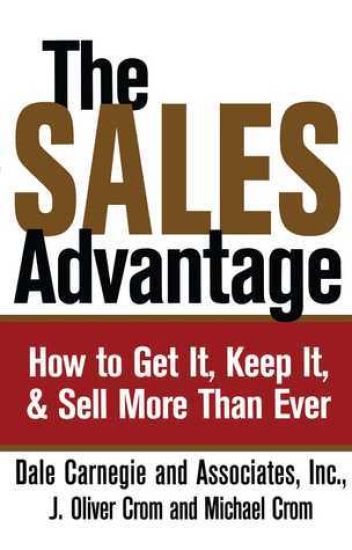
Now, for the first time ever, the time-tested, proven techniques perfected by the world-famous Dale Carnegie® sales training program are available in book form. The two crucial questions most often asked by salespeople are: "How can I close more sales?" and "What can I do to reduce objections?" The answer to both questions is the same: You learn to sell from a buyer's point of view. Global markets, increased technology, information overload, corporate mergers, and complex products and services have combined to make the buying/selling process more complicated than ever. Salespeople must understand and balance these factors to survive amid a broad spectrum of competition. Moreover, a lot of what the typical old-time salesperson did as recently as ten years ago is now done by e-commerce. The new sales professional has to capture and maintain customers by taking a consultative approach and learning to unearth the four pieces of information critical to buyers, none of which e-commerce alone can yield. The Sales Advantage will enable any salesperson to develop long-term customer relationships and help make those customers more successful—a key competitive advantage. The book includes specific advice for each stage of the eleven-stage selling process, such as: • How to find prospects from both existing and new accounts • The importance of doing research before approaching potential customers • How to determine customers' needs, such as their primary interest (what they want), buying criteria (requirements of the sale), and dominant buying motive (why they want it) • How to reach the decision makers • How to sell beyond questions of price The cutting-edge sales techniques in this book are based on interviews accumulated from the sales experiences of professionals in North America, Europe, Latin America, and Asia. This book, containing more than one hundred examples from successful salespeople representing a wide variety of products and services from around the world, provides practical advice in each chapter to turn real-world challenges into new opportunities. The Sales Advantage is a proven, logical, step-by-step guide from the most recognized name in sales training. It will create mutually beneficial results for salespeople and customers alike.

Politik och ideologier : perspektiv från Engelbergsseminariet 2011
Ulrike Ackermann; Scott Atran; James Bartolomew; Michael Bentley; Paul Berman; Vernon Bogdanor; Nick Boles; Robert Cooper; Stephan Eisel; Richard J Evans; Michael Freeden; David Frum; Dick Harrison; Anna Jardfeldt; Oliver Kamm; Robert D Kaplan; John Keane; Johan Lagerkvist; Mark Leonard; John Lloyd; Hisham Melhem; Richard Miles; Kenneth Minogue; Minxin Pei; Malise Ruthven; Roger Scruton; Per Schlingman; Nathan Shachar; Robert J Shapiro; Maria Wetterstrand
Bokförlaget Atlantis
2012
sidottu
Ideologiernas död har förutspåtts ett flertal gånger under åren, men gång på gång har vi också sett gamla ideologier återvända under nya beteckningar. I denna bok behandlar vi både nuet och det förflutna. Vi belyser en del av de politiska idéer och system i historien som fortsätter att utöva inflytande på samtiden. Vi granskar också den auktoritära statskapitalismen, som i fallet Kina, och ställer frågan om den är hållbar. Om så är fallet, hur kommer den att inverka på världen? Kommer den att bli förebilden, precis som liberal demokrati under lång tid har varit det för många människor och nationer? Kommer islamism, främlings- och invandrarfientliga partier och andra rörelser i marginalen av det politiska och ideologiska spektrumet i Europa, USA och den islamiska världen att befästa den rådande ordningen eller undergräva tilltron till den? Vilka är globaliseringens konsekvenser för politik och ideologi? Kommer svaret att bli ett världsparlament, en världsomfattande miljörörelse eller olika strömningar med religion som gemensam nämnare? Eller kommer vi kanske i stället att få se ett annat gammalt spöke återvända: nationalismen? Boken ingår i serien Engelsbergsseminarierna och utges i samarbete med Bokförlaget Atlantis och Axel och Margaret Ax:son Johnsons stiftelse för almännyttiga ändamål.
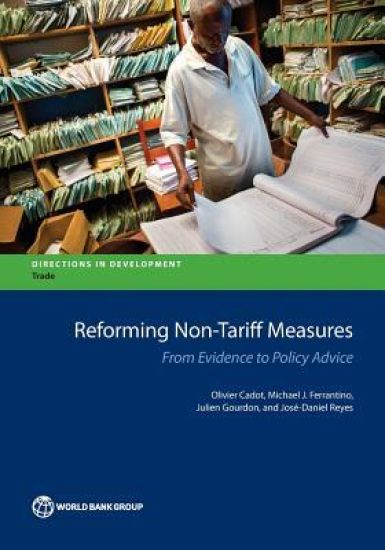
Reforming Non-Tariff Measures
Olivier Cadot; Michael J. Ferrantino; Julien Gourdon; José-Daniel Reyes
World Bank Publications
2018
nidottu
Non-tariff measures (NTMs) in international trade continues to cause trade costs to be high and to impede the further growth of trade and the gains that can be derived from trade. This book discusses some of the analytical methods that can be used to estimate the impact of NTMs on international trade, and the possible gains from their reform.
Aid During Conflict
Olga Oliker; Richard Kauzlarich; James Dobbins; Kurt W. Basseuner; Donald L. Sampler; John G. McGinn; Michael J. Dziedzic; Adam Grissom; Bruce R. Pirnie; Nora Bensahel; A.Istar Guven
RAND
2004
pokkari
An assessment of humanitarian-assistance efforts by and interaction between civilian and military providers in the early phases of Operation Enduring Freedom in Afghanistan Description and evaluation of relief, reconstruction, humanitarian, and humanitarian-type aid efforts in Afghanistan during the most intense phase of military operations, from September 2001 to June 2002. The efforts were generally successful, but there were serious coordination problems among the various civilian and military aid providers. Critical issues, both positive and negative, are identified, and a list of recommendations is provided for policymakers, implementers, and aid providers, based on lessons learned.

Complete visual history of Rommel and his Afrika Korps A fantastic new addition to the Stackpole Military Photo Series, Rommel's Desert Warriors, strives to provide a complete visual history of Rommel and his Afrika Korps in the desert of North Africa. Erwin Rommel was appointed commander of the Afrika Korps in the February of 1941. The intention was to create a unit that could act as a "blocking force" to support the Italian army struggling against British forces in Libya. It was during this time in North Africa that Rommel earned the title 'The Desert Fox.' The North African Campaign became a desperate game of hide and seek as the British and Germans rallied against each other with varying degrees of success in the harsh wasteland. Rommel's Desert Warriors is a fantastic visual exploration of the hard- fought campaign for Africa during World War II. Included are hundreds of photos of men, tanks and other weapons, uniforms and desert terrain, many of which are rare and have never before been published. This is an ideal reference guide for World War II history fans, scholars, and modellers

Knowing What Psychoanalysts Do and Doing What Psychoanalysts Know
David Tuckett; Elizabeth Allison; Olivier Bonard; Georg J. Bruns; Anna L. Christopoulos; Michael Diercks; Eike Hinze; Marinella Linardos; Michael Šebek
BLOOMSBURY PUBLISHING PLC
2024
sidottu
This book, founded on the in-depth discussion of sixteen clinical cases of psychoanalysis, tries to answer the question of what psychoanalysts do when they are practicing psychoanalysis. The authors have collaborated with over a thousand colleagues worldwide to collect a unique dataset of everyday clinical sessions using a new workshop discussion method designed to reveal differences. Faced with diversity but wanting to surface and understand it, not suppress it, they had to evolve a new theoretical framework. It covers different approaches to the analytic situation (using the metaphors, cinema, dramatic monologue, theatre and immersive theatre); different sources of data to use to infer unconscious content, differences in the troubles patients unconsciously experience and how to approach them and differences in when, about what and how a psychoanalyst should talk. Eventually taking the form of 11 very practical questions for psychoanalysts to ask of each session they conduct, the framework tries to help experienced psychoanalysts and students alike to choose what they want to try to do and to assess for themselves how far they are doing it. A final chapter applies the new framework and eleven practical questions to some contemporary technical controversies with some surprising results.