Kirjojen hintavertailu. Mukana 11 244 527 kirjaa ja 12 kauppaa.

Kirjahaku

Etsi kirjoja tekijän nimen, kirjan nimen tai ISBN:n perusteella.

1000 tulosta hakusanalla Michael J. Broyde

Sharia Tribunals, Rabbinical Courts, and Christian Panels

Sharia Tribunals, Rabbinical Courts, and Christian Panels

Michael J. Broyde

Oxford University Press Inc
2017
sidottu
This book explores the rise of private arbitration in religious and other values-oriented communities, and it argues that secular societies should use secular legal frameworks to facilitate, enforce, and also regulate religious arbitration. It covers the history of religious arbitration; the kinds of faith-based dispute resolution models currently in use; how the law should perceive them; and what the role of religious arbitration in the United States and the western world should be. Part One examines why religious individuals and communities are increasingly turning to private faith-based dispute resolution to arbitrate their litigious disputes. It focuses on why religious communities feel disenfranchised from secular law, and particularly secular family law. Part Two looks at why American law is so comfortable with faith-based arbitration, given its penchant for enabling parties to order their relationships and resolve their disputes using norms and values that are often different from and sometimes opposed to secular standards. Part Three weighs the proper procedural, jurisdictional, and contractual limits of arbitration generally, and of religious arbitration particularly. It identifies and explains the reasonable limitations on religious arbitration. Part Four examines whether secular societies should facilitate effective, legally enforceable religious dispute resolution, and it argues that religious arbitration is not only good for the religious community itself, but that having many different avenues for faith-based arbitration which are properly limited is good for any vibrant pluralistic democracy inhabited by diverse faith groups.
Jewish Law and International Law

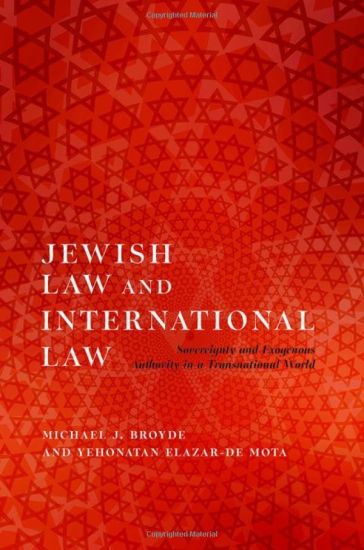
Jewish Law and International Law

Michael J. Broyde; Yehonatan Elazar-De Mota

OXFORD UNIVERSITY PRESS INC
2025
sidottu
Jewish Law and International Law offers a timely exploration of the intricate relationship between Jewish law (or halakhah) and international legal systems. In an era marked by rising antisemitism and increasing tensions between the Israel and the international community, the book offers a deeper understanding of Jewish law's contributions to the broader legal landscape. Offering relevant analysis and a forward-looking approach, Jewish Law and International Law illuminates the significant jurisprudential and methodological parallels between the two systems. Its eight chapters weave together the connections between Jewish law and international law, from the foundational concepts and histories of both legal systems to their shared values and transnational nature. The book delves into how Jewish law incorporates local and international legal principles in areas such as war, humanitarian law, copyright law, and governance. Envisioning a future where Jewish law and international law work in concert rather than conflict, the book offers a more nuanced perspective on both systems and looks toward promoting global justice.
The Codification of Jewish Law and an Introduction to the Jurisprudence of the Mishna Berura
The Codification of Jewish Law and an Introduction to the Jurisprudence of the Mishna Berura, analyses the jurisprudential methodology of Rabbi Israel Meir Kagan of Radin, the author of the Mishna Berura. It also provides an introduction to the codification of Jewish law and the methodology of codification more generally. The authors demonstrate that Rabbi Kagan had a unique approach in that he tried to balance opposing forces of tradition and modernity. He also attempted to provide definitive halakhic guidance to every question of Jewish law, based on four central questions and ten halakhic principles. After a comprehensive introduction, the authors provide 250 examples from the Mishna Berura to demonstrate their findings and to clarify their thesis in practical and clear terms.
Setting the Table

Setting the Table

Michael J. Broyde; Shlomo C. Pill

Academic Studies Press
2021
sidottu
One of the most basic questions for any legal system is that of methodology: how one interprets, analyzes, weighs, and applies a mass of often competing legal rules, precedents, practices, customs, and traditions to reach final determinations and practical guidance about the correct legal-prescribed course of action in any given situation. Questions of legal methodology raise not only practical concerns, but theoretical and philosophical ones as well. We expect law to be more than the arbitrary result of a given decision maker's personal preferences, and so we demand that legal methodologies be principled as well as practical. These issues are especially acute in religious legal systems, where the stakes are raised by concerns for respecting not just human, but divine law. Despite this, the major scholars and codifiers of halakhah, or Jewish law, have only rarely explicated their own methods for reaching principled legal decisions. This book explains the major jurisprudential factors driving the halakhic jurisprudence of Rabbi Yehiel Mikhel Epstein, twentieth-century author of the Arukh Hashulchan-the most comprehensive, seminal, and original modern restatement of Jewish law since Maimonides. Reasoning inductively from a broad review of hundreds of rulings from the Orach Chaim section of the Arukh Hashulchan, the book teases out and explicates ten core halakhic principles that animate Rabbi Epstein's halakhic decision-making. Along the way, it compares the Arukh Hashulchan methodology to that of the Mishna Berura. This book will help any reader understand important methodological issues in both Jewish and general jurisprudence.
Setting the Table

Setting the Table

Michael J. Broyde; Shlomo C. Pill

Academic Studies Press
2023
pokkari
One of the most basic questions for any legal system is that of methodology: how one interprets, analyzes, weighs, and applies a mass of often competing legal rules, precedents, practices, customs, and traditions to reach final determinations and practical guidance about the correct legal-prescribed course of action in any given situation. Questions of legal methodology raise not only practical concerns, but theoretical and philosophical ones as well. We expect law to be more than the arbitrary result of a given decision maker’s personal preferences, and so we demand that legal methodologies be principled as well as practical. These issues are especially acute in religious legal systems, where the stakes are raised by concerns for respecting not just human, but divine law. Despite this, the major scholars and codifiers of halakhah, or Jewish law, have only rarely explicated their own methods for reaching principled legal decisions. This book explains the major jurisprudential factors driving the halakhic jurisprudence of Rabbi Yehiel Mikhel Epstein, twentieth-century author of the Arukh Hashulchan—the most comprehensive, seminal, and original modern restatement of Jewish law since Maimonides. Reasoning inductively from a broad review of hundreds of rulings from the Orach Chaim section of the Arukh Hashulchan, the book teases out and explicates ten core halakhic principles that animate Rabbi Epstein’s halakhic decision-making. Along the way, it compares the Arukh Hashulchan methodology to that of the Mishna Berura. This book will help any reader understand important methodological issues in both Jewish and general jurisprudence.
Finding America in Exodus

Finding America in Exodus

Michael J Broyde; Reuven Travis

Wipf Stock Publishers
2022
pokkari
God's charge to the Jewish people at Sinai was to be a kingdom of priests and a holy nation. Nowhere is freedom found in this exhortation, even though the Jews had been freed from slavery only seven weeks prior. That is because the Jews were not liberated merely to become a free people. God wanted them and expected them to evolve into a nation committed to creating a law-abiding society. From this perspective, freedom is just a necessary precondition to achieving this. America's founders understood this and wove this idea into the basic fabric of the democracy they were creating. What has for centuries set America apart from other nations is its synergistic linking between freedom and the law, which, of course, is something that goes to the heart of the Exodus story. The first of the national goals enumerated in the preamble to the US Constitution is to form a more perfect Union, followed by to establish Justice. We truly believe that America is and always has been a great country. Yet greatness does not equate to perfection, and America's history is marked by episodes, slavery foremost among them, that were far from the founder's stated goals for their emerging nation. Falling short of the mark, as the American and Jewish people have done more times than either would like to remember, does not negate their aspirational national goals. It just means that we must be prepared to honestly assess morally challenging situations when they arise and then recommit ourselves to our goals, be it becoming a kingdom of priests and a holy nation or creating a more perfect Union. Never losing sight of this is the true enduring lesson of Exodus.
Finding America in Exodus

Finding America in Exodus

Michael J Broyde; Reuven Travis

Wipf Stock Publishers
2022
sidottu
God's charge to the Jewish people at Sinai was to be a kingdom of priests and a holy nation. Nowhere is freedom found in this exhortation, even though the Jews had been freed from slavery only seven weeks prior. That is because the Jews were not liberated merely to become a free people. God wanted them and expected them to evolve into a nation committed to creating a law-abiding society. From this perspective, freedom is just a necessary precondition to achieving this. America's founders understood this and wove this idea into the basic fabric of the democracy they were creating. What has for centuries set America apart from other nations is its synergistic linking between freedom and the law, which, of course, is something that goes to the heart of the Exodus story. The first of the national goals enumerated in the preamble to the US Constitution is to form a more perfect Union, followed by to establish Justice. We truly believe that America is and always has been a great country. Yet greatness does not equate to perfection, and America's history is marked by episodes, slavery foremost among them, that were far from the founder's stated goals for their emerging nation. Falling short of the mark, as the American and Jewish people have done more times than either would like to remember, does not negate their aspirational national goals. It just means that we must be prepared to honestly assess morally challenging situations when they arise and then recommit ourselves to our goals, be it becoming a kingdom of priests and a holy nation or creating a more perfect Union. Never losing sight of this is the true enduring lesson of Exodus.
Finding America in Leviticus

Finding America in Leviticus

Michael J Broyde; Reuven Travis

Wipf Stock Publishers
2023
pokkari
It would seem that we have taken on an impossible task in this book: trying to demonstrate to modern Americans, be they secular or religious, Jews or Christians, that the sacrificial rites found in Leviticus have any germaneness to their lives. After all, to the extent that any modern reader turns to the pages of Leviticus at all, the notion that they would be inspired by the text and pine for the restoration of animal sacrifices is ludicrous However, Leviticus is more than laws of sacrifices. As we demonstrate, Leviticus sets forth a template for nation-building via large, regularly-scheduled communal gatherings intended to foster national unity and identity among the Jewish people.
Finding America in Leviticus

Finding America in Leviticus

Michael J Broyde; Reuven Travis

Wipf Stock Publishers
2023
sidottu
It would seem that we have taken on an impossible task in this book: trying to demonstrate to modern Americans, be they secular or religious, Jews or Christians, that the sacrificial rites found in Leviticus have any germaneness to their lives. After all, to the extent that any modern reader turns to the pages of Leviticus at all, the notion that they would be inspired by the text and pine for the restoration of animal sacrifices is ludicrous However, Leviticus is more than laws of sacrifices. As we demonstrate, Leviticus sets forth a template for nation-building via large, regularly-scheduled communal gatherings intended to foster national unity and identity among the Jewish people.
The Adventure Advantage

The Adventure Advantage

Michael J Boydell

Boydell Global Productions
2023
sidottu
Welcome to your wake-up call.We all share one story: we were born to adventure. It's in our DNA. Lose that, and your potency wanes, along with your relevance in our unpredictable, rapidly evolving world.The Adventure Advantage: A Roadmap into Uncertainty, through Fear, and Onward to Your Heroic Life invites you on a quest to navigate disruptive forces and chart a course toward greater freedom, courage, and power. This exhilarating, unorthodox read-equal parts adventure roadmap and personal tool kit-will spur you on to overcome obstacles and liberate the most authentic, prosperous, and vital version of yourself at work, home, and play.
The Adventure Advantage

The Adventure Advantage

Michael J Boydell

Boydell Global Productions
2023
pokkari
Welcome to your wake-up call.We all share one story: we were born to adventure. It's in our DNA. Lose that, and your potency wanes, along with your relevance in our unpredictable, rapidly evolving world.The Adventure Advantage: A Roadmap into Uncertainty, through Fear, and Onward to Your Heroic Life invites you on a quest to navigate disruptive forces and chart a course toward greater freedom, courage, and power. This exhilarating, unorthodox read-equal parts adventure roadmap and personal tool kit-will spur you on to overcome obstacles and liberate the most authentic, prosperous, and vital version of yourself at work, home, and play.
Contributions to Functional Analysis

Contributions to Functional Analysis

Harro Heuser; R. E. Fullerton; C. C. Braunschweiger; Ebbe Thue Poulsen; Jean Leray; Gregers Krabbe; Anastasios Mallios; Tosio Kato; Felix E. Browder; Takako Komura; Yukio Komura; Helmut H. Schaefer; Kosaku Yosida; Nelson Dunford; Joseph Nieto; W. A. J. Luxemburg; A. C. Zaanen; J. L. B. Cooper; R. S. Bucy; G. Maltese; Jean Dieudonné; H. G. Garnir; Heinz König; Angus E. Taylor; Max Landsberg; Thomas Riedrich; E. Michael; A. Martineau; J. L. Kelley; Vlastimil Pták; Shozo Koshi; Horst Leptin; H. Reiter; L. Waelbroeck; N. Aronszajn

Springer-Verlag Berlin and Heidelberg GmbH Co. K
2012
nidottu
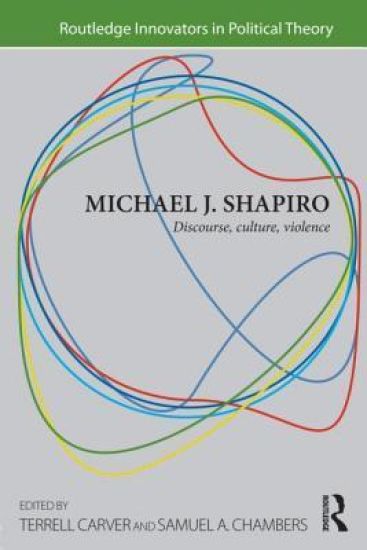
Michael J. Shapiro
Michael J. Shapiro’s writings have been innovatory with respect to the phenomena he has taken to be political, and the concomitant array of methods that he has brilliantly mastered. This book draws from his vast output of articles, chapters and books to provide a thematic yet integrated account of his boundary-crossing innovations in political theory and masterly contributions to our understanding of methods in the social sciences. The editors have focused on work in three key areas:DiscourseShapiro was one of the first theorists to demonstrate convincingly, and in a manner that has had a long-standing impact on the field, that language is not epiphenomenal to politics. Indeed, he shows that language is constitutive of politics. From his frequently-cited article on metaphor from the early 1980s to recent work on discourse and globalization, Shapiro has shown that politics happens not only with and through the use of language, but within discourse as a material practice.CultureGabriel Almond and Sidney Verba’s (1963) famous work on ‘The Civic Culture’ established a long-held but ultimately counterproductive relationship between culture and politics, one in which culture is an independent variable that has effects on politics. Samuel Huntington’s (1998) (in)famous polemic, ‘The Clash of Civilizations’, only pushes this relationship to its breaking point. Shapiro’s rich and numerous writings on culture provide a powerful and important antidote to this approach, as Shapiro consistently shows (across wide-ranging contexts) that politics is in culture and culture is in politics, and no politically salient approach to culture can afford to turn either term into a causal variable.ViolenceWhile violence is surely not a theme foreign to political studies, no one has done more or better work in contemporary political theory to bring violence into play as a central term of political thought and to expand our understanding of violence. By reconceptualizing and reinterpreting this term, Shapiro’s work has helped us to rethink the very boundaries between political theory and international relations as putatively separate subfields of political science. And it explains why both political theorists interested in International Relations and International Relations scholars concerned with a broader understanding of international politics must both start with Shapiro’s work as required reading.
Michael J. Shapiro
Michael J. Shapiro’s writings have been innovatory with respect to the phenomena he has taken to be political, and the concomitant array of methods that he has brilliantly mastered. This book draws from his vast output of articles, chapters and books to provide a thematic yet integrated account of his boundary-crossing innovations in political theory and masterly contributions to our understanding of methods in the social sciences. The editors have focused on work in three key areas:DiscourseShapiro was one of the first theorists to demonstrate convincingly, and in a manner that has had a long-standing impact on the field, that language is not epiphenomenal to politics. Indeed, he shows that language is constitutive of politics. From his frequently-cited article on metaphor from the early 1980s to recent work on discourse and globalization, Shapiro has shown that politics happens not only with and through the use of language, but within discourse as a material practice.CultureGabriel Almond and Sidney Verba’s (1963) famous work on ‘The Civic Culture’ established a long-held but ultimately counterproductive relationship between culture and politics, one in which culture is an independent variable that has effects on politics. Samuel Huntington’s (1998) (in)famous polemic, ‘The Clash of Civilizations’, only pushes this relationship to its breaking point. Shapiro’s rich and numerous writings on culture provide a powerful and important antidote to this approach, as Shapiro consistently shows (across wide-ranging contexts) that politics is in culture and culture is in politics, and no politically salient approach to culture can afford to turn either term into a causal variable.ViolenceWhile violence is surely not a theme foreign to political studies, no one has done more or better work in contemporary political theory to bring violence into play as a central term of political thought and to expand our understanding of violence. By reconceptualizing and reinterpreting this term, Shapiro’s work has helped us to rethink the very boundaries between political theory and international relations as putatively separate subfields of political science. And it explains why both political theorists interested in International Relations and International Relations scholars concerned with a broader understanding of international politics must both start with Shapiro’s work as required reading.
Michael J. Fox: A Little Golden Book Biography

Michael J. Fox: A Little Golden Book Biography

Lori Haskins Houran

RANDOM HOUSE USA INC
2025
sidottu
Get inspired by Michael J. Fox, the beloved Back to the Future actor from Canada who is helping people all around the world, with this collectible Little Golden Book featuring full-color illustrations on every page Michael moved to California--1,300 miles away from home--to be a Hollywood star Actor Michael J. Fox is known for playing Alex P. Keaton on TV's Family Ties and Marty McFly in the Back to the Future movies. The talented actor became a determined activist after being diagnosed with Parkinson's Disease and starting a foundation to help find a cure. Michael J. Fox: A Little Golden Book Biography will inspire readers of all ages. Look for more Little Golden Book biographies: - Bruce Springsteen- Dwayne Johnson- Steve Martin- Zendaya- Harry Styles
A COWBOY CHRISTMAS Michael J. Moore

A COWBOY CHRISTMAS Michael J. Moore

Michael J Moore

IngramSpark
2023
pokkari
Sue Stevens is in need of change in more ways than one As a top Travel Writer/Blogger, her Christmas articles have become stale and predictable. So she commits herself to changing from her usual fare, deciding to write about how cowboys celebrate Christmas. Spending time with cowboys and their horses as she does her research on a ranch in Montana, she quickly becomes comfortable with her surroundings, finding a calmness that's been missing in her life. She also finds there is far more than meets the eye to the ranch's ruggedly handsome philanthropic owner, who has an intriguing and, at times, sad past. Along the way, Sue fondly remembers past dreams she thought were long buried and forgotten as they happily resurface and point her towards a more rewarding future, one that could include love. But first, a surprise awaits all involved.