Kirjojen hintavertailu. Mukana 11 342 296 kirjaa ja 12 kauppaa.

Kirjahaku

Etsi kirjoja tekijän nimen, kirjan nimen tai ISBN:n perusteella.

1000 tulosta hakusanalla Michael J. Burke

Applied Ergonomics Handbook

Applied Ergonomics Handbook

Michael J. Burke

CRC Press Inc
1991
sidottu
Applied Ergonomics Handbook is a procedural guide that includes forms, protocols, and "real life" suggestions for preventing musculoskeletal trauma in the workplace. The book is based on the results of years of job site analysis experience using various techniques to find out which procedures are least cumbersome, most practical, and still remain objective. The book's step-by-step format lends itself to selecting the procedures, forms, and advice that are most appropriate to a wide array of groups. Readers can use the techniques presented as is or customize them to fit their personal or professional philosophies. Applied Ergonomics Handbook is perfect for health and safety professionals, physical therapists, occupational therapists, occupational health nurses and physicians, occupational health center directors, industrial hygienists and engineers, ergonomists, human factors professionals, insurance risk managers, and human resource administrators.

Ergonomics Analysis and Problem Solving Manual
Ergonomics Analysis and Problem Solving is a powerful software tool that helps you streamline the process of producing a comprehensive ergonomics analysis. The program was designed around the three major steps involved in the ergonomics analysis process, which include arriving at a concise job description in a task format, identifying specific ergonomic hazards, and examining possible interventions in a logical and orderly manner.
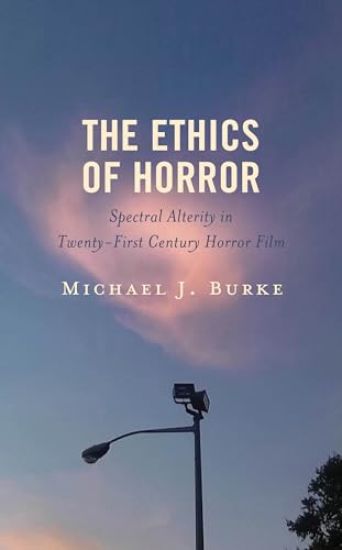
The Ethics of Horror

The Ethics of Horror

Michael J. Burke

BLOOMSBURY PUBLISHING PLC
2024
sidottu
The Ethics of Horror: Spectral Alterity in Twenty-First Century Horror Film examines the theme of spectral haunting in contemporary American horror cinema through the lens of ethical responsibility. Arguing that moral obligation can manifest as terror to the complacent self, the text extracts this dimension of ethics in twenty-first century horror films. Drawing on the ethical theories of Emmanuel Levinas and Jacques Derrida, which posit the asymmetrical obligation of the self to the other, Michael Burke highlights how recent horror films portray spectral antagonists as ethical others that hound protagonists and summon them to an accountability that they can neither evade nor ever completely fulfill. Burke observes the resulting destabilization of notions of ethical responsibility and justice in a variety of contemporary horror subgenres, including technohorror, haunted house and zombie films.
A Workplace Safety Approach to Good Health

A Workplace Safety Approach to Good Health

Michael J. Burke

Springer International Publishing AG
2025
sidottu
This book presents the latest behavioral research findings on workplace safety to assist practitioners and policymakers in achieving and maintaining good health for all workers. It delves into a wide range of topics such as experiential learning, individual and team safety training, safety climate, and safety leadership to discuss how to achieve specific targets associated with the United Nations Sustainable Development Goal of Good Health and Well-Being (SDG 3). A distinctive feature is the thorough coverage of safety research findings applicable to organizations in high-income and low- to middle-income countries, where work-related accidents, diseases, and mortality rates are often considerably higher. A timely reflection on the global applicability of advances in behavioral safety research, this book is a useful source for practitioners, policymakers, graduate students, and researchers alike in management, occupational safety, occupational health psychology, and various fields in engineering, public health, and medicine.
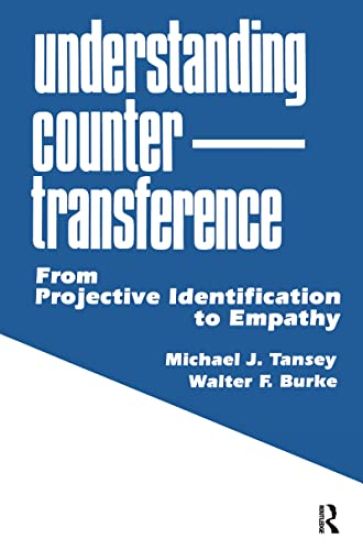
Understanding Countertransference

Understanding Countertransference

Michael J. Tansey; Walter F. Burke

Analytic Press,U.S.
1995
nidottu
Seeking to mediate between the "classical" view of countertransference as a neurotic impediment to the treatment process and the more recent "totalist" perspective, which assumes that the therapist's emotional response necessarily reveals something about the patient, Tansey and Burke stake out a thoughtful middle ground. They submit that the therapist's utilization of adequately processed countertransference reactions is in fact integral to treatment success, while arguing against the totalist assumption that the therapist's emotional to the patient must be revelatory in a direct and immediate way.
Understanding Countertransference

Understanding Countertransference

Michael J. Tansey; Walter F. Burke

Routledge
2016
sidottu
Seeking to mediate between the "classical" view of countertransference as a neurotic impediment to the treatment process and the more recent "totalist" perspective, which assumes that the therapist's emotional response necessarily reveals something about the patient, Tansey and Burke stake out a thoughtful middle ground. They submit that the therapist's utilization of adequately processed countertransference reactions is in fact integral to treatment success, while arguing against the totalist assumption that the therapist's emotional to the patient must be revelatory in a direct and immediate way.
Unexplained Fever

Unexplained Fever

Benedict Isaac; Serge Kernbaum; Michael J. Burke

CRC Press Inc
1990
sidottu
This book covers pathophysiology of fever, the general approach to the febrile patient, and offers a systematic, in-depth discussion regarding the differential diagnosis of unexplained fever. The authors define an unexplained fever as a fever which lasts a minimum of 14 days and whose etiology is not known. This one-of-a-kind publication highlights the main causes of fever, specifically infectious diseases, cancer, connective tissue diseases, various rare disorders, plus etiologies which are often ignored. Also, laboratory and medical imaging techniques for diagnosing fevers are included. Written in a comprehensive, unrepetitious style, this "must-have" resource includes such aspects as the history of the fever, a review of published cases, the approach to the patient, and an analytical review. This up-to-date volume is an indispensable guide that should be read by physicians, surgeons, internists, microbiologists and other medical professionals.
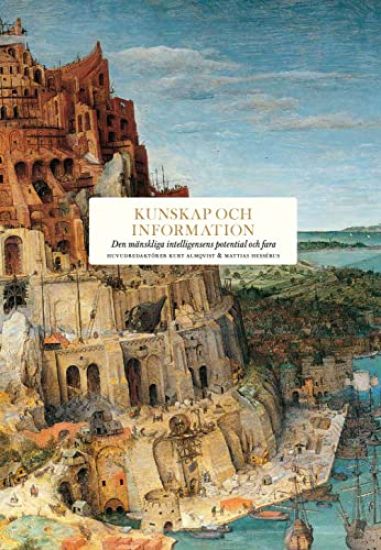
Kunskap och information : den mänskliga intelligensen potential och fara

Kunskap och information : den mänskliga intelligensen potential och fara

Mark Pagel; Mark Plotkin; John Hemming; Jessica Frazier; Richard Miles; Erica Benner; Peter Burke; Nathan Shachar; Suzana Herculano-Houzel; Mariano Sigman; Martin Ingvar; Michael Goodman; Gill Bennett; Simon Mayall; Maria Borelius; Andrew Keen; Nicholas Carr; Peter Frankopan; Christopher Coker; Janne Haaland Matláry; Elisabeth Kendall; Clarie Lehmann; David Goodhart; Brendan O´Neill; Fraser Nelson; Iain Martin; Adrian Wooldridge; S.J. M. Antoni J. Ucerler

Bokförlaget Stolpe
2021
sidottu
Vi har kommit långt från de religioner, myter och grundarberättelser som lade grunden till människans tidiga förståelse av världen och allting i den, och våra kunskaper har på senare tid ökat exponentiellt. I den här boken diskuterar ledande forskare inom konst och vetenskap hur kunskap och information har bevarats och förmedlats i historien, vilket leder oss fram till dagens digitala tidsålder och de många utmaningar som den ställer oss inför, inte minst beträffande våra persondata. Kommer vårt informationssamhälle, under växande spänning mellan en kunskapselit och dem som känner sig utestängda från offentlig diskussion och beslutsfattande, liksom under ökad friktion om tolkningsfrihet och yttrandefrihet i den akademiska världen, att bli en upplysningstid eller går vi in i en ny mörk tid för kunskapen? Texterna i den här illustrerade antologin härrör från det internationellt välrenommerade Engelsbergsseminariet 2018. Huvudredaktörer är Kurt Almqvist och Mattias Hessérus.
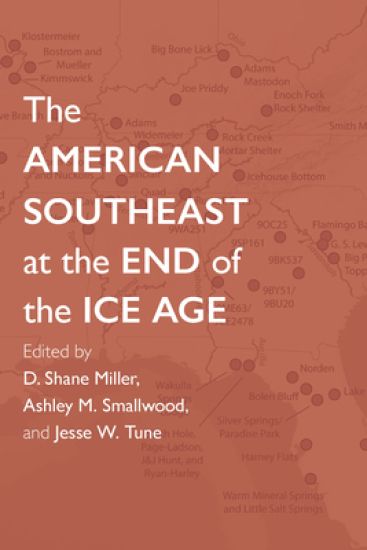
The American Southeast at the End of the Ice Age

The American Southeast at the End of the Ice Age

David G. Anderson; Derek T. Anderson; Katherine McMillan Barry; Kara Bridgman Sweeney; Samuel O. Brookes; Adam M. Burke; Stephen B. Carmody; Philip J. Carr; William A. Childress; I. Randolph Daniel; Ryan Duggins; Grayal E. Farr; Michael K. Faught; Brendan Fenerty; Jay D. Franklin; Lauren M. Franklin; J. Christopher Gillam; Joseph A. M. Gingerich; Jessi J. Halligan; Kandace D. Hollenbach; Vance T. Holliday; Thomas A. Jennings; K. C. Jones; Shawn A. Joy; Jerald Ledbetter; Greg J. Maggard; Steven M. Meredith; D. Shane Miller

THE UNIVERSITY OF ALABAMA PRESS
2022
sidottu
The definitive book on what is known about the Late Pleistocene and Early Holocene archaeological record in the Southeast The 1996 benchmark volume The Paleoindian and Early Archaic Southeast, edited by David G. Anderson and Kenneth E. Sassaman, was the first study to summarize what was known of the peoples who lived in the Southeast when ice sheets covered the northern part of the continent and mammals such as mammoths, saber-toothed cats, and ground sloths roamed the landscape.The American Southeast at the End of the Ice Age provides an updated, definitive synthesis of current archaeological research gleaned from an array of experts in the region. It is organized in three parts: state records, the regional perspective, and reflections and future directions. Chapters survey a diversity of topics including the distribution of the earliest archaeological sites in the region, chipped-stone tool technology, the expanding role of submerged archaeology, hunter-gatherer lifeways, past climate changes and the extinction of megafauna on the transitional landscape, and evidence of demographic changes at the end of the Ice Age. Discussion of the ethical responsibilities regarding the use of private collections and the relationship of archaeologists and the avocational community, insight from outside the Southeast, and considerations for future research round out the volume.
Deprivation-Specific Psychological Patterns

Deprivation-Specific Psychological Patterns

Michael J. Rutter; Edmund J. Sonuga-Barke; Celia Beckett; Jennifer Castle; Jana Kreppner; Robert Kumsta; Wolff Schlotz; Suzanne Stevens; Christopher A. Bell

Wiley-Blackwell (an imprint of John Wiley Sons Ltd)
2010
nidottu
The English and Romanian Adoptees (ERA) study constituted an invaluable "natural experiment" in which there was a rapid, easily-timed transition from a profoundly depriving environment in Romanian institutions to generally well-functioning adoptive families in England. Multimodal methods of assessment were used throughout the assessments at 4, 6, 11, and 15 years of age. Four key findings were particularly striking. First, institutional deprivation was associated with an apparently deprivation-specific pattern of combinations of quasiautism, disinhibited attachment, cognitive impairment, and inattention/overactivity. Second, longitudinal growth curves showed a relative deceleration of growth between 11 and 15 years (possibly due to early puberty). Third, institutional deprivation without subnutrition was associated with a major impairment in head growth. Fourth, the effects of institutional deprivation were as strong at 15 years as they had been earlier in childhood.
Civil Liberties and the Constitution

Civil Liberties and the Constitution

Lucius J Barker; Combs Michael; Lyles Kevin; Jr. Perry; Barker Twiley

Routledge Member of the Taylor and Francis Group
2010
nidottu
Updated in a new 9th edition, this casebook explores civil liberty problems through a study of leading judicial decisions. It offers a reasonable sample of cases across a broad spectrum of rights and liberties. This book introduces groups of featured cases with in-depth commentaries that set the specific historical-legal context of which they are a part, allowing readers to examine significant portions of court opinions, including major arguments from majority, concurring, and dissenting opinions.
Becoming Metropolitan

Becoming Metropolitan

Peter J. Taylor; Michael Barke; Zachary P. Neal

TAYLOR FRANCIS LTD
2026
sidottu
Using a unique data-rich study of Newcastle’s becoming of a metropolitan city-region in the 19th century, this book explores a new understanding of how successful cities attain a metropolitan status through disruptions of incessant economic advances being ameliorated by myriad social organizations to create a new vibrant urban environment. The book defines the specific process of ‘becoming metropolitan’ by bringing together economic and social urban studies to explain an interactive development that when successful, creates a metropolitan city region. In addition, a real example of this is meticulously described through a detailed case study that traces the process across decades to a metropolitan outcome. In doing so, it combines theoretical and empirical understandings within a single text and providing accessible information to a unique and large data set. Becoming Metropolitan will appeal to graduates and researchers of Geography, Sociology, Planning and History specializing in cities and urban studies. It will also be valuable to a larger public audience with interest in cities, as ‘metropolitan’ is a commonplace idea easily understood, and in the case-study city.
Of the Flesh

Of the Flesh

Susan Barker; J K Chukwu; Bridget Collins; Michel Faber; Lewis Hancox; Emilia Hart; Ainslie Hogarth; Robert Lautner; Adorah Nworah; Lucy Rose; James Smythe; Lavie Tidhar; Francine Toon; Evie Wyld; Louisa Young; et al

HARPERCOLLINS PUBLISHERS
2025
nidottu
'Outstandingly weird and memorable' GUARDIAN 'Deliciously creepy' NEW SCIENTIST Fear never dies… These stories from eighteen master storytellers will curdle your blood, haunt your dreams and redefine terror. From a hungry young woman who is not what she seems, to a boy who has taken his mother's advice a little too seriously; from disfigured girls willing to pay any price to fit in, to an immigrant who cannot escape his tormentor in his new home country; from a new home with a sinister secret, to the discovery that a long-dead parent’s corpse is perfectly preserved decades later; this collection plumbs the depths of the psyche and dredges up some very modern horrors.
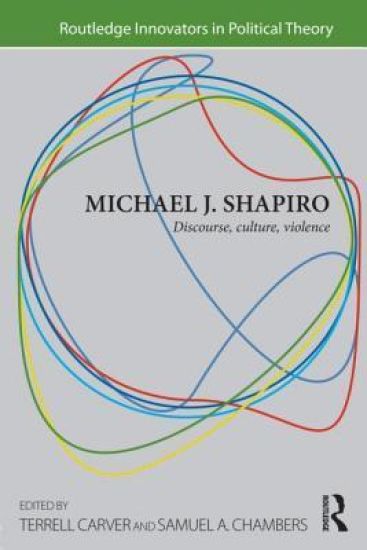
Michael J. Shapiro
Michael J. Shapiro’s writings have been innovatory with respect to the phenomena he has taken to be political, and the concomitant array of methods that he has brilliantly mastered. This book draws from his vast output of articles, chapters and books to provide a thematic yet integrated account of his boundary-crossing innovations in political theory and masterly contributions to our understanding of methods in the social sciences. The editors have focused on work in three key areas:DiscourseShapiro was one of the first theorists to demonstrate convincingly, and in a manner that has had a long-standing impact on the field, that language is not epiphenomenal to politics. Indeed, he shows that language is constitutive of politics. From his frequently-cited article on metaphor from the early 1980s to recent work on discourse and globalization, Shapiro has shown that politics happens not only with and through the use of language, but within discourse as a material practice.CultureGabriel Almond and Sidney Verba’s (1963) famous work on ‘The Civic Culture’ established a long-held but ultimately counterproductive relationship between culture and politics, one in which culture is an independent variable that has effects on politics. Samuel Huntington’s (1998) (in)famous polemic, ‘The Clash of Civilizations’, only pushes this relationship to its breaking point. Shapiro’s rich and numerous writings on culture provide a powerful and important antidote to this approach, as Shapiro consistently shows (across wide-ranging contexts) that politics is in culture and culture is in politics, and no politically salient approach to culture can afford to turn either term into a causal variable.ViolenceWhile violence is surely not a theme foreign to political studies, no one has done more or better work in contemporary political theory to bring violence into play as a central term of political thought and to expand our understanding of violence. By reconceptualizing and reinterpreting this term, Shapiro’s work has helped us to rethink the very boundaries between political theory and international relations as putatively separate subfields of political science. And it explains why both political theorists interested in International Relations and International Relations scholars concerned with a broader understanding of international politics must both start with Shapiro’s work as required reading.
Michael J. Shapiro
Michael J. Shapiro’s writings have been innovatory with respect to the phenomena he has taken to be political, and the concomitant array of methods that he has brilliantly mastered. This book draws from his vast output of articles, chapters and books to provide a thematic yet integrated account of his boundary-crossing innovations in political theory and masterly contributions to our understanding of methods in the social sciences. The editors have focused on work in three key areas:DiscourseShapiro was one of the first theorists to demonstrate convincingly, and in a manner that has had a long-standing impact on the field, that language is not epiphenomenal to politics. Indeed, he shows that language is constitutive of politics. From his frequently-cited article on metaphor from the early 1980s to recent work on discourse and globalization, Shapiro has shown that politics happens not only with and through the use of language, but within discourse as a material practice.CultureGabriel Almond and Sidney Verba’s (1963) famous work on ‘The Civic Culture’ established a long-held but ultimately counterproductive relationship between culture and politics, one in which culture is an independent variable that has effects on politics. Samuel Huntington’s (1998) (in)famous polemic, ‘The Clash of Civilizations’, only pushes this relationship to its breaking point. Shapiro’s rich and numerous writings on culture provide a powerful and important antidote to this approach, as Shapiro consistently shows (across wide-ranging contexts) that politics is in culture and culture is in politics, and no politically salient approach to culture can afford to turn either term into a causal variable.ViolenceWhile violence is surely not a theme foreign to political studies, no one has done more or better work in contemporary political theory to bring violence into play as a central term of political thought and to expand our understanding of violence. By reconceptualizing and reinterpreting this term, Shapiro’s work has helped us to rethink the very boundaries between political theory and international relations as putatively separate subfields of political science. And it explains why both political theorists interested in International Relations and International Relations scholars concerned with a broader understanding of international politics must both start with Shapiro’s work as required reading.
Michael J. Fox: A Little Golden Book Biography

Michael J. Fox: A Little Golden Book Biography

Lori Haskins Houran

RANDOM HOUSE USA INC
2025
sidottu
Get inspired by Michael J. Fox, the beloved Back to the Future actor from Canada who is helping people all around the world, with this collectible Little Golden Book featuring full-color illustrations on every page Michael moved to California--1,300 miles away from home--to be a Hollywood star Actor Michael J. Fox is known for playing Alex P. Keaton on TV's Family Ties and Marty McFly in the Back to the Future movies. The talented actor became a determined activist after being diagnosed with Parkinson's Disease and starting a foundation to help find a cure. Michael J. Fox: A Little Golden Book Biography will inspire readers of all ages. Look for more Little Golden Book biographies: - Bruce Springsteen- Dwayne Johnson- Steve Martin- Zendaya- Harry Styles
A COWBOY CHRISTMAS Michael J. Moore

A COWBOY CHRISTMAS Michael J. Moore

Michael J Moore

IngramSpark
2023
pokkari
Sue Stevens is in need of change in more ways than one As a top Travel Writer/Blogger, her Christmas articles have become stale and predictable. So she commits herself to changing from her usual fare, deciding to write about how cowboys celebrate Christmas. Spending time with cowboys and their horses as she does her research on a ranch in Montana, she quickly becomes comfortable with her surroundings, finding a calmness that's been missing in her life. She also finds there is far more than meets the eye to the ranch's ruggedly handsome philanthropic owner, who has an intriguing and, at times, sad past. Along the way, Sue fondly remembers past dreams she thought were long buried and forgotten as they happily resurface and point her towards a more rewarding future, one that could include love. But first, a surprise awaits all involved.