Kirjojen hintavertailu. Mukana 12 390 323 kirjaa ja 12 kauppaa.

Kirjahaku

Etsi kirjoja tekijän nimen, kirjan nimen tai ISBN:n perusteella.

1000 tulosta hakusanalla Michael J. Kruger

Miniature Codices in Early Christianity

Miniature Codices in Early Christianity

Michael J. Kruger

Oxford University Press
2025
sidottu
While there has been renewed scholarly interest in paratextual features of early Christian manuscripts, that interest has rarely extended to the size of manuscripts, particularly the format known as the miniature codex. Such neglect is surprising given that this miniature format was a notable part of early Christian textual culture, emerging as early as the second century and visible well into the seventh century and beyond. So established was this format among Christians during this period, that C.H. Roberts once surmised (incorrectly) that, "The miniature codex would seem to be a Christian invention." Many of these tiny books were elegant, well-crafted, and could contain a surprising number of pages. Currently, we have over 60 such codices, which contain a wide range of Christian literature including New Testament books, patristic and non-canonical writings (e.g., the Didache, Acts of Paul, and apocryphal gospels), and even liturgical-ritual texts. This volume is the first full-length monograph on the phenomenon of the miniature codex, offering a framework for distinguishing miniature codices from other tiny texts (e.g. amulets), exploring their practical and iconic functions, and, perhaps most importantly, assembling a detailed catalogue of all known Christian and Greek miniature codices. This distinctive book format provides an essential window into the textual, literary, and visual culture of early Christianity, shedding fresh light on how and why Christians were considered people of the book.
Christianity at the Crossroads

Christianity at the Crossroads

Michael J. Kruger

SPCK Publishing
2017
nidottu
It is the second century. Everyone who knew Jesus is now dead. Christianity has begun to spread, but there are serious threats to its survival. Christianity at the Crossroads examines the crucial issues that faced the second-century Church – a period often neglected or overlooked in other studies. It was during this period that the fledgling Church struggled to work out its identity and stay true to the vision of Christ and the apostles. Threatened by divisive controversies from within and fierce persecution from without, the Church’s response to these and other issues not only determined its survival; it was to shape the beliefs, values and lives of millions of Christians throughout the world over the next two millennia.
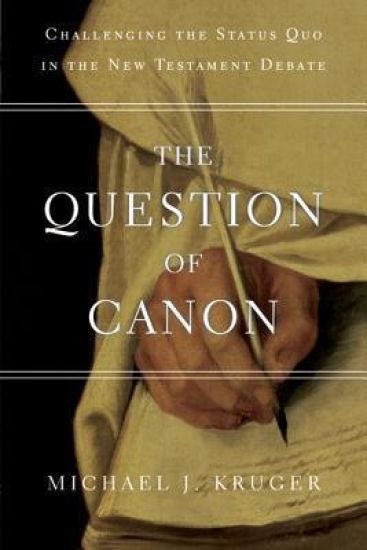
The Question of Canon

The Question of Canon

Michael J. Kruger

INTERVARSITY PRESS
2013
nidottu
Preaching Survey of the Year's Best Books for PreachersPreaching's Preacher's Guide to the Best Bible ReferenceDid the New Testament canon arise naturally from within the early Christian faith? Were the books written as Scripture, or did they become Scripture by a decision of the second-century church?Why did early Christians have a canon at all?These are the types of questions that led Michael J. Kruger to pick apart modern scholarship's dominant view that the New Testament is a late creation of the church imposed on books originally written for another purpose. Calling into question this commonly held "extrinsic" view, Kruger here tackles the five most prevalent objections to the classic understanding of a quickly emerging, self-authenticating collection of authoritative scriptures.Already a noted author on the subject of the New Testament canon, Kruger addresses foundational and paradigmatic assumptions of the extrinsic model as he provides powerful rebuttals and further support for the classic, "intrinsic" view. This framework recognizes the canon as the product of internal forces evolving out of the historical essence of Christianity, not a development retroactively imposed by the church upon books written hundreds of years before.Unlike many books written on the emergence of the New Testament canon that ask "when?" or "how?" Kruger focuses this work on the "why?"--exposing weaknesses in the five major tenets of the extrinsic model as he goes. While The Question of Canon scrutinizes today's popular scholastic view, it also offers an alternative concept to lay a better empirical foundation for biblical canon studies.
Christianity at the Crossroads

Christianity at the Crossroads

Michael J. Kruger

IVP Academic
2018
nidottu
The Gospel Coalition Book of the YearBiblical Foundations Award WinnerChristianity in the twenty-first century is a global phenomenon. But in the second century, its future was not at all certain.Initially Christianity possessed little social or cultural influence and found itself fighting for its life. While apostolic tradition was emerging as a "rule of faith," factions contested the nature of the gospel, and pagan philosophers found its claims scandalous. And while its pathway was tenuous, Christianity was forming structures of leadership and worship, and a core of apostolic texts was emerging as authoritative. But it was the challenges, obstacles, and transitions faced by Christians in the second century that, in many ways, would determine the future of the church for the next two millennia. It was a time when Christianity stood at a crossroads.Michael Kruger's introductory survey examines how Christianity took root in the second century, how it battled to stay true to the vision of the apostles, and how it developed in ways that would shape both the church and Western culture over the next two thousand years. Christianity at the Crossroads provides an accessible and informative look at the complex and foundational issues faced by an infant church still trying to determine its identity. The church's response to the issues of heresy and orthodoxy, the development of the canon, and the transmission of the Christian Scriptures not only determined its survival, but determined the kind of church it would be for generations to come.
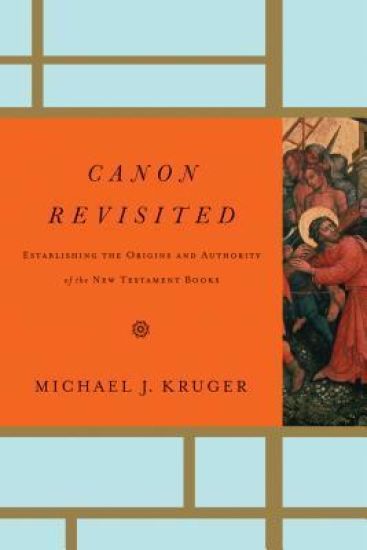
Canon Revisited

Canon Revisited

Michael J. Kruger

Crossway Books
2012
sidottu
This study of the New Testament canon and its authority looks deeper than the traditional surveys of councils and creeds, mining the biblical text itself for direction in understanding what the original authors and audiences believed the canon to be. Canon Revisited distinguishes itself by placing a substantial focus on the theology of canon as the context within which the historical evidence is evaluated and assessed. In effect, this work successfully unites both the theology and the historical development of the canon, ultimately serving as a practical defense for the authority of the New Testament books.
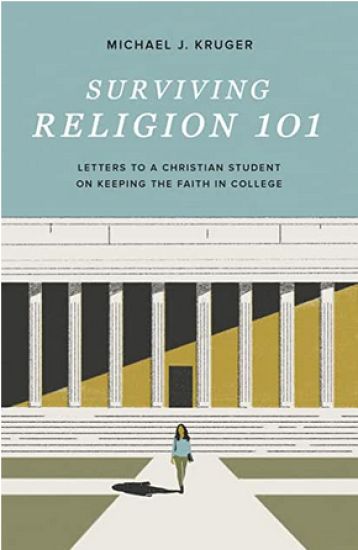
Surviving Religion 101

Surviving Religion 101

Michael J. Kruger

Crossway Books
2021
pokkari
“I can’t imagine a college student—skeptic, doubter, Christian, struggler—who wouldn’t benefit from this book.” —Kevin DeYoung For many young adults, the college years are an exciting period of self discovery full of new relationships, new independence, and new experiences. Yet college can also be a time of personal testing and intense questioning— especially for Christian students confronted with various challenges to Christianity and the Bible for the first time. Drawing on years of experience as a biblical scholar, Michael Kruger addresses common objections to the Christian faith—the exclusivity of Christianity, Christian intolerance, homosexuality, hell, the problem of evil, science, miracles, and the reliability of the Bible. If you’re a student dealing with doubt or wrestling with objections to Christianity from fellow students and professors alike, this book will equip you to engage secular challenges with intellectual honesty, compassion, and confidence—and ultimately graduate college with your faith intact.
The Good News Family Devotional: 52 Weeks Through the Gospel of Mark

The Good News Family Devotional: 52 Weeks Through the Gospel of Mark

Michael J. Kruger; Melissa B. Kruger

Harvest House Publishers
2026
sidottu
Lead Your Family Through the Gospel of Mark If you are like most parents, you may struggle to find the time to read the Bible for yourself, much less the time to instruct and train your children. That's exactly why Michael and Melissa Kruger wrote The Good News Family Devotional. For each chapter in this 52-week journey through Jesus's life, you'll read a devotion written specifically for moms and dads, preparing you for your family discussion while encouraging your own study of Scripture. Then, you'll find a clear, customizable guide for walking your children through this passage, along with specific questions for both younger and older children to engage the whole family a one-sentence Big Idea for the Week that will aid your children's memory and retention of key themes a family application question and closing prayer to help bring Christ's teachings into your daily life together Written for ordinary families with full schedules, this flexible, Christ-centered guide will help you engage your children with consistency and purpose. Let your hearts be refreshed each day as you meditate on the life and ministry of Jesus together.
Footsie & Lunko Discover a Princess

Footsie & Lunko Discover a Princess

Michael J. Kruger Ed D.

Michael J. Kruger
2016
nidottu
The Miller family and their magical socks, Footsie and Lunko, return in this delightful story that follows the celebration of James' costume birthday party. James' loves martial arts and so does his friend, Lauren, but everyone is surprised when she comes to the party as a beautiful princess Footsie and Lunko are excited seeing a princess for the first time and the Miller children come to learn that everyone can grow up to be whoever they want to be, as long they're willing to work hard and dream along the way. Profits from the sale of this book will be used to support our wounded warriors. To meet Footsie and Lunko, visit them at www.FootsieandLunko.com
Welcome to Our Neighborhood: A Combat Hero Shares His Story

Welcome to Our Neighborhood: A Combat Hero Shares His Story

Michael J. Kruger Ed D.

Createspace Independent Publishing Platform
2017
nidottu
Readers will follow the Millers greeting their new neighbors, the Beatty family, whose father is a combat hero. The Millers invite the Beattys to a barbecue and introduce them to the neighborhood. Readers will learn about a combat hero's sacrifice and recovery, the support provided to him and his family by a Fisher House, and the honor and respect given to him and his family by their new neighbors. Recommended for children ages 6 through 9.
Bully Pulpit

Bully Pulpit

Michael J Kruger

ZONDERVAN
2023
sidottu
Are churches looking for the wrong kind of leaders? The last decade has witnessed a rising number of churches wrecked by spiritual abuse--harsh, heavy-handed, domineering behavior from those in a position of spiritual authority. And high-profile cases are only a small portion of this widespread problem. Behind the scenes are many more cases of spiritual abuse that we will never hear about. Victims suffer in silence, not knowing where to turn.Of course, most pastors and leaders are godly, wonderful people who don't abuse their sheep. They shepherd their flocks gently and patiently. But we can't ignore the growing number who do not. We have tolerated and even celebrated the kind of leaders Jesus warned us against.We need gentle shepherds now more than ever, and in Bully Pulpit, seminary president and biblical scholar Michael J. Kruger offers a unique perspective for both church leaders and church members on the problem of spiritual abuse, how to spot it, and how to handle it in the church."Every Christian from pulpit to pew needs to read this wise and timely work."- Karen Swallow Prior"Both urgent and timely."- Sam Storms"Thoughtful, wise, and biblical."- Mark Vroegop
The Question of Canon

The Question of Canon

Michael J Kruger

Apollos
2013
nidottu
For many years now, the topic of the New Testament canon has been the main focus of my research and writing. It is an exciting field of study that probes into questions that have long fascinated both scholars and laymen alike, namely when and how these 27 books came to be regarded as a new scriptural deposit. But, the story of the New Testament canon is bigger than just the "when" and the "how". It is also, and perhaps most fundamentally, about the "why". Why did Christians have a canon at all? Does the canon exist because of some later decision or action of the second- or third-century church? Or did it arise more naturally from within the early Christian faith itself? Was the canon an extrinsic phenomenon, or an intrinsic one? These are the questions this book is designed to address. And these are not micro questions, but macro ones. They address foundational and paradigmatic issues about the way we view the canon. They force us to consider the larger framework through which we conduct our research - whether we realized we had such a framework or not. Of course, we are not the first to ask such questions about why we have a canon. Indeed, for many scholars this question has already been settled. The dominant view today, as we shall see below, is that the New Testament is an extrinsic phenomenon; a later ecclesiastical development imposed on books originally written for another purpose. This is the framework through which much of modern scholarship operates. And it is the goal of this volume to ask whether it is a compelling one. To be sure, it is no easy task challenging the status quo in any academic field. But, we should not be afraid to ask tough questions. Likewise, the consensus position should not be afraid for them to be asked.
The Ten Commandments of Progressive Christianity
A cautionary look at ten dangerously appealing half-truths.In 1923, J. Gresham Machen, then a professor at Princeton Seminary, wrote his classic text, Christianity and Liberalism. The book was a response to the rise of liberalism in the mainline denominations of his own day. Machen argued that the liberal understanding of Christianity was, in fact, not just a variant version of the faith, nor did it represent simply a different denominational perspective, but was an entirely different religion. Put simply, liberal Christianity is not Christianity.What is remarkable about Machen's book is how prescient it was. His description of liberal Christianity--a moralistic, therapeutic version of the faith that values questions over answers and being "good" over being "right"--is still around today in basically the same form. For this reason alone the book should be required reading, certainly for all seminary students, pastors, and Christian leaders.Although its modern advocates present liberal Christianity as something new and revolutionary, it is nothing of the sort. It may have new names (e.g., "emerging" or "progressive" Christianity), but it is simply a rehash of the same well-worn system that has been around for generations.The abiding presence of liberal Christianity struck me not long ago when I came across a daily devotional from Richard Rohr that listed ten principles he thinks modern Christianity needs to embody. These ten principles are actually drawn from Philip Gulley's book, If the Church Were Christian: Rediscovering the Values of Jesus. In that devotional series, ironically titled "Returning to Essentials," Rohr sets forth the ten principles as a kind of confessional statement of modern liberalism (while at the same time pretending to deplore confessional statements). They are, in effect, a Ten Commandments for progressive Christianity.Indeed, these ten sound like they were gathered not so much on the mountaintop as in the university classroom. They are less about God revealing his desires and more about man expressing his own--less Moses, more Oprah. But take note: each of these commandments is partially true. Indeed, that is what makes this list, and progressive Christianity as a whole, so challenging. It is a master class in half-truths that sound appealing on the surface until you dig down deeper and really explore their foundations and implications. Benjamin Franklin was right when he quipped, "Half the truth is often a great lie."In these ten short chapters we will diagnose and critique each of these tenets, offering a biblical and theological response to each, and dipping occasionally into Machen's classic volume. If the church is going to hold fast to "the faith that was once for all delivered to the saints" (Jude 3), then we must be able to distinguish the true faith from those things that masquerade as the true faith.My hope and prayer is that this brief volume will make that vital task just a little bit easier.
The Heresy of Orthodoxy

The Heresy of Orthodoxy

Andreas J. Köstenberger; Michael J. Kruger; I. Howard Marshall

Crossway Books
2010
pokkari
Beginning with Walter Bauer in 1934, the denial of clear orthodoxy in early Christianity has shaped and largely defined modern New Testament criticism, recently given new life through the work of spokesmen like Bart Ehrman. Spreading from academia into mainstream media, the suggestion that diversity of doctrine in the early church led to many competing orthodoxies is indicative of today's postmodern relativism. Authors Köstenberger and Kruger engage Ehrman and others in this polemic against a dogged adherence to popular ideals of diversity.Köstenberger and Kruger's accessible and careful scholarship not only counters the "Bauer Thesis" using its own terms, but also engages overlooked evidence from the New Testament. Their conclusions are drawn from analysis of the evidence of unity in the New Testament, the formation and closing of the canon, and the methodology and integrity of the recording and distribution of religious texts within the early church.
Michael J. Shapiro
Michael J. Shapiro’s writings have been innovatory with respect to the phenomena he has taken to be political, and the concomitant array of methods that he has brilliantly mastered. This book draws from his vast output of articles, chapters and books to provide a thematic yet integrated account of his boundary-crossing innovations in political theory and masterly contributions to our understanding of methods in the social sciences. The editors have focused on work in three key areas:DiscourseShapiro was one of the first theorists to demonstrate convincingly, and in a manner that has had a long-standing impact on the field, that language is not epiphenomenal to politics. Indeed, he shows that language is constitutive of politics. From his frequently-cited article on metaphor from the early 1980s to recent work on discourse and globalization, Shapiro has shown that politics happens not only with and through the use of language, but within discourse as a material practice.CultureGabriel Almond and Sidney Verba’s (1963) famous work on ‘The Civic Culture’ established a long-held but ultimately counterproductive relationship between culture and politics, one in which culture is an independent variable that has effects on politics. Samuel Huntington’s (1998) (in)famous polemic, ‘The Clash of Civilizations’, only pushes this relationship to its breaking point. Shapiro’s rich and numerous writings on culture provide a powerful and important antidote to this approach, as Shapiro consistently shows (across wide-ranging contexts) that politics is in culture and culture is in politics, and no politically salient approach to culture can afford to turn either term into a causal variable.ViolenceWhile violence is surely not a theme foreign to political studies, no one has done more or better work in contemporary political theory to bring violence into play as a central term of political thought and to expand our understanding of violence. By reconceptualizing and reinterpreting this term, Shapiro’s work has helped us to rethink the very boundaries between political theory and international relations as putatively separate subfields of political science. And it explains why both political theorists interested in International Relations and International Relations scholars concerned with a broader understanding of international politics must both start with Shapiro’s work as required reading.
Michael J. Shapiro
Michael J. Shapiro’s writings have been innovatory with respect to the phenomena he has taken to be political, and the concomitant array of methods that he has brilliantly mastered. This book draws from his vast output of articles, chapters and books to provide a thematic yet integrated account of his boundary-crossing innovations in political theory and masterly contributions to our understanding of methods in the social sciences. The editors have focused on work in three key areas:DiscourseShapiro was one of the first theorists to demonstrate convincingly, and in a manner that has had a long-standing impact on the field, that language is not epiphenomenal to politics. Indeed, he shows that language is constitutive of politics. From his frequently-cited article on metaphor from the early 1980s to recent work on discourse and globalization, Shapiro has shown that politics happens not only with and through the use of language, but within discourse as a material practice.CultureGabriel Almond and Sidney Verba’s (1963) famous work on ‘The Civic Culture’ established a long-held but ultimately counterproductive relationship between culture and politics, one in which culture is an independent variable that has effects on politics. Samuel Huntington’s (1998) (in)famous polemic, ‘The Clash of Civilizations’, only pushes this relationship to its breaking point. Shapiro’s rich and numerous writings on culture provide a powerful and important antidote to this approach, as Shapiro consistently shows (across wide-ranging contexts) that politics is in culture and culture is in politics, and no politically salient approach to culture can afford to turn either term into a causal variable.ViolenceWhile violence is surely not a theme foreign to political studies, no one has done more or better work in contemporary political theory to bring violence into play as a central term of political thought and to expand our understanding of violence. By reconceptualizing and reinterpreting this term, Shapiro’s work has helped us to rethink the very boundaries between political theory and international relations as putatively separate subfields of political science. And it explains why both political theorists interested in International Relations and International Relations scholars concerned with a broader understanding of international politics must both start with Shapiro’s work as required reading.
Michael J. Fox: A Little Golden Book Biography

Michael J. Fox: A Little Golden Book Biography

Lori Haskins Houran

RANDOM HOUSE USA INC
2025
sidottu
Get inspired by Michael J. Fox, the beloved Back to the Future actor from Canada who is helping people all around the world, with this collectible Little Golden Book featuring full-color illustrations on every page Michael moved to California--1,300 miles away from home--to be a Hollywood star Actor Michael J. Fox is known for playing Alex P. Keaton on TV's Family Ties and Marty McFly in the Back to the Future movies. The talented actor became a determined activist after being diagnosed with Parkinson's Disease and starting a foundation to help find a cure. Michael J. Fox: A Little Golden Book Biography will inspire readers of all ages. Look for more Little Golden Book biographies: - Bruce Springsteen- Dwayne Johnson- Steve Martin- Zendaya- Harry Styles