Kirjojen hintavertailu. Mukana 11 627 220 kirjaa ja 12 kauppaa.

Kirjahaku

Etsi kirjoja tekijän nimen, kirjan nimen tai ISBN:n perusteella.

1000 tulosta hakusanalla Michael J. Lannoo

This Land Is Your Land

This Land Is Your Land

Michael J. Lannoo

University of Chicago Press
2018
sidottu
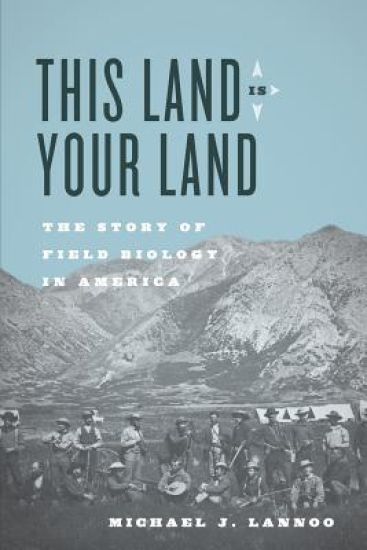
Field biology is enjoying a resurgence due to several factors, the most important being the realization that there is no ecology, no conservation, and no ecosystem restoration without an understanding of the basic relationships between species and their environments—an understanding gleaned only through field-based natural history. With this resurgence, modern field biologists find themselves asking fundamental existential questions such as: Where did we come from? What is our story? Are we part of a larger legacy? In This Land Is Your Land, seasoned field biologist Michael J. Lannoo answers these questions and more in a tale rooted in the people and institutions of the Midwest. It is a story told from the ground up, a rubber boot–based natural history of field biology in America. Lannoo illuminates characters such as John Wesley Powell, William Temple Hornaday, and Olaus and Adolph Murie—homegrown midwestern field biologists who either headed east to populate major research centers or went west to conduct their fieldwork along the frontier. From the pioneering work of Victor Shelford, Henry Chandler Cowles, and Aldo Leopold to contemporary insights from biologists such as Jim Furnish and historians such as William Cronon, Lannoo’s unearthing of American—and particularly midwestern—field biologists reveals how these scientists influenced American ecology, conservation biology, and restoration ecology, and in turn drove global conservation efforts through environmental legislation and land set-asides. This Land Is Your Land reveals the little-known legacy of midwestern field biologists, whose ethos and discoveries have enabled us to preserve and understand not just their land, but all lands.
This Land Is Your Land

This Land Is Your Land

Michael J. Lannoo

University of Chicago Press
2018
nidottu
Field biology is enjoying a resurgence due to several factors, the most important being the realization that there is no ecology, no conservation, and no ecosystem restoration without an understanding of the basic relationships between species and their environments—an understanding gleaned only through field-based natural history. With this resurgence, modern field biologists find themselves asking fundamental existential questions such as: Where did we come from? What is our story? Are we part of a larger legacy? In This Land Is Your Land, seasoned field biologist Michael J. Lannoo answers these questions and more in a tale rooted in the people and institutions of the Midwest. It is a story told from the ground up, a rubber boot–based natural history of field biology in America. Lannoo illuminates characters such as John Wesley Powell, William Temple Hornaday, and Olaus and Adolph Murie—homegrown midwestern field biologists who either headed east to populate major research centers or went west to conduct their fieldwork along the frontier. From the pioneering work of Victor Shelford, Henry Chandler Cowles, and Aldo Leopold to contemporary insights from biologists such as Jim Furnish and historians such as William Cronon, Lannoo’s unearthing of American—and particularly midwestern—field biologists reveals how these scientists influenced American ecology, conservation biology, and restoration ecology, and in turn drove global conservation efforts through environmental legislation and land set-asides. This Land Is Your Land reveals the little-known legacy of midwestern field biologists, whose ethos and discoveries have enabled us to preserve and understand not just their land, but all lands.
Status and Conservation of Midwestern Amphibians

Status and Conservation of Midwestern Amphibians

Michael J. Lannoo

University of Iowa Press
1998
nidottu
In 1990 an international group of biologists, meeting to discuss rumors of declines in the number of amphibians, discovered that amphibian disappearances once thought to be a local problem were not--the problem was global. And, even more disturbing, amphibians were disappearing not just from areas settled by humans but from regions of the world once believed to be pristine. Under the mantle of the Declining Amphibian Populations Task Force, this timely book addresses three fundamental questions for the midwestern United States: are amphibians declining; if so, why; and, if so, what can be done to halt these losses?In the Midwest--defined here as Missouri, Iowa, Illinois, Indiana, Ohio, Minnesota, Wisconsin, and Michigan--there can be no doubt that the number of salamanders and frogs has declined with Euro-American settlement and the conversion to an agriculturally dominated landscape. Habitat loss and landscape fragmentation have been major factors in this decline, as have aquacultural uses of natural wetlands. Bullfrog introductions have eliminated populations of native amphibians, and collecting for the biological supply trade has reduced the number of individuals within many populations. The goal of the forty-two essays in this well-documented, well-illustrated book is to put between two covers all we know now about the status of midwestern amphibians. By doing this, the editor has created a readily accessible historical record for future studies.Organized into sections covering landscape patterns and biogeography, species status, regional and state status, diseases and toxins, conservation, and monitoring and applications, this landmark volume will serve as the foundation for amphibian conservation in the Midwest.
The Iowa Lakeside Laboratory

The Iowa Lakeside Laboratory

Michael J. Lannoo

University of Iowa Press
2012
nidottu
Imagine a place dedicated to the long-term study of nature in nature, a permanent biological field station, a teaching and research laboratory that promotes complete immersion in the natural world. Lakeside Laboratory, founded on the shore of Lake Okoboji in northwestern Iowa in 1909, is just such a place. In this remarkable and insightful book, Michael Lannoo sets the story of Lakeside Lab within the larger story of the primacy of fieldwork, the emergence of conservation biology, and the ability of field stations to address such growing problems as pollution, disease, habitat loss, invasive species, and climate change. At the intersection of major ecosystems with distinct plant and animal communities and surrounded by what, ironically, may be the most intensely cultivated landscape on earth, Lakeside has a long history of rubber-boot biologists saturated in the spirit that grounds the new discipline of conservation biology, and Lannoo brings this history to life with his descriptions of the people and ideas that shaped it. Lakeside’s continuing commitment to bringing the laboratory to the field rather than bringing the field to the lab has supported a focus on mammalogy, ornithology, herpetology, ichthyology, invertebrate biology, parasitology, limnology, and algology, subjects rarely taught now on university campuses but crucial to the planet’s health. Today’s huge array of environmental problems can best be solved by people who have learned about nature within nature at a place with a long history of research and observation, people who thoroughly understand and appreciate nature’s cogs and wheels. Lakeside Lab and biological research stations like it have never been more relevant to science and to society at large than they are today. Michael Lannoo convinces us that while Lakeside’s past is commendable, its future, grounded in ecological principles, will help shape a more sustainable society.
The Call of the Crawfish Frog

The Call of the Crawfish Frog

Michael J. Lannoo; Rochelle M. Stiles

CRC Press
2020
sidottu
Crawfish Frogs (Rana areolata) have been called the most secretive frog in North America, and it is unusual in the twenty-first century – in the most scientifically advanced country in the world – that basic discoveries can still be made on an animal that inhabits a quarter of the United States. This is not only a story of the biology of Crawfish Frogs, but a case study of discovery. This volume describes the life history and natural history critical to the survival of the endangered amphibian and recommends management actions to ensure persistence. The authors tell an optimistic conservation biology story and fill a gap between science and the public. The authors have compiled and summarized the peer-reviewed literature on the biology of Crawfish Frogs, which may be one of the most interesting frogs in North America (that nobody knows about).Key Features Recounts the story of an imperiled species and how to go about saving it Vividly brings science to life and makes it accessible Provides a popular account of natural history research and ecological fieldworkRelated TitlesD. Vieira de Andrade, C. R. Bevier & J. Eduardo de Carvalho, eds. Amphibian and Reptile Adaptations to the Environment: Interplay Between Physiology and Behavior (ISBN 978-1-4822-2204-3).M. Ogielska, ed. Reproduction of Amphibians (ISBN 978-1-1381-1771-6).D. W. Sparling, G. Linder, C. A. Bishop & S. Krest, eds. Ecotoxicology of Amphibians and Reptiles, 2nd Edition (ISBN 978-1-4200-6416-2).F. L. Frye. Reptiles and Amphibians: Self-Assessment Color Review, Second Edition (ISBN 978-1-4822-5760-1).
The Call of the Crawfish Frog

The Call of the Crawfish Frog

Michael J. Lannoo; Rochelle M. Stiles

CRC Press
2020
nidottu
Crawfish Frogs (Rana areolata) have been called the most secretive frog in North America, and it is unusual in the twenty-first century – in the most scientifically advanced country in the world – that basic discoveries can still be made on an animal that inhabits a quarter of the United States. This is not only a story of the biology of Crawfish Frogs, but a case study of discovery. This volume describes the life history and natural history critical to the survival of the endangered amphibian and recommends management actions to ensure persistence. The authors tell an optimistic conservation biology story and fill a gap between science and the public. The authors have compiled and summarized the peer-reviewed literature on the biology of Crawfish Frogs, which may be one of the most interesting frogs in North America (that nobody knows about).Key Features Recounts the story of an imperiled species and how to go about saving it Vividly brings science to life and makes it accessible Provides a popular account of natural history research and ecological fieldworkRelated TitlesD. Vieira de Andrade, C. R. Bevier & J. Eduardo de Carvalho, eds. Amphibian and Reptile Adaptations to the Environment: Interplay Between Physiology and Behavior (ISBN 978-1-4822-2204-3).M. Ogielska, ed. Reproduction of Amphibians (ISBN 978-1-1381-1771-6).D. W. Sparling, G. Linder, C. A. Bishop & S. Krest, eds. Ecotoxicology of Amphibians and Reptiles, 2nd Edition (ISBN 978-1-4200-6416-2).F. L. Frye. Reptiles and Amphibians: Self-Assessment Color Review, Second Edition (ISBN 978-1-4822-5760-1).
Women in Field Biology

Women in Field Biology

Martha L. Crump; Michael J. Lannoo

TAYLOR FRANCIS LTD
2022
nidottu
Women are contributing to disciplines once the sole domain of men. Field biology has been no different. The history of women field biologists, embedded in a history largely made and recorded by men, has never been written. Compilations of biographies have been assembled, but the narrative—their story—has never been told. In part, this is because many expressed their passion for nature as writers, artists, collectors, and educators during eras when women were excluded from the male-centric world of natural history and science. The history of women field biologists is intertwined with men’s changing views of female intellect and with increasing educational opportunities available to women. Given the preponderance of today’s professional female ecologists, animal behaviorists, systematists, conservation biologists, wildlife biologists, restoration ecologists, and natural historians, it is time to tell this story—the challenges and hardships they faced and still face, and the prominent role they have played and increasingly play in understanding our natural world.For a broader perspective, we profile selected European women field biologists, but our primary focus is the journey of women field biologists in North America. Each woman highlighted here followed a unique path. For some, personal wealth facilitated their work; some worked alongside their husbands. Many served as invisible assistants to men, receiving little or no recognition. Others were mavericks who carried out pioneering studies and whose published works are still read and valued today. All served as inspiration and proved to the women who would follow that women are as capable as men at studying nature in nature. Their legacy lives on today. The 75 female field biologists interviewed for this book are further testament that women have the intellect, stamina, and passion for fieldwork.
Women in Field Biology

Women in Field Biology

Martha L. Crump; Michael J. Lannoo

TAYLOR FRANCIS LTD
2022
sidottu
Women are contributing to disciplines once the sole domain of men. Field biology has been no different. The history of women field biologists, embedded in a history largely made and recorded by men, has never been written. Compilations of biographies have been assembled, but the narrative—their story—has never been told. In part, this is because many expressed their passion for nature as writers, artists, collectors, and educators during eras when women were excluded from the male-centric world of natural history and science. The history of women field biologists is intertwined with men’s changing views of female intellect and with increasing educational opportunities available to women. Given the preponderance of today’s professional female ecologists, animal behaviorists, systematists, conservation biologists, wildlife biologists, restoration ecologists, and natural historians, it is time to tell this story—the challenges and hardships they faced and still face, and the prominent role they have played and increasingly play in understanding our natural world.For a broader perspective, we profile selected European women field biologists, but our primary focus is the journey of women field biologists in North America. Each woman highlighted here followed a unique path. For some, personal wealth facilitated their work; some worked alongside their husbands. Many served as invisible assistants to men, receiving little or no recognition. Others were mavericks who carried out pioneering studies and whose published works are still read and valued today. All served as inspiration and proved to the women who would follow that women are as capable as men at studying nature in nature. Their legacy lives on today. The 75 female field biologists interviewed for this book are further testament that women have the intellect, stamina, and passion for fieldwork.
Michael J. Shapiro
Michael J. Shapiro’s writings have been innovatory with respect to the phenomena he has taken to be political, and the concomitant array of methods that he has brilliantly mastered. This book draws from his vast output of articles, chapters and books to provide a thematic yet integrated account of his boundary-crossing innovations in political theory and masterly contributions to our understanding of methods in the social sciences. The editors have focused on work in three key areas:DiscourseShapiro was one of the first theorists to demonstrate convincingly, and in a manner that has had a long-standing impact on the field, that language is not epiphenomenal to politics. Indeed, he shows that language is constitutive of politics. From his frequently-cited article on metaphor from the early 1980s to recent work on discourse and globalization, Shapiro has shown that politics happens not only with and through the use of language, but within discourse as a material practice.CultureGabriel Almond and Sidney Verba’s (1963) famous work on ‘The Civic Culture’ established a long-held but ultimately counterproductive relationship between culture and politics, one in which culture is an independent variable that has effects on politics. Samuel Huntington’s (1998) (in)famous polemic, ‘The Clash of Civilizations’, only pushes this relationship to its breaking point. Shapiro’s rich and numerous writings on culture provide a powerful and important antidote to this approach, as Shapiro consistently shows (across wide-ranging contexts) that politics is in culture and culture is in politics, and no politically salient approach to culture can afford to turn either term into a causal variable.ViolenceWhile violence is surely not a theme foreign to political studies, no one has done more or better work in contemporary political theory to bring violence into play as a central term of political thought and to expand our understanding of violence. By reconceptualizing and reinterpreting this term, Shapiro’s work has helped us to rethink the very boundaries between political theory and international relations as putatively separate subfields of political science. And it explains why both political theorists interested in International Relations and International Relations scholars concerned with a broader understanding of international politics must both start with Shapiro’s work as required reading.
Michael J. Shapiro
Michael J. Shapiro’s writings have been innovatory with respect to the phenomena he has taken to be political, and the concomitant array of methods that he has brilliantly mastered. This book draws from his vast output of articles, chapters and books to provide a thematic yet integrated account of his boundary-crossing innovations in political theory and masterly contributions to our understanding of methods in the social sciences. The editors have focused on work in three key areas:DiscourseShapiro was one of the first theorists to demonstrate convincingly, and in a manner that has had a long-standing impact on the field, that language is not epiphenomenal to politics. Indeed, he shows that language is constitutive of politics. From his frequently-cited article on metaphor from the early 1980s to recent work on discourse and globalization, Shapiro has shown that politics happens not only with and through the use of language, but within discourse as a material practice.CultureGabriel Almond and Sidney Verba’s (1963) famous work on ‘The Civic Culture’ established a long-held but ultimately counterproductive relationship between culture and politics, one in which culture is an independent variable that has effects on politics. Samuel Huntington’s (1998) (in)famous polemic, ‘The Clash of Civilizations’, only pushes this relationship to its breaking point. Shapiro’s rich and numerous writings on culture provide a powerful and important antidote to this approach, as Shapiro consistently shows (across wide-ranging contexts) that politics is in culture and culture is in politics, and no politically salient approach to culture can afford to turn either term into a causal variable.ViolenceWhile violence is surely not a theme foreign to political studies, no one has done more or better work in contemporary political theory to bring violence into play as a central term of political thought and to expand our understanding of violence. By reconceptualizing and reinterpreting this term, Shapiro’s work has helped us to rethink the very boundaries between political theory and international relations as putatively separate subfields of political science. And it explains why both political theorists interested in International Relations and International Relations scholars concerned with a broader understanding of international politics must both start with Shapiro’s work as required reading.
Michael J. Fox: A Little Golden Book Biography

Michael J. Fox: A Little Golden Book Biography

Lori Haskins Houran

RANDOM HOUSE USA INC
2025
sidottu
Get inspired by Michael J. Fox, the beloved Back to the Future actor from Canada who is helping people all around the world, with this collectible Little Golden Book featuring full-color illustrations on every page Michael moved to California--1,300 miles away from home--to be a Hollywood star Actor Michael J. Fox is known for playing Alex P. Keaton on TV's Family Ties and Marty McFly in the Back to the Future movies. The talented actor became a determined activist after being diagnosed with Parkinson's Disease and starting a foundation to help find a cure. Michael J. Fox: A Little Golden Book Biography will inspire readers of all ages. Look for more Little Golden Book biographies: - Bruce Springsteen- Dwayne Johnson- Steve Martin- Zendaya- Harry Styles
A COWBOY CHRISTMAS Michael J. Moore

A COWBOY CHRISTMAS Michael J. Moore

Michael J Moore

IngramSpark
2023
pokkari
Sue Stevens is in need of change in more ways than one As a top Travel Writer/Blogger, her Christmas articles have become stale and predictable. So she commits herself to changing from her usual fare, deciding to write about how cowboys celebrate Christmas. Spending time with cowboys and their horses as she does her research on a ranch in Montana, she quickly becomes comfortable with her surroundings, finding a calmness that's been missing in her life. She also finds there is far more than meets the eye to the ranch's ruggedly handsome philanthropic owner, who has an intriguing and, at times, sad past. Along the way, Sue fondly remembers past dreams she thought were long buried and forgotten as they happily resurface and point her towards a more rewarding future, one that could include love. But first, a surprise awaits all involved.
The Man Who Didn't Exist: Quatrains by Michael J. Farrand

The Man Who Didn't Exist: Quatrains by Michael J. Farrand

Michael J. Farrand

Independently Published
2017
nidottu
Fifty nine quatrains (four-line poems) on a variety of topics--love, life, place, wheels, philosophy. Some are light, some are deep. All are quick. Just when you decide you don't like one, you're on to the next. Each poem paired with an image to add perspective (and interest). From a Vermont writer who takes brief breaks from moose hunting to pen minor classics.
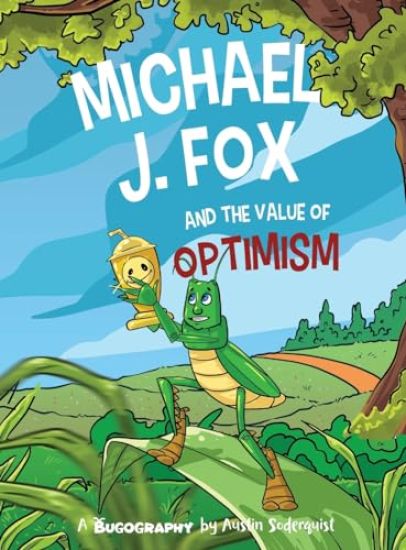
Michael J. Fox and the Value of Optimism
When life deals you a difficult and trying hand, what do you do? Do you give up? Complain? Or try to avoid it?Michael is a grasshopper who loves to hop He is training for one of the biggest hopping competitions of his life, when his whole life is turned upside down. He was told that he had a disease that would impact his ability to hop and live life normally.In that moment Michael had a choice: give up and hide, or hop up and shine. What would you do in this situation? Join Michael on his inspiring journey and learn with him the value of optimism.