Kirjahaku
Etsi kirjoja tekijän nimen, kirjan nimen tai ISBN:n perusteella.
1000 tulosta hakusanalla Michael J. Monahan
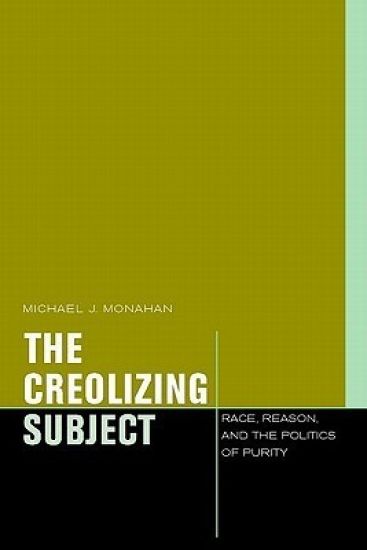
How does our understanding of the reality (or lack thereof ) of race as a category of being affect our understanding of racism as a social phenomenon, and vice versa? How should we envision the aims and methods of our struggles against racism? Traditionally, the Western political and philosophical tradition held that true social justice points toward a raceless future—that racial categories are themselves inherently racist, and a sincere advocacy for social justice requires a commitment to the elimination or abolition of race altogether. This book focuses on the underlying assumptions that inform this view of race and racism, arguing that it is ultimately bound up in a "politics of purity"—an understanding of human agency, and reality itself, as requiring all-or-nothing categories with clear and unambiguous boundaries. Racism, being organized around a conception of whiteness as the purest manifestation of the human, thus demands a constant policing of the boundaries among racial categories. Drawing upon a close engagement with historical treatments of the development of racial categories and identities, the book argues that races should be understood not as clear and distinct categories of being but rather as ambiguous and indeterminate (yet importantly real) processes of social negotiation. As one of its central examples, it lays out the case of the Irish in seventeenth-century Barbados, who occasionally united with black slaves to fight white supremacy—and did so as white people, not as nonwhites who later became white when they capitulated to white supremacy. Against the politics of purity, Monahan calls for the emergence of a "creolizing subjectivity" that would place such ambiguity at the center of our understanding of race. The Creolizing Subject takes seriously the way in which racial categories, in all of their variety and ambiguity, situate and condition our identity, while emphasizing our capacity, as agents, to engage in the ongoing contestation and negotiation of the meaning and significance of those very categories.
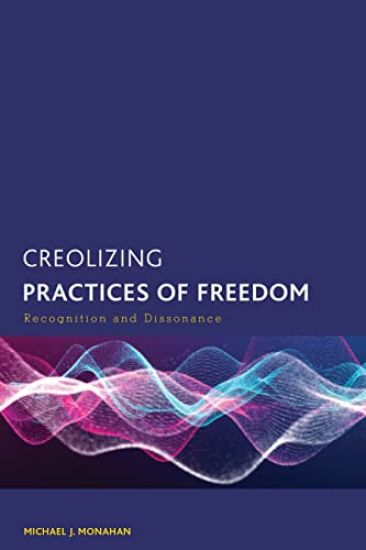
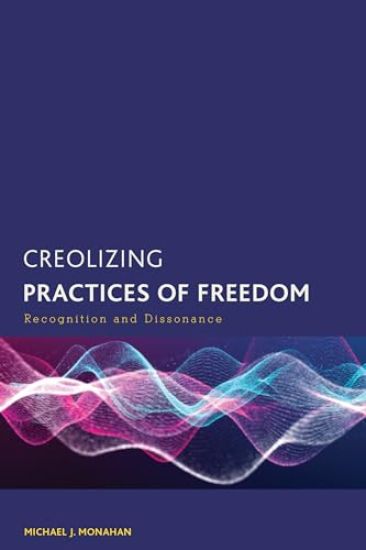
Creolizing Practices of Freedom argues that many of our long-standing debates over the concept of “freedom” have been bound up in “the politics of purity” – explicitly or implicitly insisting on clear and distinct boundaries between self and other or between choice and coercion. In this model, “freedom” becomes a matter of purifying the “self” at the individual level, and the body politic at the larger social level. The appropriate response to this is a “creolizing” theory of freedom, an approach that sees indeterminacy and ambiguity not as tragic flaws, but as crucial productive elements of the practice of freedom. Using debates about the “politics of recognition” as a central example, the book argues that both contemporary proponents and critics of recognition theory fall prey to the politics of purity. Building on a reappropriate of the Hegelian origins of recognition theory the book advances a reading of recognition in which “recognition” is a necessarily open-ended, dynamic, and relational account of human subjectivity in which freedom in this creolizing sense emerges as an aim. Arguing further that any appropriate theorization of freedom as creolizing must itself engage in an open-ended and productive encounter with different approaches and traditions, the book draws upon the work of Steve Biko, Gloria Anzaldúa, Sylvia Wynter, and Lewis Gordon to further enrich and elaborate the emerging account of freedom as a creolizing practice. Key to the development of this account of freedom is a recurring appeal to the sonic. Oppression operates as a mode of “destructive interference,” like a kind of white noise, and freedom operates as mode of “constructive interference” where human activity is mutually-enhancing and directed toward reciprocity or “resonance.”
Creolizing Practices of Freedom argues that many of our long-standing debates over the concept of freedom have been bound up in the politics of purity—explicitly or implicitly insisting on clear and distinct boundaries between self and other or between choice and coercion. In this model, freedom becomes a matter of purifying the self at the individual level and the body politic at the larger social level. The appropriate response to this is a creolizing theory of freedom, an approach that sees indeterminacy and ambiguity not as tragic flaws, but as crucial productive elements of the practice of freedom.
Om historien : att lära av det förflutna
Erica Benner; John Bew; Philip Bobbitt; Vernon Bogdanor; Michael Burleigh; Cory J. Clark; Christopher Coker; Jonathan Fenby; Niall Ferguson; Janne Haaland Matlary; Josef Joffe; Rob Johnson; Elisabeth Kendall; Iain Martin; Rana Mitter; Andrew Monaghan; Fraser Nelson; Gudrun Persson; Peter Ricketts; Brendan Simms
Bokförlaget Stolpe
2020
sidottu
Historien, mänsklighetens samlade erfarenheter, lär oss om nuet och framtiden. Hur är det möjligt att titta på händelser i det förflutna och med hjälp av dem lösa samtidens politiska eller ekonomiska förhållanden och konflikter? Essäerna i denna antologi härrör från Engelsbergsseminariet 2019 där dessa frågor diskuterades. Ur bland annat idéhistoriskt och evolutionspsykologiskt perspektiv tillämpar skribenterna historien på nutida företeelser som internationella relationer, geopolitik och nationalekonomi, individens roll och den mänskliga naturen. Kanske är det bara genom att tillämpa historien som vi hittar vägen framåt?
Michael J. Shapiro
Routledge
2012
sidottu
Michael J. Shapiro’s writings have been innovatory with respect to the phenomena he has taken to be political, and the concomitant array of methods that he has brilliantly mastered. This book draws from his vast output of articles, chapters and books to provide a thematic yet integrated account of his boundary-crossing innovations in political theory and masterly contributions to our understanding of methods in the social sciences. The editors have focused on work in three key areas:DiscourseShapiro was one of the first theorists to demonstrate convincingly, and in a manner that has had a long-standing impact on the field, that language is not epiphenomenal to politics. Indeed, he shows that language is constitutive of politics. From his frequently-cited article on metaphor from the early 1980s to recent work on discourse and globalization, Shapiro has shown that politics happens not only with and through the use of language, but within discourse as a material practice.CultureGabriel Almond and Sidney Verba’s (1963) famous work on ‘The Civic Culture’ established a long-held but ultimately counterproductive relationship between culture and politics, one in which culture is an independent variable that has effects on politics. Samuel Huntington’s (1998) (in)famous polemic, ‘The Clash of Civilizations’, only pushes this relationship to its breaking point. Shapiro’s rich and numerous writings on culture provide a powerful and important antidote to this approach, as Shapiro consistently shows (across wide-ranging contexts) that politics is in culture and culture is in politics, and no politically salient approach to culture can afford to turn either term into a causal variable.ViolenceWhile violence is surely not a theme foreign to political studies, no one has done more or better work in contemporary political theory to bring violence into play as a central term of political thought and to expand our understanding of violence. By reconceptualizing and reinterpreting this term, Shapiro’s work has helped us to rethink the very boundaries between political theory and international relations as putatively separate subfields of political science. And it explains why both political theorists interested in International Relations and International Relations scholars concerned with a broader understanding of international politics must both start with Shapiro’s work as required reading.
Michael J. Shapiro
Routledge
2012
nidottu
Michael J. Shapiro’s writings have been innovatory with respect to the phenomena he has taken to be political, and the concomitant array of methods that he has brilliantly mastered. This book draws from his vast output of articles, chapters and books to provide a thematic yet integrated account of his boundary-crossing innovations in political theory and masterly contributions to our understanding of methods in the social sciences. The editors have focused on work in three key areas:DiscourseShapiro was one of the first theorists to demonstrate convincingly, and in a manner that has had a long-standing impact on the field, that language is not epiphenomenal to politics. Indeed, he shows that language is constitutive of politics. From his frequently-cited article on metaphor from the early 1980s to recent work on discourse and globalization, Shapiro has shown that politics happens not only with and through the use of language, but within discourse as a material practice.CultureGabriel Almond and Sidney Verba’s (1963) famous work on ‘The Civic Culture’ established a long-held but ultimately counterproductive relationship between culture and politics, one in which culture is an independent variable that has effects on politics. Samuel Huntington’s (1998) (in)famous polemic, ‘The Clash of Civilizations’, only pushes this relationship to its breaking point. Shapiro’s rich and numerous writings on culture provide a powerful and important antidote to this approach, as Shapiro consistently shows (across wide-ranging contexts) that politics is in culture and culture is in politics, and no politically salient approach to culture can afford to turn either term into a causal variable.ViolenceWhile violence is surely not a theme foreign to political studies, no one has done more or better work in contemporary political theory to bring violence into play as a central term of political thought and to expand our understanding of violence. By reconceptualizing and reinterpreting this term, Shapiro’s work has helped us to rethink the very boundaries between political theory and international relations as putatively separate subfields of political science. And it explains why both political theorists interested in International Relations and International Relations scholars concerned with a broader understanding of international politics must both start with Shapiro’s work as required reading.
Michael J. Fox: A Little Golden Book Biography
Lori Haskins Houran
RANDOM HOUSE USA INC
2025
sidottu
Get inspired by Michael J. Fox, the beloved Back to the Future actor from Canada who is helping people all around the world, with this collectible Little Golden Book featuring full-color illustrations on every page Michael moved to California--1,300 miles away from home--to be a Hollywood star Actor Michael J. Fox is known for playing Alex P. Keaton on TV's Family Ties and Marty McFly in the Back to the Future movies. The talented actor became a determined activist after being diagnosed with Parkinson's Disease and starting a foundation to help find a cure. Michael J. Fox: A Little Golden Book Biography will inspire readers of all ages. Look for more Little Golden Book biographies: - Bruce Springsteen- Dwayne Johnson- Steve Martin- Zendaya- Harry Styles
Sue Stevens is in need of change in more ways than one As a top Travel Writer/Blogger, her Christmas articles have become stale and predictable. So she commits herself to changing from her usual fare, deciding to write about how cowboys celebrate Christmas. Spending time with cowboys and their horses as she does her research on a ranch in Montana, she quickly becomes comfortable with her surroundings, finding a calmness that's been missing in her life. She also finds there is far more than meets the eye to the ranch's ruggedly handsome philanthropic owner, who has an intriguing and, at times, sad past. Along the way, Sue fondly remembers past dreams she thought were long buried and forgotten as they happily resurface and point her towards a more rewarding future, one that could include love. But first, a surprise awaits all involved.
Michael J. Cryne, Petitioner, V. the United States of America. U.S. Supreme Court Transcript of Record with Supporting Pleadings
Archibald Palmer
Gale, U.S. Supreme Court Records
2011
pokkari
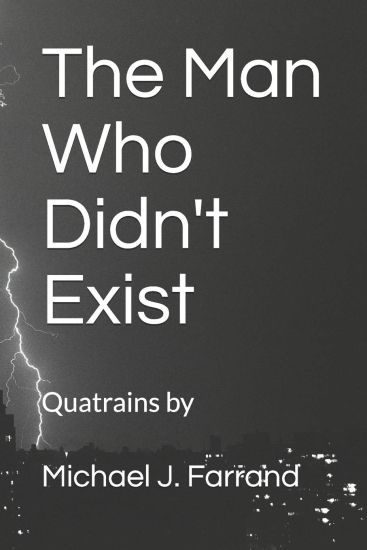
The Man Who Didn't Exist: Quatrains by Michael J. Farrand
Michael J. Farrand
Independently Published
2017
nidottu
Fifty nine quatrains (four-line poems) on a variety of topics--love, life, place, wheels, philosophy. Some are light, some are deep. All are quick. Just when you decide you don't like one, you're on to the next. Each poem paired with an image to add perspective (and interest). From a Vermont writer who takes brief breaks from moose hunting to pen minor classics.
Michael J Pennington SSC1: Short Story Collection #1: Eat the Food.
Michael J. Pennington
Createspace Independent Publishing Platform
2017
nidottu
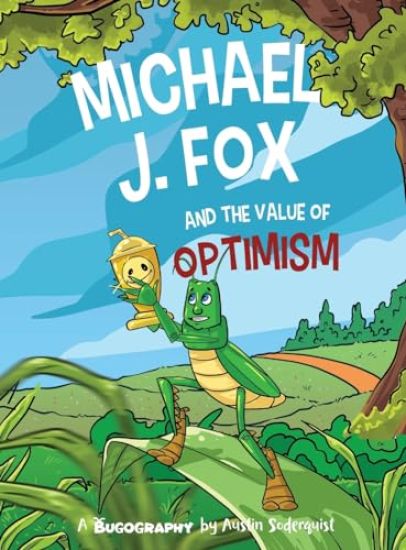
When life deals you a difficult and trying hand, what do you do? Do you give up? Complain? Or try to avoid it?Michael is a grasshopper who loves to hop He is training for one of the biggest hopping competitions of his life, when his whole life is turned upside down. He was told that he had a disease that would impact his ability to hop and live life normally.In that moment Michael had a choice: give up and hide, or hop up and shine. What would you do in this situation? Join Michael on his inspiring journey and learn with him the value of optimism.
Sinners and Saints: The Exciting Adventures of Michael J Rock, P.I.
Michael G. Edwards
Createspace Independent Publishing Platform
2011
nidottu
Death At River's Edge: The Exciting Adventures of Michael J Rock, P.I.
Michael G. Edwards
Createspace Independent Publishing Platform
2016
nidottu
The Story of Michael J Williams: murder: crime: revenge
Antreia T. Dopson
Createspace Independent Publishing Platform
2014
nidottu
Michael J. Knowles is the author of bestselling "Reasons to Vote for Democrats: A Comprehensive Guide". It's the most comprehensive, well researched book on Socialism and Democratic Politics.
Matthew J. Redden, Petitioner, V. Michael J. Murphy, as Police Commissioner of the City of New York, et al. U.S. Supreme Court Transcript of Record with Supporting Pleadings
Seymour B Quel; Irwin Asofsky
Gale, U.S. Supreme Court Records
2011
pokkari