In chapter 25 of Matthew's gospel, Jesus relates the parable of the talents. Questions that arise from this parable are: Who are the good stewards of today? Whose productive work today qualifies them as good stewards? How are people to use their talents and resources to receive favor from the Master? This book employs the papal social tradition to help determine the nature of the good steward in today's contemporary work life and systematically outlines the papal social vision of work and applies this vision to today's organization.
In chapter 25 of Matthew's gospel, Jesus relates the parable of the talents. Questions that arise from this parable are: Who are the good stewards of today? Whose productive work today qualifies them as good stewards? How are people to use their talents and resources to receive favor from the Master? This book employs the papal social tradition to help determine the nature of the good steward in today's contemporary work life and systematically outlines the papal social vision of work and applies this vision to today's organization.
The specific concern in What We Hold in Trust comes to this: the Catholic university that sees its principal purpose in terms of the active life, of career, and of changing the world, undermines the contemplative and more deep-rooted purpose of the university. If a university adopts the language of technical and social change as its main and exclusive purpose, it will weaken the deeper roots of the university’s liberal arts and Catholic mission. The language of the activist, of changing the world through social justice, equality and inclusion, or of the technician through market-oriented incentives, plays an important role in university life. We need to change the world for the better and universities play an important role, but both the activist and technician will be co-opted by our age of hyper-activity and technocratic organizations if there is not first a contemplative outlook on the world that receives reality rather than constructs it.To address this need for roots What We Hold in Trust unfolds in four chapters that will demonstrate how essential it is for the faculty, administrators, and trustees of Catholic universities to think philosophically and theologically (Chapter One), historically (Chapter Two) and institutionally (Chapters Three and Four). What we desperately need today are leaders in Catholic universities who understand the roots of the institutions they serve, who can wisely order the goods of the university, who know what is primary and what is secondary, and who can distinguish fads and slogans from authentic reform. We need leaders who are in touch with their history and have a love for tradition, and in particular for the Catholic tradition. Without this vision, our universities may grow in size, but shrink in purpose. They may be richer but not wiser.
Michael J. Shapiro’s writings have been innovatory with respect to the phenomena he has taken to be political, and the concomitant array of methods that he has brilliantly mastered. This book draws from his vast output of articles, chapters and books to provide a thematic yet integrated account of his boundary-crossing innovations in political theory and masterly contributions to our understanding of methods in the social sciences. The editors have focused on work in three key areas:DiscourseShapiro was one of the first theorists to demonstrate convincingly, and in a manner that has had a long-standing impact on the field, that language is not epiphenomenal to politics. Indeed, he shows that language is constitutive of politics. From his frequently-cited article on metaphor from the early 1980s to recent work on discourse and globalization, Shapiro has shown that politics happens not only with and through the use of language, but within discourse as a material practice.CultureGabriel Almond and Sidney Verba’s (1963) famous work on ‘The Civic Culture’ established a long-held but ultimately counterproductive relationship between culture and politics, one in which culture is an independent variable that has effects on politics. Samuel Huntington’s (1998) (in)famous polemic, ‘The Clash of Civilizations’, only pushes this relationship to its breaking point. Shapiro’s rich and numerous writings on culture provide a powerful and important antidote to this approach, as Shapiro consistently shows (across wide-ranging contexts) that politics is in culture and culture is in politics, and no politically salient approach to culture can afford to turn either term into a causal variable.ViolenceWhile violence is surely not a theme foreign to political studies, no one has done more or better work in contemporary political theory to bring violence into play as a central term of political thought and to expand our understanding of violence. By reconceptualizing and reinterpreting this term, Shapiro’s work has helped us to rethink the very boundaries between political theory and international relations as putatively separate subfields of political science. And it explains why both political theorists interested in International Relations and International Relations scholars concerned with a broader understanding of international politics must both start with Shapiro’s work as required reading.
Michael J. Shapiro’s writings have been innovatory with respect to the phenomena he has taken to be political, and the concomitant array of methods that he has brilliantly mastered. This book draws from his vast output of articles, chapters and books to provide a thematic yet integrated account of his boundary-crossing innovations in political theory and masterly contributions to our understanding of methods in the social sciences. The editors have focused on work in three key areas:DiscourseShapiro was one of the first theorists to demonstrate convincingly, and in a manner that has had a long-standing impact on the field, that language is not epiphenomenal to politics. Indeed, he shows that language is constitutive of politics. From his frequently-cited article on metaphor from the early 1980s to recent work on discourse and globalization, Shapiro has shown that politics happens not only with and through the use of language, but within discourse as a material practice.CultureGabriel Almond and Sidney Verba’s (1963) famous work on ‘The Civic Culture’ established a long-held but ultimately counterproductive relationship between culture and politics, one in which culture is an independent variable that has effects on politics. Samuel Huntington’s (1998) (in)famous polemic, ‘The Clash of Civilizations’, only pushes this relationship to its breaking point. Shapiro’s rich and numerous writings on culture provide a powerful and important antidote to this approach, as Shapiro consistently shows (across wide-ranging contexts) that politics is in culture and culture is in politics, and no politically salient approach to culture can afford to turn either term into a causal variable.ViolenceWhile violence is surely not a theme foreign to political studies, no one has done more or better work in contemporary political theory to bring violence into play as a central term of political thought and to expand our understanding of violence. By reconceptualizing and reinterpreting this term, Shapiro’s work has helped us to rethink the very boundaries between political theory and international relations as putatively separate subfields of political science. And it explains why both political theorists interested in International Relations and International Relations scholars concerned with a broader understanding of international politics must both start with Shapiro’s work as required reading.
Get inspired by Michael J. Fox, the beloved Back to the Future actor from Canada who is helping people all around the world, with this collectible Little Golden Book featuring full-color illustrations on every page Michael moved to California--1,300 miles away from home--to be a Hollywood star Actor Michael J. Fox is known for playing Alex P. Keaton on TV's Family Ties and Marty McFly in the Back to the Future movies. The talented actor became a determined activist after being diagnosed with Parkinson's Disease and starting a foundation to help find a cure. Michael J. Fox: A Little Golden Book Biography will inspire readers of all ages. Look for more Little Golden Book biographies: - Bruce Springsteen- Dwayne Johnson- Steve Martin- Zendaya- Harry Styles
Sue Stevens is in need of change in more ways than one As a top Travel Writer/Blogger, her Christmas articles have become stale and predictable. So she commits herself to changing from her usual fare, deciding to write about how cowboys celebrate Christmas. Spending time with cowboys and their horses as she does her research on a ranch in Montana, she quickly becomes comfortable with her surroundings, finding a calmness that's been missing in her life. She also finds there is far more than meets the eye to the ranch's ruggedly handsome philanthropic owner, who has an intriguing and, at times, sad past. Along the way, Sue fondly remembers past dreams she thought were long buried and forgotten as they happily resurface and point her towards a more rewarding future, one that could include love. But first, a surprise awaits all involved.
Fifty nine quatrains (four-line poems) on a variety of topics--love, life, place, wheels, philosophy. Some are light, some are deep. All are quick. Just when you decide you don't like one, you're on to the next. Each poem paired with an image to add perspective (and interest). From a Vermont writer who takes brief breaks from moose hunting to pen minor classics.
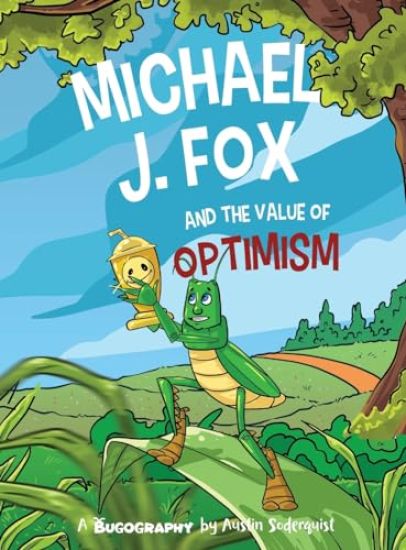
When life deals you a difficult and trying hand, what do you do? Do you give up? Complain? Or try to avoid it?Michael is a grasshopper who loves to hop He is training for one of the biggest hopping competitions of his life, when his whole life is turned upside down. He was told that he had a disease that would impact his ability to hop and live life normally.In that moment Michael had a choice: give up and hide, or hop up and shine. What would you do in this situation? Join Michael on his inspiring journey and learn with him the value of optimism.
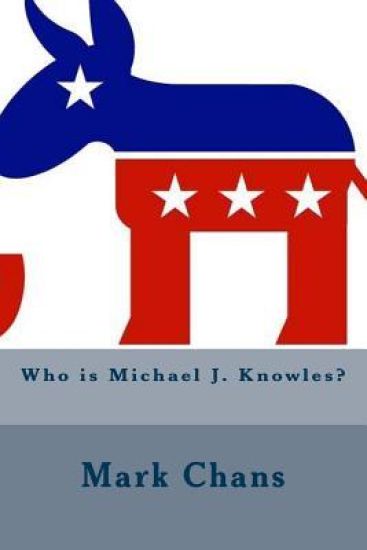
Michael J. Knowles is the author of bestselling "Reasons to Vote for Democrats: A Comprehensive Guide". It's the most comprehensive, well researched book on Socialism and Democratic Politics.
Traversing Parallels explores the work and life of American glass artist Michael Taylor, who has enjoyed a prominent career in the art glass world since 1967. The book focuses on work made from 2005 through 2017, exploring the conceptual progression of Taylor's work during this time and scrutinizing his notion of sociopolitical awareness and the responsibility of all artists to use their gifts to speak on social perspective. His cut and laminated glass constructions celebrate the progress of human ingenuity while also considering the wider implications of our impact on the world. Taylor himself provides autobiographical texts throughout the book, recounting his many years as a teacher of glass as well as his own education and evolution as an artist. With an exciting design and a wealth of images, this monograph makes a welcome addition to the history of contemporary American art glass.