Kirjojen hintavertailu. Mukana 11 244 527 kirjaa ja 12 kauppaa.

Kirjahaku

Etsi kirjoja tekijän nimen, kirjan nimen tai ISBN:n perusteella.

1000 tulosta hakusanalla Michael J. Reid

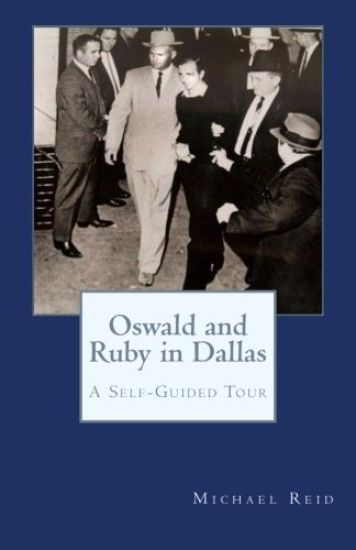
Oswald and Ruby in Dallas: A Self-Guided Tour

Oswald and Ruby in Dallas: A Self-Guided Tour

Michael J. Reid

High Street Press
2015
nidottu
This guide is for those who want to see Oswald and Ruby sites in Dallas, but do not want to go on a guided tour or spend the time to organize a tour themselves. All the important places are here and even some the tours do not include. The guide provides directions for getting from place to place via the shortest routes and in an organized fashion so you do not waste time. You can use the directions or plug the addresses into your GPS. It takes less than a day to visit all the places, depending on how much time you spend at each one.The book also contains eyewitness testimony from people who were at these places when the events occurred. With these first-hand accounts, you will be able to get a better sense of what happened.
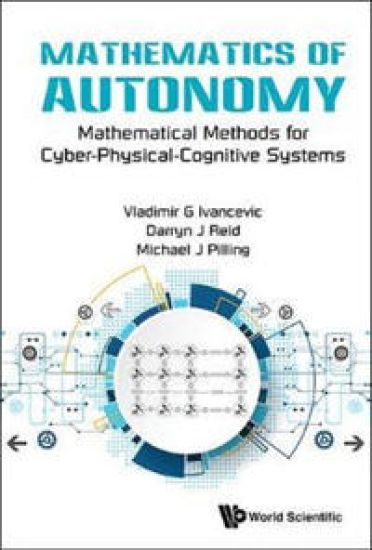
Mathematics Of Autonomy: Mathematical Methods For Cyber-physical-cognitive Systems

Mathematics Of Autonomy: Mathematical Methods For Cyber-physical-cognitive Systems

Vladimir G Ivancevic; Darryn J Reid; Michael J Pilling

World Scientific Publishing Co Pte Ltd
2017
sidottu
Mathematics of Autonomy provides solid mathematical foundations for building useful Autonomous Systems. It clarifies what makes a system autonomous rather than simply automated, and reveals the inherent limitations of systems currently incorrectly labeled as autonomous in reference to the specific and strong uncertainty that characterizes the environments they operate in. Such complex real-world environments demand truly autonomous solutions to provide the flexibility and robustness needed to operate well within them.This volume embraces hybrid solutions to demonstrate extending the classes of uncertainty autonomous systems can handle. In particular, it combines physical-autonomy (robots), cyber-autonomy (agents) and cognitive-autonomy (cyber and embodied cognition) to produce a rigorous subset of trusted autonomy: Cyber-Physical-Cognitive autonomy (CPC-autonomy).The body of the book alternates between underlying theory and applications of CPC-autonomy including 'Autonomous Supervision of a Swarm of Robots' , 'Using Wind Turbulence against a Swarm of UAVs' and 'Unique Super-Dynamics for All Kinds of Robots (UAVs, UGVs, UUVs and USVs)' to illustrate how to effectively construct Autonomous Systems using this model. It avoids the wishful thinking that characterizes much discussion related to autonomy, discussing the hard limits and challenges of real autonomous systems. In so doing, it clarifies where more work is needed, and also provides a rigorous set of tools to tackle some of the problem space.
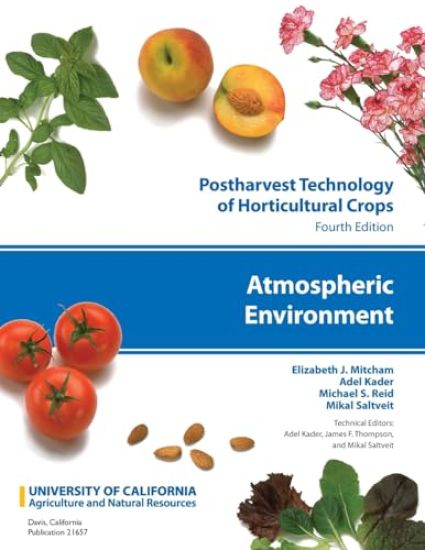
Postharvest Technology of Horticultural Crops: Atmospheric Environment

Postharvest Technology of Horticultural Crops: Atmospheric Environment

Elizabeth J. Mitcham; Adel Kader; Michael S. Reid

Regents of the University of California
2023
nidottu
Drawing on the expertise of the University of California's Postharvest Technology Center, this publication discusses commercial uses of modified- or controlled-atmosphere technology which can be used during transport, temporary storage, or long-term storage of horticultural commodities destined for the fresh market or processing.
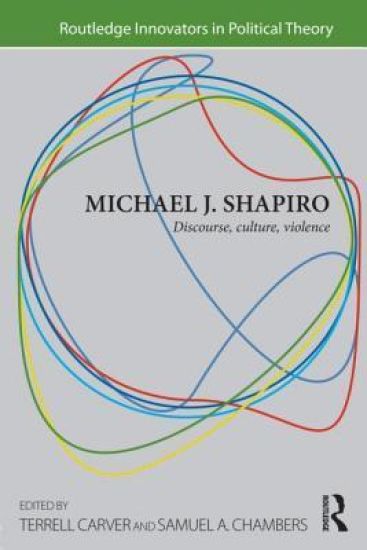
Michael J. Shapiro
Michael J. Shapiro’s writings have been innovatory with respect to the phenomena he has taken to be political, and the concomitant array of methods that he has brilliantly mastered. This book draws from his vast output of articles, chapters and books to provide a thematic yet integrated account of his boundary-crossing innovations in political theory and masterly contributions to our understanding of methods in the social sciences. The editors have focused on work in three key areas:DiscourseShapiro was one of the first theorists to demonstrate convincingly, and in a manner that has had a long-standing impact on the field, that language is not epiphenomenal to politics. Indeed, he shows that language is constitutive of politics. From his frequently-cited article on metaphor from the early 1980s to recent work on discourse and globalization, Shapiro has shown that politics happens not only with and through the use of language, but within discourse as a material practice.CultureGabriel Almond and Sidney Verba’s (1963) famous work on ‘The Civic Culture’ established a long-held but ultimately counterproductive relationship between culture and politics, one in which culture is an independent variable that has effects on politics. Samuel Huntington’s (1998) (in)famous polemic, ‘The Clash of Civilizations’, only pushes this relationship to its breaking point. Shapiro’s rich and numerous writings on culture provide a powerful and important antidote to this approach, as Shapiro consistently shows (across wide-ranging contexts) that politics is in culture and culture is in politics, and no politically salient approach to culture can afford to turn either term into a causal variable.ViolenceWhile violence is surely not a theme foreign to political studies, no one has done more or better work in contemporary political theory to bring violence into play as a central term of political thought and to expand our understanding of violence. By reconceptualizing and reinterpreting this term, Shapiro’s work has helped us to rethink the very boundaries between political theory and international relations as putatively separate subfields of political science. And it explains why both political theorists interested in International Relations and International Relations scholars concerned with a broader understanding of international politics must both start with Shapiro’s work as required reading.
Michael J. Shapiro
Michael J. Shapiro’s writings have been innovatory with respect to the phenomena he has taken to be political, and the concomitant array of methods that he has brilliantly mastered. This book draws from his vast output of articles, chapters and books to provide a thematic yet integrated account of his boundary-crossing innovations in political theory and masterly contributions to our understanding of methods in the social sciences. The editors have focused on work in three key areas:DiscourseShapiro was one of the first theorists to demonstrate convincingly, and in a manner that has had a long-standing impact on the field, that language is not epiphenomenal to politics. Indeed, he shows that language is constitutive of politics. From his frequently-cited article on metaphor from the early 1980s to recent work on discourse and globalization, Shapiro has shown that politics happens not only with and through the use of language, but within discourse as a material practice.CultureGabriel Almond and Sidney Verba’s (1963) famous work on ‘The Civic Culture’ established a long-held but ultimately counterproductive relationship between culture and politics, one in which culture is an independent variable that has effects on politics. Samuel Huntington’s (1998) (in)famous polemic, ‘The Clash of Civilizations’, only pushes this relationship to its breaking point. Shapiro’s rich and numerous writings on culture provide a powerful and important antidote to this approach, as Shapiro consistently shows (across wide-ranging contexts) that politics is in culture and culture is in politics, and no politically salient approach to culture can afford to turn either term into a causal variable.ViolenceWhile violence is surely not a theme foreign to political studies, no one has done more or better work in contemporary political theory to bring violence into play as a central term of political thought and to expand our understanding of violence. By reconceptualizing and reinterpreting this term, Shapiro’s work has helped us to rethink the very boundaries between political theory and international relations as putatively separate subfields of political science. And it explains why both political theorists interested in International Relations and International Relations scholars concerned with a broader understanding of international politics must both start with Shapiro’s work as required reading.
Michael J. Fox: A Little Golden Book Biography

Michael J. Fox: A Little Golden Book Biography

Lori Haskins Houran

RANDOM HOUSE USA INC
2025
sidottu
Get inspired by Michael J. Fox, the beloved Back to the Future actor from Canada who is helping people all around the world, with this collectible Little Golden Book featuring full-color illustrations on every page Michael moved to California--1,300 miles away from home--to be a Hollywood star Actor Michael J. Fox is known for playing Alex P. Keaton on TV's Family Ties and Marty McFly in the Back to the Future movies. The talented actor became a determined activist after being diagnosed with Parkinson's Disease and starting a foundation to help find a cure. Michael J. Fox: A Little Golden Book Biography will inspire readers of all ages. Look for more Little Golden Book biographies: - Bruce Springsteen- Dwayne Johnson- Steve Martin- Zendaya- Harry Styles
A COWBOY CHRISTMAS Michael J. Moore

A COWBOY CHRISTMAS Michael J. Moore

Michael J Moore

IngramSpark
2023
pokkari
Sue Stevens is in need of change in more ways than one As a top Travel Writer/Blogger, her Christmas articles have become stale and predictable. So she commits herself to changing from her usual fare, deciding to write about how cowboys celebrate Christmas. Spending time with cowboys and their horses as she does her research on a ranch in Montana, she quickly becomes comfortable with her surroundings, finding a calmness that's been missing in her life. She also finds there is far more than meets the eye to the ranch's ruggedly handsome philanthropic owner, who has an intriguing and, at times, sad past. Along the way, Sue fondly remembers past dreams she thought were long buried and forgotten as they happily resurface and point her towards a more rewarding future, one that could include love. But first, a surprise awaits all involved.
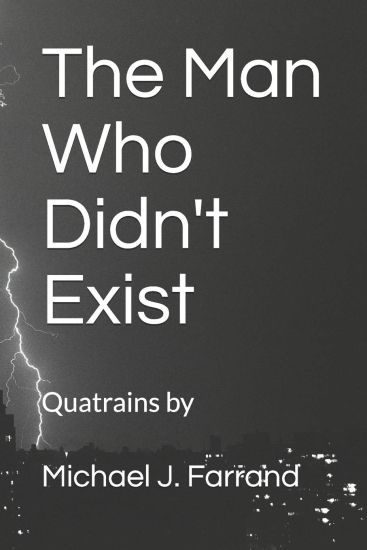
The Man Who Didn't Exist: Quatrains by Michael J. Farrand

The Man Who Didn't Exist: Quatrains by Michael J. Farrand

Michael J. Farrand

Independently Published
2017
nidottu
Fifty nine quatrains (four-line poems) on a variety of topics--love, life, place, wheels, philosophy. Some are light, some are deep. All are quick. Just when you decide you don't like one, you're on to the next. Each poem paired with an image to add perspective (and interest). From a Vermont writer who takes brief breaks from moose hunting to pen minor classics.
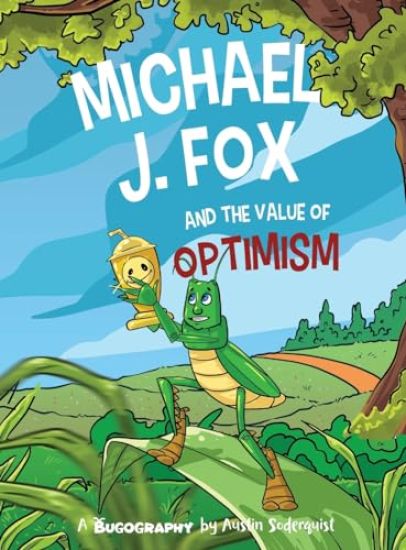
Michael J. Fox and the Value of Optimism
When life deals you a difficult and trying hand, what do you do? Do you give up? Complain? Or try to avoid it?Michael is a grasshopper who loves to hop He is training for one of the biggest hopping competitions of his life, when his whole life is turned upside down. He was told that he had a disease that would impact his ability to hop and live life normally.In that moment Michael had a choice: give up and hide, or hop up and shine. What would you do in this situation? Join Michael on his inspiring journey and learn with him the value of optimism.