Kirjojen hintavertailu. Mukana 11 244 527 kirjaa ja 12 kauppaa.

Kirjahaku

Etsi kirjoja tekijän nimen, kirjan nimen tai ISBN:n perusteella.

1000 tulosta hakusanalla Michael J. Sandel

Justice

Justice

Michael J. Sandel

Penguin Books Ltd
2010
pokkari
Michael Sandel's Justice: What's the Right Thing to Do? invites readers of all ages and political persuasions on a journey of moral reflection, and shows how reasoned debate can illuminate our lives.Is it always wrong to lie?Should there be limits to personal freedom?Can killing sometimes be justified?Is the free market fair?What is the right thing to do?Questions like these are at the heart of our lives. In this acclaimed book Michael Sandel - BBC Reith Lecturer and the Harvard professor whose 'Justice' course has become world famous - gives us a lively and accessible introduction to the intersection of politics and philosophy. He helps us think our way through such hotly contested issues as equal rights, democracy, euthanasia, abortion and same-sex marriage, as well as the ethical dilemmas we face every day.'One of the most popular teachers in the world' - Observer'Enormously refreshing ... Michael Sandel transforms moral philosophy by putting it at the heart of civic debate' - New Statesman'One of the world's most interesting political philosophers' - Guardian'Spellbinding' - The Nation
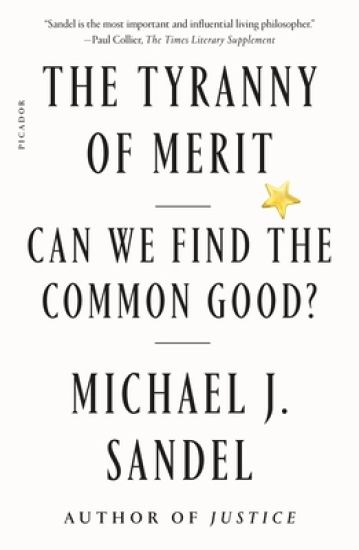
The Tyranny of Merit

The Tyranny of Merit

Michael J. Sandel

Penguin Books Ltd
2021
pokkari
A TLS, GUARDIAN AND NEW STATESMAN BOOK OF THE YEAR 2020The new bestseller from the acclaimed author of Justice and one of the world's most popular philosophers"Astute, insightful, and empathetic...A crucial book for this moment" Tara Westover, author of EducatedThese are dangerous times for democracy. We live in an age of winners and losers, where the odds are stacked in favour of the already fortunate. Stalled social mobility and entrenched inequality give the lie to the promise that "you can make it if you try". And the consequence is a brew of anger and frustration that has fuelled populist protest, with the triumph of Brexit and election of Donald Trump.Michael J. Sandel argues that to overcome the polarized politics of our time, we must rethink the attitudes toward success and failure that have accompanied globalisation and rising inequality. Sandel highlights the hubris a meritocracy generates among the winners and the harsh judgement it imposes on those left behind. He offers an alternative way of thinking about success - more attentive to the role of luck in human affairs, more conducive to an ethic of humility, and more hospitable to a politics of the common good.
What Money Can't Buy

What Money Can't Buy

Michael J. Sandel

Penguin Books Ltd.
2013
pokkari
Should we financially reward children for good marks? Is it ethical to pay people to donate organs? What about hiring mercenaries to fight our wars, outsourcing inmates to for-profit prisons or selling citizenship? In this title, the author asks: Isn't there something wrong with a world in which everything is for sale?
The Tyranny of Merit: What's Become of the Common Good?

The Tyranny of Merit: What's Become of the Common Good?

Michael J. Sandel

Farrar, Straus and Giroux
2020
sidottu
A Times Literary Supplement's Book of the Year 2020A New Statesman's Best Book of 2020A Bloomberg's Best Book of 2020A Guardian Best Book About Ideas of 2020The world-renowned philosopher and author of the bestselling Justice explores the central question of our time: What has become of the common good?These are dangerous times for democracy. We live in an age of winners and losers, where the odds are stacked in favor of the already fortunate. Stalled social mobility and entrenched inequality give the lie to the American credo that "you can make it if you try". The consequence is a brew of anger and frustration that has fueled populist protest and extreme polarization, and led to deep distrust of both government and our fellow citizens--leaving us morally unprepared to face the profound challenges of our time. World-renowned philosopher Michael J. Sandel argues that to overcome the crises that are upending our world, we must rethink the attitudes toward success and failure that have accompanied globalization and rising inequality. Sandel shows the hubris a meritocracy generates among the winners and the harsh judgement it imposes on those left behind, and traces the dire consequences across a wide swath of American life. He offers an alternative way of thinking about success--more attentive to the role of luck in human affairs, more conducive to an ethic of humility and solidarity, and more affirming of the dignity of work. The Tyranny of Merit points us toward a hopeful vision of a new politics of the common good.
Liberalism and the Limits of Justice

Liberalism and the Limits of Justice

Michael J. Sandel

Cambridge University Press
1998
sidottu
A liberal society seeks not to impose a single way of life, but to leave its citizens as free as possible to choose their own values and ends. It therefore must govern by principles of justice that do not presuppose any particular vision of the good life. But can any such principles be found? And if not, what are the consequences for justice as a moral and political ideal? These are the questions Michael Sandel takes up in this penetrating critique of contemporary liberalism. Sandel locates modern liberalism in the tradition of Kant, and focuses on its most influential recent expression in the work of John Rawls. In the most important challenge yet to Rawls' theory of justice, Sandel traces the limits of liberalism to the conception of the person that underlies it, and argues for a deeper understanding of community than liberalism allows.
Liberalism and the Limits of Justice

Liberalism and the Limits of Justice

Michael J. Sandel

Cambridge University Press
1998
pokkari
A liberal society seeks not to impose a single way of life, but to leave its citizens as free as possible to choose their own values and ends. It therefore must govern by principles of justice that do not presuppose any particular vision of the good life. But can any such principles be found? And if not, what are the consequences for justice as a moral and political ideal? These are the questions Michael Sandel takes up in this penetrating critique of contemporary liberalism. Sandel locates modern liberalism in the tradition of Kant, and focuses on its most influential recent expression in the work of John Rawls. In the most important challenge yet to Rawls’ theory of justice, Sandel traces the limits of liberalism to the conception of the person that underlies it, and argues for a deeper understanding of community than liberalism allows.
Public Philosophy

Public Philosophy

Michael J. Sandel

Harvard University Press
2006
nidottu
In this book, Michael Sandel takes up some of the hotly contested moral and political issues of our time, including affirmative action, assisted suicide, abortion, gay rights, stem cell research, the meaning of toleration and civility, the gap between rich and poor, the role of markets, and the place of religion in public life. He argues that the most prominent ideals in our political life--individual rights and freedom of choice--do not by themselves provide an adequate ethic for a democratic society. Sandel calls for a politics that gives greater emphasis to citizenship, community, and civic virtue, and that grapples more directly with questions of the good life. Liberals often worry that inviting moral and religious argument into the public sphere runs the risk of intolerance and coercion. These essays respond to that concern by showing that substantive moral discourse is not at odds with progressive public purposes, and that a pluralist society need not shrink from engaging the moral and religious convictions that its citizens bring to public life.
The Case against Perfection

The Case against Perfection

Michael J. Sandel

The Belknap Press
2009
nidottu
“Sandel explores a paramount question of our era: how to extend the power and promise of biomedical science to overcome debility without compromising our humanity. His arguments are acute and penetrating, melding sound logic with compassion.”—Jerome Groopman, author of How Doctors ThinkBreakthroughs in genetics present us with a promise and a predicament. The promise is that we will soon be able to treat and prevent a host of debilitating diseases. The predicament is that our newfound genetic knowledge may enable us to manipulate our nature—to enhance our genetic traits and those of our children. Although most people find at least some forms of genetic engineering disquieting, it is not easy to articulate why. What is wrong with re-engineering our nature?The Case against Perfection explores these and other moral quandaries connected with the quest to perfect ourselves and our children. Michael Sandel argues that the pursuit of perfection is flawed for reasons that go beyond safety and fairness. The drive to enhance human nature through genetic technologies is objectionable because it represents a bid for mastery and dominion that fails to appreciate the gifted character of human powers and achievements. Carrying us beyond familiar terms of political discourse, this book contends that the genetic revolution will change the way philosophers discuss ethics and will force spiritual questions back onto the political agenda.In order to grapple with the ethics of enhancement, we need to confront questions largely lost from view in the modern world. Since these questions verge on theology, modern philosophers and political theorists tend to shrink from them. But our new powers of biotechnology make these questions unavoidable. Addressing them is the task of this book, by one of America’s preeminent moral and political thinkers.
Democracy’s Discontent

Democracy’s Discontent

Michael J. Sandel

HARVARD UNIVERSITY PRESS
2022
nidottu
A renowned political philosopher updates his classic book on the American political tradition to address the perils democracy confronts today.The 1990s were a heady time. The Cold War had ended, and America’s version of liberal capitalism seemed triumphant. And yet, amid the peace and prosperity, anxieties about the project of self-government could be glimpsed beneath the surface.So argued Michael Sandel, in his influential and widely debated book Democracy’s Discontent, published in 1996. The market faith was eroding the common life. A rising sense of disempowerment was likely to provoke backlash, he wrote, from those who would “shore up borders, harden the distinction between insiders and outsiders, and promise a politics to ‘take back our culture and take back our country,’ to ‘restore our sovereignty’ with a vengeance.”Now, a quarter century later, Sandel updates his classic work for an age when democracy’s discontent has hardened into a country divided against itself. In this new edition, he extends his account of America’s civic struggles from the 1990s to the present. He shows how Democrats and Republicans alike embraced a version of finance-driven globalization that created a society of winners and losers and fueled the toxic politics of our time.In a work celebrated when first published as “a remarkable fusion of philosophical and historical scholarship” (Alan Brinkley), Sandel recalls moments in the American past when the country found ways to hold economic power to democratic account. To reinvigorate democracy, Sandel argues in a stirring new epilogue, we need to reconfigure the economy and empower citizens as participants in a shared public life.
The Tyranny of Merit: Can We Find the Common Good?
A Times Literary Supplement's Book of the Year 2020A New Statesman's Best Book of 2020A Bloomberg's Best Book of 2020A Guardian Best Book About Ideas of 2020The world-renowned philosopher and author of the bestselling Justice explores the central question of our time: What has become of the common good?These are dangerous times for democracy. We live in an age of winners and losers, where the odds are stacked in favor of the already fortunate. Stalled social mobility and entrenched inequality give the lie to the American credo that "you can make it if you try". The consequence is a brew of anger and frustration that has fueled populist protest and extreme polarization, and led to deep distrust of both government and our fellow citizens--leaving us morally unprepared to face the profound challenges of our time. World-renowned philosopher Michael J. Sandel argues that to overcome the crises that are upending our world, we must rethink the attitudes toward success and failure that have accompanied globalization and rising inequality. Sandel shows the hubris a meritocracy generates among the winners and the harsh judgement it imposes on those left behind, and traces the dire consequences across a wide swath of American life. He offers an alternative way of thinking about success--more attentive to the role of luck in human affairs, more conducive to an ethic of humility and solidarity, and more affirming of the dignity of work. The Tyranny of Merit points us toward a hopeful vision of a new politics of the common good.
Justicia / Justice: What's the Right Thing to Do?
Justicia ha vendido un mill n de ejemplares, el curso que imparte Michael Sandel en Harvard ha inspirado a millones de personas y su versi n televisiva es un xito de masas. La explicaci n es sencilla: al examinar el papel de la justicia en nuestra vida y en la sociedad, Sandel explica c mo la filosof a puede ayudar a entender la pol tica, la religi n, la moral e incluso nuestras propias convicciones. Deteni ndose en cuestiones tan pol micas como el aborto, la eutanasia, el matrimonio homosexual, el patriotismo o la disidencia, Sandel muestra que las cuestiones m s importantes que afrontamos como ciudadanos pueden someterse a un debate racional. Justicia garantiza a los lectores de todas las edades e ideolog as un viaje fascinante a trav s de los conceptos que subyacen tras las controversias pol ticas y morales de la actualidad. Justicia es entretenido, estimulante e inteligente, una adici n esencial a la breve lista de libros que tratan convincentemente las cuestiones fundamentales de nuestra vida en sociedad. «Un libro indispensable para cualquiera que aspire a ser un buen ciudadano. - Walter Isaacson «Sandel asombra en este amplio repaso de temas candentes. Erudito, ameno y muy humano, es una lectura que te cam­biar . - Publishers Weekly ENGLISH DESCRIPTION A renowned Harvard professor's brilliant, sweeping, inspiring account of the role of justice in our society--and of the moral dilemmas we face as citizens "For Michael Sandel, justice is not a spectator sport," The Nation's reviewer of Justice remarked. In his acclaimed book―based on his legendary Harvard course―Sandel offers a rare education in thinking through the complicated issues and controversies we face in public life today. It has emerged as a most lucid and engaging guide for those who yearn for a more robust and thoughtful public discourse. "In terms we can all understand," wrote Jonathan Rauch in The New York Times, Justice "confronts us with the concepts that lurk . . . beneath our conflicts." Affirmative action, same-sex marriage, physician-assisted suicide, abortion, national service, the moral limits of markets―Sandel relates the big questions of political philosophy to the most vexing issues of the day, and shows how a surer grasp of philosophy can help us make sense of politics, morality, and our own convictions as well. Justice is lively, thought-provoking, and wise―an essential new addition to the small shelf of books that speak convincingly to the hard questions of our civic life.
La Tiranía del Mérito / The Tyranny of Merit: What's Become of the Common Good?
El profesor de filosof a m s famoso del mundo, analiza el fracaso del sistema meritocr tico y aborda la pregunta m s importante de nuestra poca: qu ha sido del bien com n? Las sociedades occidentales padecen dos males relacionados, la desigualdad econ mica y la polarizaci n pol tica. En el marasmo resultante, parece que hemos perdido de vista la noci n clave del bien com n. En esta obra fundamental, Michael J. Sandel se plantea c mo recuperarla. Cuando solo hay ganadores y perdedores y la movilidad social se ha atascado, resulta inevitable la combinaci n de ira y frustraci n que alimenta la polarizaci n y la protesta populista, adem s de reducir la confianza en las instituciones y en nuestros conciudadanos. As no podemos hacer frente moralmente a los retos actuales. Sandel, premio princesa de Asturias de Ciencias Sociales y uno de los fil sofos m s prestigiosos de nuestra poca, sostiene que para superar las crisis que asedian nuestras sociedades hemos de repensar las ideas de xito y fracaso que han acompa ado la globalizaci n y el aumento de la desigualdad. La meritocracia genera una complacencia nociva entre los ganadores e impone una sentencia muy dura sobre los perdedores. Sandel defiende otra manera de pensar el xito, m s atenta al papel de la suerte, m s acorde con una tica de la humildad y la solidaridad y m s reivindicativa de la dignidad del trabajo. Con esos mimbres morales, La tiran a del m rito presenta una visi n esperanzadora de una nueva pol tica centrada por fin en el bien com n. ENGLISH DESCRIPTION A Times Literary Supplement's Book of the Year 2020 A New Statesman's Best Book of 2020 A Bloomberg's Best Book of 2020 A Guardian Best Book About Ideas of 2020 The world-renowned philosopher and author of the bestselling Justice explores the central question of our time: What has become of the common good? These are dangerous times for democracy. We live in an age of winners and losers, where the odds are stacked in favor of the already fortunate. Stalled social mobility and entrenched inequality give the lie to the American credo that "you can make it if you try". The consequence is a brew of anger and frustration that has fueled populist protest and extreme polarization, and led to deep distrust of both government and our fellow citizens--leaving us morally unprepared to face the profound challenges of our time. World-renowned philosopher Michael J. Sandel argues that to overcome the crises that are upending our world, we must rethink the attitudes toward success and failure that have accompanied globalization and rising inequality. Sandel shows the hubris a meritocracy generates among the winners and the harsh judgement it imposes on those left behind and traces the dire consequences across a wide swath of American life. He offers an alternative way of thinking about success--more attentive to the role of luck in human affairs, more conducive to an ethic of humility and solidarity, and more affirming of the dignity of work. The Tyranny of Merit points us toward a hopeful vision of a new politics of the common good.
Meritokratiets tyranni

Meritokratiets tyranni

Michael J. Sandel

Informations Forlag
2021
nidottu
Vi lever i en tid med vindere og tabere, hvor stagneret social mobilitet og stigende ulighed har fået forestillingen om, at ”man kan, hvad man vil, hvis man arbejder hårdt nok” til at klinge hult.I Meritokratiets tyranni viser Michael J. Sandel, hvordan præstationssamfundet genererer overmod hos de allerede velstillede og hård fordømmelse af dem, der er ladt tilbage. Ifølge Sandel må vi gentænke den fælles forståelse af succes og fiasko, som er fulgt med globaliseringen og den stigende ulighed.Meritokratiets tyranni tilbyder en alternativ måde at tænke succes på. En, som også skeler til held, som inspirerer til ydmyghed og solidaritet, og som anerkender værdien i al slags arbejde.Michael J. Sandel (f. 1953) er filosof ved Harvard University. Han er en af de mest læste og citerede amerikanske tænkere og forfatter til en lang række politiske og idéhistoriske bøger, senest Justice: What’s the Right Thing to Do? (2010) og What Money Can’t Buy: The Moral Limits of Markets (2012).Anmeldelser"Amerikansk filosof stiller tidens vigtigste spørgsmål: Har de succesfulde fortjent deres succes?" - ????? Altinget"Fremstår uhyre overbevisende." - ????? Kristeligt Dagblad"Michael Sandels mest interessante og radikale bog – et lærd angreb på alliancen mellem viden, magt og rigdom." - Rune Lykkeberg, Information