Kirjahaku
Etsi kirjoja tekijän nimen, kirjan nimen tai ISBN:n perusteella.
1000 tulosta hakusanalla Michael L. Walker
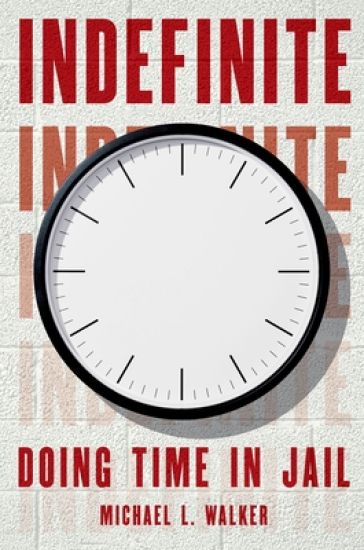
An intimate, first-hand account of the emotional and physical experience of doing time in jail and the strategies for enduring it. Jails are the principal people-processing machines of the criminal justice system. Mostly they hold persons awaiting trial who cannot afford or have been denied bail. Although jail sentences max out at a year, some spend years awaiting trial in jail-especially in counties where courts are jammed with cases. City and county jails, detention centers, police lockups, and other temporary holding facilities are regularly overcrowded, poorly funded, and the buildings are often in disrepair. American jails admit over ten million people every year, but very little is known about what happens to them while they're locked away. Indefinite is an ethnographic study of a California county jail that reflects on what it means to do jail time and what it does to men. Michael L. Walker spent several extended spells in jail, having been arrested while trying to pay parking tickets in graduate school. This book is an intimate account of his experience and in it he shares the routines, rhythms, and subtle meanings that come with being incarcerated. Walker shows how punishment in jail is much more than the deprivation of liberties. It is, he argues, purposefully degrading. Jail creates a racial politics that organizes daily life, moves men from clock time to event time, normalizes trauma, and imbues residents with substantial measures of vulnerability. Deputies used self-centered management styles to address the problems associated with running a jail, some that magnified individual conflicts to potential group conflicts and others that created divisions between residents for the sake of control. And though not every deputy indulged, many gave themselves over to the pleasures of punishment.
Solimine and Walker provide a comprehensive examination of all the major issues revolving around judicial federalism- the sharing of judicial power between the 50 states and the federal government. They make the case that the existence and operation of this system is healthy for the development of law and the protection of liberty.This theme is developed through a discussion of the major issues in the literature of judicial federalism: federalism and rights, the parity of the state and federal courts, the civil litigation system, state court interpretations of their own constitutions, and the relationship of ideology to judicial federalism. Recognizing that there are and always have been serious shortcomings in this system, the author points out that these problem areas can be remedied; the start of this remedial process necessitates a respect for the judicial institutions of the state. Solimine and Walker envision the beginning of a dialogue among practitioners, academics, and concerned citizens on how best to improve the current system in order to halt the threats to diversity posed by increasing federal domination of the judicial system.
Security Cooperation in a Strategic Competition
Michael J Mazarr; Nathan Beauchamp-Mustafaga; Jonah Blank; Samuel Charap; Michael S Chase; Beth Grill; Derek Grossman; Dara Massicot; Jennifer D P Moroney; Lyle J Morris; Alexander Noyes; Stephanie Pezard; Ashley L Rhoades; Alice Shih; Mark Stalczynski; Melissa Shostak; David E Thaler; Dori Walker
RAND Corporation
2022
pokkari
In this study, RAND researchers examined the current role of security cooperation efforts as a tool in the emerging strategic competition among the United States, Russia, and China. In particular, they sought to identify how, where, and to what degree the three major competitors?plus Australia, Japan, India, and several countries in Europe?are using security cooperation.
The Far Corner Of The Room: Off-Center Poetry By Michael L. Wright
Michael L. Wright
Createspace Independent Publishing Platform
2009
nidottu
Mission in Dialogue: Essays in Honour of Michael L. Fitzgerald
Peeters
2012
sidottu
Archbishop Michael Fitzgerald has made a lasting contribution to the Catholic Church in the field of interreligious dialogue, through his scholarship and through his work at the Pontifical Council for Interreligious Dialogue in the Vatican, as its secretary and then president. This volume, which includes contributions by several scholars and friends of Archbishop Fitzgerald, focuses on three aspects: the theology of religions, the experience of dialogue, and Muslim-Christian relations. Written by specialists, in English and in French, these seventeen contributions reflect the challenge of dialogue as it has been emphasized by the Second Vatican Council. Written from a scholarly perspective as well as from grassroots experiences, this volume also tries to show the diversity of approaches across the world.
New Edition of the Babylonian Talmud. Original Text Edited, Corrected, Formulated and Translated Into English by Michael L. Rodkinson. 1st ed. rev. and Corr. by Isaac M. Wise. 2d ed., Re-edited, rev. and enl Volume 17-18
Isaac Mayer Wise; Godfrey Taubenhaus; Michael Levy Rodkinson
Hutson Street Press
2025
sidottu
New Edition of the Babylonian Talmud. Original Text Edited, Corrected, Formulated and Translated Into English by Michael L. Rodkinson. 1st ed. rev. and Corr. by Isaac M. Wise. 2d ed., Re-edited, rev. and enl Volume 17-18
Isaac Mayer Wise; Godfrey Taubenhaus; Michael Levy Rodkinson
Hutson Street Press
2025
pokkari
FERHENGA BIRÛSKÎ - Kurmanji-English Dictionary - Volume One: A-L
Michael L. Chyet
Transnational Press London
2020
nidottu
Ferhenga Biruski is the go-to dictionary for Kurmanji-English a dialect of Kurdish spoken originally in parts of Iran, Iraq, Syria, Turkey while also being common among a large diaspora of Kurds in Europe, North America and elsewhere. This comprehensive Kurmanji-English dictionary is prepared in two volumes by Michael L. Chyet, a renowned linguist with extensive knowledge of the major dialects of Kurdish. This dictionary is an essential reference source for linguists and others interested in Kurdish language and people."The second edition of my Kurmanji-English dictionary, which I would like to call "Ferhenga Bir sk " to honor the memory of my beloved friend and colleague Bir sk Tugan, contains considerably more entries, and in many cases offers fuller information on earlier entries. In addition, I have found and corrected several typographical errors. Moreover, it is to be accompanied by a companion English to Kurdish volume. ...] It is my goal to accurately reflect the language as it exists today, providing variant spellings, synonyms, and regional usage, as well as etymologies. The late Iranist D.N. MacKenzie advised me early on to avoid filling my dictionary with "ghost words". He suggested that I base all the entries in my dictionary on texts (both written and orally generated), to ensure that I am reflecting the language as it is used by its speakers. The earlier dictionaries include words of unknown provenance, which may have no existence outside those pages."- Michael L. Chyet"Compiling such a colossal dictionary is no small task. It takes a great amount of time, patience and diligence. I had the opportunity to witness Michael's enthusiasm, tenacity, and dedication to further improve the quality of his dictionary with the second edition. With its features and comprehensiveness, Ferhenga Bir sk is setting a new standard for lexicographers of the Kurdish language. ...] The world of Kurdish studies is eternally indebted to Michael for this significant contribution and his continuous effort to help elevate Kurdish to the level of other well-established national languages."Deniz Ekici, Ph.D., University of California, Berkeley, USA.Content: Preface by Deniz EkiciIntroduction to Ferhenga Bir sk Review of Kurdish DictionariesHow to use the dictionaryAbbreviationsAbbreviations of Sources Used in Compiling this DictionarySources for Linguistic ComparisonPlace of Origin of InformantsCalendar SystemsDictionary A to L
Sadly, no one can wave a magic wand over your head and remove your depression and when caught in a downward spiral of negativity the victim of this very common disorder may consider suicide as the only answer.However, the author of Fighting the Black Beast has found a self-help method that really works. Having overcome his own depression he now offers you his 'Eight Point Plan' as a life-line. This book offers you a powerful weapon against the 'Black Beast' of depression and the means with which to fight and overcome it altogether.Fighting the Black Beast shows that the dark world of depression is largely a self-created hell, and the downward spiral can be reversed. Recovery is at last made possible.
C. S. Lewis and the Christian Worldview
Michael L. Peterson
Oxford University Press Inc
2020
sidottu
C. S. Lewis is one of the most influential and beloved Christian writers of the past century, and interest in him continues to grow as books about his fantasy, fiction, and biography continue to appear. Although Lewis's personal journey was a deeply philosophical search for the most adequate worldview, the few extant books about his Christian philosophy focus on specific topics rather than his overall worldview. In this book, Michael Peterson develops a comprehensive framework for understanding Lewis's Christian worldview--from his arguments from reason, morality, and desire to his ideas about Incarnation, Trinity, and Atonement. All worldviews address fundamental questions about reality, knowledge, human nature, meaning, and so forth. Peterson therefore examines Lewis's Christian approach to these same questions in interaction with other worldviews. Accenting that the intellectual strength and existential relevance of Lewis's works rest on his philosophical acumen as well as his Christian orthodoxy--which he famously called "mere Christianity"--Peterson skillfully shows how Lewis's Christian thought engages a variety of important problems raised by believers and nonbelievers alike: the problem of evil and suffering, the problem of religious diversity, the problem of meaning, and others. Just as Lewis was gifted in communicating philosophical ideas and arguments in an accessible style, Peterson has crafted a major contribution to Lewis scholarship presented in a way that will interest scholars and benefit the general reader.
Over a span of eighteen years, Lady Bird Johnson recorded forty-seven oral history interviews with Michael Gillette and his colleagues. These conversations, just released in 2011, form the heart of Lady Bird Johnson: An Oral History, an intimate story of a shy young country girl's transformation into one of America's most effective and admired First Ladies. Lady Bird Johnson's odyssey is one of personal and intellectual growth, political and financial ambition, and a shared life with Lyndon Baines Johnson, one of the most complicated, volatile, and powerful presidents of the 20th century. The former First Lady recounts how a cautious, conservative young woman succumbed to an ultimatum to marry a man she had known for less than three months, how she ran his congressional office during World War II, and how she transformed a struggling Austin radio station into the foundation of a communications empire. As a keen observer of the Washington scene during the eventful decades from the 1930s through the 1960s, Lady Bird Johnson shares dramatic accounts of pivotal moments in American history. We attend informal dinners at Sam Rayburn's apartment and opulent social events at grand mansions from an earlier age. Her rich verbal portraits bring to life scores of personalities, including First Ladies Edith Bolling Wilson, Eleanor Roosevelt, Bess Truman, Mamie Eisenhower, Jacqueline Kennedy, and Pat Nixon. An informal, candid narrative by one of America's most admired First Ladies, this volume reveals how instrumental Lady Bird Johnson's support and guidance were at each stage of her husband's political ascent and how she herself emerged as a significant political force.
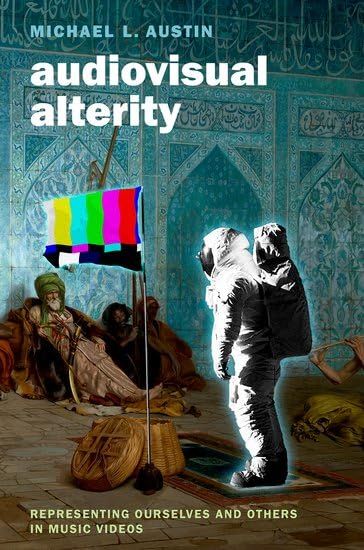
Immerse yourself in the groundbreaking exploration of diversity and representation in music videos with Audiovisual Alterity. This new research delves into the portrayal of marginalized and subaltern groups across a rich tapestry of genres of popular music, tracing the evolution of inclusivity and disenfranchisement in music videos from the 1950s to the present. Audiovisual Alterity not only furthers the scholarly conversation on representations of race, ethnicity, and gender in music videos but also broadens the scope to embrace Asians, Pacific Islanders, Indigenous peoples, the LGBTQIA+ community, religious minorities, and the incarcerated. Author Michael Austin traces the transformation of the music video landscape as he scrutinizes the medium's evolution across both traditional platforms and social media, including video-sharing sites and smartphone applications. Throughout, he offers new insights into critical analyses of contemporary debates on cultural appropriation and the nuanced portrayals of culture, race, indigeneity, gender, class, sexuality, and sexual orientation. Most compellingly, Audiovisual Alterity celebrates the self-representation of these 'others,' empowering them to voice their narratives on their own terms.
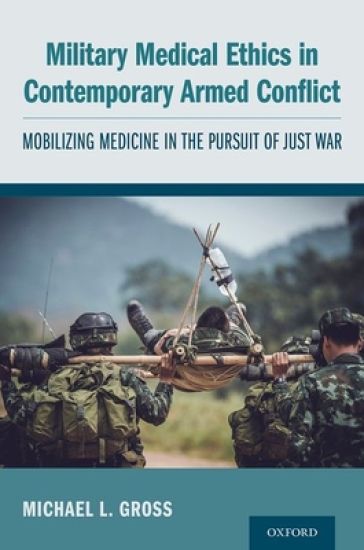
Military Medical Ethics in Contemporary Armed Conflict
Michael L. Gross
Oxford University Press Inc
2021
nidottu
Beleaguered countries struggling against aggression or powerful nations defending others from brutal regimes mobilize medicine to wage just war. As states funnel medical resources to maintain unit readiness and conserve military capabilities, numerous ethical challenges foreign to peacetime medicine result. Force conservation drives combat hospitals to prioritize warfighter care over all others. Civilians find themselves bereft of medical attention; prison officials force feed hunger-striking detainees; policymakers manage healthcare to win the hearts and minds of local nationals; and scientists develop neuro-technologies or nanosurgery to create super soldiers. When the fighting ends, intractable moral dilemmas rebound. Post-war justice demands enormous investments of time, resources and personnel. But losing interest and no longer zealous, war-weary nations forget their duties to rebuild ravaged countries abroad and rehabilitate their war-torn veterans at home. Addressing these incendiary issues, Military Medical Ethics in Contemporary Armed Conflict integrates the ethics of medicine and the ethics of war. Medical ethics in times of war is not identical to medical ethics in times of peace, but a unique discipline. Without war, there is no military medicine, and without just war there is no military medical ethics. Military Medical Ethics in Contemporary Armed Conflict revises, defends, and rebuts wartime medical practices, just as it lays the moral foundation for casualty care in future conflicts.
This book offers the first comprehensive overview of Post-Holocaust Jewish theology, quoting extensively from and interpreting all of the significant American writings of the movement. Morgan's lucid analysis clarifies the background of the movement in the postwar period, its origins, its character, and its legacy for subsequent thinking, theological and otherwise. Among the authors whose work he considers are Hannah Arendt, Richard Rubenstein, Eliezer Berkowitz, Irving Greenberg, Arthur Cohen, Emil Fackenheim, Eli Wiesel and many others. Ultimately, Morgan's primary purpose is to tell the story of the movement, to illuminate its real, deep point, and to demonstrate its continuing relevance today.
A professor of ecology and evolutionary biology shares his insights into how to protect biodiversity while allowing for human progress--"reconciliation ecology." (Ecology & Environment)
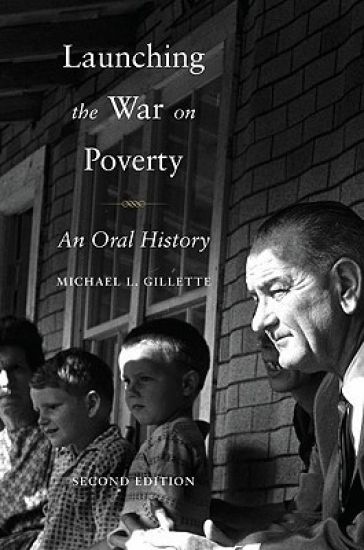
The Economic Opportunity Act of 1964 was one of the great legislative triumphs of Lyndon Johnson's presidency. In Launching the War on Poverty, forty-nine veterans of this unprecedented legislative effort tell their stories, offering a fascinating inside look at how Community Action, Head Start, the Job Corps, Legal Services, and other efforts went from brainstorming sessions in Washington to real-life programs in low-income neighborhoods throughout the nation. As the interviews reveal the idealism of the 1960s, they also capture the excitement and disappointment, the determination and doubt, the cut-and-thrust of American lawmaking, and the sheer force of the personalities involved. This second edition offers a new introduction that shows how many of these programs survived a volatile beginning to become accepted, permanent elements of domestic policy. In addition, the book now includes transcripts of Johnson's pivotal phone conversations, underscoring the president's determination and resourcefulness, his judgments of personnel and programs, and his sensitivity to political fallout. There is an updated bibliography with a list of web and archival sources on the War on Poverty.
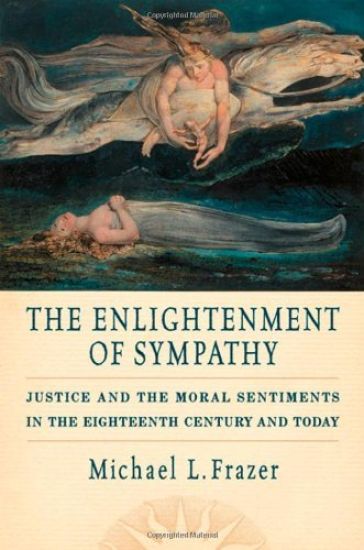
The Enlightenment is commonly referred to as 'The Age of Reason.' The term signifies the triumph of rationalism over emotionalism and sentiment in the late eighteenth century. Rationalists, the most famous of whom was Kant, posited a mind that was hierarchically arranged, with reason sitting atop of the passions. Yet as Michael Frazer argues, there were in fact two enlightenments--the sentimentalist enlightenment and the rationalist one--and the Enlightenment of Sympathy reclaims the importance of the former. As he explains, enlightened sentimentalism encompassed more than 'mere feeling' (as its critics claimed) and in fact harnessed the human mind in full to offer a positive account of the sentiments' centrality to moral and political reflection. Rather than treating the mind as a hierarchy, sentimentalists offered a more egalitarian theory of it. The mind, in their view, was integrated, and its various compartments were equals. Many of the most famous Enlightenment thinkers can rightly be called sentimentalists--Hume, Smith, and Herder, to name a few--yet the rationalist vision of politics has proven to be more influential. In fact, the most important political philosopher of liberalism of the past half century, John Rawls, relied on the rationalist enlightenment for his most important work. By reclaiming this equally important strand of enlightenment thought, Frazer not only offers a corrective to the dominant narrative of the Enlightenment political thought. His argument will also enrich contemporary political theory by integrating a more behaviorally-oriented and psychologically complex account of the mind into the corpus of liberal philosophy.