
Kirjahaku
Etsi kirjoja tekijän nimen, kirjan nimen tai ISBN:n perusteella.
1000 tulosta hakusanalla Michael Levins


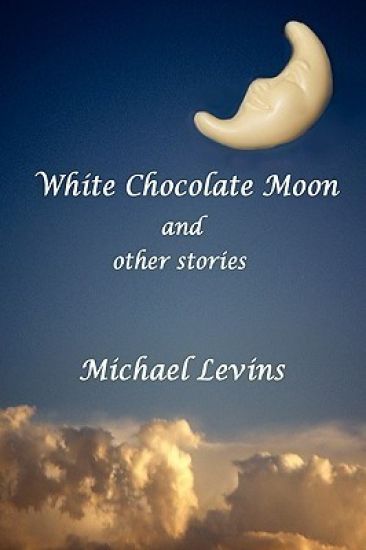
A delightful collection of short stories for ages 16 and up on a variety of subjects. You are drawn in immediately to the characters and follow them on their paths. These stories tickle the funny bone and touch the heart.



Breakdown Phenomena In Semiconductors And Semiconductor Devices
Michael E Levinshtein; Juha Kostamovaara; Sergey Vainshtein
World Scientific Publishing Co Pte Ltd
2005
sidottu
Impact ionization, avalanche and breakdown phenomena form the basis of many very interesting and important semiconductor devices, such as avalanche photodiodes, avalanche transistors, suppressors, sharpening diodes (diodes with delayed breakdown), as well as IMPATT and TRAPATT diodes. In order to provide maximal speed and power, many semiconductor devices must operate under or very close to breakdown conditions. Consequently, an acquaintance with breakdown phenomena is essential for scientists or engineers dealing with semiconductor devices.The aim of this book is to summarize the main experimental results on avalanche and breakdown phenomena in semiconductors and semiconductor devices and to analyze their features from a unified point of view. Attention is focused on the phenomenology of avalanche multiplication and the various kinds of breakdown phenomena and their qualitative analysis.
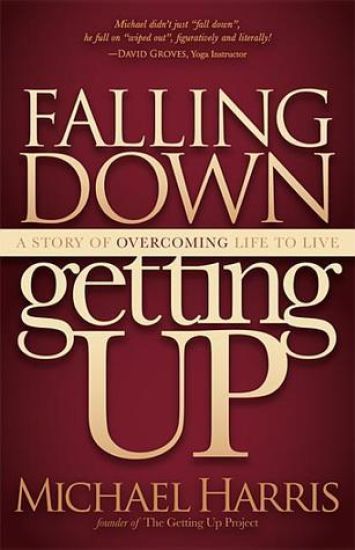
Falling Down Getting Up
Michael Harris; Jay Conrad Levinson
Morgan James Publishing llc
2012
pokkari
"Falling Down Getting Up" is about an incredible journey in life. It begins with a personal and revealing story of the author, Michael Harris, and his falling down in life. There were a few big falls like losing more than half of his liver in an accident at 12 years old, becoming an alcoholic by 16, and nearly losing his legs from vascular disease at 27. Once Michael gets you through the gory details of the mess he found himself in, he'll tell you what he did to get back up out of that mess. Perhaps as you read "Falling Down Getting Up," you will chuckle a little (or a lot) and be entertained as Michael shares his journey of falling down and getting back up. If you find yourself falling down in life, hopefully the suggestions in "Falling Down Getting Up" just might help you get back up too. Michael Harris is a writer, business coach, and popular yoga teacher. He is driven by an incredible enthusiasm for living a full life. Michael has been interviewed by a broad range of media including NBC, NPR, BBC, The Los Angeles Times, The Oregonian, and The Bend Bulletin. Michael loves to travel and, in his spare time, you can find him hiking the mountains near his home in Bend, Oregon.
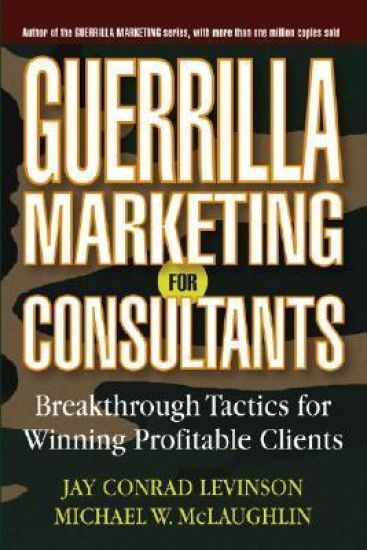
Guerrilla Marketing for Consultants
Jay Conrad Levinson; Michael W. McLaughlin
John Wiley Sons Inc
2004
nidottu
Consulting is entering the era of the guerrilla client-buyers with a glut of information at their fingertips and doubts about the value consultants add. Guerrilla Marketing for Consultants is the first book to reveal how guerrilla marketing can transform today's challenges into golden opportunities for winning profitable work from the new breed of consulting clients. Packed with information, this step-by-step guide details the 12 marketing secrets every consultant should know, the anatomy of a marketing plan, Web sites, sources of free publicity, direct-mail marketing, winning proposals, and more.
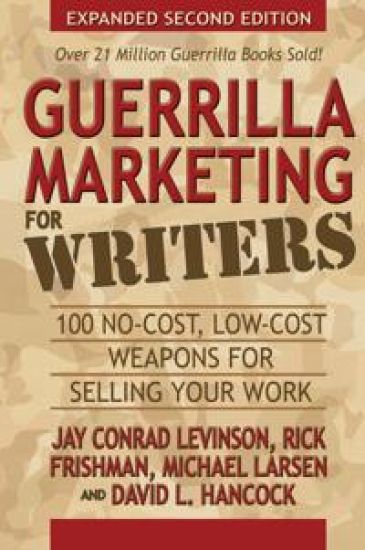
Guerrilla Marketing for Writers
Jay Conrad Levinson; Rick Frishman; Michael Larsen; David L Hancock
Morgan James Publishing llc
2010
pokkari
Because the battle begins before a book even hits the shelves, an author needs every weapon to get ahead of the competition. Guerrilla Marketing for Writers is packed with proven insights and advice, it details 100 “Classified secrets” that will help authors sell their work before and after it’s published. This life range of weapons-practical low-cost and no-cost marketing techniques-will help authors design a powerful strategy for strengthening their proposals, promoting their books, and maximizing their sales.
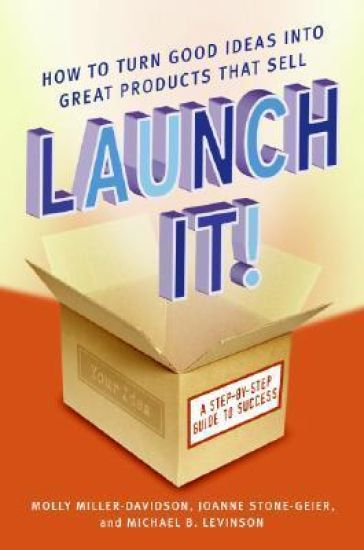
Launch It!
Molly Miller-Davidson; JoAnne Stone-Geier; Michael B. Levinson
HarperBusiness
2011
nidottu
The easy-to-read bible for developing, financing, marketing, and selling consumer products--from gadgets to kitsch, from high-touch to high-end--for America's rising entrepreneurial nation. Launch It! is written by a team of trend and product consultants with over 60 years of collective experience advising thousands of entrepeneurs, designers, and companies. As they realized not one trade book was available on the market that would provide soup-to-nuts guidance for any firm or entrepreneur seeking to turn inventions and cool ideas into great products that sell, they decided to write that book themselves. Unlike any other book, Launch It! provides the reader with the step-by-step game plan that anyone can follow to evaluate their idea, raise capital, save time, stay on top of emerging and important trends, and make money.

Diagnostika I Lechenie Ektopii Anusa. Michael Levin vs. Alberto Pena
Levin Mikhail
LAP Lambert Academic Publishing
2012
pokkari
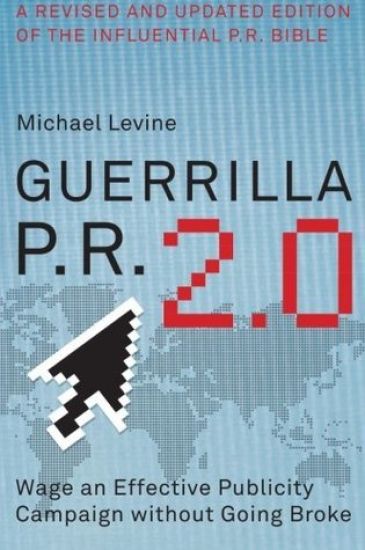
Guerrilla P.R. 2.0: Wage an Effective Publicity Campaign Without Going Broke
Michael Levine
HARPER BUSINESS
2008
nidottu
The world's most widely used and seminal introduction to public relations--now fully revised and updated for the 21st century with online strategies that workEvery Fortune 500 corporation, movie star, and scandal queen knows that a good publicist is essential to building success and maintaining public support. But if you're a small business owner, an entrepreneur, or an undercapitalized beginner seeking an edge in a highly competitive arena, it's unlikely that you have your own high-powered publicist. Guerrilla P.R. 2.0 offers all the resources necessary to mount your own campaign and get the media exposure you need. In clear and concise language, Michael Levine, one of the top public relations counselors in the country, reveals the same procedures he uses every day to get press on major stars--and how those strategies can be utilized on little or no budget. You'll learn how to think like a publicist and map out the perfect strategy for success.
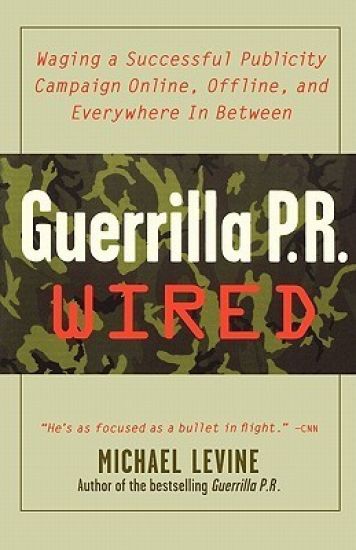
This updated guide covers Michael Levine's attention-getting strategies for the globally wired environment.
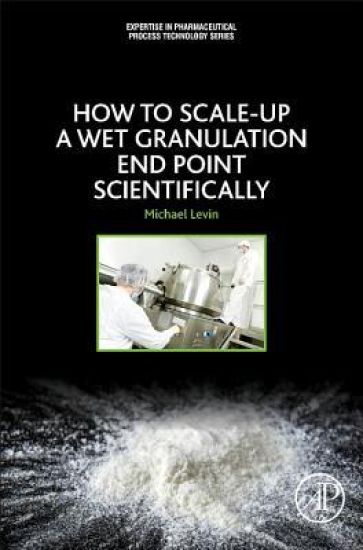
How to Scale-Up a Wet Granulation End Point Scientifically
Michael Levin
Academic Press Inc
2015
nidottu
How to Scale-Up a Wet Granulation End Point Scientifically provides a single-source devoted to all relevant information on the scale-up of a wet granulation end point. Contents include a general description, problem identification, and theoretical background with supporting literature, case studies, potential solutions, and more. By outlining issues related to scale-up and end-point determination, and then using practical examples and advice to address these issues, How to Scale-Up a Wet Granulation End Point Scientifically is a valuable and essential resource for all those pharmaceutical scientists and technologists engaged in the granulation process.
The Literary Agenda is a series of short polemical monographs about the importance of literature and of reading in the wider world and about the state of literary education inside schools and universities. The category of 'the literary' has always been contentious. What is clear, however, is how increasingly it is dismissed or is unrecognised as a way of thinking or an arena for thought. It is sceptically challenged from within, for example, by the sometimes rival claims of cultural history, contextualized explanation, or media studies. It is shaken from without by even greater pressures: by economic exigency and the severe social attitudes that can follow from it; by technological change that may leave the traditional forms of serious human communication looking merely antiquated. For just these reasons this is the right time for renewal, to start reinvigorated work into the meaning and value of literary reading. We think of the humanities as a cluster of specialized academic activities. So they are. But they also belong to the ordinary world, the world where students and faculty make connections and careers; where they eat and drink and fret; where they move through new buildings and old seminar rooms. In The Humanities and Everyday Life Michael Levenson places academic humanities within this field of daily life, where abstract thought stands alongside material need. The humanities also live outside the university in activities that have been overlooked or undervalued: in book clubs, in historical re-enactments, in visits to museums and libraries, in private collections, in contributions to Wikipedia, and in amateur genealogy. These activities belong to the humanities, quite as much as research published in specialty journals. The Humanities and Everyday Life addresses both the university and the world beyond, to see where they meet and fail to meet, and to argue that the walls between them should lower. At the centre of the book is an account of experts and expertise, a controversial topic that poses questions about professionals versus amateurs and what constitutes expertise. Drawing on the recent rejection of political elite expertise, as seen in the Brexit referendum and the American election campaign, as well as examples from science and medicine, the volume reveals the unsteady boundary between specialized knowledge and public curiosity. The Humanities and Everyday Life asks us to accept that the humanities are as enduring as religion, are indeed both rival and complement to religion; and to acknowledge that despite imperfections, they give an image of many-dimensioned life. The humanities are worth improving on their own terms, but also because, just often enough, they constitute an exemplary micro-society, one that will illuminate still more widely when academic thought meets the light of the everyday.
The years between the American Revolution of 1776, the French Revolution of 1789 and the European Revolutions of 1848 saw fundamental shifts from autocracy to emerging democracy. It is a vital period in what may be termed 'modernity': that is of the western societies that are increasingly industrial, capitalist and liberal democratic. Unsurprisingly, these years of stress and transition produced some significant reflections on politics and society.This indispensable introductory text considers how a cluster of key thinkers viewed the global political upheavals and social changes of their time, covering the work of:• Edmund Burke * Georg Hegel • Thomas Paine * Alexis de Tocqueville• Jeremy Bentham * Karl Marx and Friedrich EngelsLively and approachable, it is essential reading for anyone with an interest in modern history, political history or political thought.
The years between the American Revolution of 1776, the French Revolution of 1789 and the European Revolutions of 1848 saw fundamental shifts from autocracy to emerging democracy. It is a vital period in what may be termed 'modernity': that is of the western societies that are increasingly industrial, capitalist and liberal democratic. Unsurprisingly, these years of stress and transition produced some significant reflections on politics and society.This indispensable introductory text considers how a cluster of key thinkers viewed the global political upheavals and social changes of their time, covering the work of:• Edmund Burke * Georg Hegel • Thomas Paine * Alexis de Tocqueville• Jeremy Bentham * Karl Marx and Friedrich EngelsLively and approachable, it is essential reading for anyone with an interest in modern history, political history or political thought.
In this wide-ranging and original account of Modernism, Michael Levenson draws on more than twenty years of research and a career-long fascination with the movement, its participants, and the period during which it thrived. Seeking a more subtle understanding of the relations between the period's texts and contexts, he provides not only an excellent survey but also a significant reassessment of Modernism itself. Spanning many decades, illuminating individual achievements and locating them within the intersecting histories of experiment (Symbolism to Surrealism, Naturalism to Expressionism, Futurism to Dadaism), the book places the transformations of culture alongside the agitations of modernity (war, revolution, feminism, psychoanalysis). In this perspective, Modernism must be understood more broadly than simply in terms of its provocative works, experimental forms, and singular careers. Rather, as Levenson demonstrates, Modernism should be viewed as the emergence of an adversary culture of the New that depended on audiences as well as artists, enemies as well as supporters.
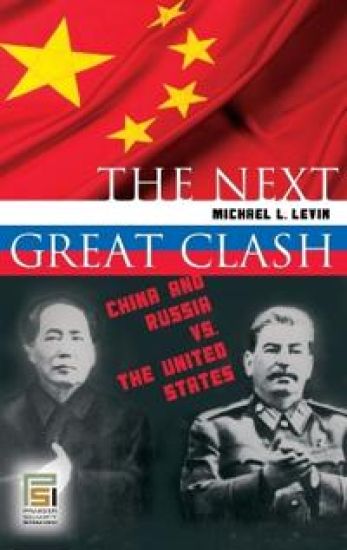
These are uncertain times. The balance of power is continually shifting worldwide. In The Next Great Clash, Michael Levin presents evidence of a global political order on the verge of a historic power shift from West to East. A reemerging China is the only nation with the latent capacity to challenge American hegemony, and Levin demonstrates that such challenges to the status quo usually lead to war. Russia, even in its diminished capacity since the end of the Cold War, has deftly positioned itself as the swing player in a future conflict between the United States and China. Levin contends that, since the turn of the century, the global War on Terror has distracted the United States from these developments, as China and Russia draw closer together in an alliance that may well displace American primacy. The Next Great Clash, augmented by personal experience in China, Russia, and the United States, combines years of scholarly research and political analysis—along with a riveting and up-to-date history of Chinese-Russian relations. This bold and iconoclastic tour de horizon is a must-read for anyone interested in international affairs.

A Geneology of Modernism is a study of literary transition in the first two decades of this century, a period of extraordinary ferment and great accomplishment, during which the avant-garde gradually consolidated a secure place within English culture. Michael Levenson analyses that complex process by following the successive phases of a literary movement - Impressionist, Imagist, Vorticist, Classicist - as it attempted to formulate the principles on which a new aesthetic might be founded. The emphasis here falls on the ideology of modernism, but throughout the book the ideological question is tied on the one hand to specific literary works and on the other to general movements in philosophy and the fine arts. The major figures under discussion, Joseph Conrad, Ford Madox Ford, Ezra Pound, Wyndham Lewis, and T. S. Elliot, are placed in relation to thinkers who have been largely neglected in the history of modernism: Max Stirner, Wilhelm Worringer, Pierre Lasserre, Allen Upward, and Hilaire Belloc. Levenson thus situates the emergence of a modernist aesthetic within the context of literary theory, literary practice, and cultural history.