Kirjojen hintavertailu. Mukana 11 342 296 kirjaa ja 12 kauppaa.

Kirjahaku

Etsi kirjoja tekijän nimen, kirjan nimen tai ISBN:n perusteella.

1000 tulosta hakusanalla Michael M. Woolfson; Malcolm S. Woolfson

Mathematics for Physics

Mathematics for Physics

Michael M. Woolfson; Malcolm S. Woolfson

Oxford University Press
2006
nidottu
Mathematics is the essential language of science. It enables us to describe abstract physical concepts, and to apply these concepts in practical ways. Yet mathematical skills and concepts are an aspect of physics that many students fear the most. Mathematics for Physics recognizes the challenges faced by students in equipping themselves with the maths skills necessary to gain a full understanding of physics. Working from basic yet fundamental principles, the book builds the students' confidence by leading them through the subject in a steady, progressive way. As its primary aim, Mathematics for Physics shows the relevance of mathematics to the study of physics. Its unique approach demonstrates the application of mathematical concepts alongside the development of the mathematical theory. This stimulating and motivating approach helps students to master the maths and see its application in the context of physics in one seamless learning experience. Mathematics is a subject mastered most readily through active learning. Mathematics for Physics features both print and online support, with many in-text exercises and end-of-chapter problems, and web-based computer programs, to both stimulate learning and build understanding. Mathematics for Physics is the perfect introduction to the essential mathematical concepts which all physics students should master.
An Introduction to X-ray Crystallography

An Introduction to X-ray Crystallography

Michael M. Woolfson

Cambridge University Press
1997
pokkari
A textbook for the advanced undergraduate or graduate student beginning a serious study of X-ray crystallography. It will be of interest both to those intending to become professional crystallographers and to those physicists, chemists, biologists, geologists, metallurgists and others who will use it as a tool in their research. All major aspects of crystallography are covered - the geometry of crystals and their symmetry, theoretical and practical aspects of diffracting X-rays by crystals and how the data may be analysed to find the symmetry of the crystal and its structure. Recent advances are fully covered, including the synchrotron as a source of X-rays, methods of solving structures from power data and the full range of techniques for solving structures from single-crystal data. A suite of computer programs is provided for carrying out many operations of data-processing and solving crystal structures - including by direct methods. While these are limited to two dimensions they fully illustrate the characteristics of three-dimensional work. These programs are required for many of the examples given at the end of each chapter but may also be used to create new examples by which students can test themselves or each other.
The Origin and Evolution of the Solar System

The Origin and Evolution of the Solar System

Michael M. Woolfson

Institute of Physics Publishing
2000
sidottu
The origin of the solar system has been a matter of speculation for many centuries, and since the time of Newton it has been possible to apply scientific principles to the problem. A succession of theories, starting with that of Pierre Laplace in 1796, has gained general acceptance, only to fall from favor due to its contradiction in some basic scientific principle or new heavenly observation. Modern observations by spacecraft of the solar system, the stars, and extra-solar planetary systems continuously provide new information that may be helpful in finding a plausible theory as well as present new constraints for any such theory to satisfy. The Origin and Evolution of the Solar System begins by describing historical (pre-1950) theories and illustrating why they became unacceptable. The main part of the book critically examines five extant theories, including the current paradigm, the solar nebula theory, to determine how well they fit with accepted scientific principles and observations. This analysis shows that the solar nebula theory satisfies the principles and observational constraints no better than its predecessors. The capture theory put forward by the author fares better and also indicates an initial scenario leading to a causal series of events that explain all the major features of the solar system.
The Origin and Evolution of the Solar System

The Origin and Evolution of the Solar System

Michael M. Woolfson

Institute of Physics Publishing
2000
nidottu
The origin of the solar system has been a matter of speculation for many centuries, and since the time of Newton it has been possible to apply scientific principles to the problem. A succession of theories, starting with that of Pierre Laplace in 1796, has gained general acceptance, only to fall from favor due to its contradiction in some basic scientific principle or new heavenly observation. Modern observations by spacecraft of the solar system, the stars, and extra-solar planetary systems continuously provide new information that may be helpful in finding a plausible theory as well as present new constraints for any such theory to satisfy. The Origin and Evolution of the Solar System begins by describing historical (pre-1950) theories and illustrating why they became unacceptable. The main part of the book critically examines five extant theories, including the current paradigm, the solar nebula theory, to determine how well they fit with accepted scientific principles and observations. This analysis shows that the solar nebula theory satisfies the principles and observational constraints no better than its predecessors. The capture theory put forward by the author fares better and also indicates an initial scenario leading to a causal series of events that explain all the major features of the solar system.
Physical and Non-Physical Methods of Solving Crystal Structures

Physical and Non-Physical Methods of Solving Crystal Structures

Michael M. Woolfson; Fan Hai-Fu

Cambridge University Press
2005
pokkari
Theoretical and experimental advances in the techniques available for solving crystal structures have led to the development of several powerful techniques for solving complex structures, including those of proteins. In this 1995 book, Michael Woolfson and Fan Hai-Fu describe all the available methods and how they are used. In addition to traditional methods such as the use of the Patterson function and isomorphous replacement, and the direct methods, the authors include methods that use anomalous scattering and observations from multiple-beam scattering. The fundamental physics and mathematical analyses are fully explained. Practical aspects of applying the methods are emphasised.
Physical and Non-Physical Methods of Solving Crystal Structures

Physical and Non-Physical Methods of Solving Crystal Structures

Michael M. Woolfson; Fan Hai-Fu

Cambridge University Press
1995
sidottu
Theoretical and experimental advances in the techniques available for solving crystal structures have led to the development of several powerful techniques for solving complex structures, including those of proteins. Michael Woolfson and Fan Hai-fu describe all the available methods and how they are used. In addition to traditional methods such as the use of the Patterson function and isomorphous replacement, and the direct methods, the authors include methods that use anomalous scattering and observations from multiple-beam scattering. The fundamental physics and mathematical analyses are fully explained. Practical aspects of applying the methods are emphasised.
Memoirs: Remembering My Father, Michael E. DeBakey, M.D.

Memoirs: Remembering My Father, Michael E. DeBakey, M.D.

Michael M. Debakey

Dorrance Publishing Co.
2019
sidottu
This is a story of a son growing up with a famous father and the evolution of their relationship as he strives for success on his own terms while seeking his father's acceptance. Michael E. DeBakey, M.D., had an illustrious and well-respected career that spanned more than seventy years. From his foundational years in medicine during World War II to his innovations in cardiovascular care to his work as the head of Baylor College of Medicine in Houston and then as one of the pioneers of Texas Medical Center, the largest medical center in the world, Dr. DeBakey was a force to be reckoned with in the medical community and a source of inspiration and respect among his family, friends, and colleagues. Dr. DeBakey's legacy includes more than sixty thousand cardiovascular surgeries, dozens of cardiovascular inventions, more than 1,600 authored books and articles, and even the covers of TIME and LIFE magazines. Memoirs is a look not just at Dr. DeBakey's celebrated life and career, but of his relationship with his son, Michael. Dr. DeBakey's fame and success, while sometimes difficult to measure up to, served as a great motivator for Michael's own success and achievements. About the Author Michael M. DeBakey was born in New Orleans, Louisiana, and raised in Houston, Texas. A career with Texaco took Michael to Lima, Peru, right out of college. In Lima, he married, raised his family, and started his own business. He continues to live there. Memoirs is a personal account of Michael's childhood and adulthood as he learned from his famous and well-respected father while discovering his own happiness and success.
ESSENZEN_Blau: Dichtungen von Michael Stoll

ESSENZEN_Blau: Dichtungen von Michael Stoll

Michael M. Stoll

tredition GmbH
2018
nidottu
Das zeichenreiche, abstrakt-philosophische Werk der "Essenzen" vermittelt dem Leser kaleidoskopartig Wortbilder die ihre Kraft aus einer befreiten, unverbauten Nat rlichkeit sch pfen. Darin reflektieren sie die vielf ltigen, ganz eigent mlichen Einflusssph ren des K nstlers: Das sensible Schauen auf die Au enr ume des eigenen Lebenskreises, dem skurrilen Spielfeld von Gesellschaft und Schicksal, die Faszination der Natur...; Schlie lich, die unterschwellige Frage nach dem letzten Sinn, - und in zarten Untert nen die m gliche Antwort des Dichters darauf. Das aufmerksame Hinh ren in den Innenraum eigen Erlebtes; Erfahrung von St rke und Zerbrechlichkeit, von Ergreifenwollen und Loslassenm ssen, von gewonnenem Gl ck und verlorenen K mpfen, von Zersplitterung altvertrauter Welten zieht sich wie ein roter Faden durch eine Wortgestaltung, die wie kaum eine andere aus der Unmittelbarkeit des Lebens flie t. Die nat rliche Abstraktion der Dichtungen - und nichts anderes als Dichtung im ehrlichsten Sinne wollen die "Essenzen" sein, deckt sich oft mit der Symbolsprache archetypischer Bilder. Naturstimmungen, Atmosph re schaffende vertraute Formen werden zitiert, ohne dass der Leser sich an allzu Konkretem, Gekanntem, festhalten kann. Jeder Versuch, es sich in den Texten gem tlich zu machen, entgleitet an seiner Subtilit t, seinem Fluss und provozierenden Kryptik; es ist das 'Gewand', in dem die Dichtung in einer transformierten, neuen mythologischen Gewandtheit an den Leser herantritt. Michael Stoll spielt in seiner Dichtung bewusst wie intuitiv mit archetypischen Sprachausdr cken, Wortstimmungen - mit Impressionen und Streiflichtern, die immer wieder um- und wegzukippen drohen, und ganz unvorhergesehene Metamorphosen durchlaufen. Der Dichter f hrt den Leser so ber seine Lese- und H rgewohnheiten hinaus, um ihn in die Stimmung und Gedanken der "Essenzen" einschwingen zu lassen und ihm unerwartete Wahrnehmungs- und Verstehensr ume zu ffnen.
Phylogenetic Analysis of DNA Sequences

Phylogenetic Analysis of DNA Sequences

Michael M. Miyamoto; Joel Cracraft

Oxford University Press Inc
1992
sidottu
With increasing frequency, systematic and evolutionary biologists have turned to the techniques of molecular biology to complement their traditional morphological and anatomical approaches to questions of historical relationship and descent among groups of animals and plants. In particular, the comparative analysis of DNA sequences is becoming a common and important focus of research attention today. This volume surveys the emerging field of molecular systematics of DNA sequences by focusing on the following topics: DNA sequence data acquisition; phylogenetic inference; congruence and consensus problems; limitations of molecular data; and integration of molecular and morphological data sets. The volume takes its inspiration from a major symposium sponsored by the American Society of Zoologists and the Society of Systematic Zoology in December, 1989.
Explore Theatre -- Instant Access

Explore Theatre -- Instant Access

Michael M O'Hara; Judith Sebesta

PEARSON
2010
muu
Explore Theatre kindles theatre student desire for watching live performance while enhancing their ability to do so intelligently through a digital learning environment designed to encourage critical and constructive thinking about theatre. This video rich, online resource facilitates multiple strategies of teaching and learning that can significantly enhance Introductory Theatre courses in large lecture, small discussion, distance and web based, or seminar style class. By building upon students’ experiences as digital audience members, Explore Theatre fosters greater understanding of the relationships between text, actor, and audience and builds bridges to live theatre and its history.
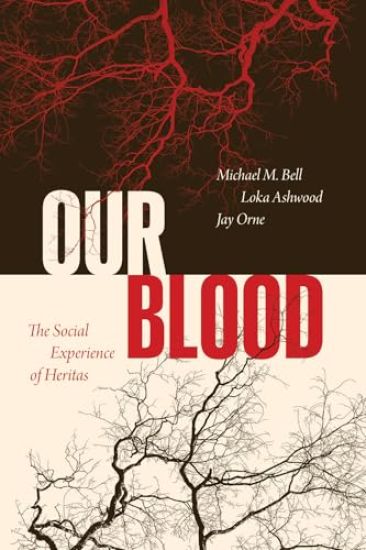
Our Blood

Our Blood

Michael M. Bell; Loka Ashwood; Jay Orne

THE UNIVERSITY OF CHICAGO PRESS
2026
sidottu
Who are we, where do we come from, and why does it matter? From whom do I come? Our Blood describes the central importance of our sense not just of our heritage, but our embodied heritage: that our past is in our bodies and runs in our blood, and that our embodied past is central to our futures. Deeply felt heritas, as Michael M. Bell, Loka Ashwood, and Jay Orne call it, can be a source of great love and kindness for one another. But it can also be a beautiful horror, the source of some of our greatest hate and meanness towards one another. We think of our embodied heritage as natural and historical facts, beyond our choice, and therefore free of manipulation for social gain. We think of it as spirited presences in our bodies that we did not choose. We think of its origins as external to us, whether we are talking about family, class, caste, places, things, ethnoraciality, or our professions. We think of it as legitimate and rightful, therefore. But we do choose. We do select. Bell, Ashwood, and Orne argue that greater awareness of heritas’s social origins and social selectivity can help us cultivate a wider sense of mutual care and ease the divisiveness of our time. Ultimately, Our Blood asks us all to consider heritas, and in doing so, to perhaps even reconsider our very selves.
Our Blood: The Social Experience of Heritas

Our Blood: The Social Experience of Heritas

Michael M. Bell; Loka Ashwood; Jay Orne

University of Chicago Press
2026
nidottu
Who are we, where do we come from, and why does it matter? From whom do I come? Our Blood describes the central importance of our sense not just of our heritage, but our embodied heritage: that our past is in our bodies and runs in our blood, and that our embodied past is central to our futures. Deeply felt heritas, as Michael M. Bell, Loka Ashwood, and Jay Orne call it, can be a source of great love and kindness for one another. But it can also be a beautiful horror, the source of some of our greatest hate and meanness towards one another. We think of our embodied heritage as natural and historical facts, beyond our choice, and therefore free of manipulation for social gain. We think of it as spirited presences in our bodies that we did not choose. We think of its origins as external to us, whether we are talking about family, class, caste, places, things, ethnoraciality, or our professions. We think of it as legitimate and rightful, therefore. But we do choose. We do select. Bell, Ashwood, and Orne argue that greater awareness of heritas's social origins and social selectivity can help us cultivate a wider sense of mutual care and ease the divisiveness of our time. Ultimately, Our Blood asks us all to consider heritas, and in doing so, to perhaps even reconsider our very selves.
Climate Travels

Climate Travels

Michael M. Gunter

Columbia University Press
2023
sidottu
Winner, 2023 Choice Outstanding Academic TitleWinner, 2023 Foreword INDIES Book of the Year Award in the category of Ecology and Environment, Foreword ReviewsMany accounts of climate change depict disasters striking faraway places: melting ice caps, fearsome hurricanes, all-consuming fires. How can seeing the consequences of human impacts up close help us grasp how global warming affects us and our neighbors? This book is a travelogue that spotlights what a changing climate looks like on the local level—for wherever local happens to be.Michael M. Gunter, Jr. takes readers around the United States to bear witness to the many faces of the climate crisis. He argues that conscientious travel broadens understanding of climate change and makes its dangers concrete and immediate. Vivid vignettes explore the consequences for people and communities: sea level rise in Virginia, floods sweeping inland in Tennessee, Maine lobsters migrating away from American territorial waters, and imperiled ecosystems in national parks, from Alaskan permafrost to the Florida Keys. But Gunter finds inspiring initiatives to mitigate and adapt to these threats, including wind turbines in a tiny Texas town, green building construction in Kansas, and walkable urbanism in Portland, Oregon. These projects are already making a difference—and they underscore the importance of local action.Drawing on interviews with government officials, industry leaders, and alternative energy activists, Climate Travels emphasizes direct personal experience and the centrality of environmental justice. Showing how travel can help bring the reality of climate change home, it offers readers a hopeful message about how to take action on the local level themselves.
Climate Travels

Climate Travels

Michael M. Gunter

Columbia University Press
2023
pokkari
Winner, 2023 Choice Outstanding Academic TitleWinner, 2023 Foreword INDIES Book of the Year Award in the category of Ecology and Environment, Foreword ReviewsMany accounts of climate change depict disasters striking faraway places: melting ice caps, fearsome hurricanes, all-consuming fires. How can seeing the consequences of human impacts up close help us grasp how global warming affects us and our neighbors? This book is a travelogue that spotlights what a changing climate looks like on the local level—for wherever local happens to be.Michael M. Gunter, Jr. takes readers around the United States to bear witness to the many faces of the climate crisis. He argues that conscientious travel broadens understanding of climate change and makes its dangers concrete and immediate. Vivid vignettes explore the consequences for people and communities: sea level rise in Virginia, floods sweeping inland in Tennessee, Maine lobsters migrating away from American territorial waters, and imperiled ecosystems in national parks, from Alaskan permafrost to the Florida Keys. But Gunter finds inspiring initiatives to mitigate and adapt to these threats, including wind turbines in a tiny Texas town, green building construction in Kansas, and walkable urbanism in Portland, Oregon. These projects are already making a difference—and they underscore the importance of local action.Drawing on interviews with government officials, industry leaders, and alternative energy activists, Climate Travels emphasizes direct personal experience and the centrality of environmental justice. Showing how travel can help bring the reality of climate change home, it offers readers a hopeful message about how to take action on the local level themselves.
Herder and the Poetics of Thought

Herder and the Poetics of Thought

Michael M. Morton

Pennsylvania State University Press
1990
sidottu
At the first and most basic level this work is a close reading of Herder's early essay "Uber den Fleiss in mehreren gelehrten Sprachen" (On Diligence in Several Learned Languages) of 1764.Morton offers the first extended examination of Herder's distinctive philosophical and rhetorical idiom. He argues that Herder's often difficult style is not the mere hindrance to understanding it has often been taken to be, but rather that the substance of his thought is in fact integrally bound up with precisely how he constructs the texts intended to express it. The meaning of a Herderian text, Morton maintains, is conveyed both through the overt content of its propositions and, at the same time, through the various poetic techniques by which they are woven together. Interpretation of Herder's work thus depends on looking not only at what the words say (or appear to) but also, as with any literary text, at what they actually do—or, in the terms of the dialectic to which Morton refers throughout the book, at the gestural no less than the discursive dimension of the text. Morton argues that the essay represents the essential key to the shape and direction of Herder's thought at large. In so doing, he provides a basis for a reassessment of Herder's position in intellectual and literary history generally, with particular reference to his role in the development of German Idealism, his key contribution to the foundations of Romanticism, and the impetus provided by his work to the rise of both linguistic and historicist paradigms of thought. This work is of importance to scholars both in German studies and in other fields working with the eighteenth and early nineteenth centuries, as well as to all those concerned with modern intellectual history, philosophy of language, and philosophy of history.
Herder and the Poetics of Thought

Herder and the Poetics of Thought

Michael M. Morton

Pennsylvania State University Press
1989
pokkari
At the first and most basic level this work is a close reading of Herder's early essay "Uber den Fleiss in mehreren gelehrten Sprachen" (On Diligence in Several Learned Languages) of 1764.Morton offers the first extended examination of Herder's distinctive philosophical and rhetorical idiom. He argues that Herder's often difficult style is not the mere hindrance to understanding it has often been taken to be, but rather that the substance of his thought is in fact integrally bound up with precisely how he constructs the texts intended to express it. The meaning of a Herderian text, Morton maintains, is conveyed both through the overt content of its propositions and, at the same time, through the various poetic techniques by which they are woven together. Interpretation of Herder's work thus depends on looking not only at what the words say (or appear to) but also, as with any literary text, at what they actually do—or, in the terms of the dialectic to which Morton refers throughout the book, at the gestural no less than the discursive dimension of the text. Morton argues that the essay represents the essential key to the shape and direction of Herder's thought at large. In so doing, he provides a basis for a reassessment of Herder's position in intellectual and literary history generally, with particular reference to his role in the development of German Idealism, his key contribution to the foundations of Romanticism, and the impetus provided by his work to the rise of both linguistic and historicist paradigms of thought. This work is of importance to scholars both in German studies and in other fields working with the eighteenth and early nineteenth centuries, as well as to all those concerned with modern intellectual history, philosophy of language, and philosophy of history.
Debating Muslims

Debating Muslims

Michael M.J. Fischer; Mehdi Abedi

University of Wisconsin Press
1990
nidottu
The aim of this book is to present in their historical context the debates that have been taking place in the Muslim world recently. It describes the place of Iranian culture in contemporary art and thought and the increasing influence Muslims are having on Western societies. In an introductory autobiographical chapter, Mehdi Abedi introduces readers to the world of Shi'ite believers. Beginning with the overthrow of Mossadegh in 1953 he describes Iranian class structure, patronage network, socialization, and religious psychology and shows how the political consciousness of an entire generation of Iranian youth - both religious fundamentalist and Marxist - was formed and exercised. Continuing with a description of how Muslims read and interpret the Qur'an, Michael Fischer and Mehdi Abedi set the interpretations against contemporary theories of reading in the modernist and postmodernist West and against contemporary Jewish and Christian thought. Other chapters analyze the hajj, the pilgrimage to Mecca and its various functions; describe the debate about nationalism and Islam between Shariati and Motahhari, two thinkers crucial to the revolution; outline the historical evolution of Baha'ism as apart from Shi'ism; and consider the burgeoning diaspora of Muslims in the West, using Houston as an example. A final chapter considers Iranian art as illustrative of the postmodern, intercultural context of the revolution and of contemporary Islam.
Wisconsin Sentencing in the Tough-on-Crime Era

Wisconsin Sentencing in the Tough-on-Crime Era

Michael M. O'Hear

University of Wisconsin Press
2017
sidottu
The dramatic increase in U.S. prison populations since the 1970s is often blamed on the mandatory sentencing required by “three strikes” laws and other punitive crime bills. Michael M. O’Hear shows that the blame is actually not so easy to assign. His meticulous analysis of incarceration in Wisconsin—a state where judges have considerable discretion in sentencing—shows that the prison population has ballooned anyway, increasing nearly tenfold over forty years.O’Hear tracks the effects of sentencing laws and politics in Wisconsin from the eve of the imprisonment boom in 1970 up to the 2010s. Drawing on archival research, original public-opinion polling, and interviews with dozens of key policymakers, he reveals important dimensions that have been missed by others. He draws out the lessons from the incarcerations that have cost taxpayers billions of dollars and caused untold misery to millions of inmates and their families.