Kirjojen hintavertailu. Mukana 11 342 296 kirjaa ja 12 kauppaa.

Kirjahaku

Etsi kirjoja tekijän nimen, kirjan nimen tai ISBN:n perusteella.

1000 tulosta hakusanalla Michael McMullen

The Bahá'í

The Bahá'í

Michael McMullen

Rutgers University Press
2000
nidottu
The Bahá’í Faith is one of the fastest growing, but least studied, of the world’s religions. Adherents view themselves as united by a universal belief that transcends national boundaries. Michael McMullen examines how the Bahá’í develop and maintain this global identity. Taking the Bahá’í community in Atlanta, Georgia, as a case in point, his book is the first to comprehensively examine the tenets of this little-understood faith.McMullen notes that, to the Bahá’í, Buddha, Moses, Jesus, and Mohammed are all divinely sent teachers of ‘the Truth’, whose messages conform to the needs of their individual cultures and historical periods. But religion—which draws from the teaching of Bahá’u’lláh, a nineteenth-century Persian—encourages its members to think of themselves as global citizens. It also seeks to establish unity among its members through adherence to a Bahá’í worldview.By examining the Atlanta Bahá’í community, McMullen shows how this global identity is interpreted locally. He discusses such topics as: the organizational structure and authority relations in the Bahá’í “Administrative Order”; Bahá’í evangelicalism; and the social boundaries between Bahá’ís and the wider culture.
Garbage Boy

Garbage Boy

Michael McMullen

Friesenpress
2023
pokkari
Garbage Boy-a.k.a. Scarface, a.k.a. William-has had it rough his entire life. Facing off against a deadbeat dad and his mom's abusive boyfriend, he's had to fight every step of the way just to survive. Not only that, his family's low social status makes him an object of ridicule and abuse among his peers and the community at large. That all begins to change when Garbage Boy meets up with Mister and Stone Pony, two mysterious men who enlist his aid in their growing sanitation enterprise. Who would have thought picking up garbage would be the road to redemption, never mind riches? But not even that comes easily for Garbage Boy. Although Garbage Boy's situation improves remarkably at first, the deeper his involvement with Mister and Stone Pony, the more complicated his life becomes, to the point he risks losing everything he's fought so hard to gain. The book implies an ethical question "Does a wrong become right if you have been wronged all along?"
Garbage Boy

Garbage Boy

Michael McMullen

Friesenpress
2023
sidottu
Garbage Boy-a.k.a. Scarface, a.k.a. William-has had it rough his entire life. Facing off against a deadbeat dad and his mom's abusive boyfriend, he's had to fight every step of the way just to survive. Not only that, his family's low social status makes him an object of ridicule and abuse among his peers and the community at large. That all begins to change when Garbage Boy meets up with Mister and Stone Pony, two mysterious men who enlist his aid in their growing sanitation enterprise. Who would have thought picking up garbage would be the road to redemption, never mind riches? But not even that comes easily for Garbage Boy. Although Garbage Boy's situation improves remarkably at first, the deeper his involvement with Mister and Stone Pony, the more complicated his life becomes, to the point he risks losing everything he's fought so hard to gain. The book implies an ethical question "Does a wrong become right if you have been wronged all along?"
Örtmedicin : naturens läkande kraft
Läkeväxter och dess användning har gammal tradition. Sedan minst 50 000 år har örter använts för att stärka människans vitalitet samt förebygga och läka sjukdom. Ända sedan grottmänniskorna läkte sår och helade sjukdomar med medicin från naturen fram till våra dagars växtbaserade ört- och läkemedel har naturens läkande kraft spelat en viktig roll för vår hälsa. Utan dem hade vi inte överlevt. I och med industrisamhällets och den moderna sjukvårdens intåg i vår kultur tappade vi dock en del av respekten och intresset för, och kunskapen om, växternas holistiska läkande kraft. Det är hög tid att återta det sunda förnuftet och leva rikare enklare.På vissa områden är det väldigt lite som skiljer grottmänniskorna från dagens individer. Ett område är behovet av enkel livsstil. Vi behöver enkel, näringsrik och ren föda tillsammans med motion och glädje för att hålla oss friska och vitala. De goda nyheterna är att naturens krafter bestämmer över människan, så vi har inget att välja på. Om människan vill överleva behöver vi återgå till de gamla traditionernas örtläkekonst tillsammans med nya kunskaper och forskningsrön som 2000-talet erbjuder – Örtmedicin på 2000-talet!Mic McMullen kommer från Australien. Han har läst fysik, kemi, statistik, histori- & filosofivetenskap, forskningsteknik (3 år) på, och är utbildad psykolog från universitet i Sydney. Han är också utbildad audiolog. Han har examen i örtmedicin från Southern Cross College i Australien och har naturopatexamen (näring och massage) från Nature Care i Sydney. Mic är bosatt i Sverige sedan 1986 och har arbetat på flera hälsohem och bedrivit egen praktik.Mic är också en av grundarna av Nordiska Närings & Fytoterapiskolan, där han också är rektor för fytoterapidelen. NNFS utbildar sedan 1997 studenter i näringsterapi och örtmedicin. Utbildningen är godkänd av Svenska Naturläkarförbundet.
Daily Readings - William Wilberforce

Daily Readings - William Wilberforce

Michael D. McMullen; William Wilberforce

CHRISTIAN FOCUS PUBLICATIONS LTD
2023
erikoissidos
A window into the heart of an abolitionary. William Wilberforce is probably best known as the leader of the parliamentary campaign for the abolition of the slave trade in the United Kingdom. But behind his heart for justice lay a commitment and desire to serve God that permeated not only his life, but also his writings. Michael D. McMullen has worked extensively on the life and manuscripts of Wilberforce and has carefully selected these daily readings to help readers not only know the man better, but also to point their eyes to the God whom he served. This beautifully presented gift edition contains daily readings are dated for every day of the year. On each day, a verse of scripture is accompanied by a reflection taken from his spiritual journals and his one published book, as well as his unpublished works, letters, and recorded reflections on scriptures. The readings are accompanied by a biographical introduction detailing the context into which Wilberforce ministered. In these writings we meet a man who is introspective and self–deprecating, believing he fell far short of the standards expected of a Christian. But his devotion and love for the God who called him to be an ‘Agent of Usefulness’ is abundantly clear. These words that he wrote to challenge and encourage himself will do the same for a new generation of readers. May Wilberforce’s passionate pursuit of God stir you to do likewise.
The Chapleau Boys Go To War

The Chapleau Boys Go To War

Michael J. Morris; Michael K. McMullen

Independently Published
2019
nidottu
World War 1 and World War 2 resulted in Canadians from all walks of life serving in the country's armed forces. This is the story of the contributions and sacrifices made during these two wars, at home and abroad, by the people of Chapleau, Ontario, a small village in Canada's North, and especially by the 36 who died in WW1 and the 29 who died in WW2.
William Wilberforce

William Wilberforce

William Wilberforce; Michael D. McMullen

Christian Heritage
2021
sidottu
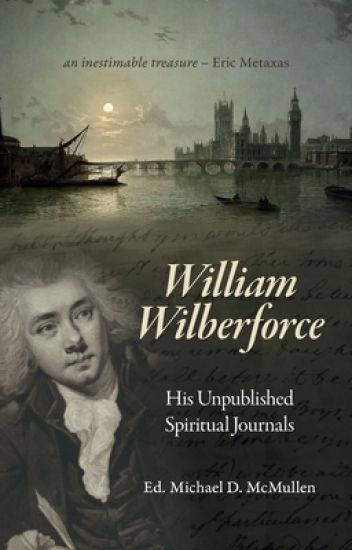
These spiritual journals will give readers insight into the heart and mind of one of Britain’s leading abolitionists. William Wilberforce (1759–1833) is best remembered as a leading figure in the movement to have the slave trade abolished throughout the British Empire. He was a Member of Parliament from the age of 21 until he retired due to ill health at the age of 66. His conversion in 1785 caused him to change his lifestyle and to commit his future life and work to the service of God. He wrote a series of spiritual journals as a record of his spiritual pilgrimage. These journals are an honest record of Wilberforce’s spiritual life: the Scriptures and Christian books he read; people he met; people he witnessed to; his spiritual and physical struggles; and many other fascinating insights. Throughout his writings his constant desire to be a better Christian is striking. This man, admired by many, saw himself as a sinner, and his diaries are filled with his striving to put this sin to death. He follows a Puritan pattern of self–introspection and his journals are form of spiritual confession. Michael McMullen has transcribed the original manuscripts and has added many helpful annotations and footnotes. Scripture passages, book titles, names of people and events are clarified. These annotations will assist the reader to better understand the context and value of the journals. This work gives an invaluable insight into the life and motivations of William Wilberforce. There is much to be gleaned from his example in life and culture today.
Building Low-Code Applications with Mendix

Building Low-Code Applications with Mendix

Bryan Kenneweg; Imran Kasam; Micah McMullen; Michael Guido

Packt Publishing Limited
2021
nidottu
Transform your app ideas into fully functional prototypes with the help of expert tips and best practices from Mendix partnersKey FeaturesMeet the ever-increasing demand for software solution delivery without having to write any codeBuild high-availability, low-cost applications unlike those developed via a traditional software engineering approachExplore Mendix from product design through to delivery using real-world scenariosBook DescriptionLow-code is a visual approach to application development. It enables developers of varying experience levels to create web and mobile apps using drag-and-drop components and model-driven logic through a graphic user interface. Mendix is among the fastest-growing platforms that enable low-code enthusiasts to put their software ideas into practice without having to write much code, and Building Low-Code Applications with Mendix will help you get up and running with the process using examples and practice projects. The book starts with an introduction to Mendix, along with the reasons for using this platform and its tools for creating your first app. As you progress, you’ll explore Mendix Studio Pro, the visual environment that will help you learn Mendix app creation. Once you have your working app ready, you’ll understand how to enhance it with custom business logic and rules. Next, you’ll find out how to defend your app against bad data, troubleshoot and debug it, and finally, connect it with real-world business platforms. You’ll build practical skills as the book is filled with examples, real-world scenarios, and explanations of the tools needed to help you build low-code apps successfully. By the end of this book, you’ll have understood the concept of low-code development, learned how to use Mendix effectively, and developed a working app.What you will learnGain a clear understanding of what low-code development is and the factors driving its adoptionBecome familiar with the various features of Mendix for rapid application developmentDiscover concrete use cases of Studio ProBuild a fully functioning web application that meets your business requirementsGet to grips with Mendix fundamentals to prepare for the Mendix certification examUnderstand the key concepts of app development such as data management, APIs, troubleshooting, and debuggingWho this book is forThis book is for tech-savvy business analysts and citizen developers who want to get started with Mendix for rapid mobile and web application development. The book is also helpful for seasoned developers looking to learn a new tool/platform and for anyone passionate about designing technical solutions without wanting to indulge in the complexities of writing code. The book assumes beginner-level knowledge of object-oriented programming and the ability to translate technical solutions from business requirements.
Lost in Florida

Lost in Florida

Michael J T McMillen

River Stone Publishing Group
2022
pokkari
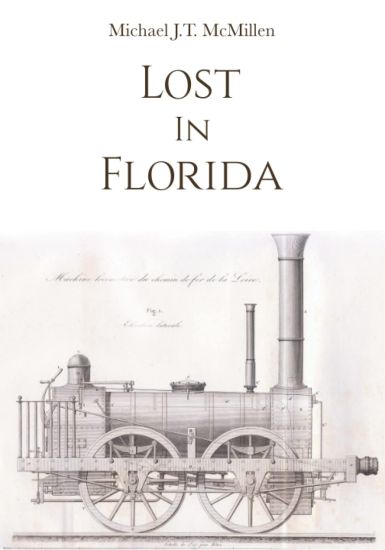
In 1836 The Proprietors of Locks and Canals on Merrimack River sold two locomotives to a start-up railroad in the Florida Territory. The Pensacola Railroad never built an inch of track or a whit of system infrastructure. The railroad was mere conception. Part of a grandiose scheme of a group of Floridians, led by William H. Chase, to channel cotton and lumber from Alabama and Georgia through Pensacola Bay. The Floridians would reap the benefits through a Pensacola real estate development project and the new Bank of Pensacola. The bank controlled the railroad. It was intended to control U.S. federal government largess for building forts and military installations in Pensacola and the Gulf of Mexico. The Bank of Pensacola issued bonds to finance the scheme. The Florida Territory guaranteed the bonds. Northern financiers were enlisted to purchase the bonds. Those financiers took control of the Bank of Pensacola and the real estate development project. The Bank of Pensacola collapsed in the Panic of 1837. Florida repudiated its bond guarantee. The two locomotive engines disappeared. Patrick Tracy Jackson, the Locks & Canals treasurer, took his lessons from the Pensacola Railroad debacle. In subsequent engine sale transactions, Jackson developed the core elements of an equipment finance structure. The structure was refined in rolling stock sales to the Baltimore & Susquehanna and the Philadelphia & Reading. It was the core of the Schuylkill Navigation boat loans and the car and equipment trusts of Lehigh Coal & Navigation, the Jersey Central, and the Pennsylvania Railroad. It is used still for financing acquisitions of all manner of equipment and projects. This book explores the intricate web of transactions surrounding the Locks & Canals sale of locomotives to the Pensacola Railroad and the mystery of the two lost engines. Available formats: (a) hardcover with color interior; (b) paperback with color interior; and (c) paperback with black and white interior.
Patrick Tracy Jackson, Philadelphia & Reading

Patrick Tracy Jackson, Philadelphia & Reading

Michael J T McMillen

River Stone Publishing Group
2025
pokkari
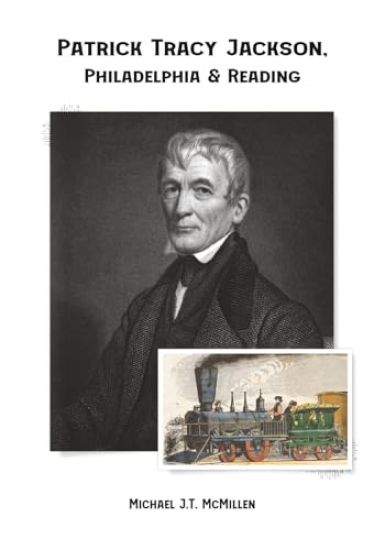
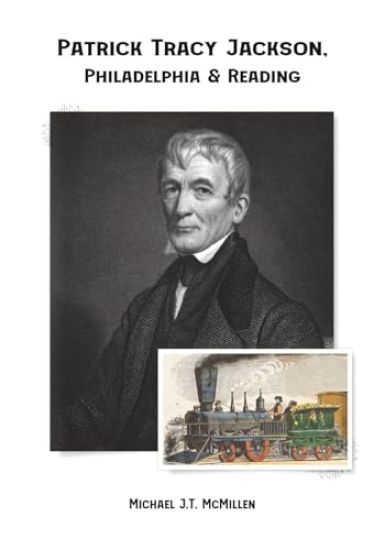
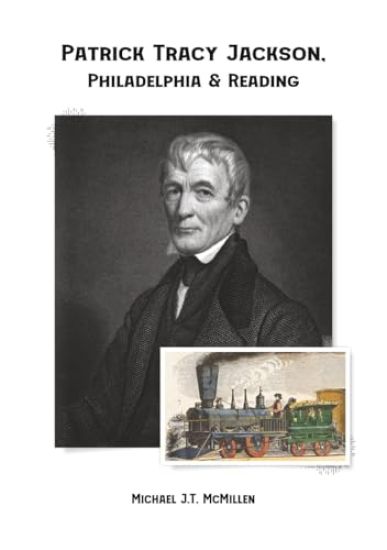
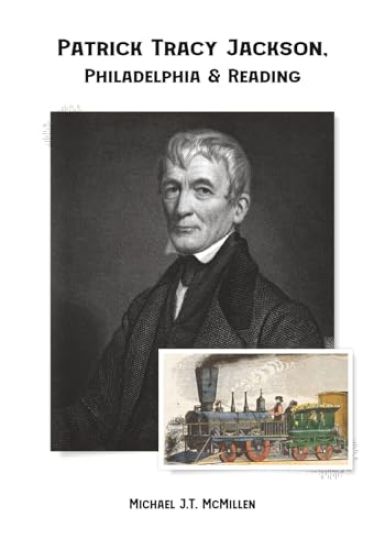
After the Panic of 1837, the Locks & Canals machine shop had little work; it was to be sold or converted to a twist mill. The L&C treasurer, Patrick Tracy Jackson, strove to keep the shop busy pending sale or conversion. An 1841 plea to Jackson from Elihu Chauncey, president of the Philadelphia & Reading railroad, seemed salvation. Despite incomplete infrastructure, the P&R would begin operating in 1842. It urgently needed coal cars and locomotives to carry anthracite from Pennsylvania fields to Philadelphia. But its financial situation was dire, its debt in default, its assets being seized by sheriffs. It struggled to borrow. Its bridges suffered arson; its trains were derailed. Statutory completion deadlines loomed. Despite the risks, L&C built P&R cars and engines.There were conditions to award of the teased building contracts. Chauncey wanted L&C to make loans to the P&R. L&C had no interest in lending. Jackson sought P&R equity enabling participation in two infant industries: railroads and coal. Chauncey concocted a surreptitious scheme to acquire P&R stock from the Bank of the United States for sale to L&C, thereby diminishing the bank's power over the P&R.Nine months later, the P&R and L&C entered into the 1842 Running Gear Contract for running gear for wood jimmies. Developing a financial structure for the locomotives transaction consumed a year: the Engines Contract for locomotives and coal cars was signed in 1843. For the contracts, Jackson developed unique financial structures to protect L&C, as builder and financier, while allowing P&R use of the equipment for revenue generation. How could L&C sell equipment to, and ensure receipt and retention of payments from, an insolvent railroad (the P&R) that had not yet, or had only recently, commenced operations, during a severe economic depression or other adverse financial circumstances?The transaction went badly. Neither Jackson nor the P&R anticipated new iron coal cars or Baldwin's flexible beam truck: they rendered small L&C engines inadequate. Builders of large engines were paid; L&C received little. Payment defaults were continuous (for years), diminishing L&C's ability to sell the machine shop.This is a story of desperation, debt, and default: of balancing on the brink of bankruptcy. Jackson began with payment admonitions, eventually including favonian, then whetted, threats of resort to legal remedies. L&C acquired P&R stock and bonds and aligned with P&R stockholders and bond holders. His focus expanded beyond the equipment debt to the P&R's financial health, especially elimination of floating debt. In 1845, L&C and P&R bond holders initiated one of the first audits of managerial custodianship in U.S. corporate history. A Pennsylvania law was enacted allowing bond holders voting rights on a parity with stockholders.When further efforts at suasion and blandishment failed, Jackson sought legal advice from the eminent Philadelphia lawyer Horace Binney. Binney and Jackson developed an elegant four-step plan to take control of the trusts and debt under the Rolling Stock Contracts and neutralize the P&R. The plan derived from contract terms, threats of legal remedies (including personal liability for trustees), and extra-legal mechanisms. Within two months, L&C took control of the remedies relating to the P&R debt from the trustees, neutralized the P&R, and forced a P&R financial restructuring. Its value enhanced, L&C rid itself of the P&R debt. But more was needed.
Patrick Tracy Jackson, Philadelphia & Reading

Patrick Tracy Jackson, Philadelphia & Reading

Michael J T McMillen

River Stone Publishing Group
2025
pokkari
After the Panic of 1837, the Locks & Canals machine shop had little work; it was to be sold or converted to a twist mill. The L&C treasurer, Patrick Tracy Jackson, strove to keep the shop busy pending sale or conversion. An 1841 plea to Jackson from Elihu Chauncey, president of the Philadelphia & Reading railroad, seemed salvation. Despite incomplete infrastructure, the P&R would begin operating in 1842. It urgently needed coal cars and locomotives to carry anthracite from Pennsylvania fields to Philadelphia. But its financial situation was dire, its debt in default, its assets being seized by sheriffs. It struggled to borrow. Its bridges suffered arson; its trains were derailed. Statutory completion deadlines loomed. Despite the risks, L&C built P&R cars and engines.There were conditions to award of the teased building contracts. Chauncey wanted L&C to make loans to the P&R. L&C had no interest in lending. Jackson sought P&R equity enabling participation in two infant industries: railroads and coal. Chauncey concocted a surreptitious scheme to acquire P&R stock from the Bank of the United States for sale to L&C, thereby diminishing the bank's power over the P&R.Nine months later, the P&R and L&C entered into the 1842 Running Gear Contract for running gear for wood jimmies. Developing a financial structure for the locomotives transaction consumed a year: the Engines Contract for locomotives and coal cars was signed in 1843. For the contracts, Jackson developed unique financial structures to protect L&C, as builder and financier, while allowing P&R use of the equipment for revenue generation. How could L&C sell equipment to, and ensure receipt and retention of payments from, an insolvent railroad (the P&R) that had not yet, or had only recently, commenced operations, during a severe economic depression or other adverse financial circumstances?The transaction went badly. Neither Jackson nor the P&R anticipated new iron coal cars or Baldwin's flexible beam truck: they rendered small L&C engines inadequate. Builders of large engines were paid; L&C received little. Payment defaults were continuous (for years), diminishing L&C's ability to sell the machine shop.This is a story of desperation, debt, and default: of balancing on the brink of bankruptcy. Jackson began with payment admonitions, eventually including favonian, then whetted, threats of resort to legal remedies. L&C acquired P&R stock and bonds and aligned with P&R stockholders and bond holders. His focus expanded beyond the equipment debt to the P&R's financial health, especially elimination of floating debt. In 1845, L&C and P&R bond holders initiated one of the first audits of managerial custodianship in U.S. corporate history. A Pennsylvania law was enacted allowing bond holders voting rights on a parity with stockholders.When further efforts at suasion and blandishment failed, Jackson sought legal advice from the eminent Philadelphia lawyer Horace Binney. Binney and Jackson developed an elegant four-step plan to take control of the trusts and debt under the Rolling Stock Contracts and neutralize the P&R. The plan derived from contract terms, threats of legal remedies (including personal liability for trustees), and extra-legal mechanisms. Within two months, L&C took control of the remedies relating to the P&R debt from the trustees, neutralized the P&R, and forced a P&R financial restructuring. Its value enhanced, L&C rid itself of the P&R debt. But more was needed.

Patrick Tracy Jackson, Philadelphia & Reading

Patrick Tracy Jackson, Philadelphia & Reading

Michael J T McMillen

River Stone Publishing Group
2025
sidottu
After the Panic of 1837, the Locks & Canals machine shop had little work; it was to be sold or converted to a twist mill. The L&C treasurer, Patrick Tracy Jackson, strove to keep the shop busy pending sale or conversion. An 1841 plea to Jackson from Elihu Chauncey, president of the Philadelphia & Reading railroad, seemed salvation. Despite incomplete infrastructure, the P&R would begin operating in 1842. It urgently needed coal cars and locomotives to carry anthracite from Pennsylvania fields to Philadelphia. But its financial situation was dire, its debt in default, its assets being seized by sheriffs. It struggled to borrow. Its bridges suffered arson; its trains were derailed. Statutory completion deadlines loomed. Despite the risks, L&C built P&R cars and engines.There were conditions to award of the teased building contracts. Chauncey wanted L&C to make loans to the P&R. L&C had no interest in lending. Jackson sought P&R equity enabling participation in two infant industries: railroads and coal. Chauncey concocted a surreptitious scheme to acquire P&R stock from the Bank of the United States for sale to L&C, thereby diminishing the bank's power over the P&R.Nine months later, the P&R and L&C entered into the 1842 Running Gear Contract for running gear for wood jimmies. Developing a financial structure for the locomotives transaction consumed a year: the Engines Contract for locomotives and coal cars was signed in 1843. For the contracts, Jackson developed unique financial structures to protect L&C, as builder and financier, while allowing P&R use of the equipment for revenue generation. How could L&C sell equipment to, and ensure receipt and retention of payments from, an insolvent railroad (the P&R) that had not yet, or had only recently, commenced operations, during a severe economic depression or other adverse financial circumstances?The transaction went badly. Neither Jackson nor the P&R anticipated new iron coal cars or Baldwin's flexible beam truck: they rendered small L&C engines inadequate. Builders of large engines were paid; L&C received little. Payment defaults were continuous (for years), diminishing L&C's ability to sell the machine shop.This is a story of desperation, debt, and default: of balancing on the brink of bankruptcy. Jackson began with payment admonitions, eventually including favonian, then whetted, threats of resort to legal remedies. L&C acquired P&R stock and bonds and aligned with P&R stockholders and bond holders. His focus expanded beyond the equipment debt to the P&R's financial health, especially elimination of floating debt. In 1845, L&C and P&R bond holders initiated one of the first audits of managerial custodianship in U.S. corporate history. A Pennsylvania law was enacted allowing bond holders voting rights on a parity with stockholders.When further efforts at suasion and blandishment failed, Jackson sought legal advice from the eminent Philadelphia lawyer Horace Binney. Binney and Jackson developed an elegant four-step plan to take control of the trusts and debt under the Rolling Stock Contracts and neutralize the P&R. The plan derived from contract terms, threats of legal remedies (including personal liability for trustees), and extra-legal mechanisms. Within two months, L&C took control of the remedies relating to the P&R debt from the trustees, neutralized the P&R, and forced a P&R financial restructuring. Its value enhanced, L&C rid itself of the P&R debt. But more was needed.
Patrick Tracy Jackson, Philadelphia & Reading

Patrick Tracy Jackson, Philadelphia & Reading

Michael J T McMillen

River Stone Publishing Group
2025
pokkari
After the Panic of 1837, the Locks & Canals machine shop had little work; it was to be sold or converted to a twist mill. The L&C treasurer, Patrick Tracy Jackson, strove to keep the shop busy pending sale or conversion. An 1841 plea to Jackson from Elihu Chauncey, president of the Philadelphia & Reading railroad, seemed salvation. Despite incomplete infrastructure, the P&R would begin operating in 1842. It urgently needed coal cars and locomotives to carry anthracite from Pennsylvania fields to Philadelphia. But its financial situation was dire, its debt in default, its assets being seized by sheriffs. It struggled to borrow. Its bridges suffered arson; its trains were derailed. Statutory completion deadlines loomed. Despite the risks, L&C built P&R cars and engines.There were conditions to award of the teased building contracts. Chauncey wanted L&C to make loans to the P&R. L&C had no interest in lending. Jackson sought P&R equity enabling participation in two infant industries: railroads and coal. Chauncey concocted a surreptitious scheme to acquire P&R stock from the Bank of the United States for sale to L&C, thereby diminishing the bank's power over the P&R.Nine months later, the P&R and L&C entered into the 1842 Running Gear Contract for running gear for wood jimmies. Developing a financial structure for the locomotives transaction consumed a year: the Engines Contract for locomotives and coal cars was signed in 1843. For the contracts, Jackson developed unique financial structures to protect L&C, as builder and financier, while allowing P&R use of the equipment for revenue generation. How could L&C sell equipment to, and ensure receipt and retention of payments from, an insolvent railroad (the P&R) that had not yet, or had only recently, commenced operations, during a severe economic depression or other adverse financial circumstances?The transaction went badly. Neither Jackson nor the P&R anticipated new iron coal cars or Baldwin's flexible beam truck: they rendered small L&C engines inadequate. Builders of large engines were paid; L&C received little. Payment defaults were continuous (for years), diminishing L&C's ability to sell the machine shop.This is a story of desperation, debt, and default: of balancing on the brink of bankruptcy. Jackson began with payment admonitions, eventually including favonian, then whetted, threats of resort to legal remedies. L&C acquired P&R stock and bonds and aligned with P&R stockholders and bond holders. His focus expanded beyond the equipment debt to the P&R's financial health, especially elimination of floating debt. In 1845, L&C and P&R bond holders initiated one of the first audits of managerial custodianship in U.S. corporate history. A Pennsylvania law was enacted allowing bond holders voting rights on a parity with stockholders.When further efforts at suasion and blandishment failed, Jackson sought legal advice from the eminent Philadelphia lawyer Horace Binney. Binney and Jackson developed an elegant four-step plan to take control of the trusts and debt under the Rolling Stock Contracts and neutralize the P&R. The plan derived from contract terms, threats of legal remedies (including personal liability for trustees), and extra-legal mechanisms. Within two months, L&C took control of the remedies relating to the P&R debt from the trustees, neutralized the P&R, and forced a P&R financial restructuring. Its value enhanced, L&C rid itself of the P&R debt. But more was needed.
Islamic Finance and the Shari'ah: The Dow Jones Fatwa and Permissible Variance as Studies in Letheanism and Legal Change
This book is about how Islamic finance is conducted in contemporary times. It is also about change and how change occurs in two areas. The first area is change in a body of law, both generally and specifically with respect to Islamic Shari ah in the areas of commerce and finance. The second area is Islamic finance. Change in the Shari ah and in Islamic finance are intimately and inextricably related: the Shari ah defines and constrains change in Islamic finance. Legal change necessarily involves consideration of the interpretive modalities that are employed in effecting that legal change, and interpretive modalities in Islamic finance are also considered.The book is divided into four parts. Part I outlines the context and provides background for later discussions. Part II introduces the Shari ah and its interpretation. Part III discusses a specific fatwa issued to Dow Jones in 1998 in respect of equity investing and equity indices (the Dow Jones Fatwa), its sequelae, and murabaha transactions. And Part IV addresses issues pertaining to and criticisms of Islamic finance.Part I describes the objectives and organization of the book, provides a short history of modern Islamic finance, and sets forth a categorized summary of the issues and criticisms raised by various critics.The discussion of Shari ah matters in Part II begins with a summary of the nature of the Shari ah (Islamic law) as applied in Islamic finance. This is followed by a detailed description of the Shari ah scholars and Shari ah boards that interpret and apply Islamic law in the field of Islamic finance. Topics considered include the qualifications of scholars, the nature and structure of Shari ah boards and how they are comprised and operate, and the roles and functions of Shari ah boards. The final chapter in this Part discusses the fatwa (legal opinion) that implements Islamic law in the transactional, operational entity and standard-setting context. Part III provides detailed discussions of the Dow Jones Fatwa, its equity investment tests, permissible and impermissible equity instruments, permissible and impermissible business activities, financial screens for impermissible interest income, and other important principles. In particular, the discussion focuses on the principles of "permissible variance" (or "permissible impurity") and "purification" that have been instrumental in the development and growth of Islamic finance. Succeeding chapters in this Part trace how the permissible variance principles have evolved and expanded in areas such as equity, private equity and real estate investing, and the financing of those activities, and in project and infrastructure finance. Six areas of evolution and expansion are considered. These include (1) modification of the initial tests, (2) new equity investing tests, (3) permissible and impermissible business activities in different areas of practice and the variations in impurity that are permitted in those areas, (4) the most commonly used structures in modern Islamic finance (the lease or ijara and the murabaha or cost-plus sale), and) (5) when and how purification (largely by donation to charity) are effected.The final group of chapters, in Part IV, discuss the various issues and criticisms in detail. Topics include (i) the amount of discretion afforded Shari ah scholars, (ii) the intentions of different transactional parties in Islamic finance transactions, (iii) the degree of formalism in application of interpretive modalities, (iv) complexities and transaction costs (both absolutely and relative to corresponding conventional transactions), (v) social justice and policy issues, and (vi) the application of interpretative modalities and their relationship to different jurisprudential theories of legal change.The book includes an extensive bibliography and index.For further information, please see http: //www.islamicfinanceinpractice.com
Michael

Michael

Michelle Ayers

Lulu.com
2011
pokkari
Kayla is a 17 year-old girl who has a unique best friend. He has helped Kayla through many rough times. He was there when she lost a very important person in her life and when a friend of hers got into some serious trouble. What makes this best friend so unique? He's an angel. An Archangel to be exact. Archangel Michael (St. Michael): Chief of the Army of God and Patron Saint of police officers and soldiers. He's also Kayla's protector and best friend.
Michael

Michael

Rwg

Rwg Publishing
2019
pokkari
College rule (also known as medium ruled paper) is the most common lined paper in use in the United States. It is generally used in middle school through to college and is also popular with adults. This is a good choice for teen or adult notebooks and composition books (known as exercise books outside the US).