Kirjojen hintavertailu. Mukana 11 244 527 kirjaa ja 12 kauppaa.

Kirjahaku

Etsi kirjoja tekijän nimen, kirjan nimen tai ISBN:n perusteella.

1000 tulosta hakusanalla Michael Robertson

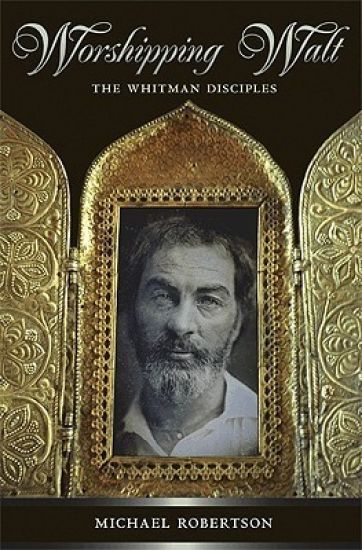
Worshipping Walt

Worshipping Walt

Michael Robertson

Princeton University Press
2010
pokkari
Despite his protests, Anne Gilchrist, distinguished woman of letters, moved her entire household from London to Philadelphia in an effort to marry him. John Addington Symonds, historian and theorist of sexual inversion, sent him avid fan mail for twenty years. And volunteer assistant Horace Traubel kept a record of their daily conversations, producing a nine-volume compilation. Who could inspire so much devotion? Worshipping Walt is the first book on the Whitman disciples--the fascinating, eclectic group of nineteenth-century men and women who regarded Walt Whitman not simply as a poet but as a religious prophet. Long before Whitman was established in the canon of American poetry, feminists, socialists, spiritual seekers, and supporters of same-sex passion saw him as an enlightened figure who fulfilled their religious, political, and erotic yearnings. To his disciples Whitman was variously an ideal husband, radical lover, socialist icon, or bohemian saint. In this transatlantic group biography, Michael Robertson explores the highly charged connections between Whitman and his followers, including Canadian psychiatrist R. M. Bucke, American nature writer John Burroughs, British activist Edward Carpenter, and the notorious Oscar Wilde. Despite their particular needs, they all viewed Whitman as the author of a new poetic scripture and prophet of a modern liberal spirituality. Worshipping Walt presents a colorful portrait of an era of intense religious, political, and sexual passions, shedding new light on why Whitman's work continues to appeal to so many.
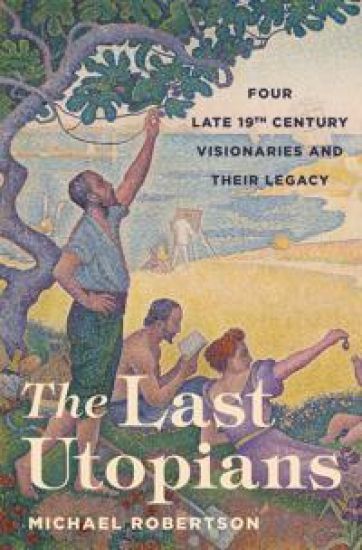
The Last Utopians

The Last Utopians

Michael Robertson

PRINCETON UNIVERSITY PRESS
2018
sidottu
The entertaining story of four utopian writers—Edward Bellamy, William Morris, Edward Carpenter, and Charlotte Perkins Gilman—and their continuing influence todayFor readers reared on the dystopian visions of Nineteen Eighty-Four and The Handmaid's Tale, the idea of a perfect society may sound more sinister than enticing. In this lively literary history of a time before "Orwellian" entered the cultural lexicon, Michael Robertson reintroduces us to a vital strain of utopianism that seized the imaginations of late nineteenth-century American and British writers.The Last Utopians delves into the biographies of four key figures--Edward Bellamy, William Morris, Edward Carpenter, and Charlotte Perkins Gilman—who lived during an extraordinary period of literary and social experimentation. The publication of Bellamy's Looking Backward in 1888 opened the floodgates of an unprecedented wave of utopian writing. Morris, the Arts and Crafts pioneer, was a committed socialist whose News from Nowhere envisions a workers' Arcadia. Carpenter boldly argued that homosexuals constitute a utopian vanguard. Gilman, a women's rights activist and the author of "The Yellow Wallpaper," wrote numerous utopian fictions, including Herland, a visionary tale of an all-female society.These writers, Robertson shows, shared a belief in radical equality, imagining an end to class and gender hierarchies and envisioning new forms of familial and romantic relationships. They held liberal religious beliefs about a universal spirit uniting humanity. They believed in social transformation through nonviolent means and were committed to living a simple life rooted in a restored natural world. And their legacy remains with us today, as Robertson describes in entertaining firsthand accounts of contemporary utopianism, ranging from Occupy Wall Street to a Radical Faerie retreat.
The Last Utopians

The Last Utopians

Michael Robertson

Princeton University Press
2020
pokkari
The entertaining story of four utopian writers—Edward Bellamy, William Morris, Edward Carpenter, and Charlotte Perkins Gilman—and their continuing influence todayIn this lively literary history, Michael Robertson introduces readers to a vital strain of utopianism that seized the imaginations of four American and British writers during an extraordinary period of literary and social experiment. The publication of Edward Bellamy's Looking Backward in 1888 opened the floodgates to an unprecedented wave of utopian writing. William Morris, the Arts and Crafts pioneer, was a committed socialist whose News from Nowhere envisions a workers' Arcadia. Edward Carpenter boldly argued that homosexuals constitute a utopian vanguard. Charlotte Perkins Gilman, a women's rights activist and the author of "The Yellow Wallpaper," wrote numerous utopian fictions, including Herland, a visionary tale of an all-female society. These writers believed in radical gender and class equality, envisioning new forms of familial and romantic relationships, and were committed to living a simple life rooted in a restored natural world. And their legacy remains with us today, from Occupy Wall Street to the Radical Faeries.
The Courtly Consort Suite in German-Speaking Europe, 1650–1706

The Courtly Consort Suite in German-Speaking Europe, 1650–1706

Michael Robertson

Ashgate Publishing Limited
2009
sidottu
Dance music at the courts of seventeenth-century Germany is a genre that is still largely unknown. Dr Michael Robertson sets out to redress the balance and study the ensemble dance suites that were played at the German courts between the end of the Thirty Years War and the early years of the eighteenth century. At many German courts during this time, it was fashionable to emulate everything that was French. As part of this process, German musicians visited Paris throughout the second half of the seventeenth century, and brought French courtly music back with them on their return. For the last two decades of the century, this meant the works of Jean-Baptiste Lully, and his music and its influence spread rapidly through the courts of Europe. Extracts from Lully's dramatic stage works were circulated in both published editions and manuscript. These extracts are considered in some detail, especially in terms of their relationship to the suite. The nobility also played their part in this process: French musicians and German players with specialist knowledge were often hired to coach their German colleagues in the art of playing in the French manner, the französischer Art. The book examines the dissemination of dance music, instrumentation and performance practice, and the differences between the French and Italian styles. It also studies the courtly suites before the advent of Lullism and the differences between the suites of court composers and town musicians. With the possible exception of Georg Muffat's two Florilegium collections of suites, much of the dance music of the German Lullists is largely unknown; court composers such as Cousser, Erlebach, Johann Fischer and Johann Caspar Ferdinand Fischer all wrote fine collections of ensemble suites, and these are examined in detail. Examples from these suites, some published for the first time, are given throughout the book in order to demonstrate the music's quality and show that its neglect is completely unjustified.
Me Gusta Mi Carro

Me Gusta Mi Carro

Michael Robertson

Holiday House
2024
nidottu
Cars, colors, and funny animals abound in this simple book for young readers, now available in Spanish. The rhino loves his red car . . . which just happens to have a rhino-horn hood ornament. And the alligator loves her green car that has sharp teeth and spikes just like hers The shark's car has a fin and a tail. The funny animals in this book match their equally funny cars as they all make their way to a party With very simple Spanish text and detailed, cartoonish illustrations, this is a great read-aloud for kids who love cars-- and an ideal book for Spanish vocabulary acquisition. Me gusta leer provides emerging Spanish language readers with translations of popular I Like to Read(R) books. The award-winning I Like to Read(R) series focuses on books for kindergarten through first grade. Acclaimed author-illustrators--including winners of Caldecott, Theodor Seuss Geisel, and Coretta Scott King honors--create original, high quality illustrations that support comprehension of simple text and are fun for kids to read with parents, teachers, or on their own
Stanley Fish on Philosophy, Politics and Law

Stanley Fish on Philosophy, Politics and Law

Michael Robertson

Cambridge University Press
2014
sidottu
Fish's writings on philosophy, politics and law comprise numerous books and articles produced over many decades. This book connects those dots in order to reveal the overall structure of his argument and to demonstrate how his work in politics and law flows logically from his philosophical stands on the nature of the self, epistemology and the role of theory. Michael Robertson considers Fish's political critiques of liberalism, critical theory, postmodernism and pragmatism before turning to his observations on political substance and political practice. The detailed analysis of Fish's jurisprudence explores his relationships to legal positivism, legal formalism, legal realism and critical legal studies, as well as his debate with Ronald Dworkin. Gaps and inconsistencies in Fish's arguments are fully explored, and the author provides a description of Fish's own positive account of law and deals with the charge that Fish is an indeterminacy theorist who undermines the rule of law.
Stanley Fish on Philosophy, Politics and Law

Stanley Fish on Philosophy, Politics and Law

Michael Robertson

Cambridge University Press
2016
pokkari
Fish's writings on philosophy, politics and law comprise numerous books and articles produced over many decades. This book connects those dots in order to reveal the overall structure of his argument and to demonstrate how his work in politics and law flows logically from his philosophical stands on the nature of the self, epistemology and the role of theory. Michael Robertson considers Fish's political critiques of liberalism, critical theory, postmodernism and pragmatism before turning to his observations on political substance and political practice. The detailed analysis of Fish's jurisprudence explores his relationships to legal positivism, legal formalism, legal realism and critical legal studies, as well as his debate with Ronald Dworkin. Gaps and inconsistencies in Fish's arguments are fully explored, and the author provides a description of Fish's own positive account of law and deals with the charge that Fish is an indeterminacy theorist who undermines the rule of law.
The Courtly Consort Suite in German-Speaking Europe, 1650–1706
Dance music at the courts of seventeenth-century Germany is a genre that is still largely unknown. Dr Michael Robertson sets out to redress the balance and study the ensemble dance suites that were played at the German courts between the end of the Thirty Years War and the early years of the eighteenth century. At many German courts during this time, it was fashionable to emulate everything that was French. As part of this process, German musicians visited Paris throughout the second half of the seventeenth century, and brought French courtly music back with them on their return. For the last two decades of the century, this meant the works of Jean-Baptiste Lully, and his music and its influence spread rapidly through the courts of Europe. Extracts from Lully's dramatic stage works were circulated in both published editions and manuscript. These extracts are considered in some detail, especially in terms of their relationship to the suite. The nobility also played their part in this process: French musicians and German players with specialist knowledge were often hired to coach their German colleagues in the art of playing in the French manner, the französischer Art. The book examines the dissemination of dance music, instrumentation and performance practice, and the differences between the French and Italian styles. It also studies the courtly suites before the advent of Lullism and the differences between the suites of court composers and town musicians. With the possible exception of Georg Muffat's two Florilegium collections of suites, much of the dance music of the German Lullists is largely unknown; court composers such as Cousser, Erlebach, Johann Fischer and Johann Caspar Ferdinand Fischer all wrote fine collections of ensemble suites, and these are examined in detail. Examples from these suites, some published for the first time, are given throughout the book in order to demonstrate the music's quality and show that its neglect is completely unjustified.
Consort Suites and Dance Music by Town Musicians in German-Speaking Europe, 1648–1700
This companion volume to The Courtly Consort Suite in German-Speaking Europe surveys an area of music neglected by modern scholars: the consort suites and dance music by musicians working in the seventeenth-century German towns. Conditions of work in the German towns are examined in detail, as are the problems posed by the many untrained travelling players who were often little more than beggars. The central part of the book explores the organisation, content and assembly of town suites into carefully ordered printed collections, which refutes the concept of the so-called 'classical' suite. The differences between court and town suites are dealt with alongside the often-ignored variation suite from the later decades of the seventeenth century and the separate suite-writing traditions of Leipzig and Hamburg. While the seventeenth-century keyboard suite has received a good deal of attention from modern scholars, its often symbiotic relationship with the consort suite has been ignored. This book aims to redress the balance and to deal with one very important but often ignored aspect of seventeenth-century notation: the use of blackened notes, which are rarely notated in a meaningful way in modern editions, with important implications for performance.
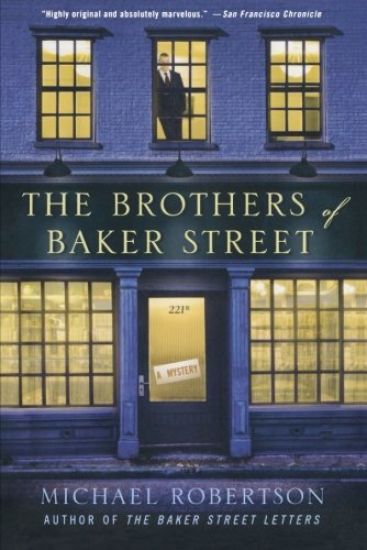
The Brothers of Baker Street

The Brothers of Baker Street

Michael Robertson

St Martin's Press
2011
nidottu
When brothers Reggie and Nigel Heath choose 221B Baker Street as the location for their law office, they don't realize that their new office space comes with one huge stipulation; namely, they must answer the letters sent to Sherlock Holmes, the most famous resident of that address. While Reggie is working on a new case involving one of London's Black Cab drivers, the letters to Sherlock Holmes are piling up. There's even one from someone who claims to be the descendant of Professor James Moriarty. With a case that would have puzzled even Sherlock himself, "The Brothers of Baker Street" is sure to please mystery fans, whatever their address.
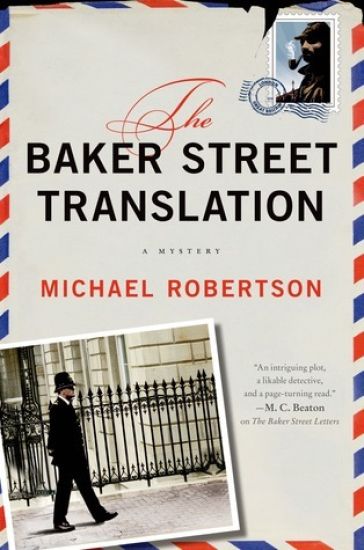
The Baker Street Translation: A Mystery

The Baker Street Translation: A Mystery

Michael Robertson

MINOTAUR BOOKS
2014
nidottu
In Michael Robertson's "The Baker Street Translation, " Reggie and Nigel Heath brothers who lease law offices at 221B Baker Street in London, England and answer mail addressed to the location's most famous resident, Sherlock Holmes find themselves pulled once again into a case straight out of Arthur Conan Doyle. An elderly American heiress wants to leave her entire fortune to Sherlock Holmes. A translator wants Sherlock Holmes to explain a nursery rhyme. And Robert Buxton Reggie's rival for the love of actress Laura Rankin has gone missing. Reggie must suss all these things out before an upcoming British royal event. If he doesn't, something very bad will happen to everyone at that event and to Laura. Fast-paced, exciting, and clever, this is the perfect mystery for aficionados of the current craze for all things Sherlockian."
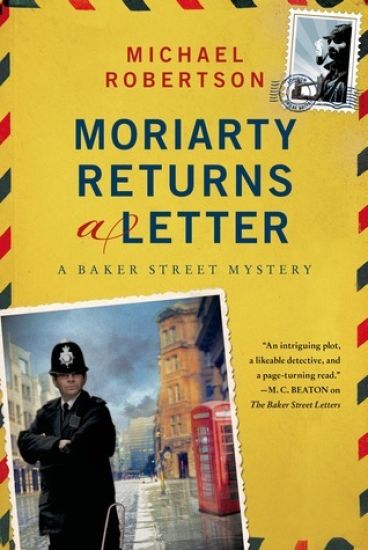
Moriarty Returns a Letter: A Baker Street Mystery
Michael Robertson has delighted mystery readers and Sherlock Holmes aficionados everywhere with his charming and innovative Baker Street mystery series, where brothers Reggie and Nigel Heath are charged with answering letters to Holmes that arrive at their law office, located at 221B Baker Street. Now, Reggie and Nigel are back in a case that would confound even Sherlock himself. An exhibition of vintage Sherlock Holmes letters has opened at the Marylebone Hotel. As Reggie and his beloved Laura embark on a pre-wedding trip, someone from Reggie and Nigel's past--someone whom they thought was long gone--reappears, causing a whole slew of new problems for the brothers. Written with Robertson's characteristic charm, Moriarty Returns a Letter is a standout mystery in a much-loved series, perfect for fans of the smash hit television shows "Sherlock" and "Elementary."
The Lazlo Mission

The Lazlo Mission

Michael Robertson

Lulu.com
2015
nidottu
The human race, the entire messy lot of us, is about to face a massive and very dramatic change. The change is coming soon, and when it happens it will happen fast, and it will affect every living being on this planet. The thing is, this change will be either a good change, a very great change for us in fact, or else it will be a real downhill slide, an escalation of the madness that seems to dominate us at this time in history.
Consort Suites and Dance Music by Town Musicians in German-Speaking Europe, 1648–1700
This companion volume to The Courtly Consort Suite in German-Speaking Europe surveys an area of music neglected by modern scholars: the consort suites and dance music by musicians working in the seventeenth-century German towns. Conditions of work in the German towns are examined in detail, as are the problems posed by the many untrained travelling players who were often little more than beggars. The central part of the book explores the organisation, content and assembly of town suites into carefully ordered printed collections, which refutes the concept of the so-called 'classical' suite. The differences between court and town suites are dealt with alongside the often-ignored variation suite from the later decades of the seventeenth century and the separate suite-writing traditions of Leipzig and Hamburg. While the seventeenth-century keyboard suite has received a good deal of attention from modern scholars, its often symbiotic relationship with the consort suite has been ignored. This book aims to redress the balance and to deal with one very important but often ignored aspect of seventeenth-century notation: the use of blackened notes, which are rarely notated in a meaningful way in modern editions, with important implications for performance.
Refusing to Quit

Refusing to Quit

Michael Robertson

AuthorHouse
2005
sidottu
We are promised a tomorrow, but we are not promised what that tomorrow will look like. Who would have imagined, that my tomorrow would have me engaged in an unexpected battle, fighting for my survival? Refusing to Quit is a story about decisions today, and life tomorrow. The decisions that you are making right now will affect what your tomorrow looks like. I went from a normal life to a life of disability, simply by the decisions that I made. Pause for a moment and think about what decisions you have made today. Are you ready to live out their consequences? This book is not just about a tragedy today, but it is also about a comeback tomorrow. If you love comeback stories, of the down and out rising to be an overcomer, then you will enjoy this book.
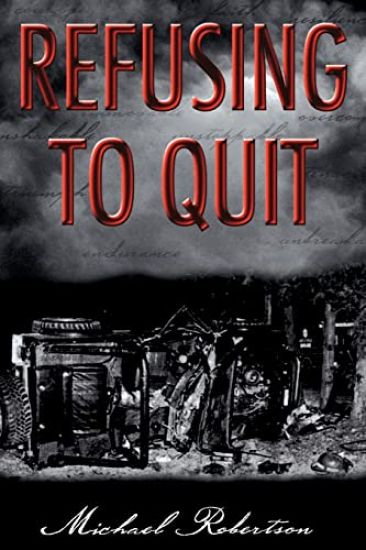
Refusing to Quit

Refusing to Quit

Michael Robertson

AuthorHouse
2005
pokkari
We are promised a tomorrow, but we are not promised what that tomorrow will look like. Who would have imagined, that my tomorrow would have me engaged in an unexpected battle, fighting for my survival? Refusing to Quit is a story about decisions today, and life tomorrow. The decisions that you are making right now will affect what your tomorrow looks like. I went from a normal life to a life of disability, simply by the decisions that I made. Pause for a moment and think about what decisions you have made today. Are you ready to live out their consequences? This book is not just about a tragedy today, but it is also about a comeback tomorrow. If you love comeback stories, of the down and out rising to be an overcomer, then you will enjoy this book.