Kirjojen hintavertailu. Mukana 11 244 527 kirjaa ja 12 kauppaa.

Kirjahaku

Etsi kirjoja tekijän nimen, kirjan nimen tai ISBN:n perusteella.

1000 tulosta hakusanalla Michael Shermer

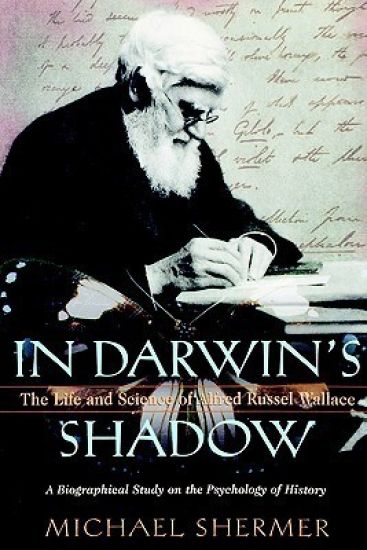
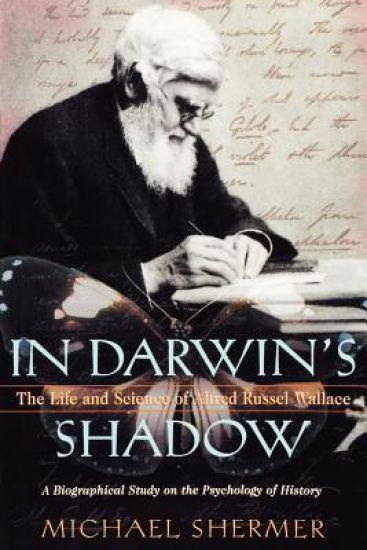
In Darwin's Shadow: The Life and Science of Alfred Russel Wallace: A Biographical Study on the Psychology of History
Virtually unknown today, Alfred Russel Wallace was the co-discoverer of natural selection with Charles Darwin and an eminent scientist who stood out among his Victorian peers as a man of formidable mind and equally outsized personality. Now Michael Shermer rescues Wallace from the shadow of Darwin in this landmark biography. Here we see Wallace as perhaps the greatest naturalist of his age--spending years in remote jungles, collecting astounding quantities of specimens, writing thoughtfully and with bemused detachment at his reception in places where no white man had ever gone. Here, too, is his supple and forceful intelligence at work, grappling with such arcane problems as the bright coloration of caterpillars, or shaping his 1858 paper on natural selection that prompted Darwin to publish (with Wallace) the first paper outlining the theory of evolution. Shermer also shows that Wallace's self-trained intellect, while powerful, also embraced surprisingly naive ideas, such as his deep interest in the study of spiritual manifestations and seances. Shermer shows that the same iconoclastic outlook that led him to overturn scientific orthodoxy as he worked in relative isolation also led him to embrace irrational beliefs, and thus tarnish his reputation. As author of Why People Believe Weird Things and founding publisher of Skeptic magazine, Shermer is an authority on why people embrace the irrational. Now he turns his keen judgment and incisive analysis to Wallace's life and his contradictory beliefs, restoring a leading figure in the rise of modern science to his rightful place.
Paranormal Claims

Paranormal Claims

Michael Shermer

University Press of America
2007
nidottu
This academic text features articles regarding paranormal, extraordinary, or fringe-science claims. It logically examines the claims of astrology; psychic ability; alternative medicine and health claims; after-death communication; cryptozoology; and faith healing, all from a skeptical perspective. Paranormal Claims is a compilation of some of the most eye-opening articles about pseudoscience and extraordinary claims that often reveal logical, scientific explanations, or an outright scam. These articles, steeped in skepticism, teach critical thinking when approaching courses in psychology, sociology, philosophy, education, or science.
Pseudoscience and Deception

Pseudoscience and Deception

Michael Shermer

University Press of America
2013
nidottu
Pseudoscience and Deception is a compilation of some of the most eye-opening skeptical articles pertaining to extraordinary claims and pseudoscience. The articles explore paranormal, extraordinary, or fringe-science claims and reveal logical explanations or outline the deceptive tactics involved in convincing the vulnerable. Topics include claims of astrology, psychic ability, alternative medicine, after-death communication, psychotherapy, and pseudoscience. The contributors to this book are among the most accomplished critical thinkers, scientists, and educators in the world and tackle their respective topics from a rational, logical, and skeptical perspective. Most students are seldom excited to study “critical thinking”—with the exception of allegedly paranormal phenomena as the subject matter. Educators must seize this golden opportunity to witness and experience students’ genuine engagement in studying critical thinking.
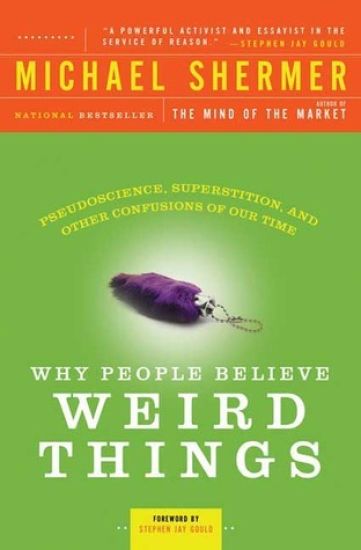
Why People Believe Weird Things: Pseudoscience, Superstition, and Other Confusions of Our Time
"This sparkling book romps over the range of science and anti-science." --Jared Diamond, author of Guns, Germs, and Steel Revised and Expanded Edition. In this age of supposed scientific enlightenment, many people still believe in mind reading, past-life regression theory, New Age hokum, and alien abduction. A no-holds-barred assault on popular superstitions and prejudices, with more than 80,000 copies in print, Why People Believe Weird Things debunks these nonsensical claims and explores the very human reasons people find otherworldly phenomena, conspiracy theories, and cults so appealing. In an entirely new chapter, "Why Smart People Believe in Weird Things," Michael Shermer takes on science luminaries like physicist Frank Tippler and others, who hide their spiritual beliefs behind the trappings of science. Shermer, science historian and true crusader, also reveals the more dangerous side of such illogical thinking, including Holocaust denial, the recovered-memory movement, the satanic ritual abuse scare, and other modern crazes. Why People Believe Strange Things is an eye-opening resource for the most gullible among us and those who want to protect them.
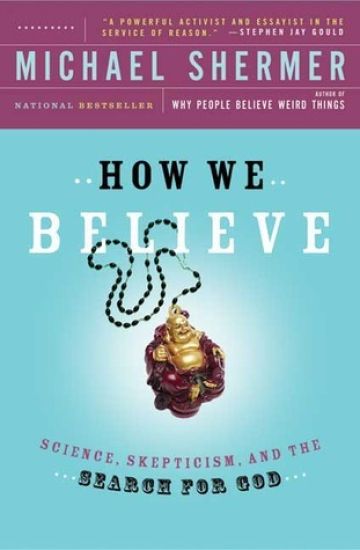
How We Believe

How We Believe

Michael Shermer

Henry Holt Company Inc
2003
nidottu
A new edition covering the latest scientific research on how the brain makes us believers or skepticsRecent polls report that 96 percent of Americans believe in God, and 73 percent believe that angels regularly visit Earth. Why is this? Why, despite the rise of science, technology, and secular education, are people turning to religion in greater numbers than ever before? Why do people believe in God at all? These provocative questions lie at the heart of How We Believe , an illuminating study of God, faith, and religion. Bestselling author Michael Shermer offers fresh and often startling insights into age-old questions, including how and why humans put their faith in a higher power, even in the face of scientific skepticism. Shermer has updated the book to explore the latest research and theories of psychiatrists, neuroscientists, epidemiologists, and philosophers, as well as the role of faith in our increasingly diverse modern world.Whether believers or nonbelievers, we are all driven by the need to understand the universe and our place in it. How We Believe is a brilliant scientific tour of this ancient and mysterious desire.
Science Friction

Science Friction

Michael Shermer

Henry Holt Company Inc
2005
nidottu
A collection of fourteen essays by the psychologist and science historian author of The Science of Good and Evil explores the personal barriers and biases that hamper and motivate scientific discoveries, covering such topics as the heretical ideas about the boundaries of the universe to the scientific ideas behind Star Trek storylines. Reprint. 35,000 first printing.
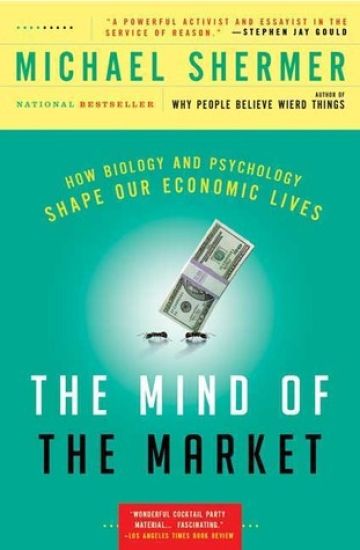
The Mind of the Market

The Mind of the Market

Michael Shermer

Henry Holt Company Inc
2009
nidottu
" A] captivating raconteur of all the greatest hits of behavioral, evolutionary and neuropsychology . . . Fascinating." "Los Angeles Times Book Review"How did we make the leap from ancient hunter-gatherers to modern consumers, and why do people get so emotional about financial decisions? The national bestseller "The Mind of the Market" uncovers the evolutionary roots of our economic behavior.Drawing on the new field of neuroeconomics, psychologist Michael Shermer investigates what brain scans reveal about bargaining, snap purchases, and establishing trust in business. He scrutinizes experiments in behavioral economics to understand why people hang on to losing stocks and why negotiations disintegrate into tit-for-tat disputes. He brings together findings from psychology and biology to describe how our tribal ancestry makes us suckers for brands, why researchers believe cooperation feels (biochemically) like sex, and how even capuchin monkeys get indignant if they don't get a fair reward for their work.Entertaining and eye-opening, "The Mind of the Market" explains the real science of economics."
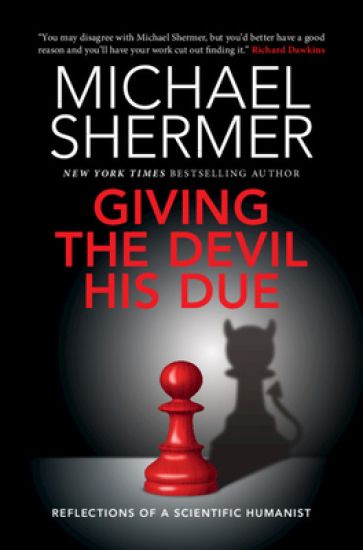
Giving the Devil his Due

Giving the Devil his Due

Michael Shermer

Cambridge University Press
2020
sidottu
Who is the 'Devil'? And what is he due? The Devil is anyone who disagrees with you. And what he is due is the right to speak his mind. He must have this for your own safety's sake because his freedom is inextricably tied to your own. If he can be censored, why shouldn't you be censored? If we put barriers up to silence 'unpleasant' ideas, what's to stop the silencing of any discussion? This book is a full-throated defense of free speech and open inquiry in politics, science, and culture by the New York Times bestselling author and skeptic Michael Shermer. The new collection of essays and articles takes the Devil by the horns by tackling five key themes: free thought and free speech, politics and society, scientific humanism, religion, and the ideas of controversial intellectuals. For our own sake, we must give the Devil his due.
Giving the Devil his Due

Giving the Devil his Due

Michael Shermer

Cambridge University Press
2021
pokkari
Who is the 'Devil'? And what is he due? The Devil is anyone who disagrees with you. And what he is due is the right to speak his mind. He must have this for your own safety's sake because his freedom is inextricably tied to your own. If he can be censored, why shouldn't you be censored? If we put barriers up to silence 'unpleasant' ideas, what's to stop the silencing of any discussion? This book is a full-throated defense of free speech and open inquiry in politics, science, and culture by the New York Times bestselling author and skeptic Michael Shermer. The new collection of essays and articles takes the Devil by the horns by tackling five key themes: free thought and free speech, politics and society, scientific humanism, religion, and the ideas of controversial intellectuals. For our own sake, we must give the Devil his due.
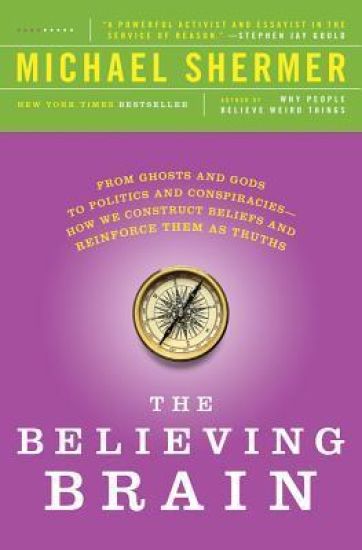
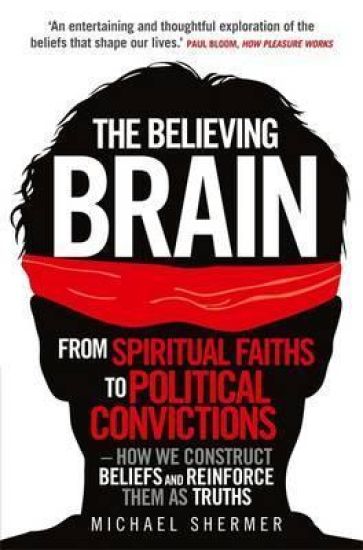
The Believing Brain: From Ghosts and Gods to Politics and Conspiracies - How We Construct Beliefs and Reinforce Them as Truths
The Believing Brain is bestselling author Michael Shermer's comprehensive and provocative theory on how beliefs are born, formed, reinforced, challenged, changed, and extinguished Synthesizing thirty years of research, psychologist and science historian Michael Shermer upends the traditional thinking about how humans form beliefs about the world. Simply put, beliefs come first and explanations for beliefs follow. The brain, Shermer argues, is a belief engine. Using sensory data that flow in through the senses, the brain naturally begins to look for and find patterns, and then infuses those patterns with meaning, forming beliefs. Once beliefs are formed the brain begins to look for and find confirmatory evidence in support of those beliefs, accelerating the process of reinforcing them, and round and round the process goes in a positive-feedback loop. In The Believing Brain, Shermer provides countless real-world examples of how this process operates, from politics, economics, and religion to conspiracy theories, the supernatural, and the paranormal. And ultimately, he demonstrates why science is the best tool ever devised to determine whether or not our beliefs match reality.
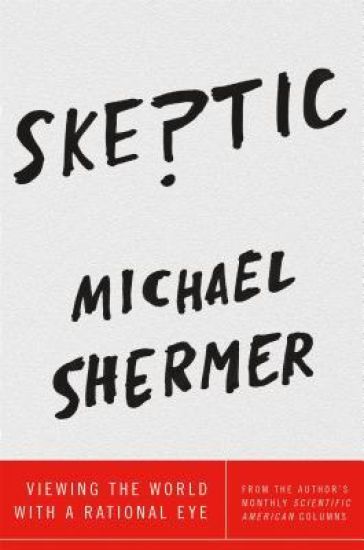
Skeptic

Skeptic

Michael Shermer

Saint Martin's Griffin,U.S.
2017
nidottu
In Skeptic, Shermer "turns a critical eye toward questions big, small, and trivial." His trademark combination of deep scientific understanding and entertaining writing style has thrilled his huge and devoted audience for years. Now, seventy-five of these columns are available together for the first time, taking on a wide range of subjects, from psychology and human nature to religion and pseudoscience. A welcome addition for his fans and a stimulating introduction for new readers, Skeptic is a must-read collection from one of our leading science commentators, "Dense with facts, convincing arguments, and curious statistics, this is an ingenious collection of light entertainment for readers who believe that explaining stuff is a good idea."
Heavens on Earth: The Scientific Search for the Afterlife, Immortality, and Utopia
A scientific exploration into humanity's obsession with the afterlife and quest for immortality from the bestselling author and skeptic Michael ShermerIn his most ambitious work yet, Shermer sets out to discover what drives humans' belief in life after death, focusing on recent scientific attempts to achieve immortality along with utopian attempts to create heaven on earth. For millennia, religions have concocted numerous manifestations of heaven and the afterlife, and though no one has ever returned from such a place to report what it is really like--or that it even exists--today science and technology are being used to try to make it happen in our lifetime. From radical life extension to cryonic suspension to mind uploading, Shermer considers how realistic these attempts are from a proper skeptical perspective. Heavens on Earth concludes with an uplifting paean to purpose and progress and how we can live well in the here-and-now, whether or not there is a hereafter.
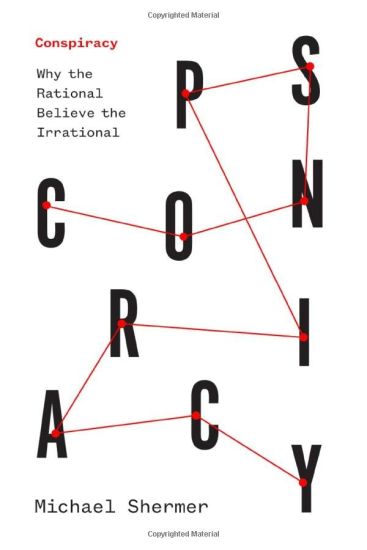
Conspiracy

Conspiracy

Michael Shermer

Johns Hopkins University Press
2022
sidottu
"A well-written and essential tool for those navigating today's complicated geopolitical landscape."—Library Journal Best-selling author Michael Shermer presents an overarching theory of conspiracy theories—who believes them and why, which ones are real, and what we should do about them.Nothing happens by accident, everything is connected, and there are no coincidences: that is the essence of conspiratorial thinking. Long a fringe part of the American political landscape, conspiracy theories are now mainstream: 147 members of Congress voted in favor of objections to the 2020 presidential election based on an unproven theory about a rigged electoral process promoted by the mysterious group QAnon. But this is only the latest example in a long history of ideas that include the satanic panics of the 1980s, the New World Order and Vatican conspiracy theories, fears about fluoridated water, speculations about President John F. Kennedy's assassination, and the notions that the Sandy Hook massacre was a false-flag operation and 9/11 was an inside job. In Conspiracy, Michael Shermer presents an overarching review of conspiracy theories—who believes them and why, which ones are real, and what we should do about them. Trust in conspiracy theories, he writes, cuts across gender, age, race, income, education level, occupational status—and even political affiliation. One reason that people believe these conspiracies, Shermer argues, is that enough of them are real that we should be constructively conspiratorial: elections have been rigged (LBJ's 1948 Senate race); medical professionals have intentionally harmed patients in their care (Tuskegee); your government does lie to you (Watergate, Iran-Contra, and Afghanistan); and, tragically, some adults do conspire to sexually abuse children. But Shermer reveals that other factors are also in play: anxiety and a sense of loss of control play a role in conspiratorial cognition patterns, as do certain personality traits. This engaging book will be an important read for anyone concerned about the future direction of American politics, as well as anyone who's watched friends or family fall into patterns of conspiratorial thinking.
Conspiracy

Conspiracy

Michael Shermer

Johns Hopkins University Press
2024
pokkari
"A well-written and essential tool for those navigating today's complicated geopolitical landscape."—Library Journal Best-selling author Michael Shermer presents an overarching theory of conspiracy theories—who believes them and why, which ones are real, and what we should do about them.Nothing happens by accident, everything is connected, and there are no coincidences: that is the essence of conspiratorial thinking. Long a fringe part of the American political landscape, conspiracy theories are now mainstream: 147 members of Congress voted in favor of objections to the 2020 presidential election based on an unproven theory about a rigged electoral process promoted by the mysterious group QAnon. But this is only the latest example in a long history of ideas that include the satanic panics of the 1980s, the New World Order and Vatican conspiracy theories, fears about fluoridated water, speculations about President John F. Kennedy's assassination, and the notions that the Sandy Hook massacre was a false-flag operation and 9/11 was an inside job. In Conspiracy, Michael Shermer presents an overarching review of conspiracy theories—who believes them and why, which ones are real, and what we should do about them. Trust in conspiracy theories, he writes, cuts across gender, age, race, income, education level, occupational status—and even political affiliation. One reason that people believe these conspiracies, Shermer argues, is that enough of them are real that we should be constructively conspiratorial: elections have been rigged (LBJ's 1948 Senate race); medical professionals have intentionally harmed patients in their care (Tuskegee); your government does lie to you (Watergate, Iran-Contra, and Afghanistan); and, tragically, some adults do conspire to sexually abuse children. But Shermer reveals that other factors are also in play: anxiety and a sense of loss of control play a role in conspiratorial cognition patterns, as do certain personality traits. This engaging book will be an important read for anyone concerned about the future direction of American politics, as well as anyone who's watched friends or family fall into patterns of conspiratorial thinking.
Heavens on Earth

Heavens on Earth

Michael Shermer

Little, Brown Book Group
2018
pokkari
A fascinating new popular psychology book about how and why were are attracted to the notion of heaven, and how religious and secular people alike look ahead to 'the next life'.
Believing Brain

Believing Brain

Michael Shermer

Constable And Robinson
2012
pokkari
'The Believing Brain is a tour de force integrating neuroscience and the social sciences to explain how irrational beliefs are formed and reinforced' - Dr Leonard Mlodinow, author The Drunkard's Walk
Nebesa na zemli. Scho kazhe nauka pro potojbichne zhittja ta bezsmertja
Naukovo-populjarna rozpovid pro kljuchovi istorichni, antropologichni ta psikhologichni kontseptsiji, jaki pojasnjujut smert, ta jikhnij zv'jazok iz mifami ta religijami.TematikaPopuljarna nauka.Pro knizhkuUsvidomlennja nashoji smertnosti j nedoskonalosti porodilo bezlich viruvan ta postijno pidshtovkhuje do naukovikh doslidzhen schodo zmolodzhennja ljudini. U riznikh formakh ljudi pragnut dukhovnogo bezsmertja na nebesakh, fizichnogo bezsmertja na zemli chi mozhlivosti vdoskonalennja tut i zaraz. Svitski filosofi ta vcheni shukajut sposobiv radikalnogo prodovzhennja zhittja, pismenniki-fantasti sperechajutsja pro majbutnje ljudstva, mrijniki-utopisti namagajutsja stvoriti dlja nogo idealni umovi, pesimisti prorokujut zagibel tsivilizatsiji, a diktatori j demagogi ekspluatujut usi tsi strakhi.Dlja kogo knizhkaDlja vsikh, khto tsikavitsja naukoju, zakhopljujetsja naukovo-populjarnoju literaturoju.Chomu tsja knizhkaU tsij knizhtsi populjarizator nauki Majkl Shermer analizuje kljuchovi istorichni, antropologichni, psikhologichni kontseptsiji, jaki pojasnjujut smert, rozpovidaje, khto buli ti ljudi, jaki pershimi usvidomili svoju smertnist, i jak tse rozuminnja privelo do stvorennja mifiv ta religij.Pro avtoraMajkl Shermer - amerikanskij naukovo-populjarnij avtor, zasnovnik "Spilnoti skeptikiv", jaka zajmajetsja rozsliduvannjam psevdonaukovikh zajav ta povidomlen pro nadprirodni javisch. Dopisuvach Scientific American ta Time.com.Knizhki na skhozhu tematiku* "Shoste Vimirannja: neprirodna istorija", Elizabet Kolbert, "Nash format", 2016 rik * "Chomu evoljutsija pravdiva", Dzherri Kojn, "Nash format", 2015 rikVidguki"Shermer - tse majak ratsionalnogo rozumu v okeani irratsionalnosti". Nil Degrass Tajson, direktor planetariju Gajdena u Amerikanskomu muzeji prirodoznavstva "Absoljutno vrazhajucha, napovnena glibokimi idejami knizhka". Emi Chua, profesorka Jelskogo universitetu TsitatiPro usvidomlennja smertnosti Odnijeju z najglibshikh nashikh dumok je usvidomlennja vlasnoji smertnosti, ale ne vona je golovnim rushijem ljudskoji dumki j povedinki, tvorchosti j produktivnosti. Nasha nezdatnist ujaviti vlasne nebuttja oznachaje, scho ostatochne rozuminnja vlasnoji smertnosti zavzhdi vislizatime vid nas, zalishajuchi nas zhiti tut i zaraz, khoch nas i vabit majbutnje.Pro sprijnjatta raju ta pekla U 2009 rotsi opituvannja gromadskoji dumki, provedene institutom Garrisa, vijavilo, scho v isnuvannja tsarstva nebesnogo virjat 75 vidsotkiv amerikantsiv, prichomu najnizhchij rezultat, 48 vidsotkiv, pokazali jevreji, a najvischij, 97 vidsotkiv, - pererodzheni khristijani. TSikavo, scho vira v isnuvannja dijavola j nadija na sili zla postupovo zmenshujetsja jak u liberalnikh, tak i v konservativnikh tserkvakh, i v usikh opituvannjakh vira v isnuvannja pekla vidstaje vid viri v isnuvannja raju na 20-25 vidsotkiv, demonstrujuchi tim samim skhilnist opitanikh do nadmirnogo optimizmu.PerekladachOlga Zakharchenko