Kirjojen hintavertailu. Mukana 11 244 527 kirjaa ja 12 kauppaa.

Kirjahaku

Etsi kirjoja tekijän nimen, kirjan nimen tai ISBN:n perusteella.

1000 tulosta hakusanalla Michael Symes

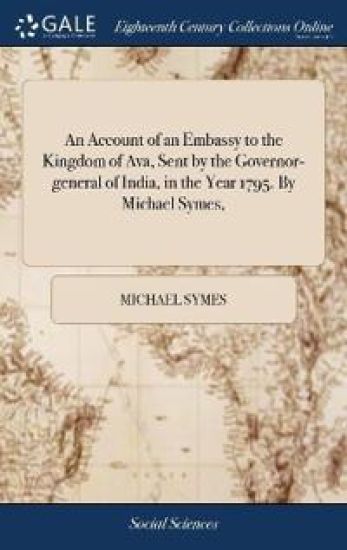
An Account of an Embassy to the Kingdom of Ava, Sent by the Governor-general of India, in the Year 1795. By Michael Symes,
The 18th century was a wealth of knowledge, exploration and rapidly growing technology and expanding record-keeping made possible by advances in the printing press. In its determination to preserve the century of revolution, Gale initiated a revolution of its own: digitization of epic proportions to preserve these invaluable works in the largest archive of its kind. Now for the first time these high-quality digital copies of original 18th century manuscripts are available in print, making them highly accessible to libraries, undergraduate students, and independent scholars.Delve into what it was like to live during the eighteenth century by reading the first-hand accounts of everyday people, including city dwellers and farmers, businessmen and bankers, artisans and merchants, artists and their patrons, politicians and their constituents. Original texts make the American, French, and Industrial revolutions vividly contemporary.++++The below data was compiled from various identification fields in the bibliographic record of this title. This data is provided as an additional tool in helping to insure edition identification: ++++British LibraryT146819With a half-title. Ordinary paper issue.London: printed by W. Bulmer and Co.; and sold by Messrs. G. and W. Nicol; and J. Wright, 1800. xxiii, 1],503, 1]p., plates: maps; 4
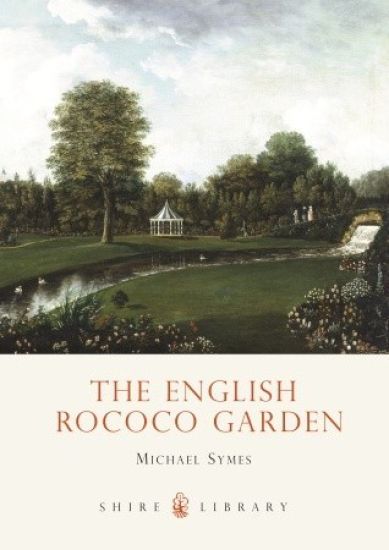
The English Rococo Garden

The English Rococo Garden

Michael Symes

Shire Publications
2011
nidottu
Delightful, eccentric, capricious, bizarre the English Rococo garden, an intriguing branch of eighteenth-century horticulture, was all these and more. This book relates the components of the Rococo garden to movements in art and architecture that had developed in Britain and in Europe, and shows its particular appeal to amateur designers and owners. It was an expression of a period in time, following Baroque and neo-Palladian and anticipating Romanticism in its sense of freedom. Most of the enchanting scenes depicted in Thomas Robins' watercolours have disappeared, but there are many garden buildings from the period that survive. The styles which overlap with Rococo Gothic, chinoiserie, rustic are also considered here, as is the use of flowers, rocks and shells. The principal designers are also profiled, including Sanderson Miller and Thomas Wright.
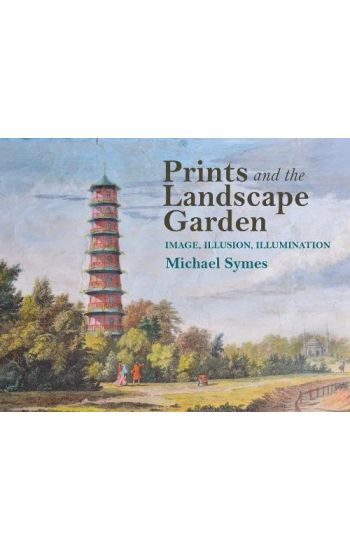
Prints and the Landscape Garden

Prints and the Landscape Garden

Michael Symes

John Hudson Publishing
2024
sidottu
This book considers what prints tell us about the development of the landscape garden in 18th- and early 19th- century Britain. They formed a significant part of the expanding machinery of mass communication and could thus influence taste and spread ideas. This could lead to propaganda, or at least creation of an image the owner of a property found desirable, and reality was consequently often compromised. The illusion of actuality could be achieved by adjustments and techniques employed by artists generally. Even if not entirely representational, a print may reveal much about fashions and attitudes towards the landscape garden. At their best they powerfully convey the atmosphere of a garden as well as the perception and possible idealisation of it. The book breaks new ground, including discussion of techniques of producing a print, marketing, categories of print, and studies of the greatest engravers and a few select gardens that prints illuminate particularly well. Changes can be observed both in the developments in print-making and in the journey of the landscape garden. With 220 prints of the period to illustrate the text, all aspects of the subject are brought to the reader's attention.
Observations on Modern Gardening, by Thomas Whately
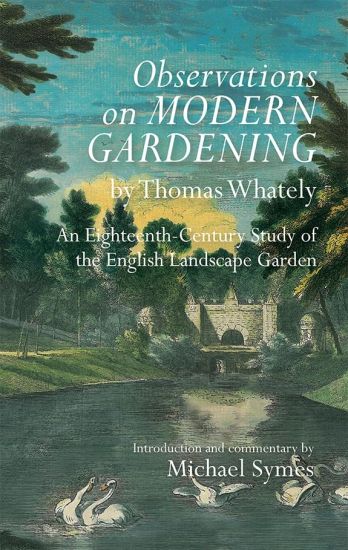
Edition, with commentary, of the first comprehensive attempt to describe the landscape garden. Thomas Whately's Observations on Modern Gardening (1770) is the first and most comprehensive study of what has come to be known as the English landscape garden, often claimed to be this country's greatest original contribution to the fine arts. It became the standard text on the subject; its authority was accepted at home and abroad, and the book was read widely across Europe, mainly in a French translation. It influenced taste and design; taught visitors how to respond to gardens; analysed natural and built elements of the garden; suggested principles of design; and provided descriptions of major gardens of the day, such as those at Blenheim and Piercefield (Monmouthshire), together with the author's responses, aesthetic, mental and emotional. It indicates a taste for the natural and the "picturesque", foreshadowing romanticism. This first modern edition of the text is accompanied by an introduction and full commentary, covering both general considerations and specific points and topics. Contemporary illustrations have been chosen to illuminate further the gardens and places discussed. Michael Symes is an author, lecturer and garden historian. He founded the MA in Garden History at Birkbeck, University of London, and specialises in eighteenth-century gardens in Britain and on the continent.
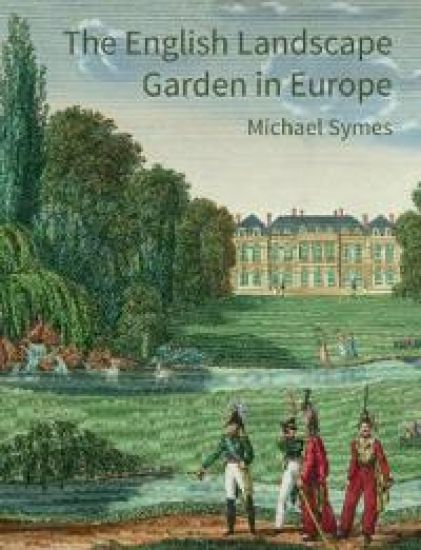
The English Landscape Garden in Europe

The English Landscape Garden in Europe

Michael Symes

Historic England
2016
nidottu
This book provides an overview of the extent to which the 18th-century English Landscape Garden spread through Europe and Russia. While this type of garden acted widely as an inspiration, it was not slavishly copied but adapted to local conditions, circumstances and agendas. A garden ‘in the English style’ is commonly used to denote a landscape garden in Europe, while the term ‘landscape garden’ is used for layouts that are naturalistic in plan and resemble natural scenery, though they might be highly contrived and usually large in scale. The landscape garden took hold in mainland Europe from about 1760. Due to the differing geopolitical character of several of the countries, and a distinct division between Catholic and Protestant, the notion of the landscape garden held different significance and was interpreted and applied variously in those countries: in other words, they found it a very flexible medium. Each country is considered individually, with a special chapter devoted to ‘Le Jardin Anglo-Chinois’, since that constitutes a major issue of its own. The gardens have been chosen to illustrate the range and variety of applications of the landscape garden, though they are also those about which most is known in English.
The English Landscape Garden

The English Landscape Garden

Michael Symes

Historic England
2019
nidottu
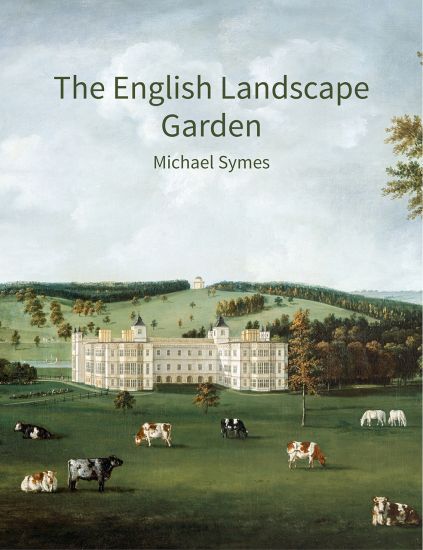
The 18th-century phenomenon of the English Landscape Garden was so widespread that even today, when so much has been built over or otherwise changed, one is never far from an example throughout England. Although seemingly natural, the English Landscape Garden was generally the result of considerable contrivance, effort and design skill, the result of ‘the art that conceals art’. It might involve digging lakes, raising or levelling hills, and planting trees, sometimes in vast numbers. Nature was arranged and shown to best advantage. The English landscape garden took many forms, and the variety of manifestations was and remains remarkable. A great number survive, if sometimes in modified form, and can be visited and appreciated. The book is structured so as to give the background to, and motivation for, creating the landscape garden; to summarise the chronology of its development; to chart the most significant writers and theorists; and to consider the range of the many forms it took. The story of the landscape garden is complex, multi-layered and constantly changing in emphasis for such an apparently simple and straightforward construct. This book will help to uncover some of the richness that lies behind a meaningful part of the environment. The book can be regarded as a companion to the volume already published by Historic England, The English Landscape Garden in Europe.
An Account of an Embassy to the Kingdom of Ava in the Year 1795

An Account of an Embassy to the Kingdom of Ava in the Year 1795

Michael Symes

MANOHAR PUBLISHERS AND DISTRIBUTORS
2023
sidottu
This book is a delightful account by the author of his stay in the kingdom of Ava in Burma (now Myanmar). Symes was appointed as the plenipotentiary by Sir John Shore, Governor-General of India, on admission to Burma authorized to deal with on behalf of the British India government. He was also asked to take cognizance of the conduct of the British nationals trading or residing in these areas. The author embarked from Calcutta on the 21st February 1795 to reach Ava on Nov 26th, 1796.
Observations on Modern Gardening, by Thomas Whately
Edition, with commentary, of the first comprehensive attempt to describe the landscape garden. Thomas Whately's Observations on Modern Gardening (1770) is the first and most comprehensive study of what has come to be known as the English landscape garden, often claimed to be this country's greatest original contribution to the fine arts. It became the standard text on the subject; its authority was accepted at home and abroad, and the book was read widely across Europe, mainly in a French translation. It influenced taste and design; taught visitors how to respond to gardens; analysed natural and built elements of the garden; suggested principles of design; and provided descriptions of major gardens of the day, such as those at Blenheim and Piercefield (Monmouthshire), together with the author's responses, aesthetic, mental and emotional. It indicates a taste for the natural and the "picturesque", foreshadowing romanticism. This first modern edition of the text is accompanied by an introduction and full commentary, covering both general considerations and specific points and topics. Contemporary illustrations have been chosen to illuminate further the gardens and places discussed.
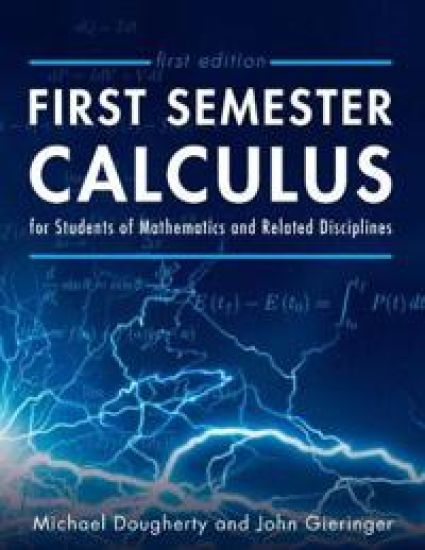
First Semester Calculus for Students of Mathematics and Related Disciplines
First Semester Calculus for Students of Mathematics and Related Disciplines equips students with a working knowledge of the fundamental principles of calculus. The book provides an engaging and accessible entry point into a critical field of study. It prepares students for more advanced courses in calculus and also helps them understand how to apply basic principles of calculus to solve problems within a wide range of disciplines, including business, biology, engineering, science, liberal arts, and mathematics.The text employs rigorous treatment of early calculus topics and detailed explanations to facilitate greater understanding and connection with the material. Over the course of five chapters, students learn about symbolic logic, continuity and limits, derivatives, mathematical and real-world applications of derivatives, and antiderivatives and their applications. Throughout, students are provided with rich guidance and copious opportunities to deepen their personal understanding of the subject matter.Highly readable and applicable, First Semester Calculus for Students of Mathematics and Related Disciplines is an ideal resource for a variety of courses that apply concepts of calculus to solve mathematical and real-world problems.
Last Semester

Last Semester

Michael Johnson

Xlibris Us
2022
pokkari
Assistant Lecturer Meredith Winters is fired and almost lynched during the most violent period of the Education Revolution on campus. When the mob settles down to a more pacific form of permanent revolution, the ex-Lecturer has found shelter as a housekeeper in the employ of his friend, the world famous and widely published Nobel Prize winner, Professor Arnold Fezwig. But when his friend and patron, the aged Professor Fezwig, is coaxed by a young faculty friend into joining the Passive Action Toilet Tour (PATT), a crusade for earth friendly, highly technological and sewer disconnected toilets, Meredith faces the loss of job, home and scholarly opportunities. He must sabotage the faculty favored Toilet Revolution. But how?