Spreading Germs discusses how modern ideas on the bacterial causes of communicable diseases were constructed and spread within the British medical profession in the last third of the nineteenth century. Michael Worboys surveys many existing interpretations of this pivotal moment in modern medicine. He shows that there were many germ theories of disease, and that these were developed and used in different ways across veterinary medicine, surgery, public health and general medicine. The growth of bacteriology is considered in relation to the evolution of medical practice rather than as a separate science of germs.
Spreading Germs discusses how modern ideas on the bacterial causes of communicable diseases were constructed and spread within the British medical profession in the last third of the nineteenth century. Michael Worboys surveys many existing interpretations of this pivotal moment in modern medicine. He shows that there were many germ theories of disease, and that these were developed and used in different ways across veterinary medicine, surgery, public health and general medicine. The growth of bacteriology is considered in relation to the evolution of medical practice rather than as a separate science of germs.
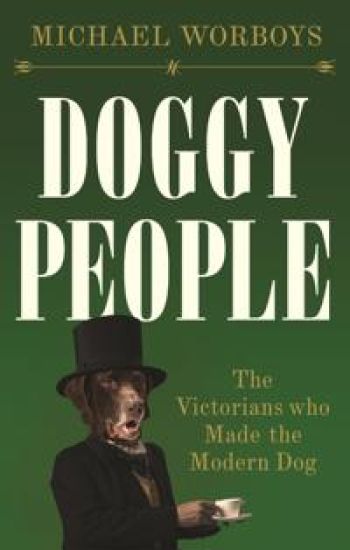
We know that there were dogs in Victorian Britain, but who were the ‘Doggy People’ who kept them, bred them, showed them, worked with them and cared for them?Chapter by chapter, this book reveals the varied and often eccentric lives of the Victorians who helped define dogs as we know them today. The cast runs from the very pinnacle of society, Queen Victoria, to near the bottom with Jemmy Shaw, a publican, boxer, promoter of dog-fights and rat-killing. The others include an artist, aristocrats, authors, a clergyman, doctors, a dog-dealer, a feminist, journalists, landowners, millionaires, philanthropists, politicians, scientists, a stockbroker, veterinarians, and a showman – none other their Charles Cruft.Looking at the invention and meaning of new breeds such as poodles, collies, Jack Russells, and borzois amongst others, we see how the Victorians thought about pets, sports, dog shows and animal rights.
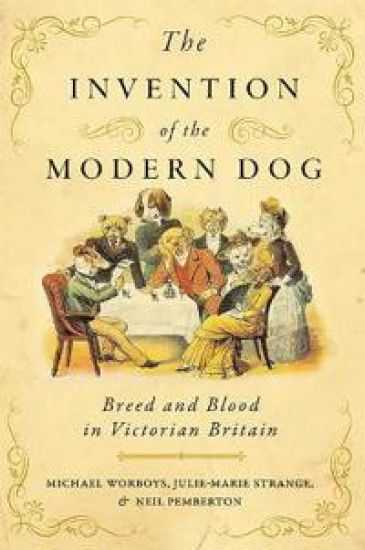
The story of the thoroughly Victorian origins of dog breeds.For centuries, different types of dogs were bred around the world for work, sport, or companionship. But it was not until Victorian times that breeders started to produce discrete, differentiated, standardized breeds. In The Invention of the Modern Dog, Michael Worboys, Julie-Marie Strange, and Neil Pemberton explore when, where, why, and how Victorians invented the modern way of ordering and breeding dogs. Though talk of "breed" was common before this period in the context of livestock, the modern idea of a dog breed defined in terms of shape, size, coat, and color arose during the Victorian period in response to a burgeoning competitive dog show culture. The authors explain how breeders, exhibitors, and showmen borrowed ideas of inheritance and pure blood, as well as breeding practices of livestock, horse, poultry and other fancy breeders, and applied them to a species that was long thought about solely in terms of work and companionship.The new dog breeds embodied and reflected key aspects of Victorian culture, and they quickly spread across the world, as some of Britain’s top dogs were taken on stud tours or exported in a growing international trade. Connecting the emergence and development of certain dog breeds to both scientific understandings of race and blood as well as Britain’s posture in a global empire, The Invention of the Modern Dog demonstrates that studying dog breeding cultures allows historians to better understand the complex social relationships of late-nineteenth-century Britain.
The story of the thoroughly Victorian origins of dog breeds.For centuries, different types of dogs were bred around the world for work, sport, or companionship. But it was not until Victorian times that breeders started to produce discrete, differentiated, standardized breeds. In The Invention of the Modern Dog, Michael Worboys, Julie-Marie Strange, and Neil Pemberton explore when, where, why, and how Victorians invented the modern way of ordering and breeding dogs. Though talk of "breed" was common before this period in the context of livestock, the modern idea of a dog breed defined in terms of shape, size, coat, and color arose during the Victorian period in response to a burgeoning competitive dog show culture. The authors explain how breeders, exhibitors, and showmen borrowed ideas of inheritance and pure blood, as well as breeding practices of livestock, horse, poultry and other fancy breeders, and applied them to a species that was long thought about solely in terms of work and companionship.The new dog breeds embodied and reflected key aspects of Victorian culture, and they quickly spread across the world, as some of Britain’s top dogs were taken on stud tours or exported in a growing international trade. Connecting the emergence and development of certain dog breeds to both scientific understandings of race and blood as well as Britain’s posture in a global empire, The Invention of the Modern Dog demonstrates that studying dog breeding cultures allows historians to better understand the complex social relationships of late-nineteenth-century Britain.
Following two successful editions, the third edition of GIS: A Computing Perspective has been completely revised and updated, with extensive new content reflecting the significant progress that has been made in the realm of GIS within the last 20 years. Major new topics covered for the first time in this edition include: graph databases and graph query languages, ontology engineering and qualitative spatial reasoning, geosensor networks and GeoAI, decentralized computing and online algorithms, and critical GIS and data sovereignty.FeaturesIncludes an entirely new chapter on AI and GIS, including ontologies and the Semantic Web, knowledge representation (KR) and spatial reasoning, machine learning and spatial analysis, and neural networks and deep learningPresents new material reflecting the advances made in cloud computing, stream computing, and sensor networks, as well as extensively revised and updated content on cartography, visualization, and interaction designConnects the technology to the social aspects and implications of GIS, including privacy and fair information practices, FATE (fairness, accountability, transparency, and ethics), and codes of conduct for responsible use of GISIntegrates the necessary background to foundational areas, such as databases and data structures, algorithms and indexes, and system architecture and AI, provided in context so readers new to those topics can still understand the concepts being discussedIncorporates over 20 carefully explained spatial algorithms; over 60 inset boxes with in-depth material that enriches the central topics; and more than 300 color figures to support the reader in mastering key conceptsWelcomes a new coauthor, Qian (Chayn) Sun, to the third edition, who brings her expertise in topics such as web mapping, cloud computing, critical geography, and machine learning with big spatial dataIntended for anyone interested in understanding GIS, especially students taking upper-level undergraduate and graduate courses in computer science and geography, as well as academics, researchers, practitioners, and professionals working in the field and involved in advanced GIS projects.
Kayla is a 17 year-old girl who has a unique best friend. He has helped Kayla through many rough times. He was there when she lost a very important person in her life and when a friend of hers got into some serious trouble. What makes this best friend so unique? He's an angel. An Archangel to be exact. Archangel Michael (St. Michael): Chief of the Army of God and Patron Saint of police officers and soldiers. He's also Kayla's protector and best friend.
College rule (also known as medium ruled paper) is the most common lined paper in use in the United States. It is generally used in middle school through to college and is also popular with adults. This is a good choice for teen or adult notebooks and composition books (known as exercise books outside the US).
He's God's deadliest weapon. His firstborn son. And still he failed.Blessed with the ultimate power of Heaven, Michael shouldn't have needed his brothers to rescue him. A reality that gnaws at his very soul. And to make matters worse, they weren't the only ones to witness his defeat. But surely fate wouldn't be so cruel as to introduce him to his intended mate on the day of his greatest failure, would it?Greyson, Prince of the Fae, knew the instant he met Michael that the archangel was his true soul. And yet, months later, Grey's still waiting for the man to acknowledge the truth. To quiet the unrelenting need that burns beneath Grey's flesh. But how can he convince a warrior that love and duty don't have to be exclusive?Left with few options, Grey asks Michael to give him one night. No expectations. No promises. Just the two of them. Together. A moment Grey knows will have to last a lifetime-until his life is threatened.Michael might not be ready to acknowledge Greyson's his mate, but he'll be damned if he fails the only man he'll ever love. He won't let Greyson down, even if it means his only course of action is a fall from grace.
E. F. Benson's "Michael" offers a fascinating glimpse into the intricacies of 20th-century English social life. This compelling work of psychological fiction delves into the complexities of human relationships and the subtle nuances of social customs prevalent in Great Britain. A meticulously prepared republication of a historical text, "Michael" explores themes relevant to family life through a literary lens, capturing a specific moment in time with enduring resonance. Readers interested in the social dynamics of early 20th-century England will find this novel a captivating study of character and societal expectations.This work has been selected by scholars as being culturally important, and is part of the knowledge base of civilization as we know it.This work is in the public domain in the United States of America, and possibly other nations. Within the United States, you may freely copy and distribute this work, as no entity (individual or corporate) has a copyright on the body of the work.Scholars believe, and we concur, that this work is important enough to be preserved, reproduced, and made generally available to the public. We appreciate your support of the preservation process, and thank you for being an important part of keeping this knowledge alive and relevant.
E. F. Benson's "Michael" offers a fascinating glimpse into the intricacies of 20th-century English social life. This compelling work of psychological fiction delves into the complexities of human relationships and the subtle nuances of social customs prevalent in Great Britain. A meticulously prepared republication of a historical text, "Michael" explores themes relevant to family life through a literary lens, capturing a specific moment in time with enduring resonance. Readers interested in the social dynamics of early 20th-century England will find this novel a captivating study of character and societal expectations.This work has been selected by scholars as being culturally important, and is part of the knowledge base of civilization as we know it.This work is in the public domain in the United States of America, and possibly other nations. Within the United States, you may freely copy and distribute this work, as no entity (individual or corporate) has a copyright on the body of the work.Scholars believe, and we concur, that this work is important enough to be preserved, reproduced, and made generally available to the public. We appreciate your support of the preservation process, and thank you for being an important part of keeping this knowledge alive and relevant.