Kirjojen hintavertailu. Mukana 11 342 296 kirjaa ja 12 kauppaa.

Kirjahaku

Etsi kirjoja tekijän nimen, kirjan nimen tai ISBN:n perusteella.

1000 tulosta hakusanalla Michel Foucault

Michel Foucault

Michel Foucault

Pradip Kumar Bose

OUP India
2019
nidottu
This new Bangla book discusses Michel Foucault's political and philosophical thoughts in the last decade of his career. The author argues that this decade was one of his most restless, creative, and fascinating. He discusses and analyses Foucauldian theories, such as sexuality, governmentality, bio-politics, and bio-power, as also his concern with the politics of truth, which includes his thoughts on modernity and critique. The book attempts to offer an intellectual history of Foucault's last decade and tries to show how a thinker thinks between the possible and the as-yet unimaginable. The author also engages with the period when Foucault positioned Kant as a critique of modernity. Through his essays on critique and Enlightenment, the author argues, Foucault was searching for another kind of critical philosophy. The essays in this book thus attempt to show the thinking in motion of an innovative intellectual of the twentieth century and in the process try to trace the finer nuances of Foucault's new critical philosophy.
Michel Foucault

Michel Foucault

Hubert L. Dreyfus; Paul Rabinow; Michel Foucault

University of Chicago Press
1983
pokkari
Summarizes the themes and arguments of the French philosopher on madness, medicine, sex, truth, and power, and explains Foucault's moral and historical outlook
Michel Foucault

Michel Foucault

Mariana Valverde

Routledge
2019
nidottu
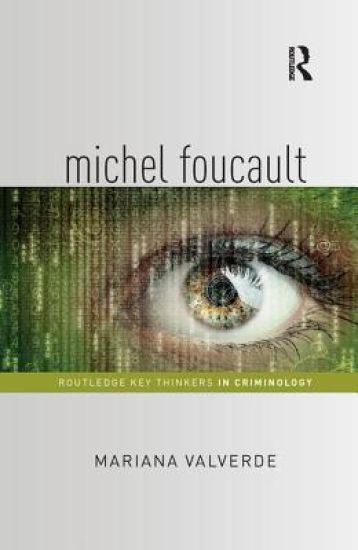
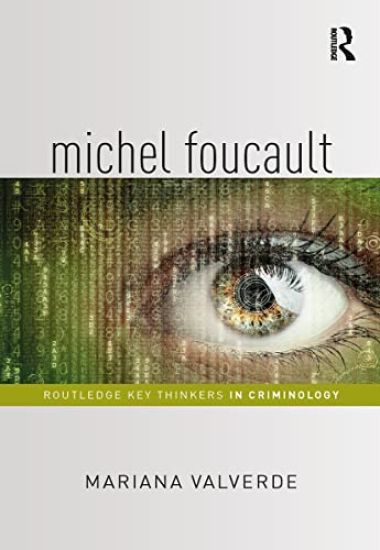
This book explores the theoretical contribution of Michel Foucault to the fields of criminology, law, justice and penology. It surveys both the ways in which the work of Foucault has been applied in criminology, but also how his work can be used to understand and explain contemporary issues and policies. Moreover, this book seeks to dispel some of the common misconceptions about the relevance of Foucault’s work to criminology and law. Mariana Valverde clearly explains the insights that Foucault’s rich body of work provides about different practices found in the fields of law, security, justice, and punishment; and how these insights have been used or could be used to understand and explain issues and policies that Foucault himself did not write about, including those that had not yet emerged during his lifetime.Drawing on key texts by Foucault such as Discipline and Punish, and also lectures he gave at the College de France and Louvain Criminology Institute which offer a more nuanced account of the development of criminal justice, Mariana Valverde offers the essential text on Foucault and his contribution and continued relevance to criminology. This book will be important reading for students and scholars of criminology, law, sociolegal studies, security studies, political theory and sociological theory.
Michel Foucault

Michel Foucault

Sara Mills

Routledge
2003
sidottu
It is impossible to imagine contemporary critical theory without the work of Michel Foucault. His radical reworkings of the concepts of power, knowledge, discourse and identity have influenced the widest possible range of theories and impacted upon disciplinary fields from literary studies to anthropology. Aimed at students approaching Foucault's texts for the first time, this volume offers:* an examination of Foucault's contexts* a guide to his key ideas* an overview of responses to his work* practical hints on 'using Foucault'* an annotated guide to his most influential works* suggestions for further reading.Challenging not just what we think but how we think, Foucault's work remains the subject of heated debate. Sara Mills' Michel Foucault offers an introduction to both the ideas and the debate, fully equipping student readers for an encounter with this most influential of thinkers.
Michel Foucault

Michel Foucault

Sara Mills

Routledge
2003
nidottu
It is impossible to imagine contemporary critical theory without the work of Michel Foucault. His radical reworkings of the concepts of power, knowledge, discourse and identity have influenced the widest possible range of theories and impacted upon disciplinary fields from literary studies to anthropology. Aimed at students approaching Foucault's texts for the first time, this volume offers:* an examination of Foucault's contexts* a guide to his key ideas* an overview of responses to his work* practical hints on 'using Foucault'* an annotated guide to his most influential works* suggestions for further reading.Challenging not just what we think but how we think, Foucault's work remains the subject of heated debate. Sara Mills' Michel Foucault offers an introduction to both the ideas and the debate, fully equipping student readers for an encounter with this most influential of thinkers.
Michel Foucault

Michel Foucault

Barry Smart

Routledge
2002
nidottu
In investigating the major works of Michel Foucault, Barry Smart focuses on the analysis of the relations of power and knowledge and modes of objectification through which human beings are made subjects; and addresses controversial issues concerning the state and resistance to power. The development of Foucault's work from the early text on madness to the final studies of sexuality, and the question of the work's methodological value and status as a form of critical analysis, are reviewed comprehensively. Barry Smart's detailed discussion of the contribution of Foucault's work to social analysis and research will promote fresh interest in the stimulating originality of Foucault's project.
Michel Foucault

Michel Foucault

Philip Barker

Prentice-Hall
1993
nidottu
This unique and original study analyzes Foucault's interaction with the history of ideas, undertaking a genealogy of the subject that subverts conventional philosophical history to develop a distinctly Foucauldian intellectual history. Through a detailed account of Foucault's work and its relation to the history of ideas, Philip Barker shows how that history can be usefully reconceptualised using Foucault's concepts of genealogy and archaeology. Locating the emergence of self-reflexive consciousness in twelfth century philosophy, and elaborating upon autobiography as a philosophical persona, Barker argues that this extremely productive approach can be used to analyze the relationship between the history of philosophy, psychoanalysis and the transparent subject.
Michel Foucault

Michel Foucault

Philip Barker

Edinburgh University Press
1998
nidottu
The ideal guide to Foucault's work for the non-specialist reader. Organised into easy-to-follow thematic sections, it allows the student to explore Foucault's work with no previous knowledge of contemporary theory. It takes the student through the major strands of Foucault's thought on power and knowledge, discipline and punishment, history and the subject, in a clear and engaging style, providing an easy entry into the complexities of Foucault's thinking.
Michel Foucault

Michel Foucault

Ashgate Publishing Limited
2014
sidottu
Michel Foucault was one of the twentieth century’s most influential thinkers whose work has unsettled and transformed the field of social philosophy and the social sciences. The essays and articles selected for this volume are written by many of the most important of Foucault’s interpreters and interlocutors and show the range of Foucault’s influence and the debates it has provoked about Foucault’s own approaches and in relation to substantive areas of social philosophy and social science such as power, critique, enlightenment, law, governance, ethics and truthfulness. This volume provides a comprehensive introduction to, and overview of, the development of Foucault’s thought and demonstrates its enduring significance on our understanding of how we have become what we are.
Michel Foucault

Michel Foucault

Clare O'Farrell

SAGE Publications Inc
2005
sidottu
A truly magnificent book... If there is a more comprehensive book on Foucault's work I have yet to see it. I anticipate those teaching and taking courses on Foucault's work will find Clare O'Farrell's book to be an invaluable resource. - Barry Smart, University of Portsmouth "A marvellous introduction. This volume captures the penetrating interdisciplinary concerns that have made Foucault a guide to so many beyond the frontiers of philosophy and history, beyond the borders of the academic community itself... This is an excellent introduction for the general reader to a passionate mind that continues to spread its influence." - James Bernauer, Boston College "Offers the best introduction to Foucault's philosophy... Superb glossary of major terms; excellent bibliography and chronology. Summing Up: Essential. Upper-level undergraduates through faculty/researchers." - C.E. Reagan, Kansas State University, CHOICE Michel Foucault's work is one of the most influential sources of ideas in the humanities and social sciences today. Clare O'Farrell offers a comprehensive and accessible introduction to Foucault's enormous, diverse and challenging output. Her book provides a range of practical tools and a reference work for readers who wish to understand and apply his ideas at both introductory and advanced levels. This volume includes: A discussion of Foucault's situation in the contemporary context exploring his role as an iconic thinker, with clear explanations as to why his work is so difficult to come to grips with, and also importantly, why it is of interest to so many people.The location of Foucault's work within its own historical, social and political setting.Brief summaries in chronological order of all of Foucault's major works, including the more recently published volumes of lectures.The organization of Foucault's work around five interrelated assumptions which underpin his world view: namely order, history, truth, power and ethics. Ideas for which he is well-known, such as archaeology, genealogy, discourse, discipline, and governmentality are discussed within the framework of these.A chronology of Foucault's life, work and times.An extensive list of key concepts in Foucault's work with detailed references pointing to where the relevant material can be found in his writings.A wide-ranging list of resources and a bibliography of Foucault's work for easy consultation.
Michel Foucault

Michel Foucault

Clare O'Farrell

SAGE PUBLICATIONS INC
2005
nidottu
A truly magnificent book... If there is a more comprehensive book on Foucault's work I have yet to see it. I anticipate those teaching and taking courses on Foucault's work will find Clare O'Farrell's book to be an invaluable resource. - Barry Smart, University of Portsmouth "A marvellous introduction. This volume captures the penetrating interdisciplinary concerns that have made Foucault a guide to so many beyond the frontiers of philosophy and history, beyond the borders of the academic community itself... This is an excellent introduction for the general reader to a passionate mind that continues to spread its influence." - James Bernauer, Boston College "Offers the best introduction to Foucault's philosophy... Superb glossary of major terms; excellent bibliography and chronology. Summing Up: Essential. Upper-level undergraduates through faculty/researchers." - C.E. Reagan, Kansas State University, CHOICE Michel Foucault's work is one of the most influential sources of ideas in the humanities and social sciences today. Clare O'Farrell offers a comprehensive and accessible introduction to Foucault's enormous, diverse and challenging output. Her book provides a range of practical tools and a reference work for readers who wish to understand and apply his ideas at both introductory and advanced levels. This volume includes: A discussion of Foucault's situation in the contemporary context exploring his role as an iconic thinker, with clear explanations as to why his work is so difficult to come to grips with, and also importantly, why it is of interest to so many people.The location of Foucault's work within its own historical, social and political setting.Brief summaries in chronological order of all of Foucault's major works, including the more recently published volumes of lectures.The organization of Foucault's work around five interrelated assumptions which underpin his world view: namely order, history, truth, power and ethics. Ideas for which he is well-known, such as archaeology, genealogy, discourse, discipline, and governmentality are discussed within the framework of these.A chronology of Foucault's life, work and times.An extensive list of key concepts in Foucault's work with detailed references pointing to where the relevant material can be found in his writings.A wide-ranging list of resources and a bibliography of Foucault's work for easy consultation.

Michel Foucault

Michel Foucault

Mark Olssen

Praeger Publishers Inc
1999
sidottu
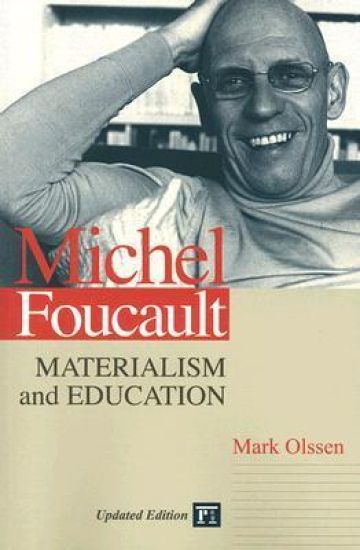
Although Foucault departs from Marxism, his own approach constitutes a form of consistent materialism which has theoretical implications for the analysis of social and educational discursive systems. In seeking to demonstrate a correct reading of Foucault, linguistic readings of his work, such as those of Christopher Norris (1993), which represent him as part of the linguistic turn in French philosophy, where language (or representation) henceforth defines the limits of thought, will be dispelled in the process of being corrected. Rather, Foucault will be represented, as Habermas (1987) has suggested, not merely as a historicist but at the same time as a nominalist, materialist, and empiricist.Because the distinctiveness of Foucault's approach can best be seen in contrast to other major philosophical systems and thinkers, considerable attention is given to examining Foucault's relationship to Marxism, as well as his relations to Kant, Gramsci, Habermas, and the Greeks. In relation to education, there is in Foucault's approach a double emphasis which constitutes an ordering principle for this work. On the one hand, attention is directed to discursive practices which perform an educative role in the constitution of subjects and of human forms of existence. On the other hand, forms of education are constituted and utilized for the purposes of collective ethical self-creation, a theme Foucault emphasized in his later works. The book assesses some of the more interesting recent utilizations of Foucault in educational research.
Michel Foucault

Michel Foucault

Barry Smart

Routledge
2016
sidottu
In investigating the major works of Michel Foucault, Barry Smart focuses on the analysis of the relations of power and knowledge and modes of objectification through which human beings are made subjects; and addresses controversial issues concerning the state and resistance to power. The development of Foucault's work from the early text on madness to the final studies of sexuality, and the question of the work's methodological value and status as a form of critical analysis, are reviewed comprehensively. Barry Smart's detailed discussion of the contribution of Foucault's work to social analysis and research will promote fresh interest in the stimulating originality of Foucault's project.
Michel Foucault

Michel Foucault

Hubert L. Dreyfus; Paul Rabinow

Routledge
2016
sidottu
First Published in 1984. This book was born out of a disagreement among friends. Paul Rabinow, attending a seminar given in 1979 by Hubert Dreyfus and John Searle which concerned, among other things, Michel Foucault, objected to the characterization of Foucault as a typical " structuralist." This challenge stirred a discussion that led to the proposal of a joint article which soon became a medium-length book.
Michel Foucault

Michel Foucault

Mariana Valverde

Routledge
2017
sidottu
This book explores the theoretical contribution of Michel Foucault to the fields of criminology, law, justice and penology. It surveys both the ways in which the work of Foucault has been applied in criminology, but also how his work can be used to understand and explain contemporary issues and policies. Moreover, this book seeks to dispel some of the common misconceptions about the relevance of Foucault’s work to criminology and law. Mariana Valverde clearly explains the insights that Foucault’s rich body of work provides about different practices found in the fields of law, security, justice, and punishment; and how these insights have been used or could be used to understand and explain issues and policies that Foucault himself did not write about, including those that had not yet emerged during his lifetime.Drawing on key texts by Foucault such as Discipline and Punish, and also lectures he gave at the College de France and Louvain Criminology Institute which offer a more nuanced account of the development of criminal justice, Mariana Valverde offers the essential text on Foucault and his contribution and continued relevance to criminology. This book will be important reading for students and scholars of criminology, law, sociolegal studies, security studies, political theory and sociological theory.
Michel Foucault

Michel Foucault

Lynn Fendler

Bloomsbury Academic
2014
nidottu
Michel Foucault’s influential work spanned a wide array of intellectual disciplines, his writings having been widely taken up in philosophy, history, literary criticism and political theory. Focusing on the implications of Foucault’s theories for education, whilst characterizing them as provocative, problematizing, poetic and playful, Lynn Fendler describes the historical context for understanding Foucault’s ground breaking critiques. Including a discussion of his major theories of disciplinary power, genealogy, discourse and subjectivity, this text provides generative explanations of concepts, using analogies to the Internet and to food, in order to connect Foucault’s theories to everyday experience.
Michel Foucault

Michel Foucault

Mark Olssen

Paradigm
2006
nidottu
"Olssen ! brings Foucault to life and sheds new light on understanding his work...Educationalists and scholars across the disciplines will welcome this interpretation of Foucault." Michael A. Peters, University of Glasgow "Olssen distills in brilliant and succinct language the core of Foucault's most important insights. This is a book that every student should read in order to understand how to link theory to practice, and educational thought to legacy and work of one of Europe's great thinkers." Henry Giroux, McMaster University Michel Foucault is arguably one of the most important thinkers of the twentieth century, and his works are some of the most difficult to grasp. Mark Olssen offers an accessible overview of Foucault's thought, putting into context the relevance of Foucault's ideas. Olssen adds important new insights to Foucault scholarship by bringing to light the influences of other thinkers such as Marx, Nietzsche, Gramsci, Habermas, and others on Foucault's development as a thinker, and their influence on the deep historical materialist strand that grounds and uniquely characterizes so much of Foucault's thought.
Michel Foucault

Michel Foucault

Dianna Taylor

Acumen Publishing Ltd
2010
sidottu
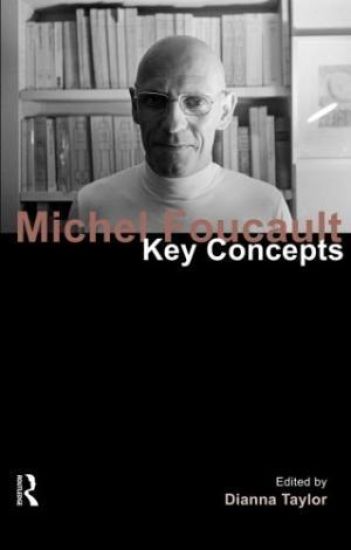
Michel Foucault was one of the twentieth century's most influential and provocative thinkers. His work on freedom, subjectivity, and power is now central to thinking across an extraordinarily wide range of disciplines, including philosophy, history, education, psychology, politics, anthropology, sociology, and criminology. "Michel Foucault: Key Concepts" explores Foucault's central ideas, such as disciplinary power, biopower, bodies, spirituality, and practices of the self. Each essay focuses on a specific concept, analyzing its meaning and uses across Foucault's work, highlighting its connection to other concepts, and emphasizing its potential applications. Together, the chapters provide the main co-ordinates to map Foucault's work. But more than a guide to the work, "Michel Foucault: Key Concepts" introduces readers to Foucault's thinking, equipping them with a set of tools that can facilitate and enhance further study.
Michel Foucault

Michel Foucault

Dianna Taylor

Acumen Publishing Ltd
2010
nidottu
Michel Foucault was one of the twentieth century's most influential and provocative thinkers. His work on freedom, subjectivity, and power is now central to thinking across an extraordinarily wide range of disciplines, including philosophy, history, education, psychology, politics, anthropology, sociology, and criminology. "Michel Foucault: Key Concepts" explores Foucault's central ideas, such as disciplinary power, biopower, bodies, spirituality, and practices of the self. Each essay focuses on a specific concept, analyzing its meaning and uses across Foucault's work, highlighting its connection to other concepts, and emphasizing its potential applications. Together, the chapters provide the main co-ordinates to map Foucault's work. But more than a guide to the work, "Michel Foucault: Key Concepts" introduces readers to Foucault's thinking, equipping them with a set of tools that can facilitate and enhance further study.