Roman qui fait suite a "Destins croises" mais qui peut se lire independamment.Sandra et Martial vont-ils se retrouver et dans quelles conditions.Se retirer n'est pas fuir comme le dit l'entete du livre car un amour meme le plus authentique finit toujours par s'epuiser quand il n'est pas partage.
L'histoire d bute Venise. Une jeune femme, Stefania, rencontre un Fran ais, M d ric, venu dans la cit de Marco Polo pour des raisons professionnelles. Stefania a un projet, se rendre en Asie pour retrouver sa m re, disparue lorsqu'elle avait dix ans, lors du pogrom perp tr par le g n ral Pol Pot. Se sentant incapable d'assumer seule ce voyage, elle demande M d ric de l'accompagner dans cette recherche afin qu'il veille sur elle. Manipulation de la part de la jeune fille, complaisance et opportunisme de la part de M d ric qui se voit offrir de singuli res vacances ? Cette qu te les entra nera jusqu'aux confins de l'Asie, au coeur de la r gion du Triangle d'or. Pour ce faire, ils remonteront le M kong, traverseront de lointaines contr es sous un climat souvent hostile sur la trace d'un pass douloureux. La route sera longue, pleine d'emb ches, de d couvertes, de surprises et de d convenues. Une fois parvenus leur but, trouveront-ils enfin, l'un et l'autre, la lumi re et la paix int rieure ?
Un homme et une femme se rencontrent dans un train. Rien de plus banal, et pourtant, leur vie va basculer. Trouveront ils, l'un et l'autre, l'amour, cette chose la plus douce qui soit, mais aussi parfois la plus am re ? Acc deront ils au bonheur, cet quilibre indispensable dans l'existence, pour tout un chacun ?
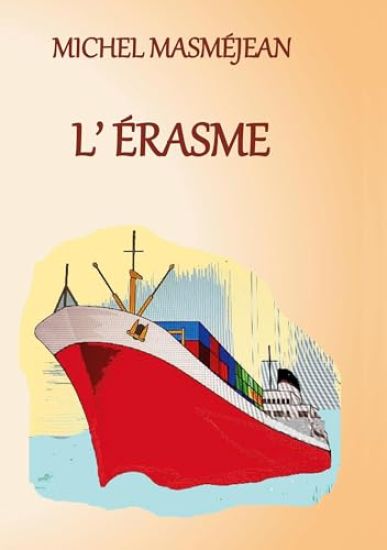
Il s'agit d'une aventure qui intrigue et ne laisse rien pr sager du contenu. C'est l'histoire d'un crivain soudain frapp par les affres de la page blanche. et qui d cide d'embarquer sur un bateau de fret reliant Marseille Shanga , qui transporte ventuellement des voyageurs. Il esp re ainsi retrouver sa plume afin d'abreuver sa r alit et en faire un roman. Nul doute que les pris d'aventure, les curieux, trouveront dans ce livre l' vasion qui nous manque tous.
Michel - Geschichte eines Deutschen unserer Zeit ist ein unver nderter, hochwertiger Nachdruck der Originalausgabe aus dem Jahr 1880. Hansebooks ist Herausgeber von Literatur zu unterschiedlichen Themengebieten wie Forschung und Wissenschaft, Reisen und Expeditionen, Kochen und Ern hrung, Medizin und weiteren Genres. Der Schwerpunkt des Verlages liegt auf dem Erhalt historischer Literatur. Viele Werke historischer Schriftsteller und Wissenschaftler sind heute nur noch als Antiquit ten erh ltlich. Hansebooks verlegt diese B cher neu und tr gt damit zum Erhalt selten gewordener Literatur und historischem Wissen auch f r die Zukunft bei.
A towering figure in music and film, Michel Legrand created some of the most creative and innovative film scores of the second half of the 20th century. The music of his most most successful collaborations -- masterpieces for films such as The Umbrellas of Cherbourg, The Thomas Crown Affair, Summer of '42, and Yentl -- is particularly memorable. As these scores and the stories behind their creation are, they represent one part of Legrand's genius. Over a career that spanned seven decades, Legrand composed the scores for 160 films, winning Oscars and Grammys along the way. Many of his songs have become standards covered by artists as diverse as Tony Bennett, Sarah Vaughan, Rufus Wainwright, and Sting. A prolific and highly versatile composer, Legrand worked with virtually every legendary figure in popular music and film from Maurice Chevalier to Barbra Streisand and from Orson Welles to Jean-Luc Godard. Still active in his late 80s, Legrand composed the score for Orson Welles's posthumously released movie, The Other Side of the Wind (2018). Just prior to his death at the age of 87, Legrand sat down with his longtime collaborator Stéphane Lerouge to recount, all the while intermingling present and past, many of the significant and memorable episodes from his life. He speaks of his triumphs but doesn't shy away from revealing rejections, fiascos, missed opportunities, creative insecurities and a nervous breakdown he experienced in Los Angeles at the height of his success. Throughout, he pays homage to the roles played by numerous artists he encountered on both sides of the Atlantic--jazz musicians, singers and lyricists, film directors and music composers, many of whom became his lifelong friends. Translated by Sam Taylor, this book shares Legrand's stories as told to Lerouge to English readers for the first time.
This new Bangla book discusses Michel Foucault's political and philosophical thoughts in the last decade of his career. The author argues that this decade was one of his most restless, creative, and fascinating. He discusses and analyses Foucauldian theories, such as sexuality, governmentality, bio-politics, and bio-power, as also his concern with the politics of truth, which includes his thoughts on modernity and critique. The book attempts to offer an intellectual history of Foucault's last decade and tries to show how a thinker thinks between the possible and the as-yet unimaginable. The author also engages with the period when Foucault positioned Kant as a critique of modernity. Through his essays on critique and Enlightenment, the author argues, Foucault was searching for another kind of critical philosophy. The essays in this book thus attempt to show the thinking in motion of an innovative intellectual of the twentieth century and in the process try to trace the finer nuances of Foucault's new critical philosophy.
Summarizes the themes and arguments of the French philosopher on madness, medicine, sex, truth, and power, and explains Foucault's moral and historical outlook
The gripping true story of one man's ten year expedition from a village in West Africa to the Arctic CircleWITH A NEW AFTERWORD BY THE AUTHORScorching heat, rich, fertile soil, and treacherous snakes marked the landscape in which Tété-Michel grew up in 1950s Togo, West Africa. When he discovered a book on Greenland as a teen, this distant land became an instant obsession - he was determined to journey to the place these pages had revealed to him and embarked on the adventure of a lifetime.A book of rich and immersive travel writing, Michel the Giant invites the reader to journey alongside an audacious Kpomassie as he makes his way from the equator to the bitter cold of the artic and settles into life with the Inuit peoples, adapting to their foods and customs. Part memoir, part anthropological observation this captivating narrative teems with nuanced observations on community, belonging and the universality of human experience. This title has been previously published as An African in Greenland
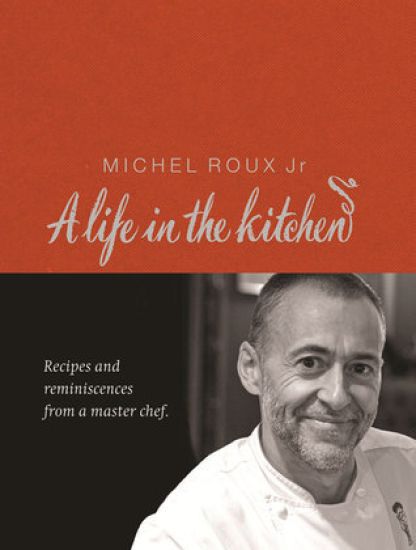
The life - and life behind the scenes - of one of Britain's best-known chefs.The Roux family is the most influential family associated with food in Britain. Through their various restaurants (Le Gavroche, Waterside Inn, Brasserie Roux) and catering services they have trained many of Britain's top chefs. Albert and Michel Sr brought French high cuisine to Britain in the sixties, much of the produce being brought twice weekly from France by Michel's mother in the family car. Michel grew up in an environment of respect for fine food and ingredients, of never settling for second best, and of traditional French family excursions to find wild food. He tells the story of what it was like to grow up as part of this close-knit family. He left school at 16 to start his first apprenticeship with Maitre Patissier Hellegourarche in Paris. He then worked with Alain Chapel at Mionnay before doing his mililtary service at the Elysee Palace cooking for Presidents Giscard d'Estaing and Francois Mitterand. After a stint cooking at the Mandarin Hotel in Hong Kong and catering in London, he took over the running of Le Gavroche in 1994.
In a career that spanned more then four decades and four countries, Michel Saint-Denis-actor, director, teacher, and theorist-was a major force in twentieth-century theatre. Baldwin chronicles his life and career, which was characterized by frequent beginnings, triumphs, and disasters. Although the times, the artistic currents, and the places changed, Saint-Denis's ambition remained consistent: to create a permanent company dedicated to theatrical experiment coupled with school. While this aspiration was never fully realized, the result of his failure was to have a more lasting effect on the theatre. Always on the move, he implanted his theatre practice internationally through the creation of innovative drama schools and his own teaching. In this long-overdue assessment, Saint-Denis's contribution to the stage is brought to light in vivid detail.Making the case that the Saint-Denis's innovations, ideas, and vision are present in current theatrical practice, Baldwin resurrects this important figure and examines a life and career that had almost been forgotten. Thirty-five years after his death, the author contends his influence can still be seen in the drama schools he created-the London Theatre Studio, the Old Vic School, the Ecole Superieure d'Art Dramatique, the National Theatre School of Canada, the Juilliard Drama Division-and in the spirit behind much that was accomplished at England's National Theatre, Royal Shakespeare Company, and Royal Court. This consideration casts new light on this important figure and reveals the extent of his role in the shaping of modern theatre and dramatic arts.