Kirjojen hintavertailu. Mukana 11 699 587 kirjaa ja 12 kauppaa.

Kirjahaku

Etsi kirjoja tekijän nimen, kirjan nimen tai ISBN:n perusteella.

1000 tulosta hakusanalla Michel Pastoureau

The Devil's Cloth

The Devil's Cloth

Michel Pastoureau

Columbia University Press
2001
sidottu
Michel Pastoureau's lively study of stripes offers a unique and engaging perspective on the evolution of fashion, taste, and visual codes in Western culture. The Devil's Cloth begins with a medieval scandal. When the first Carmelites arrived in France from the Holy Land, the religious order required its members to wear striped habits, prompting turmoil and denunciations in the West that lasted fifty years until the order was forced to accept a quiet, solid color. The medieval eye found any surface in which a background could not be distinguished from a foreground disturbing. Thus, striped clothing was relegated to those on the margins or outside the social order-jugglers and prostitutes, for example-and in medieval paintings the devil himself is often depicted wearing stripes. The West has long continued to dress its slaves and servants, its crewmen and convicts in stripes. But in the last two centuries, stripes have also taken on new, positive meanings, connoting freedom, youth, playfulness, and pleasure. Witness the revolutionary stripes on the French and United States flags. In a wide-ranging discussion that touches on zebras, awnings, and pajamas, augmented by illustrative plates, the author shows us how stripes have become chic, and even, in the case of bankers' pin stripes, a symbol of taste and status. However, make the stripes too wide, and you have a gangster's suit-the devil's cloth indeed!

The Bear

The Bear

Michel Pastoureau

The Belknap Press
2011
sidottu
The oldest discovered statue, fashioned some fifteen to twenty thousand years ago, is of a bear. The lion was not always king. From antiquity to the Middle Ages, the bear’s centrality in cults and mythologies left traces in European languages, literatures, and legends from the Slavic East to Celtic Britain. Historian Michel Pastoureau considers how this once venerated creature was deposed by the advent of Christianity and continued to sink lower in the symbolic bestiary before rising again in Pyrrhic triumph as a popular toy.The early Church was threatened by pagan legends of the bear’s power, among them a widespread belief that male bears were sexually attracted to women and would violate them, producing half-bear, half-human beings—invincible warriors who founded royal lines. Marked for death by the clergy, bears were massacred. During the Renaissance, the demonic prestige bears had been assigned in biblical allegory was lost to the goat, ass, bat, and owl, who were the devil’s new familiars, while the lion was crowned as the symbol of nobility. Once the undefeated champions of the Roman arena, prized in princely menageries, bears became entertainers in the marketplace, trained to perform humiliating tricks or muzzled and devoured by packs of dogs for the amusement of humans. By the early twentieth century, however, the bear would return from exile, making its way into the hearts of children everywhere as the teddy bear.This compelling history reminds us that men and bears have always been inseparable, united by a kinship that gradually moved from nature to culture—a bond that continues to this day.
Black

Black

Michel Pastoureau

PRINCETON UNIVERSITY PRESS
2008
sidottu
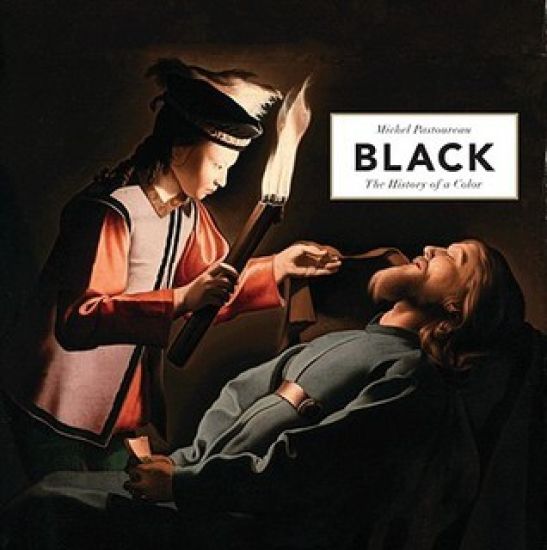
Black--favorite color of priests and penitents, artists and ascetics, fashion designers and fascists--has always stood for powerfully opposed ideas: authority and humility, sin and holiness, rebellion and conformity, wealth and poverty, good and bad. In this beautiful and richly illustrated book, the acclaimed author of Blue now tells the fascinating social history of the color black in Europe. In the beginning was black, Michel Pastoureau tells us. The archetypal color of darkness and death, black was associated in the early Christian period with hell and the devil but also with monastic virtue. In the medieval era, black became the habit of courtiers and a hallmark of royal luxury. Black took on new meanings for early modern Europeans as they began to print words and images in black and white, and to absorb Isaac Newton's announcement that black was no color after all. During the romantic period, black was melancholy's friend, while in the twentieth century black (and white) came to dominate art, print, photography, and film, and was finally restored to the status of a true color. For Pastoureau, the history of any color must be a social history first because it is societies that give colors everything from their changing names to their changing meanings--and black is exemplary in this regard. In dyes, fabrics, and clothing, and in painting and other art works, black has always been a forceful--and ambivalent--shaper of social, symbolic, and ideological meaning in European societies. With its striking design and compelling text, Black will delight anyone who is interested in the history of fashion, art, media, or design.
Green

Green

Michel Pastoureau

Princeton University Press
2014
sidottu
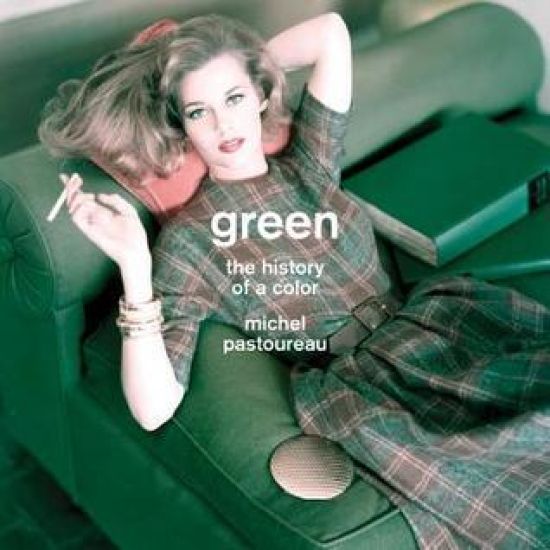
In this beautiful and richly illustrated book, the acclaimed author of Blue and Black presents a fascinating and revealing history of the color green in European societies from prehistoric times to today. Examining the evolving place of green in art, clothes, literature, religion, science, and everyday life, Michel Pastoureau traces how culture has profoundly changed the perception and meaning of the color over millennia--and how we misread cultural, social, and art history when we assume that colors have always signified what they do today. Filled with entertaining and enlightening anecdotes, Green shows that the color has been ambivalent: a symbol of life, luck, and hope, but also disorder, greed, poison, and the devil. Chemically unstable, green pigments were long difficult to produce and even harder to fix. Not surprisingly, the color has been associated with all that is changeable and fleeting: childhood, love, and money. Only in the Romantic period did green definitively become the color of nature. Pastoureau also explains why the color was connected with the Roman emperor Nero, how it became the color of Islam, why Goethe believed it was the color of the middle class, why some nineteenth-century scholars speculated that the ancient Greeks couldn't see green, and how the color was denigrated by Kandinsky and the Bauhaus. More broadly, Green demonstrates that the history of the color is, to a large degree, one of dramatic reversal: long absent, ignored, or rejected, green today has become a ubiquitous and soothing presence as the symbol of environmental causes and the mission to save the planet. With its striking design and compelling text, Green will delight anyone who is interested in history, culture, art, fashion, or media.
Red

Red

Michel Pastoureau

PRINCETON UNIVERSITY PRESS
2017
sidottu
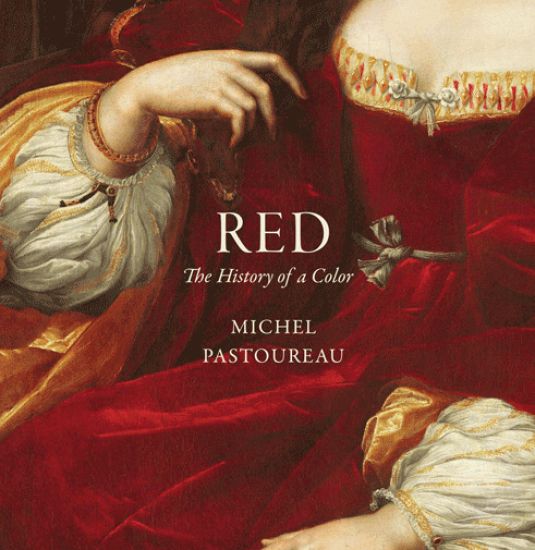
A beautifully illustrated visual and cultural history of the color red throughout the ages The color red has represented many things, from the life force and the divine to love, lust, and anger. Up through the Middle Ages, red held a place of privilege in the Western world. For many cultures, red was not just one color of many but rather the only color worthy enough to be used for social purposes. In some languages, the word for red was the same as the word for color. The first color developed for painting and dying, red became associated in antiquity with war, wealth, and power. In the medieval period, red held both religious significance, as the color of the blood of Christ and the fires of Hell, and secular meaning, as a symbol of love, glory, and beauty. Yet during the Protestant Reformation, red began to decline in status. Viewed as indecent and immoral and linked to luxury and the excesses of the Catholic Church, red fell out of favor. After the French Revolution, red gained new respect as the color of progressive movements and radical left-wing politics. In this beautifully illustrated book, Michel Pastoureau, the acclaimed author of Blue, Black, and Green, now masterfully navigates centuries of symbolism and complex meanings to present the fascinating and sometimes controversial history of the color red. Pastoureau illuminates red's evolution through a diverse selection of captivating images, including the cave paintings of Lascaux, the works of Renaissance masters, and the modern paintings and stained glass of Mark Rothko and Josef Albers.
Blue

Blue

Michel Pastoureau

PRINCETON UNIVERSITY PRESS
2018
sidottu
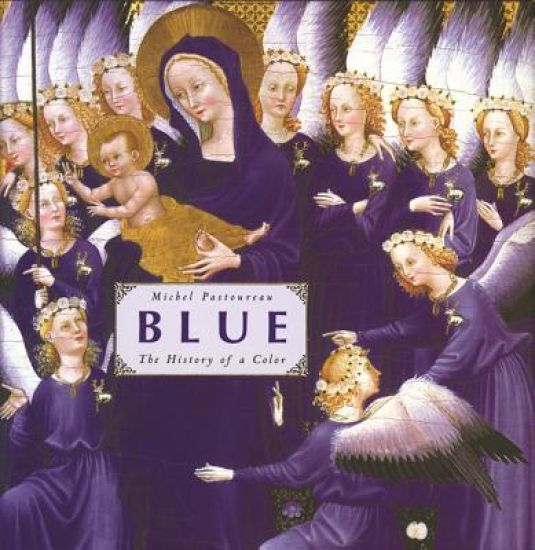
A beautifully illustrated visual and cultural history of the color blue throughout the agesBlue has had a long and topsy-turvy history in the Western world. The ancient Greeks scorned it as ugly and barbaric, but most Americans and Europeans now cite it as their favorite color. In this fascinating history, the renowned medievalist Michel Pastoureau traces the changing meanings of blue from its rare appearance in prehistoric art to its international ubiquity today.Any history of color is, above all, a social history. Pastoureau investigates how the ever-changing role of blue in society has been reflected in manuscripts, stained glass, heraldry, clothing, paintings, and popular culture. Beginning with the almost total absence of blue from ancient Western art and language, the story moves to medieval Europe. As people began to associate blue with the Virgin Mary, the color became a powerful element in church decoration and symbolism. Blue gained new favor as a royal color in the twelfth century and became a formidable political and military force during the French Revolution. As blue triumphed in the modern era, new shades were created and blue became the color of romance and the blues. Finally, Pastoureau follows blue into contemporary times, when military clothing gave way to the everyday uniform of blue jeans and blue became the universal and unifying color of the Earth as seen from space.Beautifully illustrated, Blue tells the intriguing story of our favorite color and the cultures that have hated it, loved it, and made it essential to some of our greatest works of art.
Yellow

Yellow

Michel Pastoureau

PRINCETON UNIVERSITY PRESS
2019
sidottu
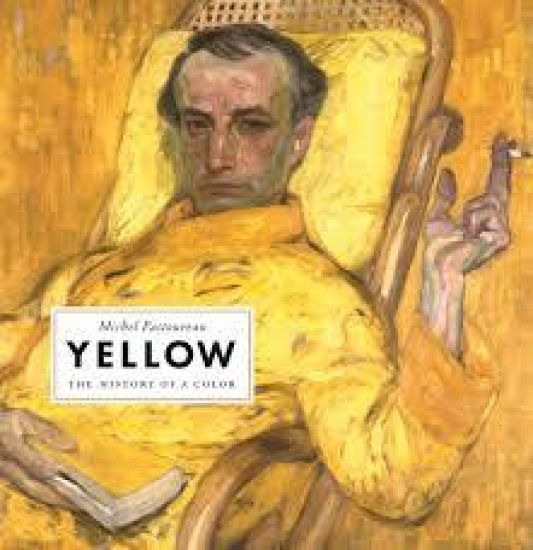
From the acclaimed author of Blue, a beautifully illustrated history of yellow from antiquity to the presentIn this richly illustrated book, Michel Pastoureau—a renowned authority on the history of color and the author of celebrated volumes on blue, black, green, and red—now traces the visual, social, and cultural history of yellow. Focusing on European societies, with comparisons from East Asia, India, Africa, and South America, Yellow tells the intriguing story of the color’s evolving place in art, religion, fashion, literature, and science.In Europe today, yellow is a discreet color, little present in everyday life and rarely carrying great symbolism. This has not always been the case. In antiquity, yellow was almost sacred, a symbol of light, warmth, and prosperity. It became highly ambivalent in medieval Europe: greenish yellow came to signify demonic sulfur and bile, the color of forgers, lawless knights, Judas, and Lucifer—while warm yellow recalled honey and gold, serving as a sign of pleasure and abundance. In Asia, yellow has generally had a positive meaning. In ancient China, yellow clothing was reserved for the emperor, while in India the color is associated with happiness. Above all, yellow is the color of Buddhism, whose temple doors are marked with it.Throughout, Pastoureau illuminates the history of yellow with a wealth of captivating images. With its striking design and compelling text, Yellow is a feast for the eye and mind.
Pink

Pink

Michel Pastoureau

PRINCETON UNIVERSITY PRESS
2025
sidottu
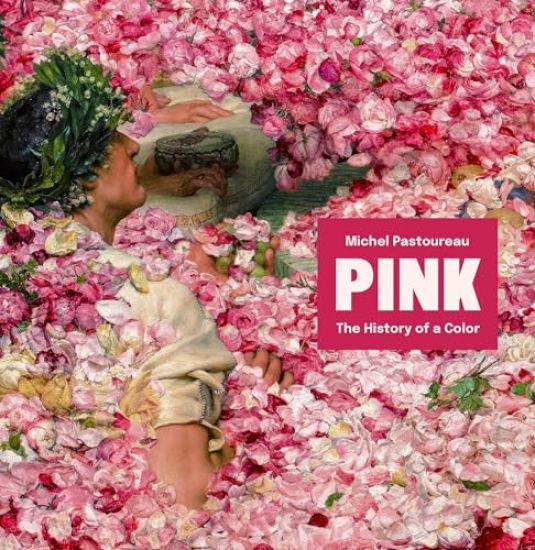
From the acclaimed author of Blue and other color histories, the beautifully illustrated story of pink, from the first ancient pigments to BarbiePink has such powerful associations today that it’s hard to imagine the color could ever have meant anything different. But it’s only since the introduction of the Barbie doll in 1959 that pink has become decisively feminized. Indeed, in the eighteenth century, pink was frequently masculine, and the color has signified many things beyond gender over the course of its long history—from the prim to the vulgar, and from the romantic to the eccentric. In this richly illustrated book, Michel Pastoureau, a celebrated authority on the history of colors, presents a fascinating visual, social, and cultural history of pink in the West, from antiquity to today.Pink pigments first appear in ancient Macedonian paintings, but it was not until the eighteenth century that vivid, saturated pinks were developed for dyeing and painting. At the same time, a popular new flower—the pink rose—finally gave the color a standard name, and pink, assuming a place in everyday life, began to acquire its own symbolism, distinct from that of red, yellow, or white. Bringing the story up to the twentieth and twenty-first centuries, Pink describes how the color, both adored and detested, became associated with many other things, from softness and pleasure to nudity and sex.Illustrated throughout with a wealth of captivating images, Pink is an entertaining and enlightening account of the evolving role and significance of the color in art, fashion, literature, religion, science, and everyday life across the millennia.
The Colours of Our Memories

The Colours of Our Memories

Michel Pastoureau

Polity Press
2012
sidottu
What remains of the colours of our childhood? What are our memories of a blue rabbit, a red dress, a yellow bike – and were they really those colours? What colours do we associate with our student years, our first loves, our adult lives? How does colour leave its mark on memory? In an attempt to answer these and other questions, Michel Pastoureau presents us with a journal about colours that covers half a century. Drawing on personal recollections, he retraces the recent history of colours through an exploration of fashion and clothing, everyday objects and practices, emblems and flags, sport, literature, museums and art. This text – playful, poetic, nostalgic – records the life of both the author and his contemporaries. We live in a world increasingly bursting with colour, in which colour remains a focus for memory, a source of delight and, most of all, an invitation to dream.
The Colours of Our Memories

The Colours of Our Memories

Michel Pastoureau

JOHN WILEY AND SONS LTD
2022
nidottu
What remains of the colours of our childhood? What are our memories of a blue rabbit, a red dress, a yellow bike – and were they really those colours? What colours do we associate with our student years, our first loves, our adult lives? How does colour leave its mark on memory? In an attempt to answer these and other questions, Michel Pastoureau presents us with a journal about colours that covers half a century. Drawing on personal recollections, he retraces the recent history of colours through an exploration of fashion and clothing, everyday objects and practices, emblems and flags, sport, literature, museums and art. This text – playful, poetic, nostalgic – records the life of both the author and his contemporaries. We live in a world increasingly bursting with colour, in which colour remains a focus for memory, a source of delight and, most of all, an invitation to dream.
Black

Black

Michel Pastoureau

PRINCETON UNIVERSITY PRESS
2026
pokkari
An acclaimed cultural history of black—now available in an attractive, text-only, pocket-sized paperback Black—favorite color of priests and penitents, artists and ascetics, fashion designers and fascists—has always stood for powerfully opposed ideas: authority and humility, sin and holiness, rebellion and conformity, wealth and poverty, good and bad. In this book, the acclaimed author of Blue now tells the fascinating social history of the color black in Europe. In the beginning was black, Michel Pastoureau tells us. The archetypal color of darkness and death, black was associated in the early Christian period with hell and the devil but also with monastic virtue. In the medieval era, black became the habit of courtiers and a hallmark of royal luxury. Black took on new meanings for early modern Europeans as they began to print words and images in black and white, and to absorb Isaac Newton's announcement that black was no color after all. During the romantic period, black was melancholy's friend, while in the twentieth century black (and white) came to dominate art, print, photography, and film, and was finally restored to the status of a true color. For Pastoureau, the history of any color must be a social history first because it is societies that give colors everything from their changing names to their changing meanings—and black is exemplary in this regard. In dyes, fabrics, and clothing, and in painting and other art works, black has always been a forceful—and ambivalent—shaper of social, symbolic, and ideological meaning in European societies. With its striking design and compelling text, Black will delight anyone who is interested in the history of fashion, art, media, or design. The History of a Color: Pocket Editions are attractive, affordable, and reader-friendly text-only paperback editions of Michel Pastoureau’s bestselling illustrated histories of color.
Zheltyj. Istorija tsveta

Zheltyj. Istorija tsveta

Michel Pastoureau

Novoe literaturnoe obozrenie
2026
sidottu
Frantsuzskij istorik Mishel Pasturo prodolzhaet svoj masshtabnyj proekt, posvjaschennyj istorii tsveta v zapadnoevropejskikh obschestvakh ot Drevnego Rima do nashikh dnej. V izdatelstve "NLO" uzhe vykhodili knigi "Sinij", "Chernyj", "Krasnyj" i "Zelenyj", a takzhe "Djavolskaja materija. Istorija polosok i polosatykh tkanej". Novaja kniga posvjaschena zheltomu tsvetu, kotoryj malo prisutstvuet v povsednevnoj zhizni sovremennoj Evropy i skudno predstavlen v ofitsialnoj simvolike. Odnako tak bylo ne vsegda. Ljudi proshlogo videli v nem svjaschennyj tsvet - tsvet sveta, tepla, bogatstva i protsvetanija. Greki i rimljane udeljali emu osoboe mesto v religioznykh obrjadakh, a kelty i germantsy svjazyvali ego s bogatstvom i bessmertiem. Ponizhenie statusa zheltogo tsveta proizoshlo v Srednevekove. S odnoj storony, on stal tsvetom gorkoj zhelchi i demonicheskoj sery - priznakom lzhi, skuposti, inogda dazhe bolezni i bezumija. V to zhe vremja est i khoroshij zheltyj: zoloto, med i spelye kolosja - znak vlasti, radosti, izobilija. Etim i drugim semanticheskim metamorfozam zheltogo tsveta posvjaschena kniga. Mishel Pasturo - istorik-medievist, professor Prakticheskoj shkoly vysshikh issledovanij v Parizhe. 3-e izd
Heraldry

Heraldry

Michel Pastoureau; Francisca Garvie

Thames Hudson Ltd
1997
nidottu
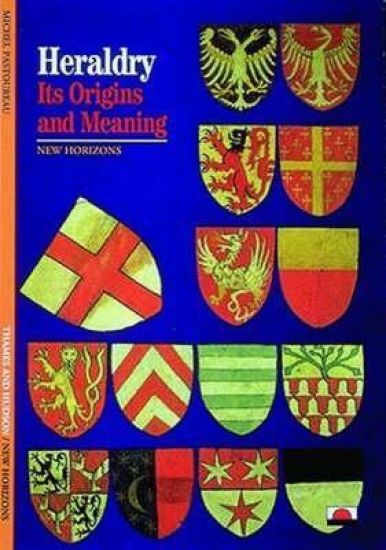
Heraldry is a living survival of the great medieval world of European chivalry. First introduced as a means of identification in battle and in tournaments, it gradually spread to society as a whole. Today the knights-in-armour and many of the families who bore these coats of arms have disappeared, but the heraldic tradition survives in the royal arms, flags, emblems, road signs, sports badges and corporate logos of the modern world. This work unravels the complex language and grammar of this social code that has been an inspiration for artists as well as an invaluable tool for historians, archaeologists and those interested in tracing their family tree.
White

White

Michel Pastoureau; Roland Betancourt

PRINCETON UNIVERSITY PRESS
2023
sidottu
From the acclaimed author of Blue, a beautifully illustrated history of the color white in visual culture, from antiquity to todayAs a pigment, white is often thought to represent an absence of color, but it is without doubt an important color in its own right, just like red, blue, green, or yellow—and, like them, white has its own intriguing history. In this richly illustrated book, Michel Pastoureau, a celebrated authority on the history of colors, presents a fascinating visual, social, and cultural history of the color white in European societies, from antiquity to today.Illustrated throughout with a wealth of captivating images ranging from the ancient world to the twenty-first century, White examines the evolving place, perception, and meaning of this deceptively simple but complex hue in art, fashion, literature, religion, science, and everyday life across the millennia. Before the seventeenth century, white’s status as a true color was never contested. On the contrary, from antiquity until the height of the Middle Ages, white formed with red and black a chromatic triad that played a central role in life and art. Nor has white always been thought of as the opposite of black. Through the Middle Ages, the true opposite of white was red. White also has an especially rich symbolic history, and the color has often been associated with purity, virginity, innocence, wisdom, peace, beauty, and cleanliness.With its striking design and compelling text, White is a colorful history of a surprisingly vivid and various color.
The Devil's Cloth

The Devil's Cloth

Michel Pastoureau; Jody (TRN) Gladding

Simon Schuster
2003
pokkari
A French scholar and author of Blue: The History of a Color presents a witty cultural and social history of stripes, from the medieval prejudice against stripes to the present day, looking at the frequently negative attitude and connotations of stripes. Reprint.
Rouge(s)

Rouge(s)

Au Prisme Des Lettres; Michel Pastoureau

BoD - Books on Demand
2025
nidottu
Le rouge de l'amour, le rouge du sang, le rouge du feu... Le rouge concentre les enjeux fondamentaux de la vie. Il se d cline en multiples nuances: carlate, grenat, rouille... Mais connaissez-vous l'amarante et le zinzolin ? Savez-vous que le Titien a donn son nom une teinte pour peindre les chevelures des femmes, que l'oxyde de fer conf re sa couleur la plan te Mars, ou encore que le coquelicot symbolise la m moire des soldats tomb s sur le champ de bataille ? Rouge(s) est le premier projet du collectif Au prisme des lettres, qui rassemble de jeunes artistes et professionnel.le.s de l' dition francophones. Dans ce recueil, 15 auteur.ice.s s'emparent de la couleur rouge dans toutes ses nuances, des plus connues aux plus originales, au travers de textes vibrant d' motion et de po sie. Une palette d'interpr tations sur les soci t s d'hier et d'aujourd'hui.
Michel

Michel

Johannes Scherr

Hansebooks
2017
pokkari
Michel - Geschichte eines Deutschen unserer Zeit ist ein unver nderter, hochwertiger Nachdruck der Originalausgabe aus dem Jahr 1880. Hansebooks ist Herausgeber von Literatur zu unterschiedlichen Themengebieten wie Forschung und Wissenschaft, Reisen und Expeditionen, Kochen und Ern hrung, Medizin und weiteren Genres. Der Schwerpunkt des Verlages liegt auf dem Erhalt historischer Literatur. Viele Werke historischer Schriftsteller und Wissenschaftler sind heute nur noch als Antiquit ten erh ltlich. Hansebooks verlegt diese B cher neu und tr gt damit zum Erhalt selten gewordener Literatur und historischem Wissen auch f r die Zukunft bei.