Kirjojen hintavertailu. Mukana 11 244 527 kirjaa ja 12 kauppaa.

Kirjahaku

Etsi kirjoja tekijän nimen, kirjan nimen tai ISBN:n perusteella.

1000 tulosta hakusanalla Mieko Ouchi

Burning Mom

Burning Mom

Mieko Ouchi

Playwrights Canada Press
2023
nidottu
After nearly a year of mourning her husband's death, sixtysomething Dorothy needs to feel alive. So she pitches a road-trip idea to her family--attending Burning Man, the massive arts festival known for its carefree nature that draws half a million people, and she wants to drive there in the RV she had purchased with her husband before he died. After she learns how to drive the RV and her family gets over their shock, Dorothy's son and his friend join her for her journey, sleeping in parking lots along the way, visiting a sex shop for costumes, and showing her around the massive, dusty grounds in Nevada. But once Dorothy starts to explore alone, whether its finding hilarious chaos in the middle of a naked bike ride parade or experiencing sweet solace and acceptance through art, she learns that she can do more in life than she ever imagined. This comical play, which is based on author Mieko Ouchi's mother's own experiences, shows that the search for courage and independence can be lighthearted even when rooted in grief.
Gli occhi del mare

Gli occhi del mare

Mirko Stifani Dr; Antonio Marcello Toja Dr

Createspace Independent Publishing Platform
2013
nidottu
Avventura, fantascienza, azione mozzafiato, natura. Il primo grande libro tutto italiano, scritto da due veri esperti di mare e di tecnologie avanzate, semi sconosciute ma gi operative. Entrerete nei luoghi pi segreti della Marina Militare Italiana, scoprirete nuove forme di vita dalle caratteristiche eccezionali, veri e propri viaggiatori spaziali che hanno popolato la terra con migliaia si specie che solo oggi sono oggetto di studio da parte dei ricercatori. Vi muoverete in un mondo di intrichi internazionali, missioni ad alto rischio e vita negli abissi, attentati e tanto altro. Ma che cosa caduto sulla Terra il 27 giugno 2007? Realt o fantascienza? Forse lo saprete alla fine del libro, forse... "Gli occhi del mare" il primo di una serie di tre libri che tratteranno gli stessi personaggi, che fin dalle prime pagine scoprirete vivi e reali e dei quali v'innamorerete. Questo libro ha solo lo scopo di divertirvi e di farvi dimenticare i guai e i problemi comuni a tutti in questo primo quarto di secolo, ma dopo aver letto "Gli occhi del mare" non sarete pi quelli di prima, i vostri orizzonti si apriranno su uno scenario quasi sconosciuto, ma reale, quanto il Sole, la Luna e la Terra
Mieko and the Fifth Treasure

Mieko and the Fifth Treasure

Eleanor Coerr

Puffin Books
2003
nidottu
Staying with her grandparents after the atomic bomb has been dropped on Nagasaki, ten-year-old Mieko feels that happiness is gone forever and she will no longer be able to produce a beautiful drawing for the contest at school.
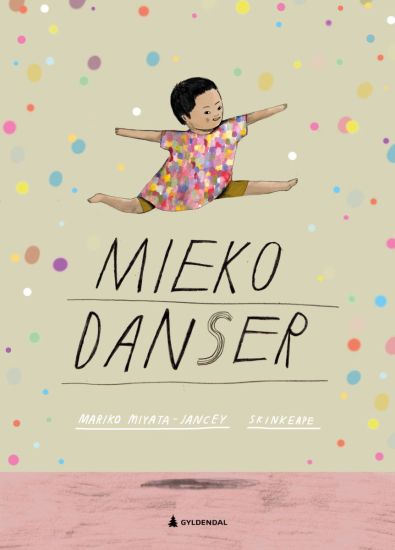
Mieko danser

Mieko danser

Mariko Miyata-Jancey

Gyldendal
2023
sidottu
Mieko elsker å danse! Særlig når hun får bruke shorts og T-skjorte i stedet for den dustete strømpebuksa og den trange drakta. Aldri før har Mieko spunnet så fort eller hoppet så høyt! Og nå har Sofia med smilet også begynt på dansinga. Smilet som gjør det varmt i magen og ekstra fint å være der.Men hvorfor blir Mieko plassert på hoppgruppa? Der er det jo bare gutter!
Mieko danser

Mieko danser

Mariko Miyata-Jancey

Turbine
2024
sidottu
Mieko elsker at danse! Og endnu mere når hun må danse i shorts og T-shirt i stedet for de dumme strømpebukser og den stramme dragt. Mieko har aldrig drejet så hurtigt eller sprunget så højt! Og nu er Sofia med smilet også begyndt til dans. Det smil, der giver varme i varmen og gør det ekstra dejligt at være der. Men hvorfor skal Mieko være på springholdet? Der er kun drenge!En smuk og rørende bog om at være sig selv. Mariko Miyata-Jancey debuterede i Norge med Mieko danser, og hun vandt i 2023 det norske Kulturdepartements billedbogspris for bogen. Illustreret af Skinkeape.
Mieko på dansecamp

Mieko på dansecamp

Mariko Miyata-Jancey

Gyldendal
sidottu
Mieko skal på dansecamp og gleder seg til både dansing og overnatting. Men alt blir ikke helt som hun hadde sett for seg. Hvorfor sier bestevennen Sofia at Mariama kan legge liggerunderlaget sitt sammen med deres? Det var jo Mieko og Sofie som skulle sove ved siden av hverandre. Og hvorfor kan pappa aldri lære forskjellen mellom L og R? Det heter faktisk ikke pølse i rumpe! Mieko på dansecamp er en fargerik og varm bildebok om å skille seg ut, sjalusi, danseglede og nye vennskap. Boken tar opp viktige tema som tilhørighet, ekskludering og rasistiske ytringer, med humor, overskudd og stort hjerte. Skinkeapes uttrykksfulle illustrasjoner skaper et visuelt univers fullt av energi og personlighet. Dette er den andre boka om Mieko. Den første, Mieko danser, fikk strålende kritikker og vant Kulturdepartementets bildebokpris.
Noor Helps Mieko Find a Fur-Ever Home

Noor Helps Mieko Find a Fur-Ever Home

Suzanne Salman

Poetry Planet Book Publishing House
2024
pokkari
Welcome to a touching story about courage, friendship, and the magical bond between Mieko, a dog, and Noor, a girl with a good heart. Turning the pages of this beautiful book will take you on a trip full of hope, kindness, and the amazing power of love. In the cute town where Noor lived, her heart was full of love and her spirit was pure. Finding a friend who she could help make life safe and whole was her simple but deep dream. She had no idea that her life would become connected with that of Mieko, a cute dog who was looking for love and a place to call home. This started her journey of fostering. Noor and Mieko went on an adventure together. They had to deal with challenges that tried their strength of will to find Mieko the best home. As the story goes on, there are happy times, hard times, and the finding that true love for Mieko has no limits. Noor's unwavering love for Mieko and the deep bond they have with each other shows how strong love can be through all of life's ups and downs. The story is about kindness, understanding, and how opening our hearts to others can change our lives. As you read "Noor and Mieko's Tale," keep in mind that there is more to this story than what you see on the page. It's a lesson that all kinds of love can get us through tough times and shine a light on the darkest parts of our lives. No matter what age you are, these pages will teach you something important: being kind and understanding is important in life. Also, we hope that this book inspires you to foster and save the lives of animals who need you So, dear kids, come along with Noor and Mieko on their amazing journey. Their story should make you want to open your heart, help others, and make the world a place where love always stands tall and shines like a star. Have fun reading
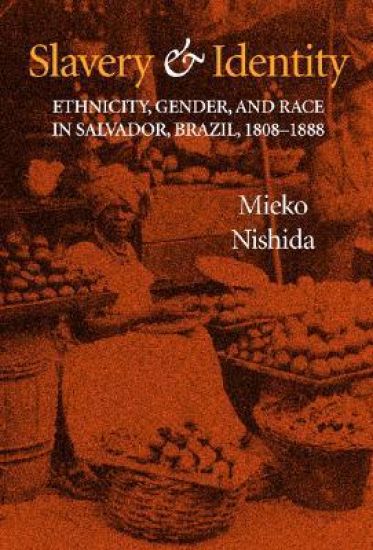
Slavery and Identity

Slavery and Identity

Mieko Nishida

Indiana University Press
2003
sidottu
Slavery and Identity narrates a peculiar sort of history of the "peculiar institution." Not about slavery per se, it looks at urban slavery in an Atlantic port city from the vantage point of enslaved Africans and their descendants, examining their self-perceptions and self-identities in a variety of situations. The book offers a new window on slave life in 19th-century Salvador, Brazil, and illustrates the difficulty of generalizing about New World slave societies. In Salvador, slaves owned slaves and even participated in the transatlantic slave trade. Africans who were removed from Africa as slaves sometimes managed to purchase their freedom, and a few entered the commerce of trade in their fellow humans. Nishida explains that though African-born people found themselves at the bottom of the social ladder, they somehow were never entirely excluded from society or even from power at a certain level.
The Role of English Teaching in Modern Japan
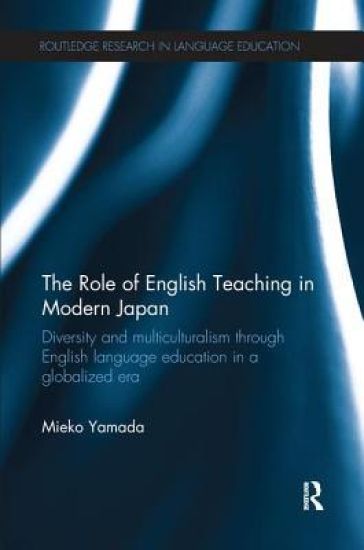
The Role of English Teaching in Modern Japan examines the complex nature of Japan’s promotion of English as a Foreign Language (EFL). In globalized societies where people with different native languages communicate through English, multicultural and multilinguistic interactions are widely created. This book takes the opportunity to look at Japan and examines how these multiple realities have affected its English language teaching within the domestic context. The myth of Japan’s racial and ethnic homogeneity may hinder many Japanese in recognizing realities of its own minority groups such as Ainu, Zainichi Koreans, and Brazilian Japanese, who are in the same EFL classrooms. Acknowledging a variety of English uses and users in Japan, this book emphasizes the influence of Japan’s recent domestic diversity on its EFL curriculum and urges that such changes should be addressed. It suggests new directions for incorporating multicultural perspectives in order to develop English language education in Japan and other Asian contexts where English is often taught as a foreign language. Chapters include: Social, cultural, and political background of Japan’s EFL education Race, ethnicity, and multiculturalism Representations of diversity in Japanese EFL Textbooks Perceptions of English learning and diversity in Japan The role of EFL education in multicultural Japan
The Role of English Teaching in Modern Japan
The Role of English Teaching in Modern Japan examines the complex nature of Japan’s promotion of English as a Foreign Language (EFL). In globalized societies where people with different native languages communicate through English, multicultural and multilinguistic interactions are widely created. This book takes the opportunity to look at Japan and examines how these multiple realities have affected its English language teaching within the domestic context. The myth of Japan’s racial and ethnic homogeneity may hinder many Japanese in recognizing realities of its own minority groups such as Ainu, Zainichi Koreans, and Brazilian Japanese, who are in the same EFL classrooms. Acknowledging a variety of English uses and users in Japan, this book emphasizes the influence of Japan’s recent domestic diversity on its EFL curriculum and urges that such changes should be addressed. It suggests new directions for incorporating multicultural perspectives in order to develop English language education in Japan and other Asian contexts where English is often taught as a foreign language. Chapters include: Social, cultural, and political background of Japan’s EFL education Race, ethnicity, and multiculturalism Representations of diversity in Japanese EFL Textbooks Perceptions of English learning and diversity in Japan The role of EFL education in multicultural Japan
Sisters in Yellow

Sisters in Yellow

Mieko Kawakami

Knopf Publishing Group
2026
sidottu
"I can never forget the sense of pure astonishment I felt when I first read Mieko Kawakami." --Haruki Murakami From Mieko Kawakami, award-winning author of Breasts and Eggs, comes a bold novel of sacrifice and the tumultuous bonds of sisterhood, set in the gritty Tokyo of the 1990s. Hana has nothing - she's fifteen years old and living in a tiny apartment in a suburb of Tokyo with her young mother, a hostess at a local dive bar. They have no money, no security. Then Kimiko appears. Kimiko is older, a bright light in Hana's dark world. Together they set up Lemon, a bar that, despite its shabby setting and seedy clientele, becomes a haven for Hana. Suddenly Hana has a job she loves, friends to share her days with, and the glittering promise of money. She feels like a normal girl. She feels invincible. But in the narrow alleys of Sangenjaya, nothing is as it seems. Soon all of Hana's hope, her optimism, and her drive will be pushed to the limit . . . A story of enduring friendship and deep betrayal, Sisters in Yellow is a masterpiece of teenage dreams and adult cruelties that confirms Mieko Kawakami as one of the great writers of her generation.
Mild Vertigo

Mild Vertigo

Mieko Kanai

NEW DIRECTIONS PUBLISHING CORPORATION
2023
nidottu
The apparently unremarkable Natsumi lives in a modern Tokyo apartment with her husband and two sons: she does the laundry, goes to the supermarket, visits friends, and gossips with neighbors. Tracing her conversations and interactions with her family and friends as they blend seamlessly into her own infernally buzzing internal monologue, Mild Vertigo explores the dizzying reality of being unable to locate oneself in the endless stream of minutiae that forms a lonely life confined to a middle-class home, where both everything and nothing happens.With shades of Clarice Lispector, Elena Ferrante, and Kobo Abe, this verbally acrobatic novel by the esteemed novelist, essayist, and critic Mieko Kanai--whose work enjoys a cult status in Japan--is a disconcerting and radically imaginative portrait of selfhood in late-stage capitalist society.
Diaspora and Identity

Diaspora and Identity

Mieko Nishida

University of Hawai'i Press
2019
nidottu
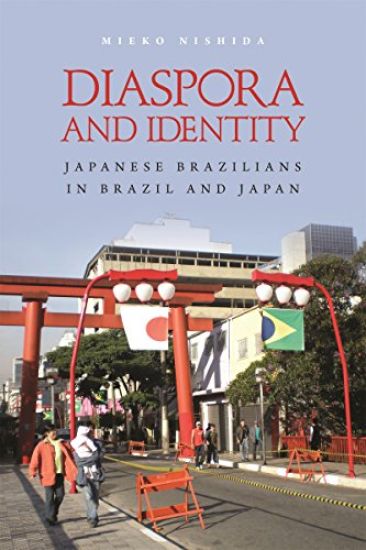
São Paulo, Brazil, holds the largest number of Japanese descendants outside Japan, and they have been there for six generations. Japanese immigration to Brazil started in 1908 to replace European immigrants to work in São Paulo’s expanding coffee industry. It peaked in the late 1920s and early 1930s as anti-Japanese sentiment grew in Brazil. Approximately 189,000 Japanese entered Brazil by 1942 in mandatory family units. After the war, prewar immigrants and their descendants became quickly concentrated in São Paulo City. Immigration from Japan resumed in 1952, and by 1993 some 54,000 immigrants arrived in Brazil. By 1980, the majority of Japanese Brazilians had joined the urban middle class and many had been mixed racially. In the mid-1980s, Japanese Brazilians’ “return” labor migrations to Japan began on a large scale. More than 310,000 Brazilian citizens were residing in Japan in June 2008, when the centenary of Japanese immigration was widely celebrated in Brazil. The story does not end there. The global recession that started in 2008 soon forced unemployed Brazilians in Japan and their Japanese-born children to return to Brazil.Based on her research in Brazil and Japan, Mieko Nishida challenges the essentialized categories of “the Japanese” in Brazil and “Brazilians” in Japan, with special emphasis on gender. Nishida deftly argues that Japanese Brazilian identity has never been a static, fixed set of traits that can be counted and inventoried. Rather it is about being and becoming, a process of identity in motion responding to the push-and-pull between being positioned and positioning in a historically changing world. She examines Japanese immigrants and their descendants’ historically shifting sense of identity, which comes from their experiences of historical changes in socioeconomic and political structure in both Brazil and Japan. Each chapter illustrates how their identity is perpetually in formation, across generation, across gender, across class, across race, and in the movement of people between nations.Diaspora and Identity makes an important contribution to the understanding of the historical development of ethnic, racial, and national identities; as well as construction of the Japanese diaspora in Brazil and its response to time, place, and circumstances.
Diaspora and Identity

Diaspora and Identity

Mieko Nishida

University of Hawai'i Press
2017
sidottu
Sao Paulo, Brazil, holds the largest number of Japanese descendants outside Japan, and they have been there for six generations. Japanese immigration to Brazil started in 1908 to replace European immigrants to work in Sao Paulo's expanding coffee industry. It peaked in the late 1920s and early 1930s as anti-Japanese sentiment grew in Brazil. Approximately 189,000 Japanese entered Brazil by 1942 in mandatory family units. After the war, prewar immigrants and their descendants became quickly concentrated in Sao Paulo City. Immigration from Japan resumed in 1952, and by 1993 some 54,000 immigrants arrived in Brazil.By 1980, the majority of Japanese Brazilians had joined the urban middle class and many had been mixed racially. In the mid-1980s, Japanese Brazilians’ “return” labor migrations to Japan began on a large scale. More than 310,000 Brazilian citizens were residing in Japan in June 2008, when the centenary of Japanese immigration was widely celebrated in Brazil. The story does not end there. The global recession that started in 2008 soon forced unemployed Brazilians in Japan and their Japanese-born children to return to Brazil.Based on her research in Brazil and Japan, Mieko Nishida challenges the essentialized categories of “the Japanese” in Brazil and “Brazilians” in Japan, with special emphasis on gender. Nishida deftly argues that Japanese Brazilian identity has never been a static, fixed set of traits that can be counted and inventoried. Rather it is about being and becoming, a process of identity in motion responding to the push-and-pull between being positioned and positioning in a historically changing world. She examines Japanese immigrants and their descendants’ historically shifting sense of identity, which comes from their experiences of historical changes in socioeconomic and political structure in both Brazil and Japan. Each chapter illustrates how their identity is perpetually in formation, across generation, across gender, across class, across race, and in the movement of people between nations.Diaspora and Identity makes an important contribution to the understanding of the historical development of ethnic, racial, and national identities; as well as construction of the Japanese diaspora in Brazil and its response to time, place, and circumstances.

Sisters in Yellow

Sisters in Yellow

Mieko Kawakami

PAN MACMILLAN
2026
sidottu
From the International Booker Prize-Shortlisted author of Heaven and Breasts and Eggs Hana has nothing but she’s hopeful. She’s fifteen years old. She lives in a tiny apartment in a suburb of Tokyo with her young mother, a hostess at a local dive bar. They have no money, no security. Then Kimiko appears. Kimiko is older, a bright light in Hana’s dark world. Together they set up Lemon, a bar that, despite its shabby setting and seedy clientele, becomes a haven for Hana. Suddenly Hana has a job she loves, friends to share her days with, and the glittering promise of money. She feels like a normal girl. She feels invincible. But in the narrow alleys of Sangenjaya, nothing is as it seems. Soon all of Hana’s hope, her optimism, and her drive, will be tested to the limit . . . Twenty years later, Kimiko is on trial. Now Hana must wrestle with her own actions, and face their devastating consequences. A story of enduring friendship and deep betrayal, Sisters in Yellow is a masterpiece of teenage dreams and adult cruelties that confirms Mieko Kawakami as one of the great writers of her generation.
Sisters in Yellow

Sisters in Yellow

Mieko Kawakami

Pan Books Ltd
2026
nidottu
From the International Booker Prize Shortlisted author of Heaven and Breasts and Eggs Hana has nothing but she's hopeful. She's fifteen years old. She lives in a tiny apartment in a suburb of Tokyo with her young mother, a hostess at a local dive bar. They have no money, no security. Then Kimiko appears. Kimiko is older, a bright light in Hana's dark world. Together they set up Lemon, a bar that caters to hostesses and their marks, small-time crooks, men with low morals and deep pockets, and anyone down on their luck. Suddenly Hana has a job she loves, friends to share her days with, and the glittering promise of money. She feels like a normal girl. She feels invincible. But in the seedy streets of Setagaya, nothing is as it seems. Soon all of Hana's hope, her optimism, and her drive, will be tested to the limt . . . Twenty years later, Kimiko is on trial. Now Hana must wrestle with her own actions, and face their devastating consequences. A story of enduring friendship and deep betrayal, Sisters in Yellow is a masterpiece of teenage dreams and adult cruelties that confirms Mieko Kawakami as one of the great writers of her generation.