

Kirjahaku
Etsi kirjoja tekijän nimen, kirjan nimen tai ISBN:n perusteella.
1000 tulosta hakusanalla Mikhail El'tsin

Eta kniga intervju pisatelja Mikhaila Zadornova posvjaschena istorii, ee samym ostrym problemam, nachinaja s tajny knjazja Rjurika i zakanchivaja toj vojnoj, kotoruju ne pervyj vek vedet Evropa protiv Rossii. Zadornov sporit, rassuzhdaet o nashikh istoricheskikh kornjakh, vydvigaet umopomrachitelnye gipotezy, vystraivaet analogii i... chasto okazyvaetsja prav. Mnogie problemy, na kotorye on kogda-to pervym obratil vnimanie, segodnja sostavljajut politicheskuju povestku dnja. Zadornov schital, chto tolko znanie istoricheskoj pravdy mozhet obespechit Rossii suverennuju i pobednuju ideologiju. Prislushaemsja k pisatelju, kotorogo nesprosta nazyvali Veschim Zadornovym.
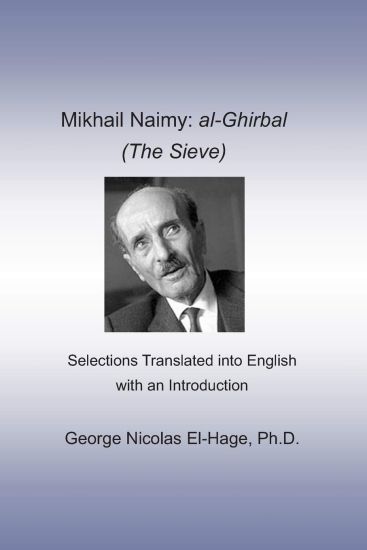
Mikhail Naimy: al-Ghirbal (The Sieve): Selections Translated into English with an Introduction
George Nicolas El-Hage
Independently Published
2019
nidottu
When The members of the Pen Bond Association (al-Rabita al-Qalamiya), a distinguished group of "like-minded" authors to borrow Naimy's phrase, were busy writing and publishing in New York City and striving to modernize and change the course of Arabic Literature, there was another group in the Middle East, particularly in Egypt (The Diwan Group) trying, within the limitations imposed on them by their closed environment, to do the same but with much less success. Perhaps it is not fair to compare the achievements and impact of these two separate groups on the modernization of Arabic literature and poetry at the turn of the twentieth century and the three decades that followed because al-Akkad, al-Mazini, and to some extent Shoukry, although they were open-minded and wanted to be tolerant of new ideas and literary theories, they still lived in a very conservative and extremely traditional society that worshiped the past and adhered to ancient rules of grammar, linguistics, morphology, and prosody. In al-Akkad, Naimy found a partner, a "like-minded" counterpart across the seas, who shared with him some basic understanding of the role of literature, poetry, the poet, and the critic. These two prominent authors had more in common even if al-Akkad insisted on putting language above the poet, thus disagreeing with Naimy who believed that language is but an instrument and a means to an end. Nevertheless, it was befitting that al-Akkad was chosen to write the introduction to the first edition of Naimy's influential book of literary criticism, al-Ghirbal, because the Egyptian Scholar was also in his own way trying to innovate in an environment shackled with a heavy inheritance of outworn traditions and forced to still wear the outmoded garments of a bygone world. As a critic, Naimy ignited a revolution that set new standards for literary criticism in modern Arabic literature. Al-Ghirbal is a decisive and definitive statement which rejects the years of stagnation that plagued Arabic literature and offers new rules and guidance to replace the archaic ones. The book bravely admits that thanks to Western literature and theories of literary criticism, we started to witness a noticeable change in Arabic literature. It introduces and legitimizes the theater, acting, the role of the actor, the play writer, and novelist as well as the important act of translating and the vital role of the translator. Placing the book in its proper historical timeframe, we realize that many of the revolutionary ideas and concepts advanced in al-Ghirbal were at the time of its publication considered avant-garde, radical, and almost heretical. The amazing fact is that the message of this book is as relevant today as it was valid and pertinent then, and if Naimy returned to life, he would not change a word in the book. Al-Ghirbal's message was strong and clear. It was certainly meant to awaken the sleepy and "lazy" minds and souls and to shock, anger, and even hurt the sensitivity of its readers and the hosts of versifiers and pretenders who thought they were poets and drive them to rethink, reconsider, and reevaluate. All said, al-Ghirbal remains one the most powerful documents on literary criticism in modern Arabic literature since the turn of the twentieth century. It abounds with sarcasm that bites but also with wisdom that enlightens and guides. It also summarizes the position of the Pen Bond Association (al-Rabita al-Qalamiya) regarding poetry and the role of the poet and of literature as they viewed it and strongly advocated to popularize and modernize it.
Dios y el Estado
Mikhail Aleksandrovich Bakunin
Createspace Independent Publishing Platform
2014
nidottu
"Dios y el Estado", de Mija l Bakunin. Mija l Bakunin fue un anarquista ruso (1814-1876)
Dios y el Estado: Trabajo escrito
Mikhail Aleksandrovich Bakunin
Createspace Independent Publishing Platform
2015
nidottu
Mija l Aleks ndrovich Bakunin, naci enTorzhok, Imperio ruso, 30 de mayo de 1815 y murio en Berna, Suiza, 1 de julio de 1876, fue un anarquista ruso. Es posiblemente el m s conocido de la primera generaci n de fil sofos anarquistas y est considerado uno de los padres de ste pensamiento, dentro del cual defendi la tesis colectivista y el ate smo. Dios y el Estado fue escrito entre febrero y marzo de 1871. Originalmente fue pensado como la segunda parte de un trabajo m s amplio llamado El imperio Knouto-Germ nico y la Revoluci n Social (de o knut, l tigo en ruso). La primera parte, por su lado, trataba sobre los antecedentes de la guerra Franco-prusiana y una historia general de la resistencia europea al imperialismo. Dios y el Estado, as como gran parte del trabajo de Bakunin, qued sin terminar ni ordenar. Esto no es algo extra o, particularmente debido a que ninguno de los trabajos escritos de Bakunin est , de hecho, completo. Cuando Bakunin fue criticado por ello respondi "Mi vida es un fragmento". Dios y el Estado es de hecho un fragmento: el libro posee algunos p rrafos, incluyendo el que constituye el final del libro, que terminan abruptamente en mitad de una frase, asimismo, es tambi n posible encontrar notas al pie de p gina de hasta cinco p rrafos de longitud.
Dios y el Estado (Spanish Edition)
Mikhail Aleksandrovich Bakunin
Createspace Independent Publishing Platform
2016
nidottu
Dios y el Estado fue escrito entre febrero y marzo de 1871. Originalmente fue pensado como la segunda parte de un trabajo m s amplio llamado El imperio Knouto-Germ nico y la Revoluci n Social. La primera parte, por su lado, trataba sobre los antecedentes de la guerra Franco-prusiana y una historia general de la resistencia europea al imperialismo. Dios y el Estado, as como gran parte del trabajo de Bakunin, qued sin terminar ni ordenar.
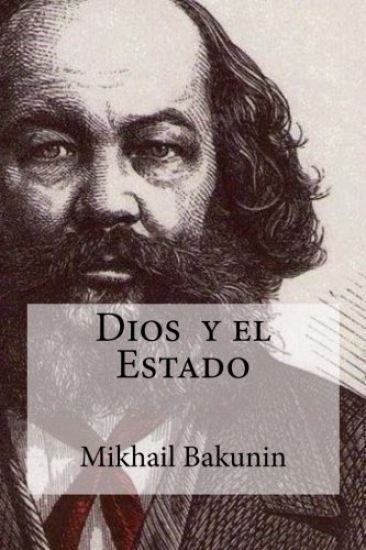
Dios y el Estado
Mikhail Aleksandrovich Bakunin
Createspace Independent Publishing Platform
2016
nidottu
Dios y el Estado es la obra mas conocida de Mijail Bakun n, y en l pasa revista a los conceptos tradicionales de la teolog a y la religi n institucionalizadas, acus ndolas de estar al servicio exclusivo de unos pocos. Los nuevos intentos de sustituir la teolog a tradicional por una "teolog a de la ciencia", un "Estado de los sabios", no ser n sino intentos de aplicar un nuevo despotismo ilustrado. En este ataque, en nombre del materialismo, al pretendido "socialismo cient fico" y autoritario de Marx, y a sus programas, posiblemente tan ut picos como el suyo propio.
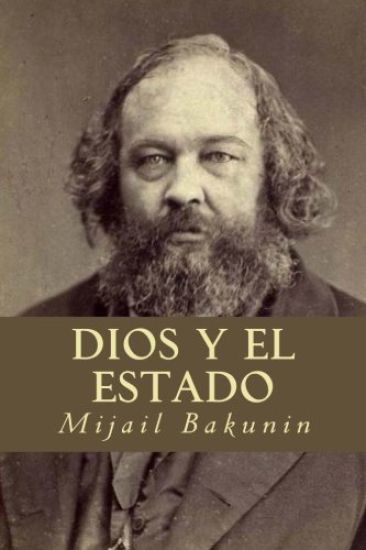
Dios y el Estado
Mikhail Aleksandrovich Bakunin
Createspace Independent Publishing Platform
2017
nidottu
Mija l Aleks ndrovich Bakunin fue un anarquista ruso. Es posiblemente el m s conocido de la primera generaci n de fil sofos anarquistas y est considerado uno de los padres de este pensamiento, dentro del cual defendi la tesis colectivista y el ate smo.
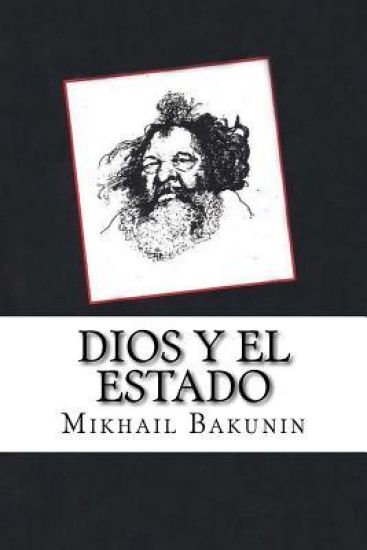
Dios y el Estado (Spanish Edition)
Mikhail Aleksandrovich Bakunin
Createspace Independent Publishing Platform
2016
nidottu
Dios y el Estado fue escrito entre febrero y marzo de 1871. Originalmente fue pensado como la segunda parte de un trabajo m s amplio llamado El imperio Knouto-Germ nico y la Revoluci n Social (de o knut, l tigo en ruso). La primera parte, por su lado, trataba sobre los antecedentes de la guerra Franco-prusiana y una historia general de la resistencia europea al imperialismo. Dios y el Estado, as como gran parte del trabajo de Bakunin, qued sin terminar ni ordenar.
Dios Y El Estado
Mikhail Aleksandrovich Bakunin
Createspace Independent Publishing Platform
2016
nidottu
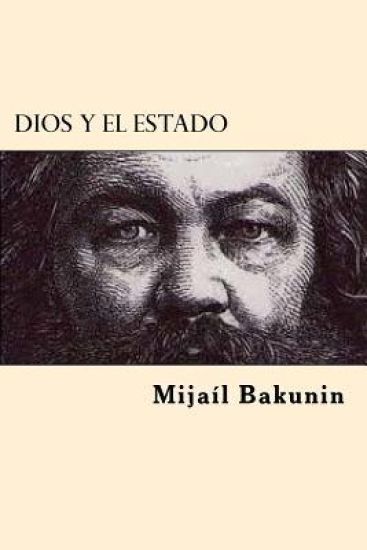
Dios y el Estado es la obra m s conocida del pensador y anarquista ruso Mija l Bakunin. Dios y el Estado fue escrito entre febrero y marzo de 1871. Originalmente fue pensado como la segunda parte de un trabajo m s amplio llamado El imperio Knouto-Germ nico y la Revoluci n Social. La primera parte, por su lado, trataba sobre los antecedentes de la guerra Franco-prusiana y una historia general de la resistencia europea al imperialismo. Dios y el Estado, as como gran parte del trabajo de Bakunin, qued sin terminar ni ordenar. Esto no es algo extra o, particularmente debido a que ninguno de los trabajos escritos de Bakunin est , de hecho, completo.
Dios y el Estado (Spanish Edition)
Mikhail Aleksandrovich Bakunin
Createspace Independent Publishing Platform
2017
nidottu
La modernidad de ciertos cl sicos nos abruma. Tal es la sensaci n que recibe el lector del texto de Bakunin "Dios y el Estado". Frente a la irrupci n de lo irracional, frente al ascenso de los diferentes fundamentalismos religiosos o no, frente a la corrupci n generalizada que caracteriza a los Estados burgueses y a la presencia de poderosas mafias incrustadas en los Estados post-comunistas, la lectura o relectura de este libro nos permite ejercer las dos facultades preciosas del ser humano que Bakunin define: La facultad de pensar y la facultad, la necesidad, de rebelarse. Este texto no es s lo una extraordinaria aportaci n al materialismo de una vigencia apabullante, sino tambi n una gran proclama libre y libertaria.
Dios y el Estado
Mikhail Aleksandrovich Bakunin
Createspace Independent Publishing Platform
2017
nidottu
Bakunin desarroll una teor a pol tica que se adecuaba d ctilmente a las energ as populares que eran desencadenadas en las revoluciones. 1789 era para l una cifra tan renombrada como subvalorada: el emblema del "pecado original" de la pol tica moderna, el inicio del moderno linaje de la autoorganizaci n, correspondencia material para las capacidades autocreativas del ser humano. En este sentido, Bakunin nunca dej de ser un ilustrado radical convencido de que los hombres y sus sociedades deb an inventarse a s mismos, y que para ello solo era necesaria una dosis m xima de libertad.

Dios y el Estado
Mikhail Aleksandrovich Bakunin
Createspace Independent Publishing Platform
2017
nidottu
Bakunin desarroll una teor a pol tica que se adecuaba d ctilmente a las energ as populares que eran desencadenadas en las revoluciones. 1789 era para l una cifra tan renombrada como subvalorada: el emblema del "pecado original" de la pol tica moderna, el inicio del moderno linaje de la autoorganizaci n, correspondencia material para las capacidades autocreativas del ser humano. En este sentido, Bakunin nunca dej de ser un ilustrado radical convencido de que los hombres y sus sociedades deb an inventarse a s mismos, y que para ello solo era necesaria una dosis m xima de libertad.
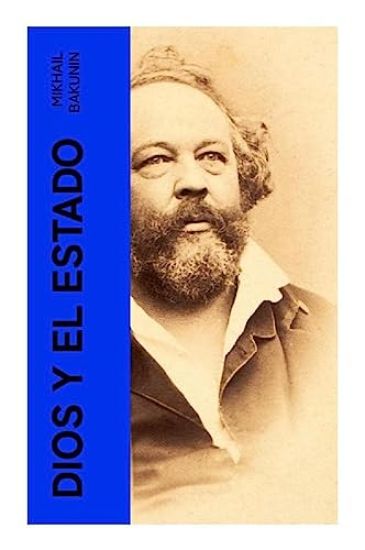
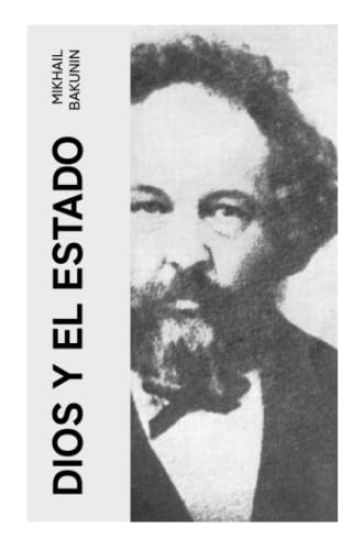
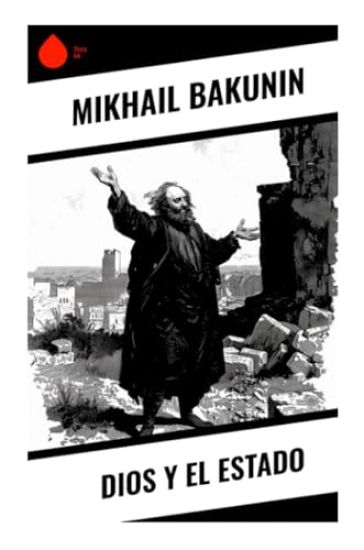

La obra Dios y el Estado fue descubierta por Carlo Cafiero y Elis e Reclus, dos conocidos anarquistas de la poca y amigos cercanos de Bakunin en sus ltimos a os de vida. Ambos buscaron incansablemente los fragmentos que faltaban del libro sin xito. Finalmente, tradujeron el libro al franc s y lo distribuyeron como panfleto en Ginebra en 1882. Cafiero y Reclus titularon el libro como "Dieu et l' tat" (Dios y el Estado) a pesar de que Bakunin lo hab a titulado originalmente "Los sofismos hist ricos de la escuela doctrinaria del comunismo". El nombre original no fue descubierto en el diario de Bakunin hasta despu s de la muerte de Cafiero y Reclus.
Siberia rusa y el Lejano Oriente entre el siglo XVII y finales del XIX.
Mikhail Novikov
Ediciones Nuestro Conocimiento
2021
nidottu

Hoja de ruta para el desarrollo y la transformación empresarial
Mikhail Kashurin
Ediciones Nuestro Conocimiento
2025
nidottu

Advances and Open Problems in Federated Learning
Peter Kairouz; H. Brendan McMahan; Brendan Avent; Aurélien Bellet; Mehdi Bennis; Arjun Nitin Bhagoji; Kallista Bonawit; Zachary Charles; Graham Cormode; Rachel Cummings; Rafael G. L. D’Oliveira; Hubert Eichner; Salim El Rouayheb; David Evans; Josh Gardner; Zachary Garrett; Adrià Gascón; Badih Ghazi; Phillip B. Gibbons; Marco Gruteser; Zaid Harchaoui; Chaoyang He; Lie He; Zhouyuan Huo; Ben Hutchinson; Justin Hsu; Martin Jaggi; Tara Javidi; Gauri Joshi; Mikhail Khodak; Jakub Konecný; Aleksandra Korolova; Farinaz Koushanfar
Now Publishers Inc
2021
nidottu
The term Federated Learning was coined as recently as 2016 to describe a machine learning setting where multiple entities collaborate in solving a machine learning problem, under the coordination of a central server or service provider. Each client’s raw data is stored locally and not exchanged or transferred; instead, focused updates intended for immediate aggregation are used to achieve the learning objective. Since then, the topic has gathered much interest across many different disciplines and the realization that solving many of these interdisciplinary problems likely requires not just machine learning but techniques from distributed optimization, cryptography, security, differential privacy, fairness, compressed sensing, systems, information theory, statistics, and more. This monograph has contributions from leading experts across the disciplines, who describe the latest state-of-the art from their perspective. These contributions have been carefully curated into a comprehensive treatment that enables the reader to understand the work that has been done and get pointers to where effort is required to solve many of the problems before Federated Learning can become a reality in practical systems. Researchers working in the area of distributed systems will find this monograph an enlightening read that may inspire them to work on the many challenging issues that are outlined. This monograph will get the reader up to speed quickly and easily on what is likely to become an increasingly important topic: Federated Learning.