Sufism is generally perceived as being spiritually focused and about the development of the self. However, Sufi orders have been involved historically as important civic and political actors in the Muslim world, having participated extensively in inter-faith dialogue and political challenges to religious orthodoxy. This book presents a comprehensive overview of the Sufi political tradition, both historically and in its present form. It outlines how Sufi thought has developed, examines how Sufism has been presented both by scholars and by Sufis themselves, and considers Sufis’ active political roles. It argues that Sufis – frequently well educated, well travelled and imaginative – have been well placed to engage with other faiths and absorb their ideas into Islam; but that they have also been, because they understand other faiths, well placed to understand the distinctiveness of Islam, and thereby act as the guardians of Islam’s core ideas and values.
This book explores how Sufis approach their faith as Muslims, upholding an Islamic worldview, but going about making sense of their religion through the world in which they exist, often in unexpected ways. Using a phenomenological approach, the book examines Sufism as lived experience within the Muslim lifeworld, focusing on the Muslim experience of Islamic history. It draws on selected case studies ranging from classic Sufism to Sufism in the contemporary era mainly taken from biographical and hagiographical data, manuscript texts, and treatises. In this way, it provides a revisionist approach to theories and methods on Sufism, and, more broadly, the category of mysticism.
Sufism formed one of the cultures of resistance which has existed in the social fabric of Persia since antiquity. Such resistance continues to manifest itself today with many looking to Sufism as a model of cooperation between East and West, between traditional and modern. 'Sufism in the Secret History of Persia' explores the place of Sufi mysticism in Iran's intellectual and spiritual consciousness through traditional and contemporary Sufi thinkers and writers. Sufism in the Secret History of Persia examines the current of spirituality which extends from the old Iranian worship of Mithra to modern Islam. This current always contains elements of gnosis and inner knowing, but has often provided impetus for socio-political resistance. The study describes how these persisting pre-Islamic cultural and socio-religious elements have secretly challenged Muslim orthodoxies and continue to shape the nature and orientation of contemporary Sufism.
This book explores how Sufis approach their faith as Muslims, upholding an Islamic worldview, but going about making sense of their religion through the world in which they exist, often in unexpected ways. Using a phenomenological approach, the book examines Sufism as lived experience within the Muslim lifeworld, focusing on the Muslim experience of Islamic history. It draws on selected case studies ranging from classic Sufism to Sufism in the contemporary era mainly taken from biographical and hagiographical data, manuscript texts, and treatises. In this way, it provides a revisionist approach to theories and methods on Sufism, and, more broadly, the category of mysticism.
Sufism is generally perceived as being spiritually focused and about the development of the self. However, Sufi orders have been involved historically as important civic and political actors in the Muslim world, having participated extensively in inter-faith dialogue and political challenges to religious orthodoxy. This book presents a comprehensive overview of the Sufi political tradition, both historically and in its present form. It outlines how Sufi thought has developed, examines how Sufism has been presented both by scholars and by Sufis themselves, and considers Sufis’ active political roles. It argues that Sufis – frequently well educated, well travelled and imaginative – have been well placed to engage with other faiths and absorb their ideas into Islam; but that they have also been, because they understand other faiths, well placed to understand the distinctiveness of Islam, and thereby act as the guardians of Islam’s core ideas and values.
Heidegger, Ontology, and the Destiny of Islam: Thoughts and Reflections on the Nature of Islam in the World critiques Islam as a phenomenon set into motion from its beginning. It is a reflective work that addresses difficult questions about Islam through familiar historical concerns and grapples with the issues that arise in that process. Notably, it attests to making no substantive claims about Muslims and instead keeps to the course of analysis of the phenomenon that is Islam, which is taken as an assessable entity rather than a categorical construct. Understood largely in light of a history of observable realities, the ontological analysis of Islam reveals the general acquaintance with it to be imperfect. This suggests the reality of Islam is based on a primal truth that is only partially seen. The analysis then confronts two problems: firstly, that Islam is not what its historical “story,” as it were, proclaims and, secondly, that Islam is therefore not what is traditionally made out of the surviving historical narratives. It is not a question of “what” Islam is, but more critically, “how” Islam appears in the world.
Sufism formed one of the cultures of resistance which has existed in the social fabric of Persia since antiquity. Such resistance continues to manifest itself today with many looking to Sufism as a model of cooperation between East and West, between traditional and modern. 'Sufism in the Secret History of Persia' explores the place of Sufi mysticism in Iran's intellectual and spiritual consciousness through traditional and contemporary Sufi thinkers and writers. Sufism in the Secret History of Persia examines the current of spirituality which extends from the old Iranian worship of Mithra to modern Islam. This current always contains elements of gnosis and inner knowing, but has often provided impetus for socio-political resistance. The study describes how these persisting pre-Islamic cultural and socio-religious elements have secretly challenged Muslim orthodoxies and continue to shape the nature and orientation of contemporary Sufism.
Revealing how Heidegger’s philosophy and the religious beliefs of Islam are fundamentally incompatible, this book challenges previous assumptions about Heidegger’s relationship to Islam. This book takes the view that they in fact stand apart. A compelling and innovative comparison, this book explores how the two have been mistakenly woven together through the imaginations of certain scholars and how others continue to utilise Heidegger in that vein. Exploring this, Milad Milanhi delivers an original study of Islam using Heidegger’s philosophy. Starting from the premise that Heidegger’s hermeneutic phenomenology establishes an important point of reference for thinking about society and politics as well as religion. Following this approach, this book analyses the thought of pivotal Muslim figures in relation to Heidegger’s position to assess not whether they were “proto-Heideggerian” or “pseudo-Heideggerian” but rather to what extent these thinkers understood the problematics of religion, politics, and society as a hermeneutical problem. A critical point of discussion for our age in light of the prominence of political Islam narrative, this book speaks to metaphysical blind spots of Islamic thought that have produced dangerous ideologies hostile to the West, which seem to reflect Heidegger’s philosophy but are not based on it in reality.
Ebook available to libraries exclusively as part of the JSTOR Path to Open initiative. The years following the Second World War saw an exponential increase in the translation of contemporary foreign poetry in Italy. The practice was at its most prevalent in the 1950s and 1960s, when publishing houses across the board almost doubled the number of foreign poetry titles in their catalogues. This remarkable phenomenon, however, has received scant critical attention, which has been limited to an aesthetic perspective. Publishing Contemporary Foreign Poetry: Transnational Exchange in the Italian Publishing Field, 1939–1977 is one of the first studies to examine the sociological significance of publishing poetry translations. Drawing on untapped archival materials, it investigates from an interdisciplinary perspective the processes and products of poetry translation, and how they impacted on publishing, cultural, literary, and political dynamics in Italy. It explores the internal reconfiguration of Italian culture, and how Italy sought to position itself in the world, without neglecting the contradictions of national and transnational cultural networks and movements. The book argues that translation was a means to modify power relationships in the field of poetry publishing and the contemporary literary arena; this ultimately changed the map of Italian cultural production and its transnational networks, thus anticipating the further developments provoked by globalisation in the 1980s.
Ebook available to libraries exclusively as part of the JSTOR Path to Open initiative. The years following the Second World War saw an exponential increase in the translation of contemporary foreign poetry in Italy. The practice was at its most prevalent in the 1950s and 1960s, when publishing houses across the board almost doubled the number of foreign poetry titles in their catalogues. This remarkable phenomenon, however, has received scant critical attention, which has been limited to an aesthetic perspective. Publishing Contemporary Foreign Poetry: Transnational Exchange in the Italian Publishing Field, 1939–1977 is one of the first studies to examine the sociological significance of publishing poetry translations. Drawing on untapped archival materials, it investigates from an interdisciplinary perspective the processes and products of poetry translation, and how they impacted on publishing, cultural, literary, and political dynamics in Italy. It explores the internal reconfiguration of Italian culture, and how Italy sought to position itself in the world, without neglecting the contradictions of national and transnational cultural networks and movements. The book argues that translation was a means to modify power relationships in the field of poetry publishing and the contemporary literary arena; this ultimately changed the map of Italian cultural production and its transnational networks, thus anticipating the further developments provoked by globalisation in the 1980s.
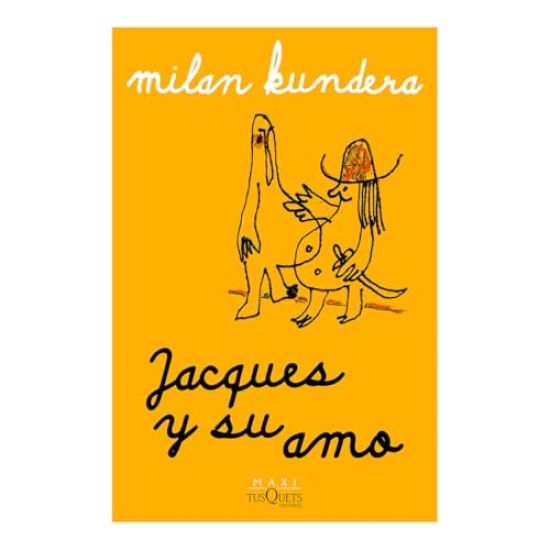
En 1972, el joven director de teatro franc s Georges Werler fue a ver a Milan Kundera a Praga y a su regreso consigui , pese a los controles de la frontera, introducir en Francia el manuscrito de su obra de teatro Jacques y su amo. Kundera la hab a escrito despu s de la invasi n sovi tica, cuando toda su obra, pasada y futura, hab a quedado borrada de las letras checoslovacas.Jacques y su amo relata tres historias de amor que se entrecruzan durante el viaje que emprenden Jacques y su amo: la del amo, la de Jacques y la de Madame de la Pommeraye; tres historias que se entremezclan polif nicamente, donde cada una es, a su vez, variaci n de la otra, y juntas conforman una comedia sobre los problemas existenciales de la pasi n amorosa.ENGLISH DESCRIPTIONIn 1972, the young French theater director Georges Werler visited Milan Kundera in Prague and, upon his return, managed to smuggle the manuscript of Kundera's play Jacques and His Master: An Homage to Denis Diderot into France, despite border controls. Kundera had written it after the Soviet invasion, during a time when all of his past and future works had been erased from Czechoslovak literature.Jacques and His Master tells three interwoven love stories during the journey undertaken by Jacques and his master: the master's story, Jacques's story, and Madame de la Pommeraye's story. These three narratives intertwine polyphonically, with each being a variation of the others, coming together to form a comedy about the existential dilemmas of romantic passion.
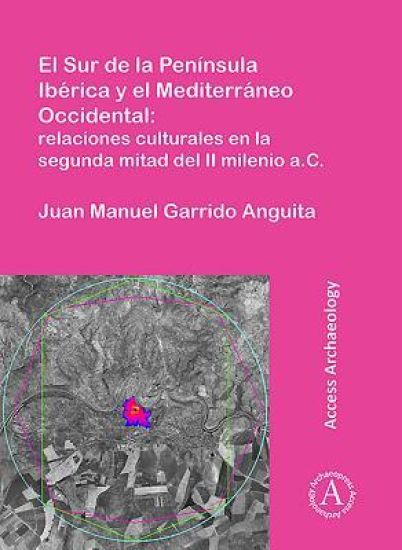
In ancient times, the first communities, societies and civilizations in the Iberian peninsula, according to archaeological evidence, began to develop following a progressive local evolution tempered by the significance of outside contacts. In order to reconstruct our history, resorting to ancient poets, we strive to distinguish reality from myth in the pursuit of a bond of certainty between the data provided by historical and literary sources and the excavated remains. Greek epics, based on the Illiad and the Odyssey, are the basis for the first speculations that link societies all along the Mediterranean coast, from east to west, with a common thread. However, how many times have we been told about mythical places, such as cities of great splendour and unique cultural progress? Did the land which Plato called Atlantis and Adolf Schulten linked to Tartessos truly exist? These answers may never be revealed (they are not at the forefront of research interests nowadays); for the time being, they are lost into a mythical and legendary world. Nonetheless, they remain alive over time. Spanish description: En tiempos lejanos, ahora sepultadas bajo la caída de los años, comienzan a formarse las primeras comunidades, sociedades y civilizaciones que se irán desarrollando en la Península Ibérica, por una progresiva evolución local, sin descuidar la atención de los contactos foráneos previa contrastación arqueológica. Refugiándonos en figuras creadas por los antiguos poetas, tratamos de discernir entre lo que comúnmente se ha denominado mito-leyenda y lo real, buscando un vínculo de certeza entre los datos que revelan las fuentes literario-históricas y los vestigios que se desentierran de nuestra primera historia, aquella que tratamos de reconstruir. La épica occidental apoyada en los relatos homéricos de la Ilíada y la Odisea, son la base de las primeras conjeturas que con un hilo, unen a las sociedades que conviven en el Mar Mediterráneo desde Oriente hasta Occidente. Pero ¿cuántas veces hemos oído contar relatos sobre míticas ciudades de gran esplendor e inigualable progreso cultural? ¿Existió aquella tierra denominada por Platón “Atlántida” y que fue asociada por Adolf Schulten a Tartessos? Estas respuestas quizá nunca lleguen a desvelarse (tampoco están en la vanguardia de los intereses de la investigación), por ahora sólo están inmersas en un mundo mítico y legendario, pero es cierto que se mantienen vivas, nostálgicas, con el paso del tiempo.
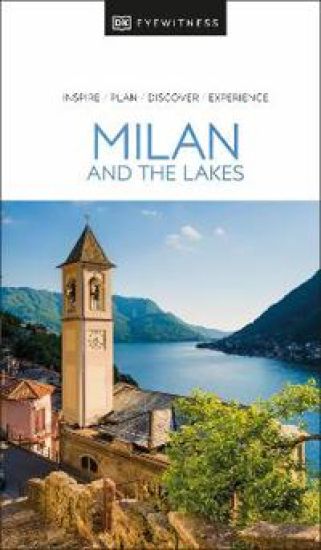
Get closer to Milan and the Lakes with DK EyewitnessBoat trips around Lake Maggiore. Long evening dinners at lively trattorias. Leonardo da Vinci's timeless masterpieces. Milan and the Lakes are a must-visit, with much to see and do. Whatever your dream trip involves, this DK Eyewitness travel guide is the perfect companion.With a brand-new design, new photography and inspirational content, this fully updated guide brings Milan and the Lakes to life, transporting you there as no other travel guide does. You'll find trusted travel advice, expert-led insights, detailed breakdowns of all the must-see sights, photographs on practically every page, and our hand-drawn illustrations, which take you inside the city's buildings and neighbourhoods. You'll discover: - Our pick of Milan and the Lake's must-sees and top experiences - Beautiful photography and detailed illustrations, taking you to the heart of Milan and the Lakes - The best spots to eat, drink, shop and stay - Detailed maps and walks which make navigating the region easy - Easy-to-follow itineraries - Expert advice: get ready, get around and stay safe - Colour-coded chapters to each part of Milan and the Lakes - A lightweight format, so you can take it with you wherever you goTravelling around Italy? Try DK Eyewitness Italy.DK is the world's leading illustrated reference publisher, producing beautifully designed books for adults and children in over 120 countries.
Will lightning ever strike twice? Can David beat Goliath a second time? These questions haunt everyone in the small town of Milan, Indiana, whose basketball team inspired Hoosiers, the greatest underdog sports movie ever made. From a town of just 1,816 residents, the team remains forever an underdog, but one with a storied past that has them eternally frozen in their 1954 moment of glory. Every ten years or so, Milan has a winning season, but for the most part, they only manage a win or two each year. And still, perhaps because it's the only option for Milan, the town believes that the Indians can rise again. Bill Riley follows the modern day Indians for a season and explores how the Milan myth still permeates the town, the residents, and their high level of expectations of the team. Riley deftly captures the camaraderie between the players and their coach and their school pride in being Indians. In the end, there are few wins or causes for celebration—there is only the little town where basketball is king and nearly the whole town shows up to watch each game. The legend of Milan and Hoosiers is both a blessing and a curse.
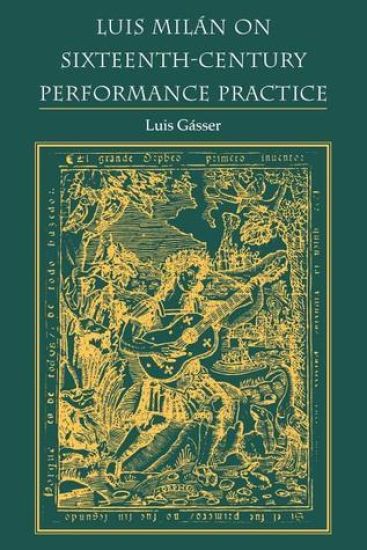
". . . valuable . . . impressive . . ." —The Times Literary Supplement "For anyone interested in Milán's music, this is an excellent source of information." —Renaissance Quarterly Luis Milán (1536-1561) was a lutenist, singer, composer, and poet. His collection of lute tablatures, El Maestro, is the first book of instrumental music known to have been printed in Spain. Luis Gásser discusses Milán's attention to modality, his use of meter, and the ornamentation in his songs and fantasías.
'Eliot to Derrida is a book which should be read by all students contemplating enrolment for a university course in modern English or European literary studies.' - Times Higher Educational Supplement This study offers the first extensive critique of the problematic representation of women in the fiction of Milan Kundera, in particular the apparent reliance on simplistic binary oppositions in the representation of women (beauty/ugliness, Madonna/whore, free will/fate, and others). Without waving away these concerns, this study goes on to show that a feminist criticism attentive to poststructural theoretical perspectives is able to engage Kundera's work most fully. While remaining ambivalent about a number of Kundera's representational strategies, this consideration of Kundera suggest that Kundera exposes the very narrative practices and representational strategies that he seems to proliferate himself on the misogynist surface of these expansive novels. Using an eclectic perspective that draws on the insights and methodology of feminist criticism, poststructuralism, and deconstruction, O'Brien argues that the character of Sabina herself offers the most effective paradigm for reading Kundera's work. Suggesting a dual vision of surface/depth, this understanding of Kundera accounts for the simplistic surfaces and ambiguous depths, both of which pose serious problems for the feminist reader.
This edited book contains a hitherto unpublished seminar held by the author in Milan, Italy in 1985. The seminar is preceded by a foreword by Kate White, of the Bowlby Centre, and by an introduction by the editor, Marco Bacciagaluppi. The introduction contains excerpts from unpublished correspondence between the author and the editor, carried out over a span of eight years, between 1982 and 1990. After the seminar there are the follow-ups of the three cases presented by Leopolda Pelizzaro, Ferruccio Osimo and Emilia Fumagalli, and a report by Germana Agnetti and Angelo Barbato, who gave hospitality to the author and his wife. This is followed by a contribution by Ferruccio Osimo on experiential dynamic psychotherapy, an application of attachment theory, with a long case study. At the end there are some concluding remarks by the editor.
This is the first scientific biography of Milan Rastislav Štefánik (1880–1919) that is focused on analysing the process of how he became the Slovak national hero.Although he is relatively unknown internationally, his contemporaries compared him “to Choderlos de Laclos for the use of military tactics in love affairs, to Lawrence of Arabia for vision, to Bonaparte for ambition ... and to one of apostles for conviction”. He played the key role in founding an independent Czechoslovakia in 1918 through his relentless worldwide travels during the First World War in order to create the Czechoslovak Army: he visited Serbia and Romania on the eve of invasion by the Central Powers, Russia before the February revolution, the United States after it declared war on Germany, Italy dealing with the consequences of defeat in the Caporetto battle, and again when Russia plunged into Civil War.Several historical methods are used to analyse the aforementioned central research question of this biography such as social capital to explain his rise in French society, the charismatic leader to understand how he convinced and won over a relatively large number of people; more traditional political, military, and diplomatic history to show his contribution to the founding of Czechoslovakia, and memory studies to analyse his extraordinary popularity in Slovakia. By mapping his intriguing life, the book will be of interest to scholars in a broad range of areas including history of Central Europe, especially Czechoslovakia, international relations, social history, French society at the beginning of the 20th century and biographical research.
This is the first scientific biography of Milan Rastislav Štefánik (1880–1919) that is focused on analysing the process of how he became the Slovak national hero.Although he is relatively unknown internationally, his contemporaries compared him “to Choderlos de Laclos for the use of military tactics in love affairs, to Lawrence of Arabia for vision, to Bonaparte for ambition ... and to one of apostles for conviction”. He played the key role in founding an independent Czechoslovakia in 1918 through his relentless worldwide travels during the First World War in order to create the Czechoslovak Army: he visited Serbia and Romania on the eve of invasion by the Central Powers, Russia before the February revolution, the United States after it declared war on Germany, Italy dealing with the consequences of defeat in the Caporetto battle, and again when Russia plunged into Civil War.Several historical methods are used to analyse the aforementioned central research question of this biography such as social capital to explain his rise in French society, the charismatic leader to understand how he convinced and won over a relatively large number of people; more traditional political, military, and diplomatic history to show his contribution to the founding of Czechoslovakia, and memory studies to analyse his extraordinary popularity in Slovakia. By mapping his intriguing life, the book will be of interest to scholars in a broad range of areas including history of Central Europe, especially Czechoslovakia, international relations, social history, French society at the beginning of the 20th century and biographical research.
This long-awaited book is the first to offer a complete and clear presentation of the therapy of the Milan Associates, Luigi Boscolo and Gianfranco Cecchin. Based on cybernetic theory, their work has had dramatic success in helping families change behaviour. This practical and enlightening book uses clinical cases and the fascinating conversations among the four authors to examine the relationship between Milan theory and practice.Transcripts of sessions conducted by Boscolo and Cecchin,which include a family that is hiding a history of incest and one dominated by an anorectic girl,provide vivid examples of family interaction and therapeutic imagination. In the accompanying conversations with Boscolo and Cecchin about these sessions, Hoffman and Penn take us behind the scenes to show how the therapists think through and conduct their therapy. These highly readable conversations clarify the essentials of the therapy, including hypothesizing, circular questioning, positive connotation, and crafting interventions. Like Milan therapy itself, the interviews are recursive new ideas about the therapy feed back into the conversations and stimulate further revelations. A lengthy introduction sets the Milan approach in historical context, and introductions to the individual cases highlight the main ideas.