

Kirjahaku
Etsi kirjoja tekijän nimen, kirjan nimen tai ISBN:n perusteella.
282 tulosta hakusanalla Milind Bokil
Post harvest biology and technology of citrus fruits is gaining importance as the therapeutic value of citrus fruits is realized and supported by the increase in health awareness among the general public.This book is the most comprehensive reference on citrus fruit biology, biotechnology and quality. Basic and applied scientific information is interwoven to serve the researcher, marketer, scientist, nutritionist, or dietician. With discussions of fruit morphology, anatomy, physiology and biochemistry and chapters on growth phases, maturity standards, grades and physical and mechanical characteristics of citrus trees, this book provides the foundation for understanding growth, harvest and post harvest aspects of these important plants. Insect-pests and diseases, irrigation, nutrition and rootstocks are also addressed.
Citrus Fruit: Biology, Technology and Evaluation, Second Edition presents a comprehensive view of these globally important crops, from cultivars to consumer acceptability. Now fully revised and updated to address the latest technologies and advancements, along with an exploration of highly current topics, including the impacts of climate and COVID-19, the book presents fresh fruit scenarios from around the globe. Sections explore the challenge of losses, background on fresh citrus cultivars production, factors that impact fruit quality, morphology, anatomy, physiology and biochemistry of fruit, fruit maturity, grades, and physico-chemical characteristics before moving into aspects of post-harvest technology. From irradiation and quality control to the nutritive, medicinal and safety aspects, the book presents the wide range of factors that can impact successful citrus crop production, delivery and consumption. Intended as a resource for researchers and scientists dealing with the growth, development and distribution of citrus fruit, the book provides up-to-date coverage on global citrus fruit production and practices.

This book is a comprehensive and practical guide to project marketing – a crucial aspect of businesses worldwide. It encompasses a variety of key infrastructure projects such as roads, airports, ports, power, irrigation, commercial, and industrial buildings.The volume:• Provides key definitions and discusses concepts such as segmentation, target marketing, positioning in projects, and organizational buyer behaviour.• Draws and adapts from extant marketing theory and provides real-life case studies to demonstrate application of concepts.• Focuses on project marketing logic, marketing mix, negotiation techniques, and strategies to aid contracting/subcontracting firms to realize better pricing and project profitability.An essential handbook for professional marketers and researchers, this book will be indispensable for B-Schools, project managers, entrepreneurs, infrastructure corporations, and start-ups. It will serve as a key text to foster hassle-free relationships between different business actors and reduce roadblocks such as time and cost escalation, litigation, and the like.
This book is a comprehensive and practical guide to project marketing – a crucial aspect of businesses worldwide. It encompasses a variety of key infrastructure projects such as roads, airports, ports, power, irrigation, commercial, and industrial buildings.The volume:• Provides key definitions and discusses concepts such as segmentation, target marketing, positioning in projects, and organizational buyer behaviour.• Draws and adapts from extant marketing theory and provides real-life case studies to demonstrate application of concepts.• Focuses on project marketing logic, marketing mix, negotiation techniques, and strategies to aid contracting/subcontracting firms to realize better pricing and project profitability.An essential handbook for professional marketers and researchers, this book will be indispensable for B-Schools, project managers, entrepreneurs, infrastructure corporations, and start-ups. It will serve as a key text to foster hassle-free relationships between different business actors and reduce roadblocks such as time and cost escalation, litigation, and the like.

Throughput Optimization in Robotic Cells
Milind W. Dawande; H. Neil Geismar; Suresh P. Sethi; Chelliah Sriskandarajah
Springer-Verlag New York Inc.
2007
sidottu
Intense global competition in manufacturing has compelled manufacturers to incorporate repetitive processing and automation for improving productivity. Modern manufacturing systems use robotic cells – a particular type of computer-controlled system in cellular manufacturing. Throughput optimization in robotic cells provides practitioners, researchers, and students with up-to-date algorithmic results on sequencing of robot moves and scheduling of parts in robotic cells. It brings together the structural results developed over the last 25 years for the various realistic models of robotic cells. After describing industrial applications of robotic cells and presenting fundamental results about cyclic production, several advanced features, such as dual-grippers, parallel machines, multi-part-type production, and multiple robots, are treated. Important open problems in the area are also identified. This book is an excellent text for use in a graduate course or a research seminar on robotic cells.
This book explores the relationship between mainstream and marginal or subaltern religious practice in the Indian subcontinent, and its entanglement with ideas of nationhood, democracy and equality. With detailed readings of texts from Marathi and Hindi literature and criticism, the book brings together studies of Hindu devotionalism with issues of religious violence. Drawing on the arguments of Partha Chatterjee, Martin Heidegger and Jacques Derrida, the author demonstrates that Indian democracy, and indeed postcolonial democracies in general, do not always adhere to Enlightenment ideals of freedom and equality, and that religion and secular life are inextricably enmeshed in the history of the modern, whether understood from the perspective of Europe or of countries formerly colonized by Europe. Therefore subaltern protest, in its own attempt to lay claim to history, must rely on an idea of religion that is inextricably intertwined with the deeply invidious legacy of nation, state, and civilization. The author suggests that the co-existence of acts of social altruism and the experience of doubt born from social strife - ‘miracle’ and ‘violence’ - ought to be a central issue for ethical debate. Keeping in view the power and reach of genocidal Hinduism, this book is the first to look at how the religion of marginal communities at once affirms and turns away from secularized religion.This important contribution to the study of vernacular cosmopolitanism in South Asia will be of great interest to historians and political theorists, as well as to scholars of religious studies, South Asian studies and philosophy.

This book explores the relationship between mainstream and marginal or subaltern religious practice in the Indian subcontinent, and its entanglement with ideas of nationhood, democracy and equality. With detailed readings of texts from Marathi and Hindi literature and criticism, the book brings together studies of Hindu devotionalism with issues of religious violence. Drawing on the arguments of Partha Chatterjee, Martin Heidegger and Jacques Derrida, the author demonstrates that Indian democracy, and indeed postcolonial democracies in general, do not always adhere to Enlightenment ideals of freedom and equality, and that religion and secular life are inextricably enmeshed in the history of the modern, whether understood from the perspective of Europe or of countries formerly colonized by Europe. Therefore subaltern protest, in its own attempt to lay claim to history, must rely on an idea of religion that is inextricably intertwined with the deeply invidious legacy of nation, state, and civilization. The author suggests that the co-existence of acts of social altruism and the experience of doubt born from social strife - ‘miracle’ and ‘violence’ - ought to be a central issue for ethical debate. Keeping in view the power and reach of genocidal Hinduism, this book is the first to look at how the religion of marginal communities at once affirms and turns away from secularized religion.This important contribution to the study of vernacular cosmopolitanism in South Asia will be of great interest to historians and political theorists, as well as to scholars of religious studies, South Asian studies and philosophy.

Not only examines how to analyze industry structure and how to determine your company's competitive position within it, but also details how to use such analysis in order to gain the competitive edge by anticipating or changing the rules of the game--even changing the game itself. Provides clear, concise solutions to some major problems such as how to describe and communicate a strategy and how to determine what's feasible and what's not, depending on your company's position. Packed with case studies from such industries as AT&T, Federal Express, United Airlines and more.
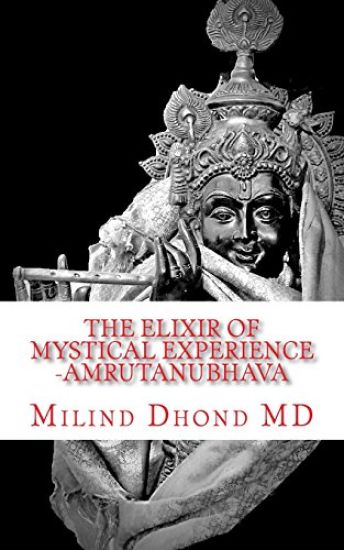
This book is a fictionalized version of Saint Jnaneshwars great philosophical work Amrutanubhava that contains the quintessential knowledge of Kundalini yoga. It describes the journey of Nivritti, a boy living in rural India as he goes in search of spiritual enlightenment. His journey involves visiting the seven sages that bestow this knowledge. The journey sees him meet Lord Shiva and his consort Shakti. They explain to him the nature of the manifest and un-manifest universe. Nivritti then meets his guru Gahnininath who initiates him with a dhiksha that transfers spiritual energy into him and allows him to start experiencing transcendental states. The boy's journey continues where each sage he meets reveals to him the nature of sound, pure knowledge, existence, consciousness and bliss. He also encounters gurus that teach him about the use of words and the nature of relative knowledge and ignorance. The book culminates in his enlightened state. The chapters of the story correspond to the knowledge outlined in the original text of Amrutanubhava. Also included are various techniques from the yogic text Vijnana Bhairava which outlines meditation techniques that the reader can use for achieving states of heightened consciousness.

GeoCongress 2008, Geotechnics of Waste Management and Remediation
Milind V. (EDT) Khire; Akram N. (EDT) Alshawabkeh; Krishna R. Reddy
Amer Society of Civil Engineers
2008
pokkari
This book focuses on the fundamental aspects of yarn winding from a broader perspective. Supplemented with self-explanatory labelled diagrams and photographs, the subject matter of this book includes –Principles of winding systemsWinding package parametersYarn tension during windingPackage driving and yarn traversingWinding package faults and remediesPrint edition not for sale in South Asia (India, Sri Lanka, Nepal, Bangladesh, Pakistan and Bhutan)

This book focuses on the fundamental aspects of yarn winding from a broader perspective. Supplemented with self-explanatory labelled diagrams and photographs, the subject matter of this book includes – Principles of winding systems Winding package parameters Yarn tension during winding Package driving and yarn traversing Winding package faults and remedies Print edition not for sale in South Asia (India, Sri Lanka, Nepal, Bangladesh, Pakistan and Bhutan)

This book critically analyses the evolving landscape of money laundering in the context of emerging technologies. Motivated by the need to provide an insight into evolving money laundering typologies and advocate for innovative approaches, such as the Money Laundering Appeal Index (MLAI) and the Actors, Predicate crime, Purpose of laundering, and Technological innovations (APPT) framework, it integrates insights from sociological and criminological theories to better understand the decision-making process of launderers. In addition to providing a framework aimed at expounding the technique(s) employed in the money laundering process and a metric to assess the appeal of a destination for money laundering flows, the work advocates for a systematic approach to construct models that can detect shell companies employed for laundering illicitly obtained funds, all based on publicly accessible information. By presenting novel insights and instruments, the book enriches the financial crime discourse, equipping stakeholders with the resources for more effective identification and prevention of these widespread economic offenses. It will be a valuable resource for academics, researchers and those working in the area of financial crime.
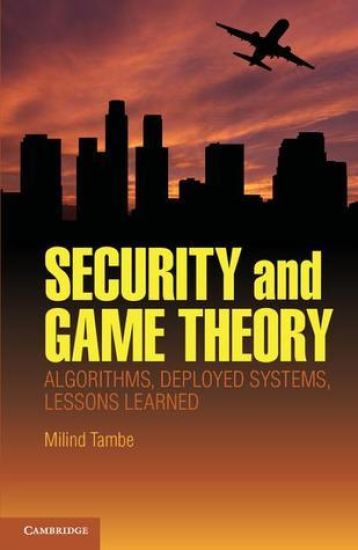
Global threats of terrorism, drug-smuggling and other crimes have led to a significant increase in research on game theory for security. Game theory provides a sound mathematical approach to deploy limited security resources to maximize their effectiveness. A typical approach is to randomize security schedules to avoid predictability, with the randomization using artificial intelligence techniques to take into account the importance of different targets and potential adversary reactions. This book distills the forefront of this research to provide the first and only study of long-term deployed applications of game theory for security for key organizations such as the Los Angeles International Airport police and the US Federal Air Marshals Service. The author and his research group draw from their extensive experience working with security officials to intelligently allocate limited security resources to protect targets, outlining the applications of these algorithms in research and the real world.
A Quantamental Walk Down Wall Street: From Smart Betas to Smarter Alpha
Milind Sharma
WILEY
2026
sidottu

Throughput Optimization in Robotic Cells
Milind W. Dawande; H. Neil Geismar; Suresh P. Sethi; Chelliah Sriskandarajah
Springer-Verlag New York Inc.
2010
nidottu
Intense global competition in manufacturing has compelled manufacturers to incorporate repetitive processing and automation for improving productivity. Modern manufacturing systems use robotic cells – a particular type of computer-controlled system in cellular manufacturing. Throughput optimization in robotic cells provides practitioners, researchers, and students with up-to-date algorithmic results on sequencing of robot moves and scheduling of parts in robotic cells. It brings together the structural results developed over the last 25 years for the various realistic models of robotic cells. After describing industrial applications of robotic cells and presenting fundamental results about cyclic production, several advanced features, such as dual-grippers, parallel machines, multi-part-type production, and multiple robots, are treated. Important open problems in the area are also identified. This book is an excellent text for use in a graduate course or a research seminar on robotic cells.

Darwinian medicine looks at the ecological and evolutionary roots of disease. A disease is an interaction between a genome and its biotic or abiotic environment and therefore a disease is essentially an ecological process. Good understanding of ecology and a Darwinian way of thinking can give us novel and useful perspectives on health and disease. If we understand the disease process better, we can certainly prevent, control as well as treat diseases in a better way. Although the thought that the origins of obesity and type 2 diabetes (T2D) might lie in our hunter gatherer adaptations is not new, research over the last decade makes us rethink many of the classical concepts. Brain and behavior is increasingly being recognized as central to all the endocrine, metabolic and immunological changes that earmark type 2 diabetes and other metabolic syndrome disorders. A major change in paradigm appears to be on the horizon and the proposed book intends to speed up the paradigm shift by raising important questions, pointing out flaws and inadequacies in the prevalent paradigm and stimulating radical rethinking which would redirect and refine the line of research as well as bring some fundamental changes in drug discovery and clinical practice. ?

A captivating family drama on the difficult decisions and anguish family members endure while caring for their aging parent with Alzheimer's. As their mother succumbs to this unrelenting disease, contrasting beliefs between siblings on her proper care erupt, and the clash threatens to tear the family apart. Who should make end of life decisions? What does it mean to die with dignity? These are some of the provocative topics addressed in this novel that take the reader through a cathartic journey of love, life, and death. Based on a true story.