

Kirjahaku
Etsi kirjoja tekijän nimen, kirjan nimen tai ISBN:n perusteella.
1000 tulosta hakusanalla Miranda Carrie
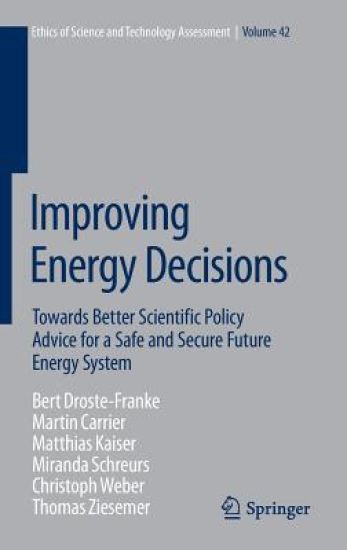
Improving Energy Decisions
Bert Droste-Franke; M. Carrier; M. Kaiser; Miranda Schreurs; Christoph Weber; Thomas Ziesemer
Springer International Publishing AG
2014
sidottu
Managing a successful transition of the current energy supply system to less carbon emitting options, ensuring a safe and secure supply during the whole process and in the long term, is one of the largest challenges of our time. Various approaches and first implementations show that it is not only technological issue, but also a matter of societal acceptance and acceptability, considering basic ethic values of the society.The main foci of the book are, thus, to develop an understanding about the specific challenges of the scientific policy advice in the area, to explore typical current approaches for the analysis of future energy systems and to develop criteria for the quality assessment and guidelines for the improvement of such studies.The book provides assistance to the interpretation of existing studies and guidelines for setting up and carrying out new analyses as well as for communicating and applying the results. Thereby, it aims to support the involved actors such as the respective scientific experts and researchers as well as decision makers, energy suppliers, stakeholders and the interested public in designing procedures for a successful transition process. The study elaborates consistent interdisciplinary advice as contribution for realising a continuously safe and secure, long-term viable energy supply in spite of diverse interests, multi-level responsibilities, multi-dimensional processes, large uncertainties and lack of knowledge about future developments.

Improving Energy Decisions
Bert Droste-Franke; M. Carrier; M. Kaiser; Miranda Schreurs; Christoph Weber; Thomas Ziesemer
Springer International Publishing AG
2016
nidottu
Managing a successful transition of the current energy supply system to less carbon emitting options, ensuring a safe and secure supply during the whole process and in the long term, is one of the largest challenges of our time. Various approaches and first implementations show that it is not only technological issue, but also a matter of societal acceptance and acceptability, considering basic ethic values of the society.The main foci of the book are, thus, to develop an understanding about the specific challenges of the scientific policy advice in the area, to explore typical current approaches for the analysis of future energy systems and to develop criteria for the quality assessment and guidelines for the improvement of such studies.The book provides assistance to the interpretation of existing studies and guidelines for setting up and carrying out new analyses as well as for communicating and applying the results. Thereby, it aims to support the involved actors such as the respective scientific experts and researchers as well as decision makers, energy suppliers, stakeholders and the interested public in designing procedures for a successful transition process. The study elaborates consistent interdisciplinary advice as contribution for realising a continuously safe and secure, long-term viable energy supply in spite of diverse interests, multi-level responsibilities, multi-dimensional processes, large uncertainties and lack of knowledge about future developments.
Carreno de Miranda in the Collection of the Hispanic Society of America
Hispanic Society of America
Literary Licensing, LLC
2013
nidottu
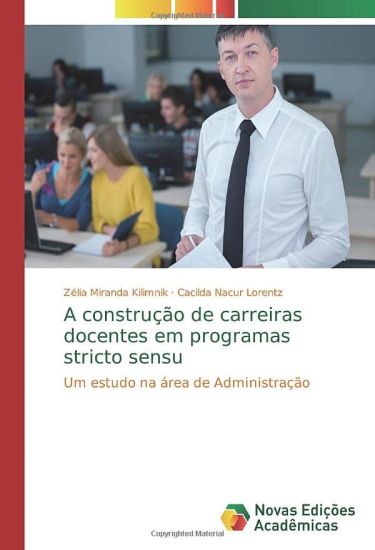
A construção de carreiras docentes em programas stricto sensu
Zélia Miranda Kilimnik; Cacilda Nacur Lorentz
Novas Edições Acadêmicas
2019
nidottu

Empresas centradas en las personas: Una mirada crítica sobre la empresa y sus fines
Alejandro Carrera; Hernán Fitte
Ediciones Granica, S.A.
2023
nidottu

Cosas que tu psiquiatra nunca te dijo: Otra mirada sobre las verdades de las psiquiatrías y las psicologías
Kepa Matilla; Javier Carreño
Createspace Independent Publishing Platform
2018
nidottu
Fiel reflejo de lo que estudia, Cosas que tu psiquiatra nunca te dijo exhibe un deslumbrante compendio de miscel neas. De ah que nos familiarizamos con la fragmentaci n del campo de la psicolog a y de la psiquiatr a, hecho del que los autores se hacen eco con t rminos como las psiquiatr as, significante alrededor del cual gravitan todas las significaciones desplegadas en esta obra. Su uso en plural habla por s s lo de ese tejido, confeccionado con los m s variopintos hilos, que da cuerpo a la psicolog a y a la psiquiatr a. Aunque parezca ingenuo, el s lo hecho de afirmar que la psicolog a y la psiquiatr a son m ltiples causa un persistente desagrado a quienes se creen en posesi n de la verdad y ven leg tima nicamente la suya, porque, en todo caso, las otras son meras seudociencias o antiguallas propias de un museo. Con este argumento recurrente se despacha a los contrincantes y se da por terminado el debate antes incluso de iniciarlo. Sin embargo, lo m s habitual es que las corrientes contrarias no bajen a la arena y permanezcan acantonadas en sus respectivos guetos, cada una con sus cosas, alejadas e ignorantes de que existe una lengua com n que facilita el di logo.Este libro, en cambio, es de los que discute los argumentos del oponente sin perderle la cara y usando las mismas armas. Porque los m s usual en nuestro medio es que se refute al contrario hablando cada uno en su propio dialecto. De esta forma, no hay manera de ponerse de acuerdo en nada y las posiciones se distancian cada vez m s, con lo cual cada uno de los contendientes acaba reafirm ndose en la raz n que ya se atribu a. Pero Cosas que tu psiquiatra nunca te dijo, aunque es una obra cr tica con la corriente psi hoy d a imperante, toma sus argumentos de las mismas fuentes y de los mismos estudios de vocaci n neurocient fica que sus adversarios escriben y usan para fundamentar su visi n. Las conclusiones a las que llega, sin embargo, distan mucho de las que ofrecen las publicaciones de impacto, esos papers de los que se hace eco la ense anza oficial y constituyen el cuerpo doctrinal que nutre a las futuras generaciones de especialistas. Escrito en el dialecto de la ciencia, la obra examina el estado actual de la corriente psi dominante, amalgama de neurobiolog a y cognitivismo a partir de un enfoque bien definido, combinaci n del psicoan lisis de orientaci n lacaniana y de los grandes pensadores de la psicopatolog a. Una obra que navega entre los cuentos y los estudios cient ficos, entre los ensayos cl nicos y el psicoan lisis, con el tim n, por supuesto, de la psicopatolog a y la historia de la locura.

One of the most significant Supreme Court cases in U.S. history has its roots in Arizona and is closely tied to the state's leading legal figures. Miranda has become a household word; now Gary Stuart tells the inside story of this famous case, and with it the legal history of the accused's right to counsel and silence. Ernesto Miranda was an uneducated Hispanic man arrested in 1963 in connection with a series of sexual assaults, to which he confessed within hours. He was convicted not on the strength of eyewitness testimony or physical evidence but almost entirely because he had incriminated himself without knowing it and without knowing that he didn t have to. Miranda's lawyers, John P. Frank and John F. Flynn, were among the most prominent in the state, and their work soon focused the entire country on the issue of their client's rights. A 1966 Supreme Court decision held that Miranda's rights had been violated and resulted in the now-famous "Miranda warnings." Stuart personally knows many of the figures involved in Miranda, and here he unravels its complex history, revealing how the defense attorneys created the argument brought before the Court and analyzing the competing societal interests involved in the case. He considers Miranda's aftermath not only the test cases and ongoing political and legal debate but also what happened to Ernesto Miranda. He then updates the story to the Supreme Court's 2000 Dickerson decision upholding Miranda and considers its implications for cases in the wake of 9/11 and the rights of suspected terrorists. Interviews with 24 individuals directly concerned with the decision lawyers, judges, and police officers, as well as suspects, scholars, and ordinary citizens offer observations on the case's impact on law enforcement and on the rights of the accused. Ten years after the decision in the case that bears his name, Ernesto Miranda was murdered in a knife fight at a Phoenix bar, and his suspected killer was "Mirandized" before confessing to the crime. Miranda: The Story of America's Right to Remain Silent considers the legacy of that case and its fate in the twenty-first century as we face new challenges in the criminal justice system.

This is the first book in a series of self-help fiction titles. By reading about the lives of fictional characters, the reader learns much about how to unravel present day problems. The understanding of stresses that began in childhood years casts light on why the characters are struggling with the difficulties that they are having now. Description on the back cover reads as follows: Newly unemployed, Miranda is feeling directionless and dejected. Then she encounters Kate, a former work colleague. Kate is now facing redundancy. Their friendship is rekindled, and as the two women share their problems and dilemmas, they begin to confide about experiences that have affected their lives. Miranda had helped to mother her two younger sisters when they were growing up, but they rarely contact her and she feels puzzled and hurt by this. It emerges that the impact upon Kate of her father's leaving when she was young has many facets. Inspired by memories of her Granny Ann, whose many stories delighted her, Miranda's creative self begins to emerge, and Kate's vision of her own future matures. Miranda and Kate gain confidence and optimism about self-employment, and their personal relationships begin to flourish.





Miranda is a black ex-slave, now the owner of a sugar plantation in Jamaica in the late eighteenth century. Her battle to overcome prejudice and to raise the status of African slaves by teaching them to read and write makes compelling reading. Her personal struggle with an overseer who preys on black women to satisfy his sexual appetite has far-reaching consequences.

Miranda is a black ex-slave, now the owner of a sugar plantation in Jamaica in the late eighteenth century. Her battle to overcome prejudice and to raise the status of African slaves by teaching them to read and write makes compelling reading. Her personal struggle with an overseer who preys on black women to satisfy his sexual appetite has far-reaching consequences.

Gonzalo, un arquitecto bastante exitoso, vive en su piso de Barcelona, sin grandes sobresaltos, hasta que recibe una llamada que ya no esperaba. A partir de ese instante, su vida da un giro de 180 grados. Desde que suena el tel fono hasta el final de la novela, Gonzalo y Miranda -movidos por la pasi n- reviven un pasado tr gico y sorprendente, mientras intentan construir un futuro luminoso. Podr n hacerlo? Antes de responder esa pregunta, la autora nos invita a bucear en los sentimientos de los personajes, identificarnos con sus temores, sus deseos y sus esperanzas. Una historia de amor que nos lleva a reflexionar acerca de cu les son las cosas m s importantes de la vida, mientras nos mantiene en suspenso, cap tulo tras cap tulo.