
Kirjahaku
Etsi kirjoja tekijän nimen, kirjan nimen tai ISBN:n perusteella.
334 tulosta hakusanalla Mircea a. Tamas
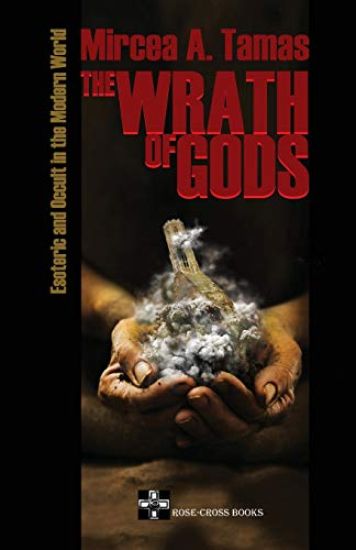
The Wrath of Gods: Esoteric and Occult in the Modern World
Mircea a. Tamas
Rose-Cross Books
2016
nidottu
We have entered indeed the final phase of Kali-yuga, the darkest period of this dark age, this state of dissolution from which we cannot escape but through a cataclysm, since it is not about a simple straightening that would be necessary, but about a total renovation. Disorder and confusion the Great Disarray] reign in all the areas; they have reached a point which surpasses by far all that we have seen until now, and ... threaten to invade the entire world ... it seems to be the sign of the most serious crisis encountered by humanity in the present cycle. (Ren Gu non, La Crise du monde moderne)
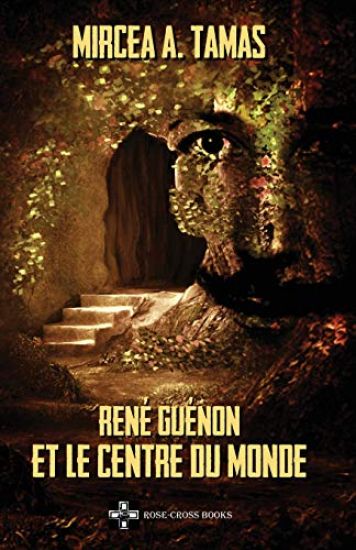
LE CENTRE du monde ou le centre supr me de l'humanit terrestre actuelle s'appelle le paradis terrestre, l'Agarttha, ou Salem. C'est le Temple de la Paix (salem) et la Maison de Justice (Beith-Din), parce que le centre supr me, ou n'importe quel autre centre spirituel, qui en est l'image, peut tre d crit symboliquement la fois comme un temple (aspect sacerdotal, correspondant la Paix) et comme un palais ou un tribunal (aspect royal, correspondant la Justice
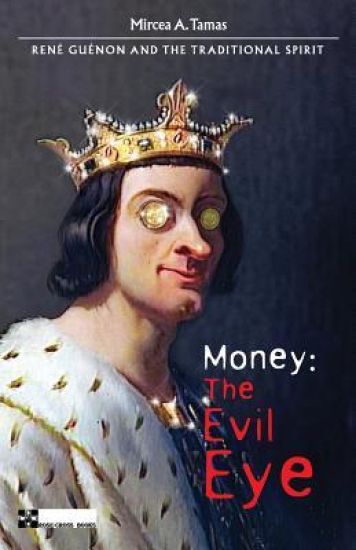
There is no doubt that today "Money is the Devil's Eye." Ren Gu non wrote an entire chapter about how the concept of "money" decayed, from a traditional to a profane and modern level. Today, after half a century, the degeneration described by Gu non has reached its nadir, as illustrated by the present "economic crisis" and the recurrent "bailouts," a crisis that refutes the absurd theory of "continual progress." In addition to the numerous political, psychological and social implications, which are not our concern, since our viewpoint is purely traditional, the crisis has reinforced an already well-known fact: money tops everything else, and the modern world loudly admitted that nothing is more important than money, that the modern mentality cannot imagine a life without monetary slavery and money as the main aspiration, which makes the "bailouts" vital for maintaining the profane and infrahuman lifestyle.
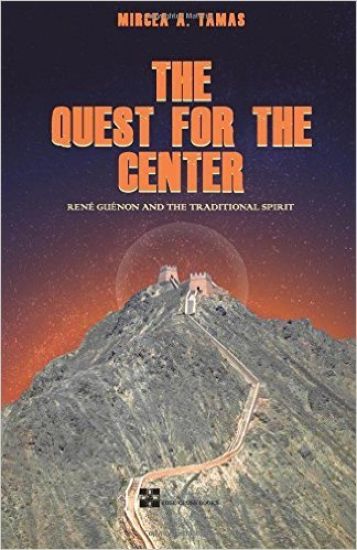
The world is in agony, the three pillars of a healthy society: the profound faith in God and aspiration for His Love and Wisdom; the submission to the spiritual authority; respect for parents and teachers, are all broken, and we witness a sombre concert, a devilish harmony between the receivers and the givers, because priests, parents and teachers are also "broken", not all of them, not yet (which is why the world still exists), and then, we have the frauds, the false prophets who call themselves heroes and saviours, when in fact they are tools of the counter-initiatory forces. What our world lacks is the Traditional Spirit. Ren Gu non revealed the essence in a unique manner and warned that, without recovering this Traditional Spirit, the world will end, sooner or later. We decided to organize our last books under the authority of "Ren Gu non and the Traditional Spirit" and publish three works: A View of the Center, The Center and the World, and The Quest for the Center; there is a fourth volume, because traditionally, as we have already underlined in another work, when we have 3 there is also a 4th, a volume already published and called Money: The Evil Eye. All of them strive to rekindle the Traditional Spirit and are written following the advice of Saint Symeon the Metaphrast: "It is not right to leave his words the words of Saint John Chrysostom] and say mine," because we, as author, are nothing in face of Tradition and its wise exponents.
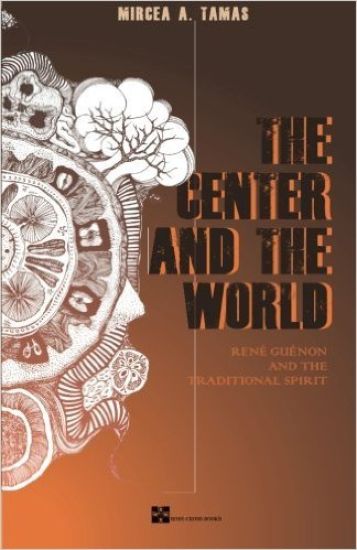
The world is in agony, the three pillars of a healthy society: the profound faith in God and aspiration for His Love and Wisdom; the submission to the spiritual authority; respect for parents and teachers, are all broken, and we witness a sombre concert, a devilish harmony between the receivers and the givers, because priests, parents and teachers are also "broken", not all of them, not yet (which is why the world still exists), and then, we have the frauds, the false prophets who call themselves heroes and saviours, when in fact they are tools of the counter-initiatory forces. What our world lacks is the Traditional Spirit. Ren Gu non revealed the essence in a unique manner and warned that, without recovering this Traditional Spirit, the world will end, sooner or later.

"Do nosso ponto de vista, cremos que a Guarda de Ferro foi um movimento mais religioso e militar que pol tico, havendo que estud -lo como tal, mais de um ponto de vista sociol gico e antropol gico-etnol gico do que de um ponto de vista ideol gico e pol tico (...) a Guarda de Ferro esteve t o estreitamente vinculada s tradi es romenas, que a investiga o hist rica que a queira estudar dever ir a par com uma pesquisa hist rica, religiosa e com tudo o mais que tal possa acarretar." - Franco CardiniMircea Eliade e a Guarda de Ferro constitui uma importante contribui o para a compreens o do itiner rio intelectual do grande historiador das religi es, bem como para a hist ria do Movimento Legion rio nas suas rela es com a cultura romena. Apoiando-se numa abundante documenta o, o autor empenhou-se em reconstituir todo um quebra-cabe as, do qual sobressai que uma grande parte da produ o te rica e romanesca de Eliade indissoci vel do empenho do escritor, nos anos 30, a favor do movimento fundado e dirigido por Corneliu Zelea Codreanu.A compet ncia de Claudio Mutti sobre este assunto inquestion vel. Falando fluentemente o romeno, traduziu para o italiano os principais textos da literatura legion ria e escreveu v rios livros sobre o fen meno legion rio e a influ ncia de Ren Gu non na Rom nia.A FACETA MENOS PROPAGADA DE MIRCEA ELIADEMircea Eliade (Bucareste, 13 de Mar o de 1907 - Chicago, 22 de Abril de 1986) foi um historiador e romancista romeno naturalizado estadunidense. Foi um dos mais importantes e influentes historiadores e fil sofo das religi es da contemporaneidade.Embora o seu trabalho acad mico nunca tenha estado subordinado s suas cren as pol ticas, este reflecte a escola de pensamento associada Rom nia do entre-guerras, bem como das obras de Julius Evola, tendo liga es tem ticas comuns s do fascismo. O acad mico Marcel Tolcea tem defendido que, por interm dio da interpreta o que Evola fez das obras de Gu non, Eliade manteve uma liga o not vel s ideologias nacionalistas e que este transparece nas suas obras.Um artigo, datado dos anos 30, via Eliade retractar Julius Evola como sendo um grande intelectual e elogiar intelectuais t o pol micos como Oswald Spengler, Arthur de Gobineau, Houston Stewart Chamberlain e inclusive Alfred Rosenberg, ide logo nazi. Evola, que continuou a defender os princ pios do fascismo m stico, na sua interpreta o de Direita, chegou a protestar que Eliade pecava por n o o citar a ele nem a Gu non. Eliade respondeu-lhe que os seus trabalhos se destinavam a um p blico mais amplo, que n o os iniciados dos c rculos esot ricos. No final dos anos 60 Eliade, bem como Evola e Rougier, entre outros intelectuais, deram o seu apoio ao GRECE - Groupement de Recherche et d' tudes pour la Civilisation Europ enne, parte da corrente intelectual que ficou conhecida pelo nome de Nova Direita.ACERCA DO AUTORClaudio Mutti (nascido em 1946) formado em filologia cl ssica, traduziu para o italiano obras de Plutarco, Aratos, Porf rio, do Imperador Juliano e de Sal stio. Depois de ter desenvolvido actividade docente e de pesquisa no Instituto de Filologia Fino- grico de L ngua e Literatura H ngara da Universidade de Bolonha, cargo a que teve que renunciar em 1974.Mutti escreveu diversas obras relativas ao folclore da Europa central, estudando o conte do simb lico das tradi es populares seguindo os passos das indica es fornecidas por Ren Gu non. No mbito de um aprofundado interesse pela cultura da rea carp tico-danubiana, traduziu numerosos documentos e depoimentos relativos ao movimento legion rio romeno e ao movimento das cruzes flechadas h ngaro. Em particular, investigou as rela es de Mircea Eliade, Emil Cioran e Constantin Noica com o Movimento Legion rio; fez pesquisas aprofundadas acerca da influ ncia exercida por Ren Gu non e Julius Evola nos pa ses da Europa danubiana.
Much has been written on Mircea Eliade (1907-1986) and his work on the history of religions, but little attention has been given to Eliade's idea of a `new humanism' for modern culture. Yet this vision, as David Cave argues in this detailed analysis, was the motivating impulse behind much of Eliade's life and work as a scholar of religion and as a writer.

"No one has done so much as Mr. Eliade to inform literature students in the West about 'primitive' and Oriental religions...Everyone who cares about the human adventure will find new information and new angles of vision."--Martin E. Marty, "New York Times Book Review"
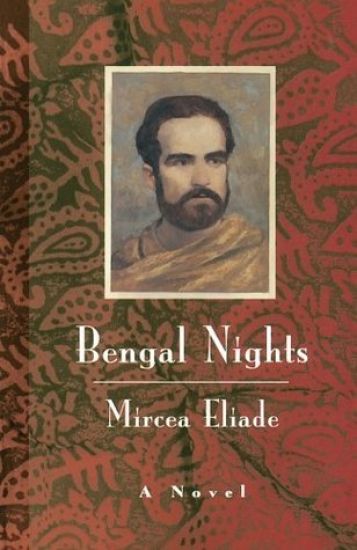
Set in 1930s Calcutta, this is a roman a clef of remarkable intimacy. Originally published in Romanian in 1933, this semiautobiographical novel by the world renowned scholar Mircea Eliade details the passionate awakenings of Alain, an ambitious young French engineer flush with colonial pride and prejudice and full of a European fascination with the mysterious subcontinent. Offered the hospitality of a senior Indian colleague, Alain grasps at the chance to discover the authentic India firsthand. He soon finds himself enchanted by his host's daughter, the lovely and inscrutable Maitreyi, a precocious young poet and former student of Tagore. What follows is a charming, tentative flirtation that soon, against all the proprieties and precepts of Indian society, blossoms into a love affair both impossible and ultimately tragic. This erotic passion plays itself out in Alain's thoughts long after its bitter conclusion. In hindsight he sets down the story, quoting from the diaries of his disordered days, and trying to make sense of the sad affair. A vibrantly poetic love story, Bengal Nights is also a cruel account of the wreckage left in the wake of a young man's self discovery. At once horrifying and deeply moving, Eliade's story repeats the patterns of European engagement with India even as it exposes and condemns them. Invaluable for the insight it offers into Eliade's life and thought, it is a work of great intellectual and emotional power. Translated into French in 1950, Bengal Nights was an immediate critical success. The film, Les Nuits Bengali, appeared in 1987.
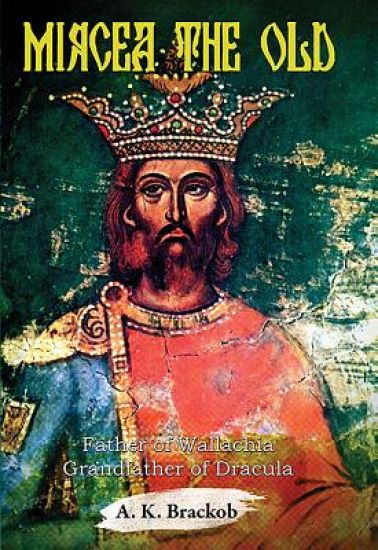
One of the greatest leaders in Romanian history, Mircea the Old comes to life in this new book. Although his grandson, Vlad the Impaler, has acquired much greater international fame, Mircea the Old was the most significant ruler to sit on the throne of the small principality of Wallachia during the Middle Ages. To understand the historical Dracula, it is essential to comprehend the life and times of Mircea the Old, who, during his long reign from 1386 to 1418, consolidated the political and administrative structure of his principality and maintained its freedom at the time of its most significant peril. Mircea defeated the mighty Ottoman Empire, the greatest power of his day, at the battle of Rovine in 1394. During the crusade of Nicopolis, in 1396, the Wallachian prince played a key role and many, including Emperor Sigismund of Luxemburg, believed that he should have led the Christian assault. Flawed political considerations, however, countermanded that proposal and resulted in a disastrous defeat for Christendom. Despite this setback, Mircea positioned his small country as a major force in international politics at the dawn of the fifteenth century. As the Ottoman Empire collapsed into civil war following the decisive defeat of Sultan Bayezid by the Mongol Emperor Tamerlane at the battle of Ankara in 1402, Mircea the Old emerged in the role of kingmaker. The great powers fighting for control over southeastern Europe all recognized his skill and acumen, leading the Turkish chronicler Leunclavius to describe him as "the bravest and most able of Christian Princes." His long reign allowed him to establish the dynamic ruling dynasty from which the Dracula legend would ultimately be born.
One of the greatest leaders in Romanian history, Mircea the Old comes to life in this new book. Although his grandson, Vlad the Impaler, has acquired much greater international fame, Mircea the Old was the most significant ruler to sit on the throne of the small principality of Wallachia during the Middle Ages. To understand the historical Dracula, it is essential to comprehend the life and times of Mircea the Old, who, during his long reign from 1386 to 1418, consolidated the political and administrative structure of his principality and maintained its freedom at the time of its most significant peril. Mircea defeated the mighty Ottoman Empire, the greatest power of his day, at the battle of Rovine in 1394. During the crusade of Nicopolis, in 1396, the Wallachian prince played a key role and many, including Emperor Sigismund of Luxemburg, believed that he should have led the Christian assault. Flawed political considerations, however, countermanded that proposal and resulted in a disastrous defeat for Christendom. Despite this setback, Mircea positioned his small country as a major force in international politics at the dawn of the fifteenth century. As the Ottoman Empire collapsed into civil war following the decisive defeat of Sultan Bayezid by the Mongol Emperor Tamerlane at the battle of Ankara in 1402, Mircea the Old emerged in the role of kingmaker. The great powers fighting for control over southeastern Europe all recognized his skill and acumen, leading the Turkish chronicler Leunclavius to describe him as "the bravest and most able of Christian Princes." His long reign allowed him to establish the dynamic ruling dynasty from which the Dracula legend would ultimately be born.

The short-sighted adolescent is a passionate reader who takes various cultural figures as models, trying to emulate both their lives or their works. The pupil protagonist is a poor student, who likes science and reads a lot of books, sometimes staying up all night to do so. At the age of 17, he decides to write a novel to demonstrate to his teachers that he is not as mediocre as his other classmates, and that he is prepared to give up everything he holds dear in order to do so. The novel is written in a number of notebooks - the 'diary' of the title - but our myopic hero ultimately fails 3 subjects and has to repeat the school year. Set in the Romanian capital in the early 20th century, from the perspective of a schoolboy's diary of his daily life, - his teachers, his classmates' academic and amorous rivalries, his first sexual experiences - we are introduced to the themes of religion, self-knowledge, erotic sensibility, artistic creation and otherness, ideas which would preoccupy him until the end of his life. Diary of a Short-Sighted Adolescent was written by the young Mircea Eliade - one of Romania's greatest writers and intellectuals. The book can be viewed as an early 20th century 'Catcher in the Rye', and allows us an intimate view of the developing genius, whose literary output has been neglected in the English language for too long.
The Midtown Murders: A Detective Novel
Mircea Luca; Tad S. Torm
Createspace Independent Publishing Platform
2015
nidottu

Did you know that moms have magical powers? Their magic can take away any pain, detect little lies (and lost toys), and bind hearts together with a ribbon of love. And one more thing: it helps them to always be right. With love, for all mothers and their little ones, a little book of rhymes. From a dad.

IIS Best Practices and Security Hardening: a straightforward guide to a successful and secure deployment of IIS
Mircea Jaloba
Createspace Independent Publishing Platform
2017
nidottu

Reliability and Validity Claims of a Foreign Language Proficiency Test
Walter J Mircea-Pines
LAP Lambert Academic Publishing
2012
pokkari
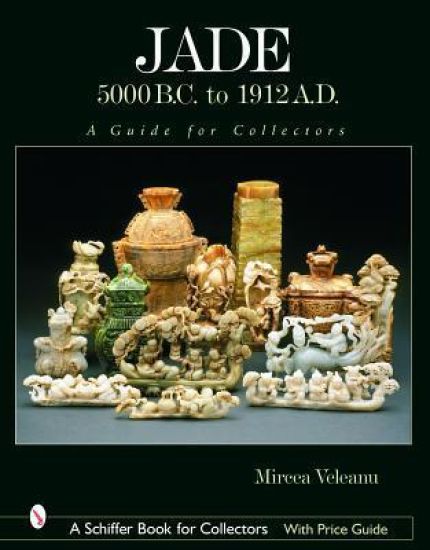
Prized the world over, jade has been considered a sacred stone with miraculous powers since prehistoric times. In ancient China, jade was regarded as the most important physical substance on earth. This invaluable book traces the chronological use of jade carvings in China, including primitive utilitarian tools, fascinating ceremonial objects, beautiful ornaments, and intricately designed sculptures. Lavishly illustrated with over 900 color photographs, it features a wide diversity of examples and helps today's collector identify different types of jade and their period of carving -- ranging from neolithic times through the Qing Dynasty (1644-1912). Also discussed in less detail are jade carvings from India, New Zealand, and pre-Columbian civilizations such as the Mayan, Toltec, and Aztec. Tips for determining the age and authenticity of jade carvings are provided, along with current values for all items illustrated. This indispensable reference will appeal to all collectors and admirers of jade and the Oriental arts.

Random Vibration of Complex Systems: A Unified Approach
Richard V. Field; Mircea D. Grigoriu
Academic Press
2017
nidottu
Random Vibration of Complex Systems provides a new framework for assessing the performance of complex dynamic systems subject to random input. While most current books on random vibration treat the four different scenarios defined by the type of input and dynamic system independently and provide different methods for the analysis of each, Field and Grigoriu provide a unified approach for the analysis of linear and/or nonlinear dynamic systems subject to Gaussian and/or non-Gaussian input.Using numerous real-world engineering problems to illustrate the application of this new approach, Random Vibration of Complex Systems presents methods and techniques in a practical way to make them easily transferable to your vibration problems. Intended as a reference resource for applied scientists and engineers interested in analytical and numerical methods for solving random vibration problems, the book will be of particular interest to those working in the aerospace, automotive, civil engineering industries. Provides the first reference resource to guide you through the analysis of randomness and complexity in a unified way.Offers a new framework for analyzing complex dynamic systems with different input scenarios, unlike most other books that provide different methods for each scenario or consider only one or two academic situations.Demonstrates methods and techniques through the use of real-world engineering case studies with the aim of making the approach easily transferable to your vibration problems.