Kirjahaku
Etsi kirjoja tekijän nimen, kirjan nimen tai ISBN:n perusteella.
1000 tulosta hakusanalla Miriam Cohen
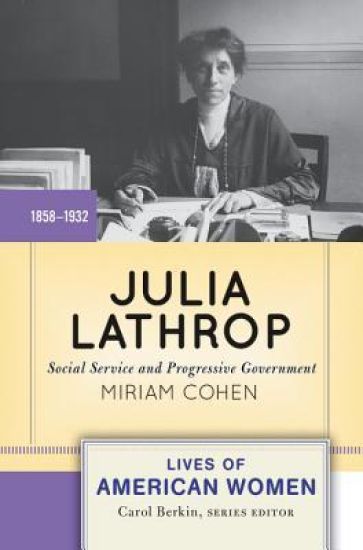
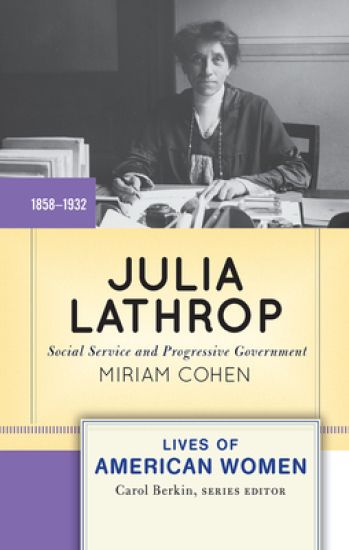
Julia Lathrop was a social servant, government activist, and social scientist who expanded notions of women's proper roles in public life during the early 1900s. Appointed as chief of the U.S. Children's Bureau, created in 1912 to promote child welfare, she was the first woman to head a United States federal agency. Throughout her life, Lathrop challenged the social norms of the time and became instrumental in shaping Progressive reform. She began her career at Hull House in Chicago, the nation's most famous social settlement, where she worked to improve public and private welfare for poor people, helped establish America's first juvenile court, and pushed for immigrant rights. Lathrop was also co-founder of one of America's first schools of social work. Later in life she became a leader in the League of Women Voters and an advisor on child welfare to the League of Nations. Following Lathrop's life from her childhood and college education through her social service and government work, this book gives an overview of her enduring contribution to progressive politics, women's employment, and women's education. It also offers a look at how one influential woman worked within the bounds of traditional conventions about gender, race, and class, and also pushed against them.
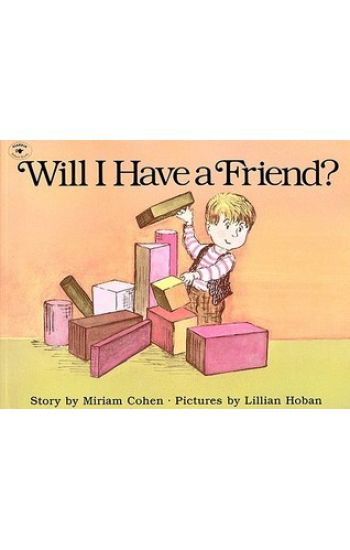
Jim faces his fears of making a friend on his first day of kindergarten in this picture book by Miriam Cohen, chosen as the Library of Congress’s Children’s Book of the Year.When Pa was taking Jim to school for the first time, Jim said, “Will I have a friend at school?” “I think you will,” said Pa. But even his father’s gentle reassurance doesn’t make Jim feel any better. The other children in kindergarten are scary strangers to him. He’s sure that he’ll never find a friend…until naptime, when he discovers someone who feels the way he does.
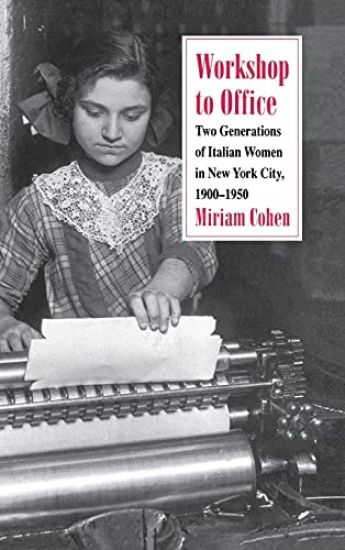
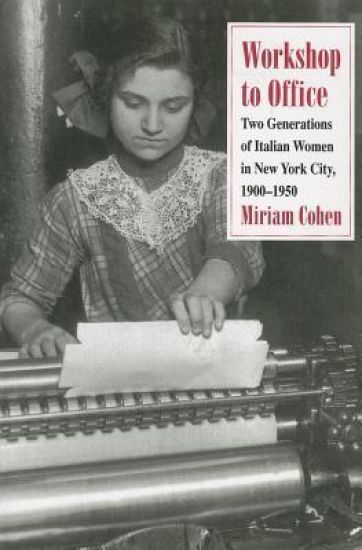
In turn-of-the-century New York, Italian immigrant daughters spent their youth in factories while their mothers did irregular wage labor as well as domestic work at home. By the I940s, Italian-American girls were in school, socializing and preparing for white-collar jobs that would not begin until they were eighteen. Drawing on a range of sources from censuses to high school yearbooks, Miriam Cohen examines shifting patterns in the family roles, work lives, and schooling of two generations of Italian-American women. Paying particular attention to the importance of these women's pragmatic daily choices, she documents how major social and political changes helped create new opportunities and constraints for the second generation. While financial need was a powerful factor in determining the behavior of the first generation women, Cohen shows, they and their daughters succeeded in adapting family survival strategies to new work patterns. Once the second generation was married, their careers mirrored those of the first in many ways: they raised children, cared for the home, and took on paid employment when necessary. Unlike their mothers, however, these Italian-American wives could also participate in the growing consumerism surrounding home and childcare. Throughout, Cohen compares the changing Italian-American experience with that of Jewish women, discovering significant similarities in these experiences by 1950. As well as presenting a nuanced portrait of one group of ethnic working-class women, Workshop to Office demonstrates the impact of political developments on individual lives. It will spark lively debates among students and scholars of social history, immigration history, labor history, women's history, and the history of education in the United States.
Julia Lathrop was a social servant, government activist, and social scientist who expanded notions of women's proper roles in public life during the early 1900s. Appointed as chief of the U.S. Children's Bureau, created in 1912 to promote child welfare, she was the first woman to head a United States federal agency. Throughout her life, Lathrop challenged the social norms of the time and became instrumental in shaping Progressive reform. She began her career at Hull House in Chicago, the nation's most famous social settlement, where she worked to improve public and private welfare for poor people, helped establish America's first juvenile court, and pushed for immigrant rights. Lathrop was also co-founder of one of America's first schools of social work. Later in life she became a leader in the League of Women Voters and an advisor on child welfare to the League of Nations. Following Lathrop's life from her childhood and college education through her social service and government work, this book gives an overview of her enduring contribution to progressive politics, women's employment, and women's education. It also offers a look at how one influential woman worked within the bounds of traditional conventions about gender, race, and class, and also pushed against them.
Realizing Reparative Justice for International Crimes
Miriam Cohen
Cambridge University Press
2022
pokkari
This book provides a timely and systematic study of reparations in international criminal justice, going beyond a theoretical analysis of the system established at the International Criminal Court (ICC). It originally engages with recent decisions and filings at the ICC relating to reparation and how the criminal and reparative dimensions of international criminal justice can be reconciled. This book is equally innovative in its extensive treatment of the significant challenges of adjudicating on reparations, and proposing recommendations based on concrete experiences. With recent and imminent decisions from the ICC, and developments in national courts and beyond, Miriam Cohen provides a critical analysis of the theory and emerging jurisprudence of reparations for international crimes, their impact on victims and stakeholders.
Realizing Reparative Justice for International Crimes
Miriam Cohen
Cambridge University Press
2020
sidottu
This book provides a timely and systematic study of reparations in international criminal justice, going beyond a theoretical analysis of the system established at the International Criminal Court (ICC). It originally engages with recent decisions and filings at the ICC relating to reparation and how the criminal and reparative dimensions of international criminal justice can be reconciled. This book is equally innovative in its extensive treatment of the significant challenges of adjudicating on reparations, and proposing recommendations based on concrete experiences. With recent and imminent decisions from the ICC, and developments in national courts and beyond, Miriam Cohen provides a critical analysis of the theory and emerging jurisprudence of reparations for international crimes, their impact on victims and stakeholders.
It's Valentine's Day and the first graders are excited about the cards they will receive. Their teacher tells the children to send a Valentine's card to everyone in the class so that nobody will feel left out. However, in their eagerness to send the best cards, the first graders don't remember to send cards to everyone. This upsets George who does not get as many Valentines as everybody else. Luckily, his friends know just how to cheer him up and as they play music and dance around him, it is one happy Valentine's Day party for everybody after all!
This book is suitable as an excellent read-aloud. It helps children develop social and emotional skills. Layla, the new girl in first grade, is hesitant to participate in the various school-day activities because she is afraid that her head scarf makes her look too different from her classmates. But as the day progresses, and the curious first graders learn more about Layla's culture, they help to make her feel more comfortable in her new school. Miriam Cohen's timely story highlights the challenges all children face when they begin social interactions at school. Ronald Himler's watercolour illustrations give the children distinct characteristics and provide a realistic portrayal of a first grade classroom.
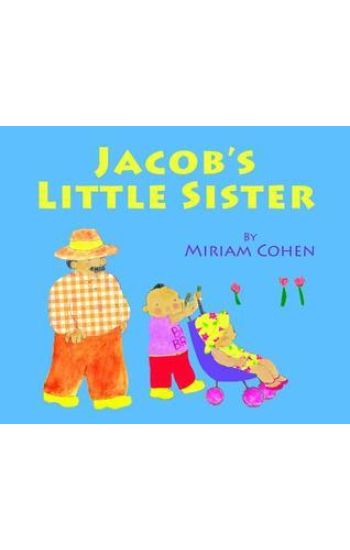
Jacob does not ride on his father's back any more. He is helping his daddy today, pushing his little sister in a stroller to the park. His little sister is as cute as a button, but my, she is a wild thing She runs everywhere in the park. Jacob cannot take his eyes off her, running fast to catch her. It's hard But Jacob knows it's big brother's job to take good care of little sister. Jacob is now Big Brother.
In turn-of-the-century New York, Italian immigrant daughters spent their youth in factories while their mothers did irregular wage labor as well as domestic work at home. By the I940s, Italian-American girls were in school, socializing and preparing for white-collar jobs that would not begin until they were eighteen. Drawing on a range of sources from censuses to high school yearbooks, Miriam Cohen examines shifting patterns in the family roles, work lives, and schooling of two generations of Italian-American women. Paying particular attention to the importance of these women's pragmatic daily choices, she documents how major social and political changes helped create new opportunities and constraints for the second generation.While financial need was a powerful factor in determining the behavior of the first generation women, Cohen shows, they and their daughters succeeded in adapting family survival strategies to new work patterns. Once the second generation was married, their careers mirrored those of the first in many ways: they raised children, cared for the home, and took on paid employment when necessary. Unlike their mothers, however, these Italian-American wives could also participate in the growing consumerism surrounding home and childcare. Throughout, Cohen compares the changing Italian-American experience with that of Jewish women, discovering significant similarities in these experiences by 1950.As well as presenting a nuanced portrait of one group of ethnic working-class women, Workshop to Office demonstrates the impact of political developments on individual lives. It will spark lively debates among students and scholars of social history, immigration history, labor history, women's history, and the history of education in the United States.
El debate entre apertura comercial y cuidado ambiental
Alfie Cohen Miriam
Eae Editorial Academia Espanola
2011
pokkari
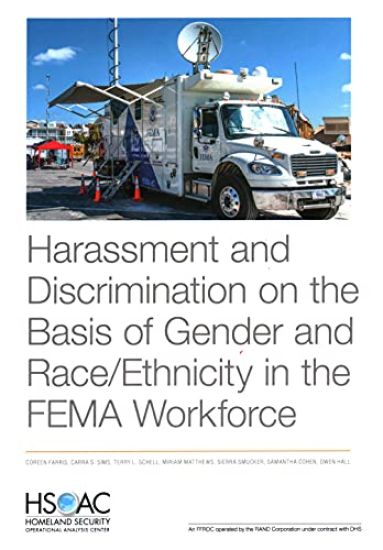
Harassment and Discrimination on the Basis of Gender and Race/Ethnicity in the FEMA Workforce
Coreen Farris; Carra S Sims; Terry L Schell; Miriam Matthews; Sierra Smucker; Samantha Cohen; Owen Hall
RAND
2021
nidottu
Produção científica e inovação na gestão pública
Mirian Miranda Cohen
Novas Edições Acadêmicas
2017
nidottu
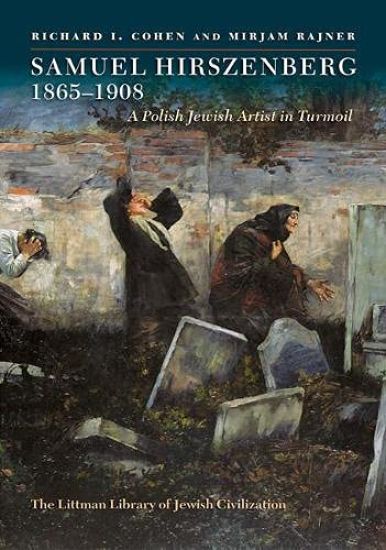
Samuel Hirszenberg, 1865–1908
Richard I. Cohen; Mirjam Rajner
LIVERPOOL UNIVERSITY PRESS
2022
sidottu
Samuel Hirszenberg is an artist who deserves to be more widely known: his work intertwined modernism and Jewish themes, and he influenced later artists of Jewish origin.Born into a traditional Jewish family in Lódz in 1865, Hirszenberg gradually became attached to Polish culture and language as he pursued his artistic calling. Like Maurycy Gottlieb before him, he studied at the School of Art in Kraków, which was then headed by the master of Polish painting, Jan Matejko. His early interests were to persist with varying degrees of intensity throughout his life: his Polish surroundings, traditional east European Jews, historical themes, the Orient, and the nature of relationships between men and women. He also had a lifelong commitment to landscape painting and portraiture.Hirszenberg’s personal circumstances, economic considerations, and historical upheavals took him to different countries, strongly influencing his artistic output. He moved to Jerusalem in 1907 and there, as a secular and acculturated Jew who had adopted the world of humanism and universalism, he strove also to express more personal aspirations and concerns. This fully illustrated study presents an intimate and detailed picture of the artist’s development.
Be Gay, Do Crime
Alissa Nutting; Anna Dorn; Aurora Mattia; Emily R. Austin; Francesca Ekwuyasi; Kayla Kumari Upadhyaya; Maame Blue; Marisa (Mac) Crane; Myriam Gurba; Myriam LaCroix; Priya Guns; Sam Cohen; Sj Sindu; Soula Emmanuel; Temim Fruchter; Venita Blackburn
Dzanc Books
2025
nidottu
“Chaotic, sexy, and binge-worthy as hell, Be Gay, Do Crime is an EVENT.”—Ruth Madievsky, author of All Night PharmacyA follow-up to their runaway success Peach Pit: Sixteen Stories of Unsavory Women, editors Molly Llewellyn and Kristel Buckley return with Be Gay, Do Crime, a celebration of queer chaos from an all-queer author lineup featuring Myriam Gurba, Emily Austin, Alissa Nutting, and Francesca EkwuyasiA trans woman makes increasingly frequent hoax calls to a business where she's had a negative experience, watching the consequences with perverse joy. A group of aging queers turns to bank robbery to stop the sale of their bungalow complex to a development company. As the president prepares to give a speech, two women lurk among the journalists, ready to shoot him. And an aspiring author takes to stealing items from strangers’ homes in a kind of cosmic redistribution each time one of her relationships fail.In sixteen brilliant, wild-eyed stories, Be Gay, Do Crime delivers a celebration and reckoning of why queer people turn to crime–unintentionally, as a means of survival, as protest, as rescue, or to right injustices big and small.