Kirjojen hintavertailu. Mukana 11 699 587 kirjaa ja 12 kauppaa.

Kirjahaku

Etsi kirjoja tekijän nimen, kirjan nimen tai ISBN:n perusteella.

1000 tulosta hakusanalla Mohamed Ali Ahdash

Copyright in Islamic Law

Copyright in Islamic Law

Mohamed Ali Ahdash

The Islamic Texts Society
2016
sidottu
Copyright in Islamic Law is the first work in English to discuss systematically the ideas of intellectual property and copyright from an Islamic perspective. In so doing, the author, Dr Mohamed Ahdash, adopts the discipline of usul al-fiqh (principles of Islamic jurisprudence) to see if key terms associated with one's legal rights--such as the right to ownership (milkiyya), wealth (ma l) and utility (manfa'a)--can be applied to copyright. Dr Ahdash then seeks evidence for copyright in the primary sources of Islamic law--the Qur'a n and the Hadith--before looking at how the secondary sources of analogy (qiyas), public interest (maslaha), custom ('urf) and legal maxims (qawa'id fiqhiyya) can be applied to copyright. The result of this study is a framework wherein the concept of copyright is defined and understood according to Sharia law. This gives a consistent approach from which specific legal rulings can be derived. Copyright in Islamic Law is both a ground-breaking study in Shari'a law and a valuable contribution to the ongoing debates on copyright in general.
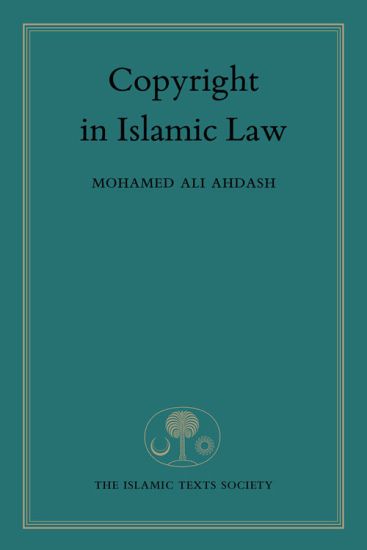
Copyright in Islamic Law

Copyright in Islamic Law

Mohamed Ali Ahdash

The Islamic Texts Society
2016
nidottu
Copyright in Islamic Law is the first work in English to systematically address the ideas of intellectual property and copyright from an Islamic perspective. The author builds a framework from within Shari'a law to address the concepts of intellectual property and copyright. In so doing, he adopts the classical usul al-fiqh approach by firstly defining the key terms associated with the field, namely: right (haq), ownership (milkiyya), wealth (mal), and utility (manfa'a). Dr Ahdash then analyses how these terms are used in the Qur'an and in the Hadith before looking at how the secondary sources of qiyas (analogy), maslaha (public interest), 'urf (custom) and al-qawa'id al-fiqhiyya (legal maxims) can be applied to copyright. The result of this study is a framework wherein the concept of copyright is defined and understood in an Islamic manner. This then gives a consistent approach from which specific rulings can be derived. Copyright in Islamic Law is a ground-breaking study not only within Shari'a law, but also by making a contribution to the on-going debates on copyright in general.
Victory Over Abu Derya

Victory Over Abu Derya

Mohamed Ali

Bloomsbury Qatar Foundation Publishing
2010
nidottu
The pearl fleet has returned from another hard season at sea. The legendary guardian of the Sea Kingdom, Abu Derya, has inflicted a terrible defeat and many ships and sailors have been lost. When Rashids grandmother has a dream in which her grandsons hands are filled with pearls, the villagers are determined to reverse their fortune. But Abu Derya is ready once again to unleash his forces.
Victory Over Abu Derya

Victory Over Abu Derya

Mohamed Ali

Bloomsbury Qatar Foundation Publishing
2010
nidottu
Text in Arabic. The pearl fleet has returned from another hard season at sea. The legendary guardian of the Sea Kingdom, Abu Derya, has inflicted a terrible defeat and many ships and sailors have been lost. When Rashids grandmother has a dream in which her grandsons hands are filled with pearls, the villagers are determined to reverse their fortune. But Abu Derya is ready once again to unleash his forces.
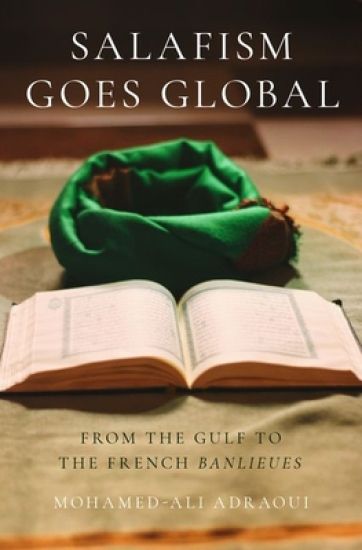
Salafism Goes Global

Salafism Goes Global

Mohamed-Ali Adraoui

Oxford University Press Inc
2020
sidottu
Salafism is a fundamentalist Sunni vision of Islam that is growing in popularity in many countries. In this book, Mohamed-Ali Adraoui focuses on quietist Salafism, which he calls a study in contradictions. Strongly opposed to political action, terrorism, and the overthrow of established regimes, quietist Salafism insists on restructuring Islamic norms with the fervor of a revivalist and fundamentalist ethic. Quietist Salafis seek the purification of culture and religious renewal through a "de-militantization" of the Islamic corpus. Adraoui explores the Salafis' individual trajectories, their relationship with politics, and their vision of the world and of modernity, in order to understand how quietist Salafis negotiate their social identities and religious obligations in the Western context. What does the increasing presence of Islamic movements in the global space mean? Adraoui draws parallels between the French case and that of Muslim countries, and argues that the spread of quietist Salafism is partially a result of the foreign policy of Saudi Arabia. Quietist Salafism, he argues, is resonant of Saudi Arabia's efforts to promote a legitimist, anti-anarchist, and counter-revolutionary conception of Islam, after having long legitimized and reinforced the Islamist forces and Jihadist movements when it was in its geopolitical interests to do so. Salafism Goes Global sheds light on a dynamic of globalization that is taking place in the margins.
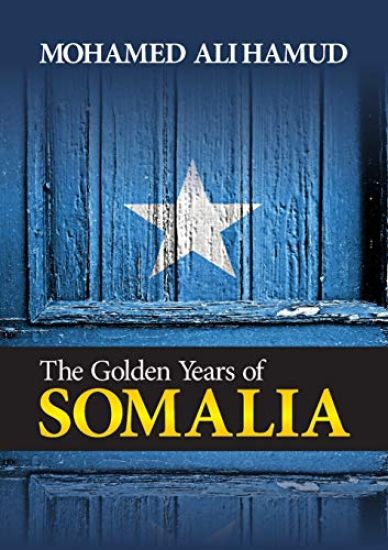
The Golden Years of Somalia

The Golden Years of Somalia

Mohamed Ali Hamud

Heart Space Publications
2014
pokkari
Past cabinet minister and historian, Mohamed Ali Hamud documents the events of Somali history, particularly from 19th century and the 20th century. As a member of parliament, the author has first-hand insight into the happenings of those turbulent times, sometimes exciting and often sad. Mohamed Ali Hamud traces the Sultanates, which were established between 13th and 19th centuries. The work includes major events, such as; the First World War (1914-1918); the Second World War (1939-1945), both of which dramatically changed the history of the world and the region. After the Berlin conference, several European powers began the struggle for Africa. This inspired Mohamed Abdullah Hassan the Dervish leader to begin, what became one of the longest colonial resistance wars ever - a struggled that lasted for twenty years against the foreign invasion in East Africa and was supported across the whole of the Horn of Africa. This book is arranged as follows: The introduction The Sultanates that existed prior to colonization The Potsdam conference The European powers competing for Somalia, Dervish state, established by Sid Mohamed Abdullah Hassan in 1900 Somalia under Trusteeship Somalia's Independence in 1960 The Golden years of Somalia from 1970-1977 Somalia's lost dignity after the collapse of its Government Somalia's self-destruction The Kuwait crisis and the position of Somali delegation The economic History of Somalia Author Biography