Kirjahaku
Etsi kirjoja tekijän nimen, kirjan nimen tai ISBN:n perusteella.
1000 tulosta hakusanalla Molly K. Varley
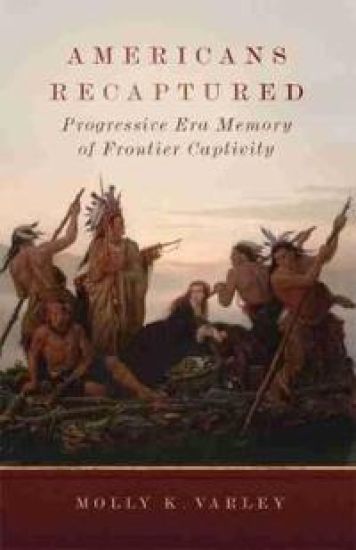
It was on the frontier, where ""civilized"" men and women confronted the ""wilderness,"" that Europeans first became Americans - or so authorities from Frederick Jackson Turner to Theodore Roosevelt claimed. But as the frontier disappeared, Americans believed they needed a new mechanism for fixing their collective identity; and they found it, historian Molly K. Varley suggests, in tales of white Americans held captive by Indians.For Americans in the Progressive Era (1890-1916) these stories of Indian captivity seemed to prove that the violence of national expansion had been justified, that citizens' individual suffering had been heroic, and that settlers' contact with Indians and wilderness still characterized the nation's ""soul."" Furthermore, in the act of memorializing white Indian captives - through statues, parks, and reissued narratives - small towns found a way of inscribing themselves into the national story.By drawing out the connections between actual captivity, captivity narratives, and the memorializing of white captives, Varley shows how Indian captivity became a means for Progressive Era Americans to look forward by looking back. Local boosters and cultural commentators used Indian captivity to define ""Americanism"" and to renew those frontier qualities deemed vital to the survival of the nation in the post-frontier world, such as individualism, bravery, ingenuity, enthusiasm, ""manliness,"" and patriotism. In Varley's analysis of the Progressive Era mentality, contact between white captives and Indians represented a stage in the evolution of a new American people and affirmed the contemporary notion of America as a melting pot.Revealing how the recitation and interpretation of these captivity narratives changed over time - with shifting emphasis on brutality, gender, and ethnographic and historical accuracy - Americans Recaptured shows that tales of Indian captivity were no more fixed than American identity, but were consistently used to give that identity its own useful, ever-evolving shape.
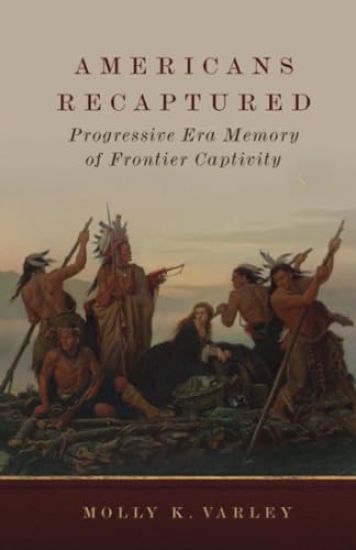
It was on the frontier, where “civilized” men and women confronted the “wilderness,” that Europeans first became Americans—or so authorities from Frederick Jackson Turner to Theodore Roosevelt claimed. But as the frontier disappeared, Americans believed they needed a new mechanism for fixing their collective identity; and they found it, historian Molly K. Varley suggests, in tales of white Americans held captive by Indians.For Americans in the Progressive Era (1890–1916) these stories of Indian captivity seemed to prove that the violence of national expansion had been justified, that citizens’ individual suffering had been heroic, and that settlers’ contact with Indians and wilderness still characterized the nation’s “soul.” Furthermore, in the act of memorializing white Indian captives—through statues, parks, and reissued narratives—small towns found a way of inscribing themselves into the national story.By drawing out the connections between actual captivity, captivity narratives, and the memorializing of white captives, Varley shows how Indian captivity became a means for Progressive Era Americans to look forward by looking back. Local boosters and cultural commentators used Indian captivity to define “Americanism” and to renew those frontier qualities deemed vital to the survival of the nation in the post-frontier world, such as individualism, bravery, ingenuity, enthusiasm, “manliness,” and patriotism. In Varley’s analysis of the Progressive Era mentality, contact between white captives and Indians represented a stage in the evolution of a new American people and affirmed the contemporary notion of America as a melting pot.Revealing how the recitation and interpretation of these captivity narratives changed over time—with shifting emphasis on brutality, gender, and ethnographic and historical accuracy—Americans Recaptured shows that tales of Indian captivity were no more fixed than American identity, but were consistently used to give that identity its own useful, ever-evolving shape.
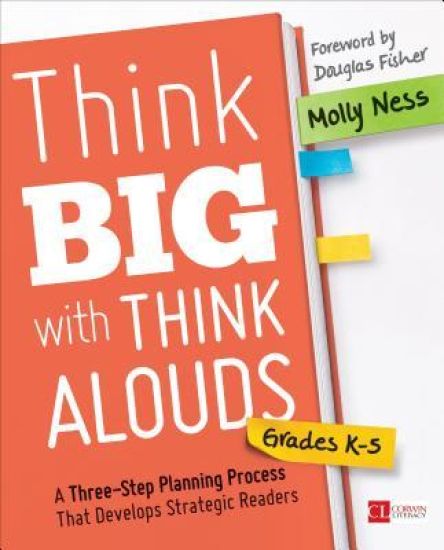
Focusing on just five strategies: asking questions, making inferences, synthesizing, understanding the author's purpose, and monitoring and clarifying, this book uses a simple process for creating dynamic lessons. The first step is the reader noting all the spots that strike them, the second step is to narrow these points down to just the important ones, and finally - writing down what is going to be said in class.
Make the most of every instructional minute with engaging literacy activities Time—or lack thereof—may be the most precious commodity in the classroom. From covering all the necessary curriculum and imparting life skills to attending meetings and answering emails, educators are faced with real challenges when there never seems to be enough time to do it all. Although teachers don’t have the power to create more minutes in the school day, they do have the power to be effective and efficient with the time given. Molly Ness asks teachers first to examine their use of time in the classroom in order to make more space for literacy. She then introduces 40 innovative activities designed to replace seatwork. These literacy-rich alternatives for classroom transitions are presented alongside Research on instructional time in K–5 classrooms Strategies for how to maximize every minute of instructionSuggestions for improving efficiency to expand independent reading and writing timeReflective practices to help teachers examine how they use the time they have The instructional day is ripe for redesign with a thoughtful and authentic time audit. Every Minute Matters guides educators through that process by outlining literacy-rich activities to optimize transitional times and minimize lost instructional minutes.
Companion Guide for Speech & Debate Coaches
Molly K. Beck; Amy J. Johnson; Shawn F. Briscoe
My Debate Resources
2017
nidottu
Written in an engaging and jargon-free style by a team of international and interdisciplinary experts, Modern Environments and Human Health demonstrates by example how methods, theoretical approaches, and data from a wide range of disciplines can be used to resolve longstanding questions about the second epidemiological transition. The first book to address the subject from a multi-regional, comparative, and interdisciplinary perspective, Modern Environments and Human Health is a valuable resource for students and academics in biological anthropology, economics, history, public health, demography, and epidemiology.
Using Economic Incentives to Regulate Toxic Substances
Molly K. Macauley; Michael D. Bowes; Karen L. Palmer
Routledge
2017
sidottu
Using case studies, the authors evaluate the potential attractiveness of incentive-based policies for the regulation of four specific toxic substances: chlorinated solvents, formaldehyde, cadmium, and brominated flame retardants. Originally published in 1992, the authors provide a compelling demonstration of the role of case studies in determining the appropriate regulatory approach for the specific toxic substances. This is a valuable title for students concerned with environmental issues and policy making.
Using Economic Incentives to Regulate Toxic Substances
Molly K. Macauley; Michael D. Bowes; Karen L. Palmer
Routledge
2018
nidottu
Using case studies, the authors evaluate the potential attractiveness of incentive-based policies for the regulation of four specific toxic substances: chlorinated solvents, formaldehyde, cadmium, and brominated flame retardants. Originally published in 1992, the authors provide a compelling demonstration of the role of case studies in determining the appropriate regulatory approach for the specific toxic substances. This is a valuable title for students concerned with environmental issues and policy making.
Understanding the Impact of Cultural Diversity on Organizations
Molly K Moon
Biblioscholar
2012
pokkari
App Development Recipes for iOS and watchOS explores the technical side of app development with tips and tricks to avoid those little things that become big frustrations, outside of the realm of development, causing many people to throw up their hands and say “It’s just not worth the hassle!” The experiential nature of this work sets it apart from other iOS and watchOS books. Even if you are a developer who is completely new to Swift, iOS or watchOS, you’ll find the right experienced-based answers to important questions like “Why do I need version control?”, “Why is testing so important?” and more specific problems directly related to iOS and watchOS development with Swift. We discover and summarize the most common problems and derive the solutions; not just a short answer and screenshot, but a systematic, logical derivation, that is, how we got to the solution. After the introductory basics, each chapter delivers a problem statement and a solution. The experienced developer may, without losing anything, skip to whatever problem with which they are currently dealing. At the same time, we guide the less experienced developer through the process with focus on solving problems along the way. What you will learn:iOS career options for the new developerWorking with Source Code and Version ControlHow to work with iOS accessory devicesUnderstanding development methodologies such as Agile/ScrumUser Experience Development and UI ToolsUnit, UI, and Beta TestingPublishing your workWho this book is for:Developers who need to find specific solutions to common problems in developing apps for iOS and watchOS.
The Sleepover: A Steilyn Story
Molly K. Martin
Createspace Independent Publishing Platform
2018
nidottu
Tales From Tennyson
Alfred Tennyson Baron Tennyson; Molly K Bellew; H S Campbell
Anson Street Press
2025
pokkari
Tales From Tennyson
Alfred Tennyson Baron Tennyson; Molly K Bellew; H S Campbell
Anson Street Press
2025
sidottu
The World Blind Union Guide to the Marrakesh Treaty
Laurence R. Helfer; Molly K. Land; Ruth L. Okediji; Jerome H. Reichman
Oxford University Press Inc
2017
sidottu
"The Marrakesh Treaty to Facilitate Access to Published Works for Persons Who Are Blind, Visually Impaired, or Otherwise Print Disabled" is a watershed development in the fields of intellectual property and human rights. As the first international legal instrument to establish mandatory exceptions to copyright, the Marrakesh Treaty uses the legal and policy tools of copyright to advance human rights. The World Blind Union Guide to the Marrakesh Treaty offers a comprehensive framework for interpreting the Treaty in ways that enhance the ability of print-disabled individuals to create, read, and share books and cultural materials in accessible formats. The Guide also provides specific recommendations to government officials, policymakers, and disability rights organizations involved with implementing the Treaty's provisions in national law.
The World Blind Union Guide to the Marrakesh Treaty
Laurence R. Helfer; Molly K. Land; Ruth L. Okediji; Jerome H. Reichman
Oxford University Press Inc
2017
nidottu
"The Marrakesh Treaty to Facilitate Access to Published Works for Persons Who Are Blind, Visually Impaired, or Otherwise Print Disabled" is a watershed development in the fields of intellectual property and human rights. As the first international legal instrument to establish mandatory exceptions to copyright, the Marrakesh Treaty uses the legal and policy tools of copyright to advance human rights. The World Blind Union Guide to the Marrakesh Treaty offers a comprehensive framework for interpreting the Treaty in ways that enhance the ability of print-disabled individuals to create, read, and share books and cultural materials in accessible formats. The Guide also provides specific recommendations to government officials, policymakers, and disability rights organizations involved with implementing the Treaty's provisions in national law.
Molly Letter Tracing for Kids Trace my Name Workbook: Tracing Books for Kids ages 3 - 5 Pre-K & Kindergarten Practice Workbook
Molly Books
Createspace Independent Publishing Platform
2018
nidottu
MOLLY Name Tracing Workbook - Preschoolers Kindergarten Practice Workbook - Toddlers Writing Notebook - Learn How to Write MOLLY - Preschoolers Activities Teaching your child the basics of writing is a difficult task especially if he or she is full of energy and finds it more difficult to focus. In order to give him a push in the first years of school or kindergartner, we are presenting a revolutionary way of teaching your baby the basics of the alphabet: the name tracing workbook for children. Why our workbook? The name tracing workbook has been designed specifically to teach children the basic of spelling and writing. By learning to write his own name, your child will develop the abilities and skills needed in the first years of schools while having fun. The 100 pages activity book is the perfect choice if you are searching to invest in your child's education from the beginning so don't hesitate and get him the only workbook he needs LEARNING THE FIRST LETTERS teaching your toddler the first letters and how to spell his or her name is difficult, which is why we have designed a special workbook that will make the learning process easier and a lot more fun, adding to the baby's educational fund. PERSONALIZED WORKING: the name is the first word any child should learn how to spell, but it is almost impossible to find special help for that task. MOLLY Name Tracing Workbook is divided in 12 themed chapters that will teach your toddler how to spell his or her name in a fun and interactive way. WHAT IT CONTAINS: MOLLY Name Tracing Workbook counts no less than 100 pages divided in 12 themed sheets that propose recognition activities, letter tracing practice and letter games, that are sure to teach your child the basics of writing and spelling. FOR TODDLERS: MOLLY Name Tracing Workbook is made especially for children aged 3 to 6 so your son or daughter will be well prepared for both kindergarten and first grade Learning the alphabet will be a piece of cake if your kid will already have the foundation letter tracing so why not give him a head start in school. THE PERFECT GIFT: offering a present to a toddler that is both fun and parents-approved is an almost impossible task, but the name tracing workbook has it all: it is educational, personalized and made especially for youngsters ages 3 to 6 so, if you're trying to bring a smile on a kid's face, this is it
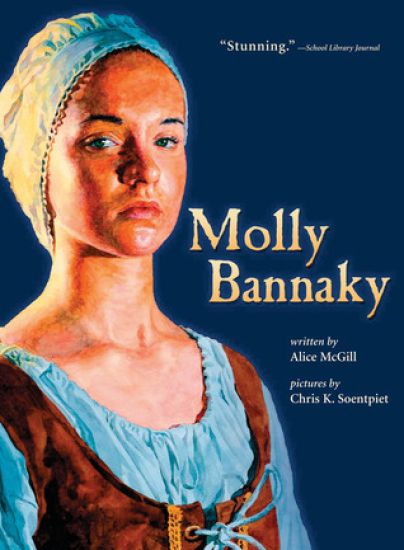
On a cold gray morning in 1683, Molly Walsh sat on a stool tugging at the udder of an obstinate cow. When she spilled the milk, she was brought before the court for stealing. Because she could read, Molly escaped the typicalpunishment of death on the gallows. At the age of seventeen, the English dairymaid was exiled from her country and sentenced to work as an indentured servant in British Colonial America. Molly worked for a planter in Maryland for seven long years. Then she was given an ox hitched to a cart, some supplies-and her freedom. That a lone woman should stake land was unheard of. That she would marry an African slave was even more so. Yet Molly prospered, and with her husband Bannaky, she turned a one-room cabin in the wilderness into a thriving one hundred-acre farm. And one day she had the pleasure of writing her new grandson's name in her cherished Bible: Benjamin Banneker.