
Kirjahaku
Etsi kirjoja tekijän nimen, kirjan nimen tai ISBN:n perusteella.
1000 tulosta hakusanalla Morgan J. Muir

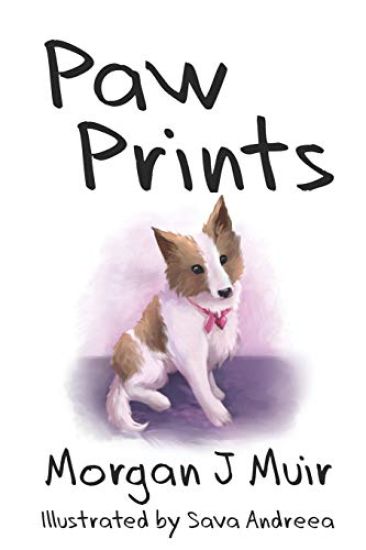
"They say that pets will leave paw prints on my heart. But I don't think I believe them." Paw Prints is a poignant, illustrated story of loss and grief. With full color illustrations on each page, it follows a woman's contemplation on the loss of her young dog as she takes one last walk through their morning routine.

What is eternity without love? All Mariah Alvarez wants is to help run her father's merchant business in Maracaibo, quietly marry her fiance Miguel, and not get tangled up in any more intrigue. Unfortunately, fate has other ideas, and a faceless menace haunts her dreams, promising suffering and death to those she loves.First her father disappears, then Miguel. Though visions of their deaths mock her, Mariah refuses to believe them. Determined to fix things, she sets out into the wild northern corner of South America and comes face to face with an ancient evil-two vampires warring for dominance of the continent. She'll do anything to reunite her family, even seek help from a vampire. But predators don't ally with prey. Mariah must choose-become his for a chance to save the man she loves, or die. Amaranth Dawn is a historical paranormal fantasy with adult themes, magic, romance, and vampires, set in colonial Maracaibo and the Guajira Peninsula. It is the 1st book of a completed trilogy, and ends in a cliffhanger. If you enjoy genre-bending fiction with lush imagery and fully developed characters, then this book is for you



Master an Approach Based on Fire Safety Goals, Fire Scenarios, and the Assessment of Design AlternativesPerformance-Based Fire Safety Design demonstrates how fire science can be used to solve fire protection problems in the built environment. It also provides an understanding of the performance-based design process, deterministic and risk-based analysis techniques, development of design fire scenarios, trial design development and analysis, and building lifecycle management. Develop a Strategy That Meets the Fire Safety Goals for a BuildingTopics addressed include designing to protect people from fire, design of detection systems, smoke control systems and structural fire resistance, addressing computational and design uncertainty, and fire testing to support design development or evaluation. Identifies key attributes of performance-based designReviews the advantages and disadvantages of performance-based design over specification-based prescriptive designProvides a series of steps offering a framework/process for performance-based design Performance-Based Fire Safety Design focuses on the development and application of performance-based fire safety design approaches. Written by leading experts in the field, this text addresses the unique features and uses of a building and helps you gain a better understanding of how a building will perform in the event of a fire.

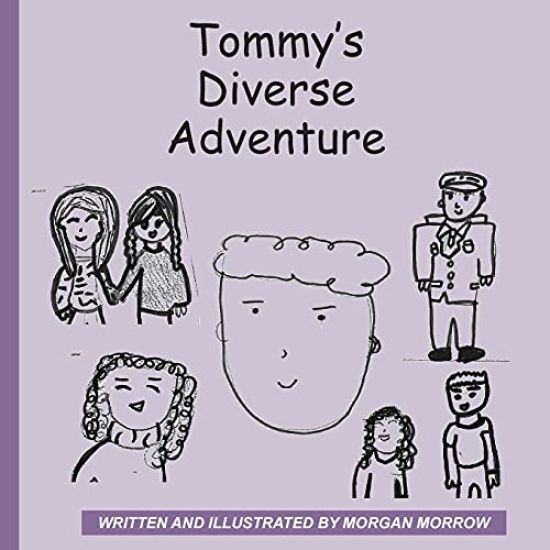
Tommy is a nice boy, but he doesn't have any friends. He wonders if it is because he is different; Tommy wears hearing aids. But instead of getting angry or upset, Tommy decides to find out more about the people around him. He genuinely wants to get to know what makes everyone he meets unique. In doing so, Tommy learns that everyone is different in one way or another, that being different is okay, and that he's just fine with his differences. And that's what diversity is all about, Tommy figures out. Morgan Morrow, a teenager from Columbus, Indiana, tells the tale of Tommy and his newfound friends in this book she did for her high school senior project. Morgan also did all the illustrations. She hopes this book will help anyone who feels they're not okay because of their differences or is having a rough time fitting in or feeling accepted. She says, "Be yourself Love yourself no matter what "

In a kingdom cursed to turn people into dragons, two teens from opposite worlds, each with nothing left to lose, form an uneasy alliance. Told in dual perspectives, this sweeping debut follows their search for redemption and the slow-burning bond that could save them both. Every month, the kingdom of Florent braces for the Ignition: solar event that turns ordinary humans into vicious dragon shifters. And anyone can be a dragon's next victim. Claire knows this all too well because the Ignition consumed her and her father, her town, and the life she thought she'd have. Now, she's scraping by on her wits as part of a sisterhood of thieves--lying, stealing, her heart locked tight--until she tracks down a disgraced dragon slayer who may be the one person who can give her back the life she once had. Abel has been shunned by the prestigious Slayers Guild for conducting research that's too...unorthodox to condone. But there's no one Claire trusts more than a rulebreaker, and that research might be the one thing that could help her. So when Abel reveals he is hunting again, Claire tries to hire him under false pretenses. Abel, however, is reluctant to accept a job from a criminal, no matter how charming she is. And yet...he really needs the money. Together, Claire and Abel will race through Florent and uncover dangerous secrets in their quests for forgiveness--and survival. But that knowledge may cost them the very thing they've grown desperate to protect: each other.
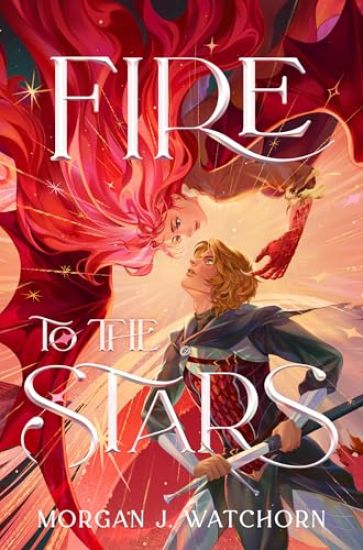
In a kingdom cursed to turn people into dragons, two teens from opposite worlds, each with nothing left to lose, form an uneasy alliance. Told in dual perspectives, this sweeping debut follows their search for redemption and the slow-burning bond that could save them both. Every month, the kingdom of Florent braces for the Ignition: solar event that turns ordinary humans into vicious dragon shifters. And anyone can be a dragon's next victim. Claire knows this all too well because the Ignition consumed her and her father, her town, and the life she thought she'd have. Now, she's scraping by on her wits as part of a sisterhood of thieves--lying, stealing, her heart locked tight--until she tracks down a disgraced dragon slayer who may be the one person who can give her back the life she once had. Abel has been shunned by the prestigious Slayers Guild for conducting research that's too...unorthodox to condone. But there's no one Claire trusts more than a rulebreaker, and that research might be the one thing that could help her. So when Abel reveals he is hunting again, Claire tries to hire him under false pretenses. Abel, however, is reluctant to accept a job from a criminal, no matter how charming she is. And yet...he really needs the money. Together, Claire and Abel will race through Florent and uncover dangerous secrets in their quests for forgiveness--and survival. But that knowledge may cost them the very thing they've grown desperate to protect: each other.

This intellectual history of Standard Swahili explores the long-term, intertwined processes of standard making and community creation in the historical, political, and cultural contexts of East Africa and beyond. Morgan J. Robinson argues that the portability of Standard Swahili has contributed to its wide use not only across the African continent but also around the globe. The book pivots on the question of whether standardized versions of African languages have empowered or oppressed. It is inevitable that the selection and promotion of one version of a language as standard—a move typically associated with missionaries and colonial regimes—negatively affected those whose language was suddenly deemed nonstandard. Before reconciling the consequences of codification, however, Robinson argues that one must seek to understand the process itself. The history of Standard Swahili demonstrates how events, people, and ideas move rapidly and sometimes surprisingly between linguistic, political, social, or temporal categories. Robinson conducted her research in Zanzibar, mainland Tanzania, and the United Kingdom. Organized around periods of conversation, translation, and codification from 1864 to 1964, the book focuses on the intellectual history of Swahili's standardization. The story begins in mid-nineteenth-century Zanzibar, home of missionaries, formerly enslaved students, and a printing press, and concludes on the mainland in the mid-twentieth century, as nationalist movements added Standard Swahili to their anticolonial and nation-building toolkits. This outcome was not predetermined, however, and Robinson offers a new context for the strong emotions that the language continues to evoke in East Africa. The history of Standard Swahili is not one story, but rather the connected stories of multiple communities contributing to the production of knowledge. The book reflects this multiplicity by including the narratives of colonial officials and anticolonial nationalists; East African clerks, students, newspaper editors, editorialists, and their readers; and library patrons, academic linguists, formerly enslaved children, and missionary preachers. The book reconstructs these stories on their own terms and reintegrates them into a new composite that demonstrates the central place of language in the history of East Africa and beyond.

This intellectual history of Standard Swahili explores the long-term, intertwined processes of standard making and community creation in the historical, political, and cultural contexts of East Africa and beyond. Morgan J. Robinson argues that the portability of Standard Swahili has contributed to its wide use not only across the African continent but also around the globe. The book pivots on the question of whether standardized versions of African languages have empowered or oppressed. It is inevitable that the selection and promotion of one version of a language as standard—a move typically associated with missionaries and colonial regimes—negatively affected those whose language was suddenly deemed nonstandard. Before reconciling the consequences of codification, however, Robinson argues that one must seek to understand the process itself. The history of Standard Swahili demonstrates how events, people, and ideas move rapidly and sometimes surprisingly between linguistic, political, social, or temporal categories. Robinson conducted her research in Zanzibar, mainland Tanzania, and the United Kingdom. Organized around periods of conversation, translation, and codification from 1864 to 1964, the book focuses on the intellectual history of Swahili's standardization. The story begins in mid-nineteenth-century Zanzibar, home of missionaries, formerly enslaved students, and a printing press, and concludes on the mainland in the mid-twentieth century, as nationalist movements added Standard Swahili to their anticolonial and nation-building toolkits. This outcome was not predetermined, however, and Robinson offers a new context for the strong emotions that the language continues to evoke in East Africa. The history of Standard Swahili is not one story, but rather the connected stories of multiple communities contributing to the production of knowledge. The book reflects this multiplicity by including the narratives of colonial officials and anticolonial nationalists; East African clerks, students, newspaper editors, editorialists, and their readers; and library patrons, academic linguists, formerly enslaved children, and missionary preachers. The book reconstructs these stories on their own terms and reintegrates them into a new composite that demonstrates the central place of language in the history of East Africa and beyond.

This work has been selected by scholars as being culturally important and is part of the knowledge base of civilization as we know it.This work is in the public domain in the United States of America, and possibly other nations. Within the United States, you may freely copy and distribute this work, as no entity (individual or corporate) has a copyright on the body of the work.Scholars believe, and we concur, that this work is important enough to be preserved, reproduced, and made generally available to the public. To ensure a quality reading experience, this work has been proofread and republished using a format that seamlessly blends the original graphical elements with text in an easy-to-read typeface.We appreciate your support of the preservation process, and thank you for being an important part of keeping this knowledge alive and relevant.

This work has been selected by scholars as being culturally important and is part of the knowledge base of civilization as we know it.This work is in the public domain in the United States of America, and possibly other nations. Within the United States, you may freely copy and distribute this work, as no entity (individual or corporate) has a copyright on the body of the work.Scholars believe, and we concur, that this work is important enough to be preserved, reproduced, and made generally available to the public. To ensure a quality reading experience, this work has been proofread and republished using a format that seamlessly blends the original graphical elements with text in an easy-to-read typeface.We appreciate your support of the preservation process, and thank you for being an important part of keeping this knowledge alive and relevant.


Performance-Based Fire Safety Design
Morgan J. Hurley; Eric R. Rosenbaum
Apple Academic Press Inc.
2015
sidottu
Master an Approach Based on Fire Safety Goals, Fire Scenarios, and the Assessment of Design AlternativesPerformance-Based Fire Safety Design demonstrates how fire science can be used to solve fire protection problems in the built environment. It also provides an understanding of the performance-based design process, deterministic and risk-based analysis techniques, development of design fire scenarios, trial design development and analysis, and building lifecycle management. Develop a Strategy That Meets the Fire Safety Goals for a BuildingTopics addressed include designing to protect people from fire, design of detection systems, smoke control systems and structural fire resistance, addressing computational and design uncertainty, and fire testing to support design development or evaluation. Identifies key attributes of performance-based designReviews the advantages and disadvantages of performance-based design over specification-based prescriptive designProvides a series of steps offering a framework/process for performance-based designPerformance-Based Fire Safety Design focuses on the development and application of performance-based fire safety design approaches. Written by leading experts in the field, this text addresses the unique features and uses of a building and helps you gain a better understanding of how a building will perform in the event of a fire.
Foreclosures of Subprime Mortgages in Chicago: Analyzing the Role of Predatory Lending Practices
Morgan J. Rose
Createspace Independent Publishing Platform
2014
nidottu



With unguarded humor and honesty, Morgan J. Bolt balances his experiences as a cancer patient with the mind-set, faith, and theology that helped him both to endure his prognosis and treatments and to relish the opportunities that came along the way.Just a few months after graduating from college, Morgan Bolt was diagnosed with desmoplastic small round cell tumors (DSRCT), a rare pediatric cancer. Over the next four years, together with his wife, Christina, Morgan endured aggressive radiation and chemo treatments, multiple surgeries, and the reality of confronting his own mortality.Throughout Morgan's memoir of his journey with DSRCT, he breaks down common preconceptions about cancer and cancer patients, including why people get sick, prejudices facing disabled people, why prayer is weird, and how the church both supported and abandoned him in his illness. The most vital of these preconceptions is also the first: cancer is not evil. Cancer just is.Barely a month after publication, Morgan lost his battle with cancer. His message is alive and timeless.Praise for Cancer Just Is"I'm better off because I encountered this book, and you will be too. Read it, consume it, and hold on to that love. For the love that made you will indeed be the love that brings you, and all of us, home." -Rob W. Lee, author of Stained-Glass Millennials and A Sin By Any Other Name"In this gripping narrative, Morgan Bolt speaks with such an honest, eloquent, and compelling voice that it must join the chorus of America's most memorable literary narrators. But instead of rafting the Mississippi River, exploring the West, or wandering New York, Bolt's journey takes him into the harrowing clinical corridors of a young cancer patient prematurely confronting death. His powerful account of that pilgrimage, however, is a bittersweet celebration of a life, told with disarming humor, unflinching candor, and a remarkable wisdom and faith that will be a gift to all who listen." -Kerry Temple, editor of Notre Dame Magazine