Kirjojen hintavertailu. Mukana 11 244 527 kirjaa ja 12 kauppaa.

Kirjahaku

Etsi kirjoja tekijän nimen, kirjan nimen tai ISBN:n perusteella.

1000 tulosta hakusanalla Muhammad b. Idris al-Shafi'i

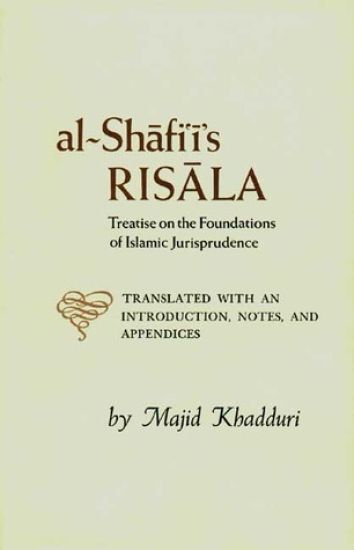
Al-Shafi'i's Risala

Al-Shafi'i's Risala

Muhammad b. Idris al-Shafi'i

The Islamic Texts Society
1987
sidottu
Written in the second Islamic century by al-Imam al-Shafi'i (d. 204AH/820AD), the founder of one of the four Sunni schools of law, this important work gives the fundamental principles of Islamic jurisprudence and its influence continues to the present day. During the early years of the spread of Islam, the exponents of Islamic legal doctrine were faced with the problems raised by ruling and administering a diverse and rapidly growing empire. In Medina and Kufa, as well as other cities of early Muslim rule, schools of law had to be developed, but it took the genius of Muhammad b. Idris al-Shafi'i, born in the year 150AH/767AD, to establish the principles by which the various legal doctrines could be synthesised into a coherent system. In the 'Risala', which laid down the basis for such a synthesis, al-Shafi'i established the overriding authority, next only to the Qur'an, of the 'Sunna' or example of the Prophet Muhammad as transmitted in the traditions.
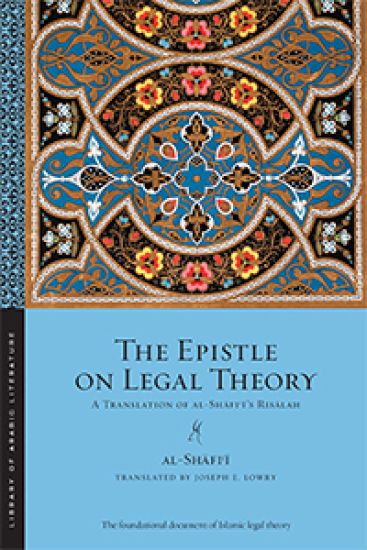
The Epistle on Legal Theory

The Epistle on Legal Theory

Muhammad ibn Idris al-Shafi'i

New York University Press
2013
sidottu
A modern translation of a foundational document of Islamic jurisprudence The Epistle on Legal Theory is the oldest surviving Arabic work on Islamic legal theory and the foundational document of Islamic jurisprudence. Its author, Muhammad ibn Idris al-Shafi'i (d. 204/820), was the eponym of the Shafi'i school of legal thought, one of the four rites in Sunni Islam. This fascinating work offers the first systematic treatment in Arabic of key issues in Islamic legal thought. These include a survey of the importance of Arabic as the language of revelation, principles of textual interpretation to be applied to the Qur'an and prophetic Traditions, techniques for harmonizing apparently contradictory precedents, legal epistemology, rules of inference, and discussions of when legal interpretation is required. The author illustrates his theoretical claims with numerous examples drawn from nearly all areas of Islamic law, including ritual law, commercial law, tort law, and criminal law. The text thus provides an important window into both Islamic law and legal thought in particular and early Islamic intellectual history in general. The Arabic text has been established on the basis of the two most important critical editions and includes variants in the notes, while the English text is a new translation by a leading scholar of Shafi'i and his thought. The Epistle on Legal Theory represents one of the earliest complete works on Islamic law, one that is centrally important for the formation of Islamic legal thought and the Islamic legal tradition. A bilingual Arabic-English edition.
The Epistle on Legal Theory

The Epistle on Legal Theory

Muhammad ibn Idris al-Shafi'i

New York University Press
2015
pokkari
A modern translation of a foundational document of Islamic jurisprudence The Epistle on Legal Theory is the oldest surviving Arabic work on Islamic legal theory and the foundational document of Islamic jurisprudence. Its author, Muhammad ibn Idris al-Shafi'i (d. 204/820), was the eponym of the Shafi'i school of legal thought, one of the four rites in Sunni Islam. This fascinating work offers the first systematic treatment in Arabic of key issues in Islamic legal thought. These include a survey of the importance of Arabic as the language of revelation, principles of textual interpretation to be applied to the Qur'an and prophetic Traditions, techniques for harmonizing apparently contradictory precedents, legal epistemology, rules of inference, and discussions of when legal interpretation is required. The author illustrates his theoretical claims with numerous examples drawn from nearly all areas of Islamic law, including ritual law, commercial law, tort law, and criminal law. The text thus provides an important window into both Islamic law and legal thought in particular and early Islamic intellectual history in general. The Arabic text has been established on the basis of the two most important critical editions and includes variants in the notes, while the English text is a new translation by a leading scholar of Shafi'i and his thought. The Epistle on Legal Theory represents one of the earliest complete works on Islamic law, one that is centrally important for the formation of Islamic legal thought and the Islamic legal tradition. A bilingual Arabic-English edition.
Tales of Prophet Idris (?????? ?????) Bilingual Edition English and Russian
Prophet Idris (Enoch) is an ancient prophet and patriarch mentioned in the Qur'an, whom Muslims believe was the second prophet after Adam. Islamic tradition has unanimously identified Idris with the biblical Enoch, although many Muslim scholars of the classical and medieval periods also held that Idris and Hermes Trismegistus were the same person. He is described in the Qur'an as "trustworthy" and "patient" and the Qur'an also says that he was "exalted to a high station," Because of this and other parallels, traditionally Idris has been identified with the Biblical Enoch, and Islamic tradition usually places Idris in the early Generations of Adam, and considers him one of the oldest prophets mentioned in the Qur'an, placing him between Adam and Noah. Idris' unique status inspired many future traditions and stories surrounding him in Islamic lore. According to hadith, narrated by Malik ibn Anas and found in Sahih Muslim, it is said that on Muhammad's Night Journey, he encountered Idris in the fourth heaven. The traditions that have developed around the figure of Idris have given him the scope of a prophet as well as a philosopher and mystic, and many later Muslim mystics, or Sufis, including Ruzbihan Baqli and Ibn Arabi, also mentioned having encountered Idris in their spiritual visions. Idris's father was Yarid and his mother was Barkanah. Idris's wife was a woman named Aadanah. Idris also had a son whose name was Methuselah; who would eventually be the grandfather of Prophet Nuh (Noah). This means that Idris was the great-grandfather of Noah. Idris was born in Babylon, a city in present-day Iraq. Before he received the Revelation, he followed the rules revealed to Prophet Seth, the son of Adam. When Idris grew older, Allah bestowed Prophethood on him. During his lifetime all the people were Muslim; no one associated partners with Allah.