Kirjojen hintavertailu. Mukana 11 244 527 kirjaa ja 12 kauppaa.

Kirjahaku

Etsi kirjoja tekijän nimen, kirjan nimen tai ISBN:n perusteella.

461 tulosta hakusanalla Muhsin Qara'ati

Commentary of Surah al-Najm

Commentary of Surah al-Najm

Muhsin Qara'ati

Islamic Publishing House
2023
pokkari
Immerse yourself in the Divine Light and Splendor of the Words of Allāh and spend a few minutes with the Noble Quran. A book which has transformed the lives of billions of people on this Earth since its Divine descent over 1,400 years ago, still plays a prominent role in the lives of close to 2 billion people across this globe. See what the Quran has to say about day to day life, human interaction, economics, political theories, spirituality, worship and countless other practical topics. This work provides a unique look into the Noble Quran by presenting a commentary meant to stimulate the mind of the reader to get them to think about what Allāh is saying to them. In addition to commenting on the verses, the author provides what we have termed "Take Away Points" which are meant to pique the curiosity of the reader and to get them to think about what they are reading of the Noble Quran - making this a book which is applicable for all times and places. This booklet features the commentary of Surah al-Najm - #53 of the Quran.
Giant Resonances

Giant Resonances

Muhsin N. Harakeh; Adriaan van der Woude

Oxford University Press
2001
sidottu
Giant resonances are collective excitations of the atomic nucleus, a typical quantum many-body system. The study of these fundamental modes has in many respects contributed to our understanding of the bulk behaviour of the nucleus and of the dynamics of non-equilibrium excitations. Although the phenomenon of giant resonances has been known for more than 50 years, a large amount of information has been obtained in the last 10 years. This book gives an up-to-date, comprehensive account of our present knowledge of giant resonances. It presents the experimental facts and the techniques used to obtain that information, describes how these facts fit into theoretical concepts and how this allows to determine various nuclear properties which are otherwise difficult to obtain. Included as an introduction is an overview of the main facts, a short history of how the field has developed in the course of time, and a discussion of future perspectives.
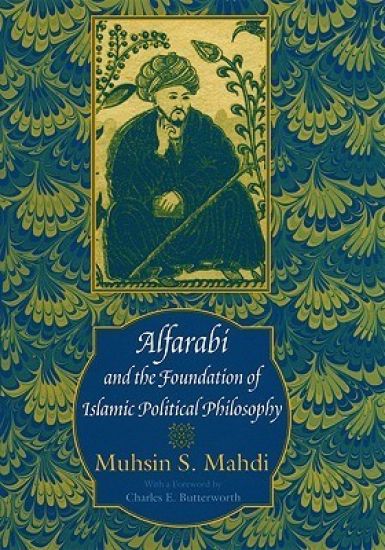
Alfarabi and the Foundation of Islamic Political Philosophy

Alfarabi and the Foundation of Islamic Political Philosophy

Muhsin S. Mahdi

University of Chicago Press
2010
nidottu
In this work, Muhsin S. Mahdi - widely regarded as the preeminent scholar of Islamic political thought - distills more than four decades of research to offer an authoritative analysis of the work of Alfarabi, the founder of Islamic political philosophy. Mahdi, who also brought to light writings of Alfarabi that had long been presumed lost or were not even known, presents this great thinker as a philosopher who sought to lay the foundations for a new understanding of revealed religion and its relation to the tradition of political philosophy. This philosophical engagement with the writings of and about Alfarabi has become essential reading for anyone interested in medieval political philosophy.
The Islamic Context of The Thousand and One Nights

The Islamic Context of The Thousand and One Nights

Muhsin al-Musawi

Columbia University Press
2009
sidottu
In this fascinating study, Muhsin J. al-Musawi shows how deeply Islamic heritage and culture is embedded in the tales of The Thousand and One Nights (known to many as the Arabian Nights) and how this integration invites readers to make an Islamic milieu. Conservative Islam dismisses The Thousand and One Nights as facile popular literature, and liberal views disregard the rich Islamic context of the text. Approaching the text with a fresh and unbiased eye, al-Musawi reads the tales against Islamic schools of thought and theology and recovers persuasive historical evidence to reveal the cultural and religious struggle over Islam that drives the book's narrative tension and binds its seemingly fragmented stories. Written by a number of authors over a stretch of centuries, The Thousand and One Nights depicts a burgeoning, urban Islamic culture in all its variety and complexity. As al-Musawi demonstrates, the tales document their own places and periods of production, reflecting the Islamic individual's growing exposure to a number of entertainments and temptations and their conflict with the obligations of faith. Aimed at a diverse audience, these stories follow a narrative arc that begins with corruption and ends with redemption, conforming to a paradigm that concurs with the sociological and religious concerns of Islam and the Islamic state. By emphasizing Islam in his analysis of these entertaining and instructional tales, al-Musawi not only illuminates the work's consistent equation between art and life, but he also sheds light on its underlying narrative power. His study offers a brilliant portrait of medieval Islam as well, especially its social, political, and economic institutions and its unique practices of storytelling.
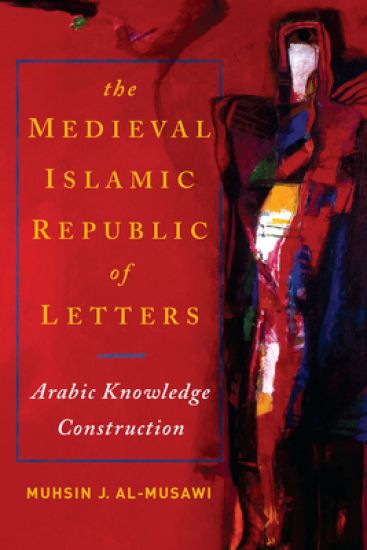
The Medieval Islamic Republic of Letters

The Medieval Islamic Republic of Letters

Muhsin J. al-Musawi

University of Notre Dame Press
2015
nidottu
In The Medieval Islamic Republic of Letters: Arabic Knowledge Construction, Muhsin J. al-Musawi offers a groundbreaking study of literary heritage in the medieval and premodern Islamic period. Al-Musawi challenges the paradigm that considers the period from the fall of Baghdad in 1258 to the collapse of the Ottoman Empire in 1919 as an "Age of Decay" followed by an "Awakening" (al-nahdah). His sweeping synthesis debunks this view by carefully documenting a "republic of letters" in the Islamic Near East and South Asia that was vibrant and dynamic, one varying considerably from the generally accepted image of a centuries-long period of intellectual and literary stagnation. Al-Musawi argues that the massive cultural production of the period was not a random enterprise: instead, it arose due to an emerging and growing body of readers across Islamic lands who needed compendiums, lexicons, and commentaries to engage with scholars and writers. Scholars, too, developed their own networks to respond to each other and to their readers. Rather than addressing only the elite, this culture industry supported a common readership that enlarged the creative space and audience for prose and poetry in standard and colloquial Arabic. Works by craftsmen, artisans, and women appeared side by side with those by distinguished scholars and poets. Through careful exploration of these networks, The Medieval Islamic Republic of Letters makes use of relevant theoretical frameworks to situate this culture in the ongoing discussion of non-Islamic and European efforts. Thorough, theoretically rigorous, and nuanced, al-Musawi's book is an original contribution to a range of fields in Arabic and Islamic cultural history of the twelfth to eighteenth centuries.
Arabic Disclosures

Arabic Disclosures

Muhsin J. al-Musawi

UNIVERSITY OF NOTRE DAME PRESS
2022
sidottu
Arabic Disclosures presents readers with a comparative analysis of Arabic postcolonial autobiographical writing. In Arabic Disclosures Muhsin J. al-Musawi investigates the genre of autobiography within the modern tradition of Arabic literary writing from the early 1920s to the present. Al-Musawi notes in the introduction that the purpose of this work is not to survey the entirety of autobiographical writing in modern Arabic but rather to apply a rigorously identified set of characteristics and approaches culled from a variety of theoretical studies of the genre to a particular set of autobiographical works in Arabic, selected for their different methodologies, varying historical contexts within which they were conceived and written, and the equally varied lives experienced by the authors involved. The book begins in the larger context of autobiographical space, where the theories of Bourdieu, Bachelard, Bakhtin, and Lefebvre are laid out, and then considers the multiple ways in which a postcolonial awareness of space has impacted the writings of many of the authors whose works are examined. Organized chronologically, al-Musawi begins with the earliest modern example of autobiographical work in ?aha ?usayn's book, translated into English as The Stream of Days. Al-Musawi studies some of the major pioneers in the development of modern Arabic thought and literary expression: Jurji Zaydan, Mik?a?il Nu?aymah, A?mad Amin, Salamah Musa, Sayyid Qu?b, and untranslated works by the prominent critic and scholar ?ammadi ?ammud, the novelist ?Aliah Mamdu?, and others. He also examines the autobiographies of a number of women, including Nawal al-Sa?dawi and Fadwa ?uqan, and fiction writers. The book draws a map of Arab thought and culture in its multiple engagements with other cultures and will be useful for scholars and students of comparative literature, Arabic studies, and Middle Eastern studies, intellectual thought, and history.
The Medieval Islamic Republic of Letters

The Medieval Islamic Republic of Letters

Muhsin J. al-Musawi

UNIVERSITY OF NOTRE DAME PRESS
2022
sidottu
In The Medieval Islamic Republic of Letters: Arabic Knowledge Construction, Muhsin J. al-Musawi offers a groundbreaking study of literary heritage in the medieval and premodern Islamic period. Al-Musawi challenges the paradigm that considers the period from the fall of Baghdad in 1258 to the collapse of the Ottoman Empire in 1919 as an "Age of Decay" followed by an "Awakening" (al-nahdah). His sweeping synthesis debunks this view by carefully documenting a "republic of letters" in the Islamic Near East and South Asia that was vibrant and dynamic, one varying considerably from the generally accepted image of a centuries-long period of intellectual and literary stagnation. Al-Musawi argues that the massive cultural production of the period was not a random enterprise: instead, it arose due to an emerging and growing body of readers across Islamic lands who needed compendiums, lexicons, and commentaries to engage with scholars and writers. Scholars, too, developed their own networks to respond to each other and to their readers. Rather than addressing only the elite, this culture industry supported a common readership that enlarged the creative space and audience for prose and poetry in standard and colloquial Arabic. Works by craftsmen, artisans, and women appeared side by side with those by distinguished scholars and poets. Through careful exploration of these networks, The Medieval Islamic Republic of Letters makes use of relevant theoretical frameworks to situate this culture in the ongoing discussion of non-Islamic and European efforts. Thorough, theoretically rigorous, and nuanced, al-Musawi's book is an original contribution to a range of fields in Arabic and Islamic cultural history of the twelfth to eighteenth centuries.
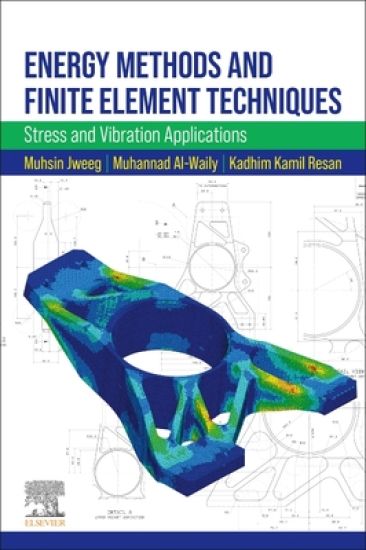
Energy Methods and Finite Element Techniques

Energy Methods and Finite Element Techniques

Muhsin J. Jweeg; Muhannad Al-Waily; Kadhim Kamil Resan

Elsevier - Health Sciences Division
2021
nidottu
Energy Methods and Finite Element Techniques: Stress and Vibration Applications provides readers with a complete understanding of the theory and practice of finite element analysis using energy methods to better understand, predict, and mitigate static stress and vibration in different structural and mechanical configurations. It presents readers with the underlying theory, techniques for implementation, and field-tested applications of these methods using linear ordinary differential equations. Statistical energy analysis and its various applications are covered, and applications discussed include plate problems, bars and beams, plane strain and stress, 3D elasticity problems, vibration problems, and more. Higher order plate and shell elements, steady state heat conduction, and shape function determinations and numerical integration are analyzed as well.
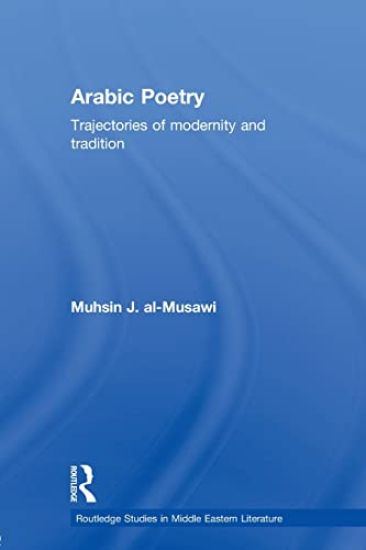
Arabic Poetry

Arabic Poetry

Muhsin J. Al-Musawi

Routledge
2010
nidottu
Since the late 1940s, Arabic poetry has spoken for an Arab conscience, as much as it has debated positions and ideologies, nationally and worldwide. This book tackles issues of modernity and tradition in Arabic poetry as manifested in poetic texts and criticism by poets as participants in transformation and change. It studies the poetic in its complexity, relating to issues of selfhood, individuality, community, religion, ideology, nation, class and gender.Al-Musawi also explores in context issues that have been cursorily noticed or neglected, like Shi’i poetics, Sufism, women’s poetry, and expressions of exilic consciousness. Arabic Poetry employs current literary theory and provides comprehensive coverage of modern and post-modern poetry from the 1950s onwards, making it essential reading for those with interests in Arabic culture and literature and Middle East studies.
Arabic Poetry

Arabic Poetry

Muhsin J. Al-Musawi

Routledge
2006
sidottu
Since the late 1940s, Arabic poetry has spoken for an Arab conscience, as much as it has debated positions and ideologies, nationally and worldwide. This book tackles issues of modernity and tradition in Arabic poetry as manifested in poetic texts and criticism by poets as participants in transformation and change. It studies the poetic in its complexity, relating to issues of selfhood, individuality, community, religion, ideology, nation, class and gender.Al-Musawi also explores in context issues that have been cursorily noticed or neglected, like Shi’i poetics, Sufism, women’s poetry, and expressions of exilic consciousness. Arabic Poetry employs current literary theory and provides comprehensive coverage of modern and post-modern poetry from the 1950s onwards, making it essential reading for those with interests in Arabic culture and literature and Middle East studies.
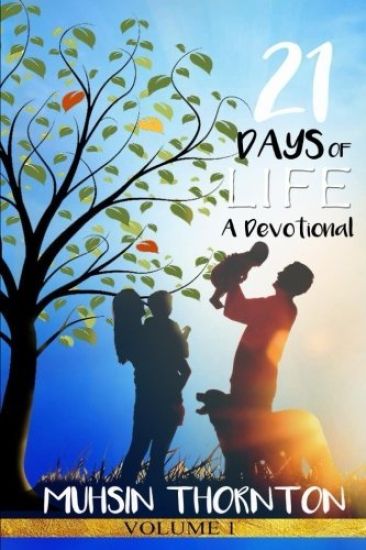
21 Days of Life: A Devotional

21 Days of Life: A Devotional

Muhsin Thornton

Minute with Muh
2018
nidottu
Trouble will always be in this world. It is what we do about those troubles that make the difference in our lives. Will you choose to let life's challenges weigh you down or will you stay positive? In his book, 21 Days of LIFE, Minister Muhsin Thornton gives us with twenty-one, short, funny, inspiring devotions. He shares real-life problems and real-life solutions that comfort, encourage, challenge and motivate us to stay positive and to hold fast to our faith in God. 21 Days of LIFE is for Christians and non-Christians. It is for the young and the old. It is for anyone who is struggling with the issues of life. 21 Days of LIFE is for you. This book will motivate you to keep a smile on your face no matter what you are going through. Prepare to be Lifted Up, Inspired, Faithful, and Encouraged. Prepare to learn how one minute with Minister Muh can help you to experience victory every day so that you can enjoy LIFE
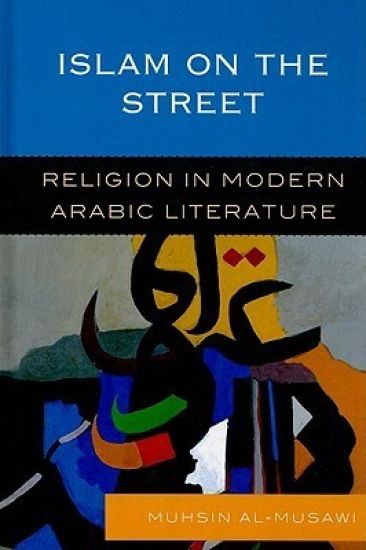
Islam on the Street

Islam on the Street

Muhsin al-Musawi

Rowman Littlefield Publishers
2009
sidottu
Islam on the Street deals with the popular side of Islam, as described not only in tracts and manuals written by Sufi shaykhs and Islamist thinkers from among the more militant groups in Islam, but also in writings by other, more secular thinkers who have also influenced public opinion. Muhsin al-Musawi explains the growing rift that has occurred between the secular intellectual—the forerunner of Arab and Islamic modernity since the late nineteenth century—and the upsurge of Islamic fervor in the street, at the grassroots level, and what these secular intellectuals can do to reconnect with the masses.
Islam on the Street

Islam on the Street

Muhsin Al-Musawi

Rowman Littlefield Publishers
2011
nidottu
Islam on the Street deals with the popular side of Islam, as described not only in tracts and manuals written by Sufi shaykhs and Islamist thinkers from among the more militant groups in Islam, but also in writings by other, more secular thinkers who have also influenced public opinion. Muhsin al-Musawi explains the growing rift that has occurred between the secular intellectual—the forerunner of Arab and Islamic modernity since the late nineteenth century—and the upsurge of Islamic fervor in the street, at the grassroots level, and what these secular intellectuals can do to reconnect with the masses.
The President's Gardens

The President's Gardens

Muhsin Al-Ramli

MacLehose Press
2018
pokkari
One Hundred Years of Solitude meets The Kite Runner in Saddam Hussein's Iraq. "A contemporary tragedy of epic proportions. No author is better placed than Muhsin Al-Ramli, already a star in the Arabic literary scene, to tell this story. I read it in one sitting". Hassan Blasim, winner of the Independent Foreign Fiction Prize for The Iraqi Christ. On the third day of Ramadan, the village wakes to find the severed heads of nine of its sons stacked in banana crates by the bus stop.One of them belonged to one of the most wanted men in Iraq, known to his friends as Ibrahim the Fated.How did this good and humble man earn the enmity of so many? What did he do to deserve such a death?The answer lies in his lifelong friendship with Abdullah Kafka and Tariq the Befuddled, who each have their own remarkable stories to tell.It lies on the scarred, irradiated battlefields of the Gulf War and in the ashes of a revolution strangled in its cradle.It lies in the steadfast love of his wife and the festering scorn of his daughter.And, above all, it lies behind the locked gates of The President's Gardens, buried alongside the countless victims of a pitiless reign of terror.Translated from the Arabic by Luke Leafgren
Daughter of the Tigris

Daughter of the Tigris

Muhsin Al-Ramli

MacLehose Press
2020
pokkari
The follow-up to the internationally acclaimed The President's Gardens"Al-Ramli is a remarkable storyteller, and in Daughter of the Tigris he creates a dynamic, intricately plotted narrative, brimming with stories and a host of memorable characters" Susannah Tarbush, Banipal On the sixth day of Ramadan, in a land without bananas, Qisma leaves for Baghdad with her husband-to-be to find the body of her father. But in the bloodiest year of a bloody war, how will she find one body among thousands? For Tariq, this is more than just a marriage of convenience: the beautiful, urbane Qisma must be his, body and soul. But can a sheikh steeped in genteel tradition share a tranquil bed with a modern Iraqi woman? The President has been deposed, and the garden of Iraq is full of presidents who will stop at nothing to take his place. Qisma is afraid - afraid for her son, afraid that it is only a matter of time before her father's murderers come for her. The only way to survive is to take a slice of Iraq for herself. But ambition is the most dangerous drug of all, and it could just seal Qisma's fate.Translated from the Arabic by Luke LeafgrenREVIEWS FOR THE PRESIDENT'S GARDENS'Though firmly rooted in its context, The President's Gardens' concerns are universal. It is a profoundly moving investigation of love, death and injustice, and an affirmation of the importance of dignity, friendship and meaning amid oppression. Its light touch and persistent humour make it an enormous pleasure to read' Robin Yassin-Kassab, Guardian.The President's Gardens evokes the fantastical, small town feel of One Hundred Years of Solitude Tom Gordon, Financial Times'No author is better placed than Muhsin Al-Ramli, already a star in the Arabic literary scene, to tell this story. I read it in one sitting' Hassan Blasim, winner of the Independent Foreign Fiction Prize
Poetic Desire and Literary Thievery

Poetic Desire and Literary Thievery

Muhsin J. al-Musawi

Cambridge University Press
2025
pokkari
How do we define plagiarism in literature? In this wide-ranging and innovative study, Muhsin J. al-Musawi examines debates surrounding literary authenticity across Arabic and Islamic culture over seven centuries. Al-Musawi argues that intertextual borrowing was driven by personal desire alongside the competitive economy of the Abbasid Islamic Empire. Here, accusations of plagiarism had wide-ranging consequences, as competition among poets and writers grew fierce, while philologists and critics served as public arbiters over controversies of alleged poetic thefts. Taking in an extensive remit of Arabic sources, from Persian writers to the poets of Andalusia and Morocco, al-Musawi extends his argument all the way to Ibrahim ?Abd al-Qadir al-Mazini's writing in Egypt and the Iraqi poet Nazik al-Mala?ikah's work in the twentieth century to present 'theft' as a necessary condition of creative production in Arabic literature. As a result, this study sheds light on a vast yet understudied aspect of the Arabic literary tradition, while raising important questions surrounding the rising challenge of artificial intelligence in matters of academic integrity.