
Kirjahaku
Etsi kirjoja tekijän nimen, kirjan nimen tai ISBN:n perusteella.
366 tulosta hakusanalla Mukunda Stiles
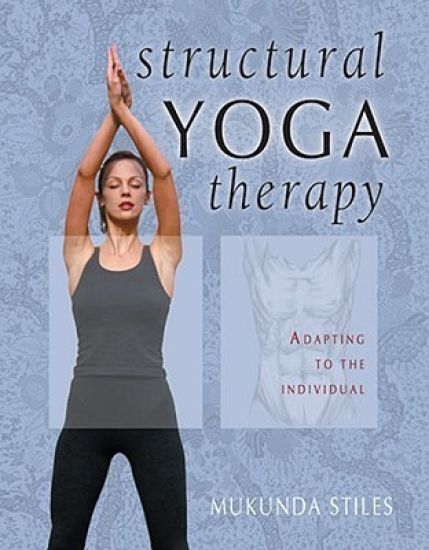
Structural Yoga Therapy has been written for teachers and serious practitioners who want to use yoga to bring complete balance to the body. Mukunda Stiles begins by providing a comprehensive overview of the spiritual philosophy of yoga, and its many branches. He discusses everything that a beginning student needs to consider when choosing a practice, including how to find a yoga teacher. He also shares his solid understanding of anatomy and kinesiology (how specific muscles and bones react during movement) so that you can understand how each asana affects your body. Structural Yoga Therapy "TM" involves a series of 24 asanas. You'll learn "bodyreading" to determine what your posture reveals about muscular imbalances. You'll find out about joint mobility and muscle strength and learn how to work with a series of jointfreeing exercises to strengthen muscles. Once you are fully acquainted with your individual needs, Stiles teaches you how to synthesize a personalized program from the 24 Structural Yoga asanas to optimize health and healing. This valuable textbook is also useful for anyone working in physical therapy, myofascial release techniques, or other forms of massage.
The practice of Tantra Yoga is considered to be the highest and most rapid path to enlightenment. Master teacher Mukunda Stiles offers 18 lessons in Tantra Yoga, a practice of transformational self-healing in which we can deepen awareness of our bodies, their energy forces, and the connections to the natural world around us and those we love.While many movements today describe tantra as a sexual practice promising longer and better orgasms, increased stamina, and ecstasy, the real Tantra aims to awaken Kundalini, the dormant potential force in the human personality.P>The Tantra tradition includes a vast range of practical teachings leading to the expansion of human consciousness and the liberation of primal energy. By heightening their awareness to this connective energy readers will learn to embrace and develop a higher level of intimacy, the heart of tantra. Stiles explains this intimate and life changing practice with grace, structure, and clarityan easy-to-follow Tantra Yoga workshop in book form. Tantra Yoga Secrets will empower readers to overcome emotions, gain new knowledge, and live a more fulfilling spiritual lifestyle.
A concise and poetic rendering that conveys the essence and depth of this perennial classic of yoga. "This beautiful, poetic rendition of Patanjali's Yoga Sutras was gathered from Mukunda's lifetime of abiding in the good company of the saints and sages of the Great Tradition. We can rely upon the fact that these words come from his own authentic experience of love and life and of Yoga. Please enjoy this gift of poetry from Mukunda and embrace the beauty of your life every day." --Mark Whitwell, author of Yoga of Heart: The Healing Power of Intimate Connection Patanjali is to yoga what the Buddha is to Buddhism. His yoga sutras--literally "the path to transcendence"--are a means to profound self-realization and are considered the spiritual and philosophical root of the yoga tradition in its various forms. This concise, poetic rendering of the classic Yoga Sutra text conveys both the essence and depth of the yoga tradition. Mukunda Stiles had a lifelong devotion to the spiritual practice of yoga. Here, he shares Patanjali's essential work with precision and insight. He also includes a succinct line-for-line commentary, as well as word-by-word Sanskrit-to-English translation.

Mukunda-m¿l¿-stotram: Kommentar zur Opfergabe der Liebe und Hingabe des ¿¿v¿rs Kula¿ekara
Paramahamsa Sri Swami Vishwananda
Bhakti Marga Publications
2022
nidottu

Mukunda Deb
BLACK EAGLE BOOKS
2025
pokkari

Mukunda lowered his gaze for a moment as a burning sensation gripped his chest and a cold sweat ran down his spine. His heart was beating at a pace he was finding difficult to cope with. Darkness soon grappled his vision. The Exile of Mukunda, part two of the Maha Vishnu Trilogy, is set on a planet called Prithvi in a distant universe called 1408. Manavas from both the city of Madhavpur and Ayudhpur have now united. They are living harmoniously in the well-guarded beautiful city of Ksharanpur. Shriram now rules the new Manava society and Radhika looks after the day-to-day administration. Shyam has retired and now enjoys his time with his grandkids. Krishna's legacy is still remembered and celebrated by all except for one, his own young defiant son, Mukunda. He blames Krishna for not only abandoning him but also his mother in their hour of need. Desperate to search for answers, the ever-defiant Mukunda crosses into the enemy line. Trapped in a kingdom governed by the evilest forces on Prithvi, he finds himself helping them make weapons that may very well wipe Manavas out of existence, once and for all. The only one Mukunda can trust in these dire times is a faceless voice emanating from the dark depths of the deep space. Whose voice is that? Surrounded by a soulless enemy and betrayed by the girl he loves, will Mukunda ever be able to escape from the clutches of evil? What happened to Krishna? Will Mukunda ever be able to find him or will he too fade into oblivion, thousands of miles away from home? Enter into the mythical world of part two of the Maha Vishnu series and get swept away in a fast-paced suspenseful narrative.

Stories of Mukunda - Early Life of Paramahansa Yogananda (EditionFirst )
Swami Kriyananda
SPI Publications
2025
nidottu

Spirit Matters: From the Hindustan Times
Mukunda Goswami
Createspace Independent Publishing Platform
2015
nidottu


Neutralization of Lethal PLA2 of Naja naja Venom by Turmeric Peptide
Mukunda Chethan Kumar
LAP Lambert Academic Publishing
2019
pokkari
Snake bite envenomations constitute public health hazards in many regions of the world, particularly in the tropics (Chippaux, 1998; Shashidharamurthy and Kemparaju, 2006; Warrell, 1992). Approximately 450 of the 3000 species of snakes found worldwide are considered to be dangerous to humans. Of these about 52 are encountered in the geographical area, which extends from Pakistan and the rest of the Indian subcontinent through to the Philippines and Indonesia. In many parts of this region, snake bite is a familiar occupational hazard of farmers, plantation workers and others, resulting in tens of thousands of deaths each year and innumerable cases of chronic physical handicap. An estimated 55000 to 60000 mortalities are reported in India from bites of venomous snakes (Avijith, 2003).
Vibrational spectroscopic studies of biological molecules
Mukunda Madhab Borah; Dipraj Saikia; Gomti Devi
Scholars' Press
2019
pokkari
In this work we have used Raman and FTIR spectroscopic techniques to record the infrared absorption spectrum of the biomolecules. We have used SERS method in order to get the enhance Raman spectrum. The theoretical spectra of the molecules were scaled and compared with the recorded experimental spectra to find the environmental and hydrogen bonding interaction effect. The Non-Coincidence effect of L-Phenylalanine in water enviroments are also discussed in details.

Neutralización del PLA2 letal del veneno de Naja naja por un péptido de cúrcuma
Mukunda Chethan Kumar
Ediciones Nuestro Conocimiento
2022
nidottu

Neutralisation du PLA2 létal du venin de Naja naja par un peptide de curcuma
Mukunda Chethan Kumar
International Book Market Service Ltd
2022
pokkari

Neutralizzazione del PLA2 letale del veleno di Naja naja da parte del peptide della curcuma
Mukunda Chethan Kumar
International Book Market Service Ltd
2022
pokkari

Neutralizacja zabójczego PLA2 z jadu Naja naja przez peptyd kurkumy
Mukunda Chethan Kumar
International Book Market Service Ltd
2022
pokkari

Neutralização do PLA2 Letal do Veneno Naja naja por Peptídeo de Cúrcuma
Mukunda Chethan Kumar
International Book Market Service Ltd
2022
pokkari

Contouring Human Development
Mukunda Mishra; Soumendu Chatterjee
Springer Verlag, Singapore
2020
sidottu
This book acquaints readers with a range of techniques to help them effectively identify, record, map, analyze and report on patterns in various dimensions of human development (HD) with spatial scales down to the village level. It is impossible to capture HD at the local and global scale with only a single index, because differences in HD at the international scale are caused by ‘general’ factors, whereas local-scale differences are influenced by ‘specific’ factors. This book offers a variety of methods for scientifically mapping HD at any spatial scale. It covers how to rationally select variables; how to test the models; how to validate the results, and how to analyze them. For this purpose, it employs a case study on an Indian district. The socio-economic factors regulating the patterns of HD are now more complex than they were only a few decades ago, making it essential to incorporate newer models in order to successfully ‘replicate’ the real-world situation. Accordingly, the book offers essential methodological tools & techniques for mapping HD. It sheds new light on a handful of statistical multivariate analysis and machine learning algorithms that are rarely used in the social sciences when dealing with HD, yet have sound mathematical and statistical bases. These techniques can be successfully used for predictive analysis in the earth & natural sciences, decision sciences and management disciplines, and are equally effective in terms of capturing, predicting and projecting the composite HD ‘landscape.’ This book will especially benefit two groups of readers: firstly, HD practitioners who want to find out ‘why some areas are doing better than others’ by exploring the complex interactions of spatially linked variables with different HD parameters. And secondly, practitioners in other branches of the social sciences who are not concerned with HD but are looking for ‘hands-on training’ with techniques they can apply in their respectivefield of spatial investigations.