Kirjojen hintavertailu. Mukana 11 244 527 kirjaa ja 12 kauppaa.

Kirjahaku

Etsi kirjoja tekijän nimen, kirjan nimen tai ISBN:n perusteella.

1000 tulosta hakusanalla Murray Denise E.

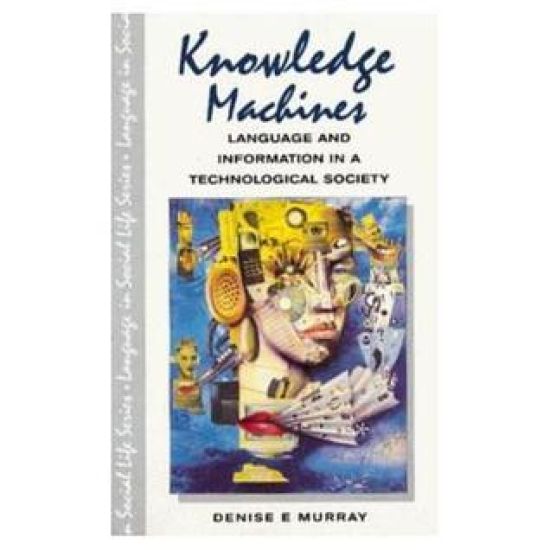
Knowledge Machines

Knowledge Machines

Murray Denise E.

Longman
1995
nidottu
Provides a wide-ranging survey of the sociolinguistic issues raised by the impact of information technology. The author demonstrates how and in which ways the new technologies both affect human communication and are in turn affected by the way people communicate using the technologies.
What English Language Teachers Need to Know Volume II

What English Language Teachers Need to Know Volume II

Denise E. Murray; MaryAnn Christison

Routledge
2020
sidottu
Designed for pre-service and novice teachers in ELT, What English Language Teachers Need to Know Volumes I, II, and III are companion textbooks organized around the key question: What do teachers need to know and be able to do in order to help their students to learn English? In the Second Edition of Volume II, Murray and Christison return to this essential question and cover the three main facets of teaching: planning, instructing, and assessing L2 English instruction. Addressing new skills and strategies that ESL and EFL teachers require to meet the needs of their shifting student populations who are impacted by changing demographics, different learning contexts, and digital environments, this book offers a strong emphasis on practical applications for classroom teaching that is grounded in current research. This updated and expanded Second Edition features:a new section on teacher learning, including a chapter on exploring digital technologies in ELTnew and updated classroom examples throughoutdiscussions of how teachers can prepare for contemporary challenges, such as population mobility and globalization.The comprehensive texts work for teachers across different contexts—where English is the dominant language, an official language, or a foreign language; for different levels—elementary/primary, secondary, university, or adult education; and for different learning purposes—general English, workplace English, English for academic purposes, or English for specific purposes.
What English Language Teachers Need to Know Volume II

What English Language Teachers Need to Know Volume II

Denise E. Murray; MaryAnn Christison

Routledge
2020
nidottu
Designed for pre-service and novice teachers in ELT, What English Language Teachers Need to Know Volumes I, II, and III are companion textbooks organized around the key question: What do teachers need to know and be able to do in order to help their students to learn English? In the Second Edition of Volume II, Murray and Christison return to this essential question and cover the three main facets of teaching: planning, instructing, and assessing L2 English instruction. Addressing new skills and strategies that ESL and EFL teachers require to meet the needs of their shifting student populations who are impacted by changing demographics, different learning contexts, and digital environments, this book offers a strong emphasis on practical applications for classroom teaching that is grounded in current research. This updated and expanded Second Edition features:a new section on teacher learning, including a chapter on exploring digital technologies in ELTnew and updated classroom examples throughoutdiscussions of how teachers can prepare for contemporary challenges, such as population mobility and globalization.The comprehensive texts work for teachers across different contexts—where English is the dominant language, an official language, or a foreign language; for different levels—elementary/primary, secondary, university, or adult education; and for different learning purposes—general English, workplace English, English for academic purposes, or English for specific purposes.
What English Language Teachers Need to Know Volume I

What English Language Teachers Need to Know Volume I

Denise E. Murray; MaryAnn Christison

CRC Press Inc
2019
sidottu
Designed for pre-service teachers and teachers new to the field of ELT, What English Teachers Need to Know Volumes I, II, and III are companion textbooks organized around the key question: What do teachers need to know and be able to do in order for their students to learn English? In the Second Edition of Volume I, Murray and Christison return to this essential question and call attention to emerging trends and challenges affecting the contemporary classroom. Addressing new skills and strategies that EFL teachers require to meet the needs of their shifting student populations who are impacted by changing demographics, digital environments, and globalization, this book, which is grounded in current research, offers a strong emphasis on practical applications for classroom teaching. This updated and expanded Second Edition features: a new chapter on technology in TESOL new and updated classroom examples throughout discussions of how teachers can prepare for contemporary challenges, such as population mobility and globalizationThe comprehensive texts work for teachers across different contexts—where English is the dominant language, an official language, or a foreign language; for different levels—elementary/primary, secondary, university, or adult education; and for different learning purposes—general English, workplace English, English for academic purposes, or English for specific purposes.
What English Language Teachers Need to Know Volume I

What English Language Teachers Need to Know Volume I

Denise E. Murray; MaryAnn Christison

CRC Press Inc
2019
nidottu
Designed for pre-service teachers and teachers new to the field of ELT, What English Teachers Need to Know Volumes I, II, and III are companion textbooks organized around the key question: What do teachers need to know and be able to do in order for their students to learn English? In the Second Edition of Volume I, Murray and Christison return to this essential question and call attention to emerging trends and challenges affecting the contemporary classroom. Addressing new skills and strategies that EFL teachers require to meet the needs of their shifting student populations who are impacted by changing demographics, digital environments, and globalization, this book, which is grounded in current research, offers a strong emphasis on practical applications for classroom teaching. This updated and expanded Second Edition features: a new chapter on technology in TESOL new and updated classroom examples throughout discussions of how teachers can prepare for contemporary challenges, such as population mobility and globalizationThe comprehensive texts work for teachers across different contexts—where English is the dominant language, an official language, or a foreign language; for different levels—elementary/primary, secondary, university, or adult education; and for different learning purposes—general English, workplace English, English for academic purposes, or English for specific purposes.
Knowledge Machines

Knowledge Machines

Denise E. Murray

Routledge
2017
sidottu
Provides a wide-ranging survey of the sociolinguistic issues raised by the impact of information technology. The author demonstrates how and in which ways the new technologies both affect human communication and are in turn affected by the way people communicate using the technologies.
What English Language Teachers Need to Know Volume III

What English Language Teachers Need to Know Volume III

MaryAnn Christison; Denise E. Murray

Routledge
2021
sidottu
Designed for pre-service and novice teachers in ELT, What English Language Teachers Need to Know Volumes I, II, and III are companion textbooks organized around the key question: What do teachers need to know and be able to do in order to help their students to learn English?Thoroughly revised and updated, the second edition of Volume III explores the contexts for ELT curricula; explains key processes in curriculum design; and sets out approaches to curricula that are linguistic-based, content-based, learner centered, and learning centered. Organized around the three pillars of teaching—planning, instructing, and assessing—chapters in the second edition are updated to include current research and theory to meet the needs of today’s teachers, and feature new or revised vignettes and activities. New chapters help teachers understand both the technological and multilingual approaches that learners need to succeed today. The comprehensive texts of this series are suitable resources for teachers across different contexts—where English is the dominant language, an official language, or a foreign language; for different levels—elementary/primary, secondary, university, or adult education; and for different learning purposes—general English, workplace English, English for academic purposes, or English for specific purposes.
What English Language Teachers Need to Know Volume III

What English Language Teachers Need to Know Volume III

MaryAnn Christison; Denise E. Murray

Routledge
2021
nidottu
Designed for pre-service and novice teachers in ELT, What English Language Teachers Need to Know Volumes I, II, and III are companion textbooks organized around the key question: What do teachers need to know and be able to do in order to help their students to learn English?Thoroughly revised and updated, the second edition of Volume III explores the contexts for ELT curricula; explains key processes in curriculum design; and sets out approaches to curricula that are linguistic-based, content-based, learner centered, and learning centered. Organized around the three pillars of teaching—planning, instructing, and assessing—chapters in the second edition are updated to include current research and theory to meet the needs of today’s teachers, and feature new or revised vignettes and activities. New chapters help teachers understand both the technological and multilingual approaches that learners need to succeed today. The comprehensive texts of this series are suitable resources for teachers across different contexts—where English is the dominant language, an official language, or a foreign language; for different levels—elementary/primary, secondary, university, or adult education; and for different learning purposes—general English, workplace English, English for academic purposes, or English for specific purposes.
Substanzmissbrauch bei Jugendlichen Auf der Suche nach Lösungen
Probleme und Trends im Zusammenhang mit Substanzmissbrauch treten h ufig in der bergangsphase der Adoleszenz auf, wenn junge Menschen beginnen, sich an Gleichaltrigen zu orientieren und weniger der elterlichen Autorit t unterworfen sind. Im Zusammenhang mit Substanzmissbrauch ist zu beobachten, dass Risiko- und Schutzfaktoren gleicherma en in verschiedenen Kontexten bestehen, u. a. in der Einzelperson, in der Familie, in der Gleichaltrigengruppe, in der Schule und in der Gemeinschaft. Eine enge Zusammenarbeit mit Familien, Betreuern und kommunalen/freiwilligen Organisationen sowie mit anderen staatlichen Stellen verbessert die Kommunikation und mobilisiert Ressourcen in einer Weise, die den Schutz junger Menschen verbessert, insbesondere in Situationen, in denen mehrere Familienmitglieder an Drogenmissbrauch beteiligt sind. Dieses Buch dokumentiert Forschungsarbeiten, die in f nf Gemeinden in westlichen Vororten von Dublin durchgef hrt wurden, um das Verst ndnis der Fachleute f r die Risikofaktoren des Drogenmissbrauchs bei Jugendlichen und die Ans tze f r Interventionen zu untersuchen.
L'abus de substances chez les adolescents à la recherche de solutions
Les probl mes et les tendances li s l'abus de substances se d veloppent souvent pendant la phase de transition de l'adolescence, lorsque les jeunes commencent se tourner vers leurs pairs et sont moins soumis l'autorit parentale. En ce qui concerne l'abus de substances, on observe que les facteurs de risque et de protection existent parts gales dans diff rents contextes, notamment au sein de l'individu, de la famille, du groupe de pairs, de l' cole et de la communaut . Une collaboration troite avec les familles, les soignants et les organisations communautaires/b n voles, ainsi qu'avec d'autres organismes officiels, permet d'am liorer la communication et de mobiliser les ressources de mani re renforcer la protection des jeunes, en particulier dans les cas o plusieurs membres de la famille sont concern s par l'abus de substances psychoactives. Ce livre documente les recherches men es dans cinq communaut s de la banlieue ouest de Dublin, explorant la compr hension qu'ont les professionnels des facteurs de risque d'abus de substances par les jeunes et des approches d'intervention.
Abuso di sostanze negli adolescenti Alla ricerca di soluzioni
Le problematiche e le tendenze relative all'abuso di sostanze si sviluppano spesso nella fase di transizione dell'adolescenza, quando i giovani iniziano a guardare ai loro coetanei per orientarsi e sono meno soggetti all'autorit dei genitori. In relazione all'abuso di sostanze si osserva che i fattori di rischio e di protezione esistono in egual misura in contesti diversi, tra cui l'individuo, la famiglia, il gruppo dei pari, la scuola e la comunit . Lavorare a stretto contatto con le famiglie, gli assistenti e le organizzazioni comunitarie/volontarie, oltre che con le altre agenzie statutarie, migliora la comunicazione e mobilita le risorse in modo tale da aumentare la protezione dei giovani, soprattutto in circostanze in cui vi sono diversi membri della famiglia coinvolti nell'abuso di sostanze. Questo libro documenta una ricerca condotta in cinque comunit della periferia occidentale di Dublino, che esplora la comprensione da parte dei professionisti dei fattori di rischio per l'abuso di sostanze da parte dei giovani e degli approcci di intervento.
Consumo indevido de substâncias na adolescência Em busca de soluções
As quest es e tend ncias relacionadas com a utiliza o indevida de subst ncias desenvolvem-se frequentemente na fase de transi o da adolesc ncia, quando os jovens come am a procurar orienta o junto dos seus pares e est o menos sujeitos autoridade dos pais. No que diz respeito ao abuso de subst ncias, verifica-se que os factores de risco e de prote o existem em igual medida em diferentes contextos, incluindo o indiv duo, a fam lia, o grupo de pares, a escola e a comunidade. Trabalhar em estreita colabora o com as fam lias, os prestadores de cuidados e as organiza es comunit rias/volunt rias, bem como com outras ag ncias oficiais, melhora a comunica o e mobiliza recursos de forma a aumentar a prote o dos jovens, especialmente em circunst ncias em que h v rios membros da fam lia envolvidos no abuso de subst ncias. Este livro documenta a investiga o levada a cabo em cinco comunidades dos sub rbios do oeste de Dublin, explorando a compreens o dos profissionais sobre os factores de risco para o abuso de subst ncias por parte dos jovens e as abordagens de interven o.
Murray Walker

Murray Walker

Murray Walker

HarperCollinsWillow
2003
nidottu
The voice of motor racing and much loved public figure – and the man responsible for introducing millions of viewers to the previously inaccessible world of Formula 1 – tells the story of his incident-packed life, with a brand new chapter on his globetrotting adventures since retirement. Murray Walker is a national treasure. When the man who made famous the catch phrase 'Unless I'm very much mistaken… I AM very much mistaken!!!' announced that he was retiring as ITV's Grand Prix commentator, the media reacted as if the sport itself was losing one of its biggest stars. His reputation for mistakes was the making of Walker. He was the fan who happened to be given the keys to the commentary box – and never wanted to give them back. His high-octane delivery kept viewers on the edge of their seats, while his passion for talking about the sport he loved was matched by an all-encompassing knowledge gained through hours of painstaking research before every race. In his book he writes about his childhood and the influence that his father, British motorcycle champion Graham Walker, had on his career. Failing to match his father's achievements on the track after active service in World War II, he made a successful career for himself in advertising which catapulted him to the top of his profession. An offer from the BBC to take over the commentary seat for their F1 broadcasts was too good to turn down, and it wasn't long before the infamous 'Murrayisms' enlivened a sport which until then had been shrouded in a cloak of unfathomable technical jargon and mind-numbing statistics. He also talks about the biggest changes in the sport over the last 50 years, in particular the safety issues which came to the fore after the tragic death of Ayrton Senna, which he witnessed first hand. His partnership with James Hunt behind the microphone is the subject of some hilarious anecdotes, while his views on drivers past and present such as Stirling Moss, Jackie Stewart, Damon Hill and Michael Schumacher make for fascinating reading.