
Kirjahaku
Etsi kirjoja tekijän nimen, kirjan nimen tai ISBN:n perusteella.
1000 tulosta hakusanalla Mustafa Necati Bursali



Boston Globe, Best 2018 Books for ChildrenTD Canadian Children's Literature Award FinalistMustafa and his family traveled a long way to reach their new home. Some nights Mustafa dreams about the country he used to live in, and he wakes up not knowing where he is. Then his mother takes him out to the balcony to see the moon — the same moon as in their old country. In the park, Mustafa sees ants and caterpillars and bees — they are the same, too. He encounters a “girl-with-a-cat,” who says something in a language that he can’t understand. He watches an old lady feeding birds and other children playing, but he is always looking in from the outside and he feels that he is invisible. But one day, the girl-with-the-cat beckons to him, and Mustafa begins to become part of his new world.Marie-Louise Gay’s remarkable ability to write and illustrate from the perspective of a young child is movingly exhibited in this gentle, thoughtful story about coming to feel at home in a new country.Correlates to the Common Core State Standards in English Language Arts:CCSS.ELA-LITERACY.RL.1.2Retell stories, including key details, and demonstrate understanding of their central message or lesson.CCSS.ELA-LITERACY.RL.1.4Identify words and phrases in stories or poems that suggest feelings or appeal to the senses.CCSS.ELA-LITERACY.RL.2.5Describe the overall structure of a story, including describing how the beginning introduces the story and the ending concludes the action.
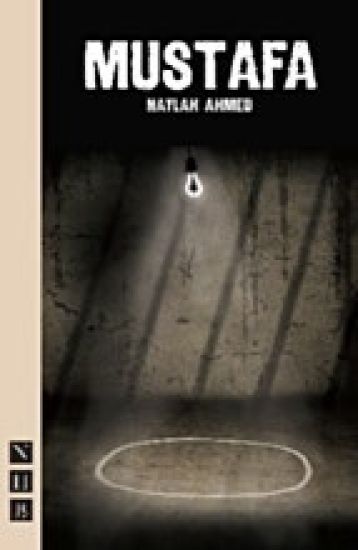
A vivid and compelling thriller about belief and retribution. Mustafa is in prison for the death of a teenage boy during an exorcism. Racked with guilt at the loss of an innocent life and isolated in a world where his beliefs are constantly challenged, he's trying to avoid trouble. But when prisoners who taunt him suffer mysterious injuries and prison officers start behaving strangely, Mustafa realises the spirit he tried to banish is still with him, and he must confront it once again. Naylah Ahmed's play Mustafa was first performed at Soho Theatre, London, in 2012 in a co-production by Kali Theatre and Birmingham Rep.
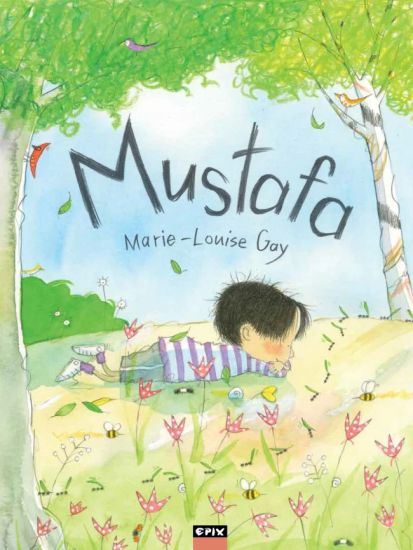
Ibland på nätterna drömmer Mustafa om landet som han bodde i förut. Drömmar fulla av rök och eld och höga ljud. Han vaknar. ”Var är jag?” frågar han. ”Du är här”, säger hans mamma. Hon kramar honom hårt. Hans nya värld är mycket annorlunda. I parken nära hans hem möter han en flicka-med-katt som säger något på ett språk han inte förstår. Han ser en gammal kvinna som pratar med fåglarna. I parken nära hans hem ser han andra barn som leker och skrattar. Men ingen lägger märke till honom. Han känner sig osynlig. En mjuk och tankeväckande berättelse om svårigheten att börja känna sig hemma på ett nytt ställe och om vänskapens nödvändighet för dem som bär på osynliga känslosår från krig och flykt. Berättelsen om en liten pojke som flyttar till en främmande plats och finner sig till rätta där trots att alla talar ett annat språk är något som alla barn borde få höra. School Library Journal … en ovärderlig resurs för alla som arbetar med barn från flyktingfamiljer. Kirkus Marie-Louise Gay är en kanadensisk illustratör och barnboksförfattare. Utöver ett stort antal priser och utmärkelser i Kanada och USA har hon även blivit nominerad till två av de främsta internationella barnbokspriserna, Hans Christian Andersen-medaljen och ALMA, Litteraturpriset till Astrid Lindgrens minne.Fler böcker av Marie-Louise Gay på Epix Bokförlag Caramba (Katten som inte kunde flyga) Små berättelser för små monster Stella, Nattens prinsessa
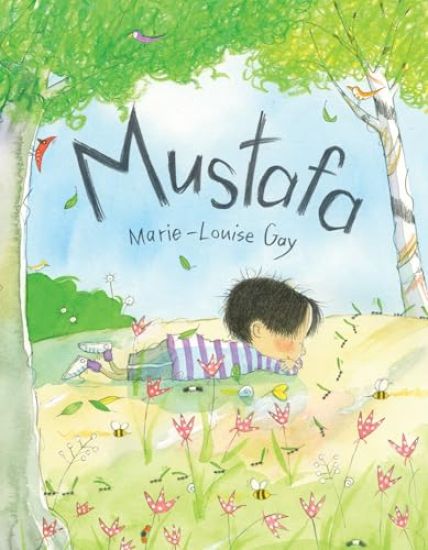
Boston Globe, Best 2018 Books for Children TD Canadian Children's Literature Award Finalist Mustafa and his family traveled a long way to reach their new home. Some nights Mustafa dreams about the country he used to live in, and he wakes up not knowing where he is. Then his mother takes him out to the balcony to see the moon — the same moon as in their old country. In the park, Mustafa sees ants and caterpillars and bees — they are the same, too. He encounters a “girl-with-a-cat,” who says something in a language that he can’t understand. He watches an old lady feeding birds and other children playing, but he is always looking in from the outside and he feels that he is invisible. But one day, the girl-with-the-cat beckons to him, and Mustafa begins to become part of his new world. Marie-Louise Gay’s remarkable ability to write and illustrate from the perspective of a young child is movingly exhibited in this gentle, thoughtful story about coming to feel at home in a new country. Correlates to the Common Core State Standards in English Language Arts: CCSS.ELA-LITERACY.RL.1.2 Retell stories, including key details, and demonstrate understanding of their central message or lesson. CCSS.ELA-LITERACY.RL.1.4 Identify words and phrases in stories or poems that suggest feelings or appeal to the senses. CCSS.ELA-LITERACY.RL.2.5 Describe the overall structure of a story, including describing how the beginning introduces the story and the ending concludes the action.

Part of The World in A Life series, this brief text provides insight into the life of Mustafa Kemal Atatürk. By the outbreak of World War II, the Republic of Turkey epitomized more than a state bound for better times; it aspired to represent the essence of modern politics in the twentieth century. To contemporaries of this period, Mustafa Kemal Atatürk-the country's first president-was both the muse and the architect of this radical transformation. By the time of his death in 1938, he was regularly compared alongside other luminary statesmen of the post-Versailles era. Outside of Turkey, his name was synonymous with bold leadership and ambitious reform. Atatürk's reputation as a man both progressive and iconoclastic greatly augmented his already lofty status as Turkey's premier general and war hero. Yet there were some aspects of his life presidency that tempered contemporary admiration for Mustafa Kemal. His acclaim and celebrity came with the understanding that he was a dictator with little patience for liberal democracy. Atatürk's inability to brook compromise and tolerate opposition engendered acts of violence and oppression that resulted in the deaths of large numbers of his fellow citizens. As a whole, the legacies of both his achievements and flaws as a leader remain critical to any understanding of modern-day Turkey. We live in a global age where big concepts like "globalization" often tempt us to forget the personal side of the past. The titles in The World in A Life series aim to revive these meaningful lives. Each one shows us what it was like to live on a world historical stage. Brief, inexpensive, and thematic, each book can be read in a week, fit within a wide range of curricula, and shed insight into a particular place or time. Four to six short primary sources at the end of each volume sharpen the reader's view of an individual's impact on world history.
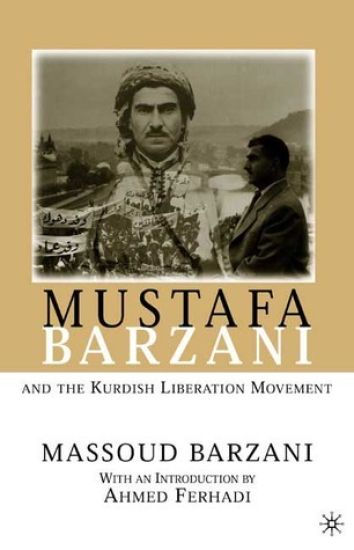
As a leader of the Kurdish national liberation movement for almost half a century, Mustafa Barzani witnessed many historical events that rocked the Middle East and had a strong impact on the fate of the Kurdish communities in the region. Barzani's life-long struggle began in 1907 when he was barely three years old, when he and his mother were incarcerated in the aftermath of a raid by the Ottoman Turkish forces. Barzani went on to spend most of his life fighting various governments partitioning Kurdistan. Barzani's son, Massoud, the president of the Kurdish Democratic Party (KDP) and currently the de facto ruler of much of Iraqi Kurdistan, has put together a valuable dossier of documents, stories, rare photos and has pieced them into a narrative in the first person with his reflections and analyses of historic events in the period 1931 to 1961.

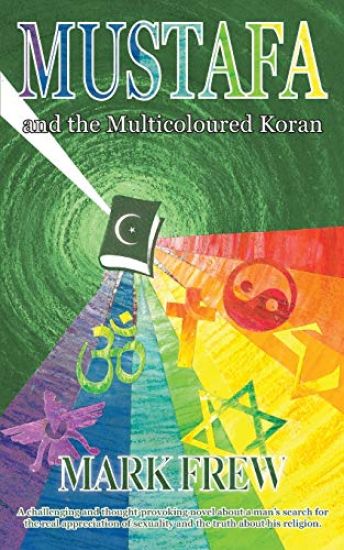
A story about a gay Muslim who discovers the real origins of the Koran, the true identity of Muhammad and finally understands homosexuality in the great scheme of things.
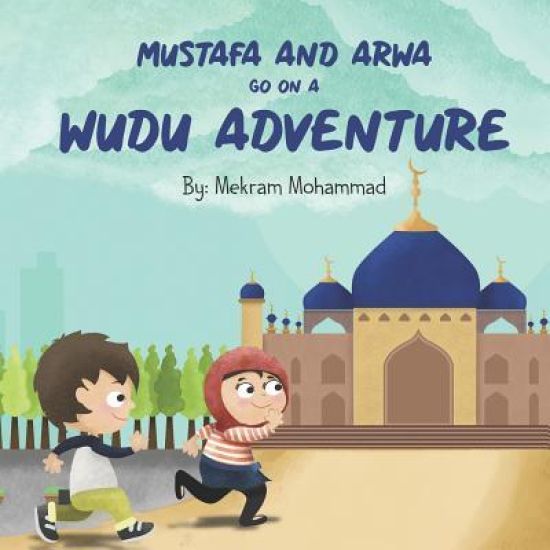
Mustafa and Arwa go on a Wudu Adventure is an adorable storybook for children of all ages to learn how to perform wudu in a fun way Each page contains easy to understand steps, beautiful colors and pictures, and fun rhymes to make learning easy and fun Follow Mustafa and Arwa to see what adventure they go on next Never has learning about Islam been so fun This book aims to teach kids the importance of wudu and all the steps that go into it. We believe that it's never too early to teach kids good habits, and what better way than a fun storybook? Your kids will be having so much fun, they won't realize they are learning at the same time

Mustafa Murrar’s stories span more than a ?fty-year period. Jamal Assadi has translated a selection of these stories to introduce this Palestinian writer to a wider public through the English language. This volume includes serious stories with light and humorous scenes, love stories intermingled with tales of the unusual, and political stories interwoven with love scenes. This book enables Murrar to tell his own stories and the stories of his people – stories of alienation and marginalization but also of hopes and dreams – in a new magnified voice. All readers will savor the aroma of a different culture, while scholars of Arabic literature will be given the chance to tread new fields for academic assessment and critique.
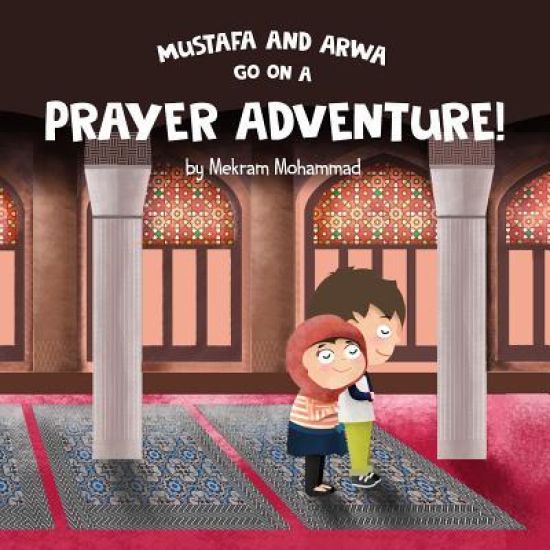
Mustafa and Arwa Go on a Prayer Adventure!
Mekram Mohammad
Createspace Independent Publishing Platform
2016
nidottu

Mustafa and Arwa go on a Ramadan Adventure!
Mekram Mohammad
Createspace Independent Publishing Platform
2017
pokkari

Mustafa Kemal Atatürk and the Republic of Turkey: The History of the Ottoman Empire's Collapse and the Establishment of a New State
Charles River
Independently Published
2019
nidottu
*Includes pictures*Includes a bibliography for further reading"In human life, you will find players of religion until the knowledge and proficiency in religion will be cleansed from all superstitions, and will be purified and perfected by the enlightenment of real science." - Mustafa Kemal Atat rkThe long agony of the "sick man of Europe," an expression used by the Tsar of Russia to depict the falling Ottoman Empire, could almost blind people to its incredible power and history. Preserving its mixed heritage, coming from both its geographic position rising above the ashes of the Byzantine Empire and the tradition inherited from the Muslim Conquests, the Ottoman Empire lasted more than six centuries. Its soldiers fought, died, and conquered lands on three different continents, making it one of the few stable multi-ethnic empires in history, and likely one of the last. Thus, it's somewhat inevitable that the history of its decline is at the heart of complex geopolitical disputes, as well as sectarian tensions that are still key to understanding the Middle East, North Africa and the Balkans. Despite it all, the Ottoman Empire would survive for over 200 more years, and in the last century of its life it strove to reform its military, administration and economy until it was finally dissolved. Years before the final collapse of the Empire, the Tanzimat ("Reorganization"), a period of swiping reforms, led to significant changes in the country's military apparatus, among others, which certainly explains the initial success the Ottoman Empire was able to achieve against its rivals. Similarly, the drafting of a new Constitution (Kan n-u Es s , basic law) in 1876, despite it being shot down by Sultan Abdul Hamid II just two years later, as well as its revival by the "Young Turks" movement in 1908, highlights the understanding among Ottoman elites that change was needed, and their belief that such change was possible. The fall of the Ottoman Empire set the political and geostrategic scene of the new Middle East. In 1920, two years after the end of the war, the region was already experiencing growing instability. The issues and trends that would plague the region until today were growing. On April 4, Arab riots broke out in Jerusalem, fueled by the growing hostility against the Zionist movement. The British passivity would convince one of the Jewish leaders, Vladimir Jabotinsky (the future founder of the Israeli right-wing), of the strategic necessity of a strong Jewish military as the core of the future state. Just two weeks later in Turkey, the Grand National Assembly in Ankara set the foundation of the Turkish state, opening the way for several years of reforms. In Iraq, a Shiite revolt broke out in the south, as locals demanded the creation of an Islamic state. The British compromise was to place Faisal, the son of Sharif Hussein and a Sunni, on the throne. His father, meanwhile, was embroiled in a conflict with a local tribe, the Ibn Saud, that sought to carve a new kingdom in the Arabian Peninsula.More broadly, the long decline of the "sick man of Europe" fostered the emergence of nationalistic and ideological movements that are still key to any understanding of the Middle East today. The compatibility between the Islamic religion and culture and Western reforms were first discussed within the Ottoman Empire, and they are still up for debate today. Abdul Hamid's pan-Islamism, while its results at the time remain limited, still resonates within the Muslim world and can still be seen as a viable rival to the region's various nationalistic aspirations. This book examines how the empire collapsed and was replaced by modern Turkey. Along with pictures of important people and events, you will learn about Atat rk and the founding of Turkey like never before.