Kirjojen hintavertailu. Mukana 11 717 486 kirjaa ja 12 kauppaa.

Kirjahaku

Etsi kirjoja tekijän nimen, kirjan nimen tai ISBN:n perusteella.

1000 tulosta hakusanalla Néstor Ponce

Recordar Escribiendo: Gedaechtnis Und Erinnerung Bei Néstor Ponce Und Eduardo Belgrano Rawson

Recordar Escribiendo: Gedaechtnis Und Erinnerung Bei Néstor Ponce Und Eduardo Belgrano Rawson

Tobias Wildner

Peter Lang Gmbh, Internationaler Verlag Der Wissenschaften
2012
nidottu
Die Romane El int rprete (1998) von N stor Ponce und Fuegia (1991) von Eduardo Belgrano Rawson stehen f r eine profunde literarische Auseinandersetzung mit der argentinischen Vergangenheit und dem heutigen Geschichtsdiskurs. Unter R ckgriff auf ma gebliche Ged chtnis- und Erinnerungstheorien sowie gattungsspezifische berlegungen zur (Nueva) Novela Hist rica betrachtet dieser Band die beiden bislang von der Wissenschaft nur wenig wahrgenommenen Werke unter einem doppelten Fokus: einerseits hinsichtlich der Inszenierung individuellen Erinnerns auf narrativer Ebene, andererseits aber auch bez glich der Repr sentation eines kollektiven Ged chtnisses. In diesem Zusammenhang wird ebenso der Frage nachgegangen, inwiefern damit Gegen-Diskurse zur offiziellen argentinischen Geschichtsschreibung entworfen werden.
El lado bestia de la vida: El asesinato de Néstor Kirchner
Esta novela forma parte de un ciclo comenzado con Toda la ceguera del mundo (Ediciones B, Colombia), y del cual El lado bestia de la vida es la continuaci n, aunque se puede leer de manera completamente independiente.En Toda la ceguera del mundo el comisario Barrionuevo estuvo encargado de realizar una investigaci n en La Plata para desmantelar un tr fico de drogas en el que se oponen los carteles colombiano y mexicano. La investigaci n culmina exitosamente y permite descubrir la implicaci n de pol ticos, polic as, gendarmes y empresarios. Como premio, Barrionuevo es trasladado a la Patagonia.El lado bestia de la vida comienza en Rawson, provincia de Chubut. Barrionuevo piensa que el traslado es una excusa para asesinarlo y decide pedir protecci n a la DEA norteamericana. Viaja a California bajo una falsa identidad. En Los ngeles, Barrionuevo consigue un puesto de director de seguridad en un shopping. En paralelo, su familia se descompone. Barrionuevo vegeta entre el shopping y latinos que practican la poes a (encuentra as a representantes del Movimiento inm vil, grupo po tico que aparece en la novela anterior).Entre tanto, en Argentina, un Ministro se entrevista con la comisaria Adela Pineda (ex colaboradora de Barrionuevo) para solicitarle que constituya un equipo para investigar acerca de un supuesto plan para asesinar a N stor Kirchner. Los organizadores del complot ser an militares y civiles escondidos en el extranjero, y que realizan regularmente operativos en Argentina contra la democracia. Adela decide convocar a Barrionuevo. Para l, es un regreso inesperado a la Argentina y a la acci n...
The Book of Blood

The Book of Blood

Néstor Ponce de León

Hansebooks
2017
pokkari
The Book of Blood is an unchanged, high-quality reprint of the original edition of 1873. Hansebooks is editor of the literature on different topic areas such as research and science, travel and expeditions, cooking and nutrition, medicine, and other genres. As a publisher we focus on the preservation of historical literature. Many works of historical writers and scientists are available today as antiques only. Hansebooks newly publishes these books and contributes to the preservation of literature which has become rare and historical knowledge for the future.
The Book of Blood

The Book of Blood

Nestor Ponce De Leon

Alpha Edition
2019
pokkari
This book has been considered by academicians and scholars of great significance and value to literature. This forms a part of the knowledge base for future generations. We have represented this book in the same form as it was first published. Hence any marks seen are left intentionally to preserve its true nature.
Technological Dictionary; English Spanish, Spanish-English, Of Words And Terms Employed In The Applied Sciences, Industrial Arts, Fine Arts, Mechanics, Machinery, Mines Metallurgy, Agriculture, Commerce, Navigation, Manufactures, Architecture, Civil And Mi
Technological Dictionary; English Spanish, Spanish-English, Of Words And Terms Employed In The Applied Sciences, Industrial Arts, Fine Arts, Mechanics, Machinery, Mines Metallurgy, Agriculture, Commerce, Navigation, Manufactures, Architecture, Civil And Military Engineering, Marine, Military Art, Railroads, Telegraphs, Etc., Etc. With A Supplement Bringing The Work Right Up-To-Date (Part Ii) Spanish-English has been considered by academicians and scholars of great significance and value to literature. This forms a part of the knowledge base for future generations. So that the book is never forgotten we have represented this book in a print format as the same form as it was originally first published. Hence any marks or annotations seen are left intentionally to preserve its true nature.
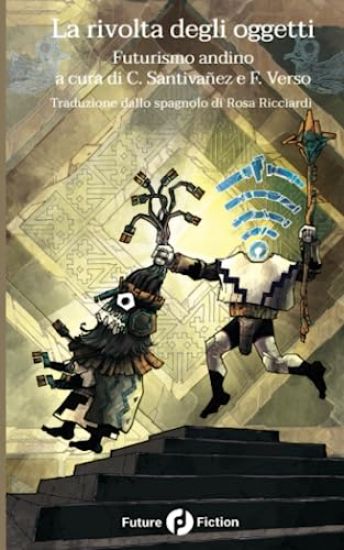
La rivolta degli oggetti

La rivolta degli oggetti

Edmundo Paz Soldan; Nestor Toledo; Laura Ponce

Future Fiction
2023
pokkari
In lingua quechua il passato davanti a noi perch lo conosciamo e possiamo studiarlo mentre il futuro dietro di noi in quanto non possiamo vederlo e quindi ci sconosciuto. Basterebbe gi questo esempio, capace di ribaltare la concezione occidentale del tempo, per dimostrare l'importanza fondamentale di tutti quei "futuri" - negletti e trascurati - che non abbiamo avuto modo di leggere n di esplorare. Per questo motivo il futurismo andino - qui rappresentato da una selezione dei migliori autori e autrici provenienti da Argentina, Bolivia, Cile, Colombia, Equador e Per - diventa uno strumento potentissimo per aiutarci a espandere la nostra comprensione del domani e ad abbracciarne una visione pi complessa ma altrettanto ricca.Tradotte per la prima volta in italiano da Rosa Ricciardi, le storie de "La rivolta degli oggetti" immaginano scenari solarpunk de-colonizzati, cambiamenti climatici radicali, rivolte sociali post-pandemiche e profonde riflessioni sulla nostra dipendenza dai social media, restituendo altrettanti sguardi sui territori e i popoli andini che, seppure schiacciati da antiche colonizzazioni e nuovi imperialismi, sono ancora capaci di raccontare i propri futuri, in modo autentico e originale. Introduzione di C sar Santiva ezSott'acqua di Adriana Alarco - Per Un uomo nel mio letto di Solange Pappe - EquadorDipendenza programmata di Daniel Collazos - Per Mentre menti di Laura Ponce - ArgentinaLedva di Luis Apolin - Per Miraflores di Tanya Tynj l - Per Il viaggio di Tanya Tynj l - Per Robot poeta di Edmundo Paz Soldan - BoliviaParlo con mille voci - Cesar Santivanez - Per Anuri di Karen Reyes - ColombiaPop up di Nestor Toledo - ArgentinaServiology di Eva Van Kreimmer - CileDiecimila seguaci - Sandrine L. Sarango - Per Terrapunk di Luis Apolin - Per Traduzione dallo spagnolo di Rosa Ricciardi, illustrazione di copertina di Hugo Espinoza.
Nestor

Nestor

Keith Dickson

CRC Press Inc
1995
sidottu
First published in 1995. This study presents techniques in the Greek epic, in various guises within literature and a commentary on the naming of Nestor, Nestor as AOIDUS, as intercessor, and as host.
Nestor

Nestor

Keith Dickson

Routledge
2016
nidottu
First published in 1995. This study presents techniques in the Greek epic, in various guises within literature and a commentary on the naming of Nestor, Nestor as AOIDUS, as intercessor, and as host.
Chronique Dite de Nestor

Chronique Dite de Nestor

Nestor

Hachette Livre - BNF
2016
pokkari
Chronique dite de Nestor / traduite sur le texte slavon-russe avec introduction et commentaire critique par Louis Leger, ...Date de l'edition originale: 1884 Povest vremennyh let (francais). 1884]Collection: Publications de l'ecole des Langues orientales vivantes; 13Ce livre est la reproduction fidele d'une oeuvre publiee avant 1920 et fait partie d'une collection de livres reimprimes a la demande editee par Hachette Livre, dans le cadre d'un partenariat avec la Bibliotheque nationale de France, offrant l'opportunite d'acceder a des ouvrages anciens et souvent rares issus des fonds patrimoniaux de la BnF.Les oeuvres faisant partie de cette collection ont ete numerisees par la BnF et sont presentes sur Gallica, sa bibliotheque numerique.En entreprenant de redonner vie a ces ouvrages au travers d'une collection de livres reimprimes a la demande, nous leur donnons la possibilite de rencontrer un public elargi et participons a la transmission de connaissances et de savoirs parfois difficilement accessibles.Nous avons cherche a concilier la reproduction fidele d'un livre ancien a partir de sa version numerisee avec le souci d'un confort de lecture optimal. Nous esperons que les ouvrages de cette nouvelle collection vous apporteront entiere satisfaction.Pour plus d'informations, rendez-vous sur www.hachettebnf.fr
Nestor Perlongher

Nestor Perlongher

Ben Bollig

University of Wales Press
2008
sidottu
This book is the first full-length study in English of the work of the highly regarded and influential Argentine poet and anthropologist Nestor Perlongher (1949-92). Perlongher's pioneering work takes on the most dynamic and conflictive themes of modern-day Latin America such as dictatorship, national identity, exile, issues of gender and marginal sexualities, and modern-day esoteric religions; Bollig's study analyses and contextualizes his work as well as offering important tools for reading and understanding challenging and experimental poetry.
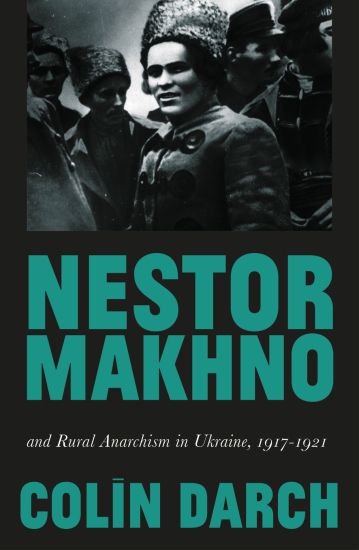
Nestor Makhno and Rural Anarchism in Ukraine, 1917-1921
Histories of the Russian Revolution often present the Bolshevik seizure of power in 1917 as the central event, neglecting the diverse struggles of urban and rural revolutionaries across the heartlands of the Russian Empire. This book takes as its subject one such struggle, the anarcho-communist peasant revolt led by Nestor Makhno in left-bank Ukraine, locating it in the context of the final collapse of the Empire that began in 1914. Between 1917 and 1921, the Makhnovists fought German and Austrian invaders, reactionary monarchist forces, Ukrainian nationalists and sometimes the Bolsheviks themselves. Drawing upon anarchist ideology, the Makhnovists gathered widespread support amongst the Ukrainian peasantry, taking up arms when under attack and playing a significant role - in temporary alliance with the Red Army - in the defeats of the White Generals Denikin and Wrangel. The Makhnovist movement is often dismissed as a kulak revolt, or a manifestation of Ukrainian nationalism; here Colin Darch analyses its successes and its failures, emphasising its revolutionary character. Over 100 years after the revolutions, this book reveals a lesser known side of 1917, contributing both to histories of the period and broadening the narrative of 1917, whilst enriching the lineage of anarchist history.
Nestor Makhno and Rural Anarchism in Ukraine, 1917-1921
Histories of the Russian Revolution often present the Bolshevik seizure of power in 1917 as the central event, neglecting the diverse struggles of urban and rural revolutionaries across the heartlands of the Russian Empire. This book takes as its subject one such struggle, the anarcho-communist peasant revolt led by Nestor Makhno in left-bank Ukraine, locating it in the context of the final collapse of the Empire that began in 1914. Between 1917 and 1921, the Makhnovists fought German and Austrian invaders, reactionary monarchist forces, Ukrainian nationalists and sometimes the Bolsheviks themselves. Drawing upon anarchist ideology, the Makhnovists gathered widespread support amongst the Ukrainian peasantry, taking up arms when under attack and playing a significant role - in temporary alliance with the Red Army - in the defeats of the White Generals Denikin and Wrangel. The Makhnovist movement is often dismissed as a kulak revolt, or a manifestation of Ukrainian nationalism; here Colin Darch analyses its successes and its failures, emphasising its revolutionary character. Over 100 years after the revolutions, this book reveals a lesser known side of 1917, contributing both to histories of the period and broadening the narrative of 1917, whilst enriching the lineage of anarchist history.