This book of 100 Easy Sudoku puzzles will keep you entertained for hours. It's the perfect size to take with you anywhere - fits easily into any bag, briefcase or backpack. Challenging and fun Sharpen your pencil and keep an eraser handy.Size: 6x9 Soft, matte cover100 Easy Sudoku puzzlesSolutions in the back of the book for each puzzleMakes a great gift
A lavishly illustrated, full-scale portrait of the distinguished American illustrator describes N. C. Wyeth's attitude toward his own art, his close family ties, his complex personality, and his influence on the artistic careers of his famed son, Andrew, and grandson, Jamie. Reprint.
A fresh and surprising overview of N. C. Wyeth’s career that considers the full range of the multifaceted artist’s oeuvre N. C. Wyeth (1882–1945) was widely renowned for his iconic images of characters such as King Arthur, Robin Hood, and Robinson Crusoe that were reproduced as illustrations for books and magazines. The patriarch of the Wyeth family, father of Andrew Wyeth and grandfather of Jamie, he was also an artist with a broad purview whose work includes impressionist views of the Pennsylvania countryside and 1930s modernist interpretations of Maine coastal scenes. The book’s essays look at topics such as Wyeth’s contributions to the visual mythology of the American West, the darker nuances found in his Treasure Island illustrations, and correlations between his illustrations and cinema. Also explored is the way in which Wyeth’s own Chadds Ford properties reflect his conception of home and the role of the artist in American society. Complete with a detailed chronology, this carefully researched study of Wyeth’s life and work provides a long overdue assessment of the remarkable breadth of this complex yet often misunderstood artist.Published in association with the Brandywine River Museum of Art and the Portland Museum of ArtExhibition Schedule:Brandywine River Museum of Art, Chadds Ford, PA (06/22/19–09/15/19)Portland Museum of Art, ME (10/02/19–01/12/20)Taft Museum of Art, Cincinnati (02/08/20–05/03/20)
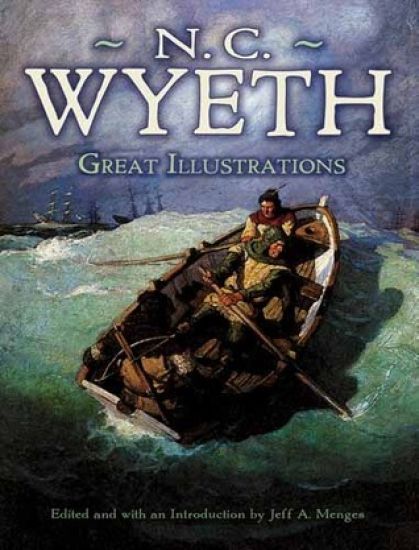
Newell Convers Wyeth created more than 3,000 illustrations in the course of his career. This original full-color collection focuses on his early and most popular illustrations, featuring more than 100 iconic images from "The Mysterious Stranger, Robin Hood, Robinson Crusoe, Rip Van Winkle, The Boy's King Arthur, " and other classics.
This work has been selected by scholars as being culturally important and is part of the knowledge base of civilization as we know it.This work is in the public domain in the United States of America, and possibly other nations. Within the United States, you may freely copy and distribute this work, as no entity (individual or corporate) has a copyright on the body of the work.Scholars believe, and we concur, that this work is important enough to be preserved, reproduced, and made generally available to the public. To ensure a quality reading experience, this work has been proofread and republished using a format that seamlessly blends the original graphical elements with text in an easy-to-read typeface.We appreciate your support of the preservation process, and thank you for being an important part of keeping this knowledge alive and relevant.
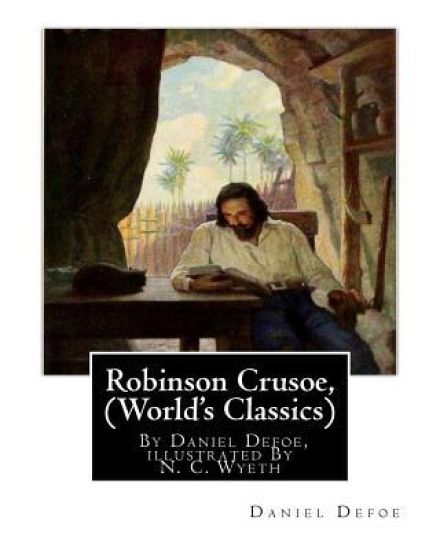
Robinson Crusoe is a novel by Daniel Defoe, first published on 25 April 1719. The first edition credited the work's protagonist Robinson Crusoe as its author, leading many readers to believe he was a real person and the book a travelogue of true incidents. It was published under the full title The Life and Strange Surprizing Adventures of Robinson Crusoe, Of York, Mariner: Who lived Eight and Twenty Years, all alone in an un-inhabited Island on the Coast of America, near the Mouth of the Great River of Oroonoque; Having been cast on Shore by Shipwreck, wherein all the Men perished but himself. With An Account how he was at last as strangely deliver'd by Pyrates. Plot sumary--Crusoe (the family name corrupted from the German name "Kreutznaer") sets sail from the Queen's Dock in Hull on a sea voyage in August 1651, against the wishes of his parents, who want him to pursue a career, possibly in law. After a tumultuous journey where his ship is wrecked in a storm, his lust for the sea remains so strong that he sets out to sea again. This journey, too, ends in disaster, as the ship is taken over by Sal pirates (the Sal Rovers) and Crusoe is enslaved by a Moor. Two years later, he escapes in a boat with a boy named Xury; a captain of a Portuguese ship off the west coast of Africa rescues him. The ship is en route to Brazil. Crusoe sells Xury to the captain. With the captain's help, Crusoe procures a plantation. Years later, Crusoe joins an expedition to bring slaves from Africa, but he is shipwrecked in a storm about forty miles out to sea on an island (which he calls the Island of Despair) near the mouth of the Orinoco river on 30 September 1659. The details of Crusoe's island were probably based on the Caribbean island of Tobago, since that island lies a short distance north of the Venezuelan coast near the mouth of the Orinoco river, in sight of Trinidad. 4] He observes the latitude as 9 degrees and 22 minutes north. He sees penguins and seals on his island. (However, seals and penguins live together in the Northern Hemisphere only around the Gal pagos Islands.) As for his arrival there, only he and three animals, the captain's dog and two cats, survive the shipwreck. Overcoming his despair, he fetches arms, tools and other supplies from the ship before it breaks apart and sinks. He builds a fenced-in habitat near a cave which he excavates. By making marks in a wooden cross, he creates a calendar. By using tools salvaged from the ship, and some he makes himself from "ironwood", he hunts, grows barley and rice, dries grapes to make raisins, learns to make pottery and raises goats. He also adopts a small parrot. He reads the Bible and becomes religious, thanking God for his fate in which nothing is missing but human society. More years pass and Crusoe discovers native cannibals, who occasionally visit the island to kill and eat prisoners. At first he plans to kill them for committing an abomination but later realizes he has no right to do so, as the cannibals do not knowingly commit a crime. He dreams of obtaining one or two servants by freeing some prisoners; when a prisoner escapes, Crusoe helps him, naming his new companion "Friday" after the day of the week he appeared. Crusoe then teaches him English and converts him to Christianity...... Daniel Defoe ( 1660 - 24 April 1731), born Daniel Foe, was an English trader, writer, journalist, pamphleteer, and spy, most famous for his novel Robinson Crusoe. Newell Convers Wyeth (October 22, 1882 - October 19, 1945), known as N. C. Wyeth, was an American artist and illustrator. He was the pupil of artist Howard Pyle and became one of America's greatest illustrators.
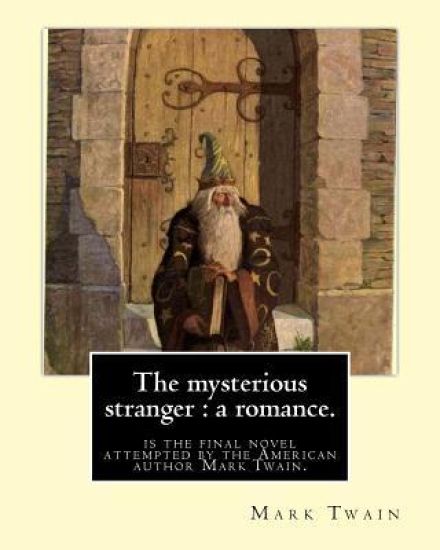
The Mysterious Stranger is the final novel attempted by the American author Mark Twain. He worked on it periodically from 1897 through 1908. The body of work is a serious social commentary by Twain addressing his ideas of the Moral Sense and the "damned human race". Newell Convers Wyeth (October 22, 1882 - October 19, 1945), known as N. C. Wyeth, was an American artist and illustrator. He was the pupil of artist Howard Pyle and became one of America's greatest illustrators. During his lifetime, Wyeth created over 3,000 paintings and illustrated 112 books, 25 of them for Scribner's, the Scribner Classics, which is the work for which he is best known.... Samuel Langhorne Clemens (November 30, 1835 - April 21, 1910), better known by his pen name Mark Twain, was an American writer, entrepreneur, publisher and lecturer. Among his novels are The Adventures of Tom Sawyer (1876) and its sequel, Adventures of Huckleberry Finn (1885), the latter often called "The Great American Novel". Twain was raised in Hannibal, Missouri, which later provided the setting for Tom Sawyer and Huckleberry Finn. After an apprenticeship with a printer, Twain worked as a typesetter and contributed articles to the newspaper of his older brother, Orion Clemens. He later became a riverboat pilot on the Mississippi River before heading west to join Orion in Nevada. He referred humorously to his lack of success at mining, turning to journalism for the Virginia City Territorial Enterprise.In 1865, his humorous story "The Celebrated Jumping Frog of Calaveras County" was published, based on a story he heard at Angels Hotel in Angels Camp, California, where he had spent some time as a miner. The short story brought international attention, and was even translated into classic Greek.His wit and satire, in prose and in speech, earned praise from critics and peers, and he was a friend to presidents, artists, industrialists, and European royalty.Though Twain earned a great deal of money from his writings and lectures, he invested in ventures that lost a great deal of money, notably the Paige Compositor, a mechanical typesetter, which failed because of its complexity and imprecision. In the wake of these financial setbacks, he filed for protection from his creditors via bankruptcy, and with the help of Henry Huttleston Rogers eventually overcame his financial troubles. Twain chose to pay all his pre-bankruptcy creditors in full, though he had no legal responsibility to do so
James Fenimore Cooper (September 15, 1789 - September 15, 1851) was a prolific and popular American writer of the early 19th century. His historical romances of frontier and Indian life in the early American days created a unique form of American literature. He lived most of his life in Cooperstown, New York, which was founded by his father William on property that he owned. Cooper was a lifelong member of the Episcopal Church and, in his later years, contributed generously to it.He attended Yale University for three years, where he was a member of the Linonian Society, but was expelled for misbehavior. Before embarking on his career as a writer, he served in the U.S. Navy as a Midshipman, which greatly influenced many of his novels and other writings. The novel that launched his career was The Spy, a tale about counterespionage set during the Revolutionary War and published in 1821. He also wrote numerous sea stories, and his best-known works are five historical novels of the frontier period known as the Leatherstocking Tales. Among naval historians, Cooper's works on the early U.S. Navy have been well received, but they were sometimes criticized by his contemporaries. Among his most famous works is the Romantic novel The Last of the Mohicans, often regarded as his masterpiece...... Newell Convers Wyeth (October 22, 1882 - October 19, 1945), known as N. C. Wyeth, was an American artist and illustrator. He was the pupil of artist Howard Pyle and became one of America's greatest illustrators. During his lifetime, Wyeth created over 3,000 paintings and illustrated 112 books,25 of them for Scribner's, the Scribner Classics, which is the work for which he is best known. The first of these, Treasure Island, was one of his masterpieces and the proceeds paid for his studio. Wyeth was a realist painter just as the camera and photography began to compete with his craft. Sometimes seen as melodramatic, his illustrations were designed to be understood quickly.Wyeth, who was both a painter and an illustrator, understood the difference, and said in 1908, "Painting and illustration cannot be mixed-one cannot merge from one into the other."..............
Treasure Island is an adventure novel by Scottish author Robert Louis Stevenson, narrating a tale of "buccaneers and buried gold". Its influence is enormous on popular perceptions of pirates, including such elements as treasure maps marked with an "X", schooners, the Black Spot, tropical islands, and one-legged seamen bearing parrots on their shoulders. PLOT: PART I-"THE OLD BUCCANEER" An old sailor, calling himself "the captain"-real name "Billy" Bones-comes to lodge at the Admiral Benbow Inn on the west English coast during the mid-1700s, paying the innkeeper's son, Jim Hawkins, a few pennies to keep a lookout for a one-legged "seafaring man". A seaman with intact legs shows up, frightening Billy-who drinks far too much rum-into a stroke, and Billy tells Jim that his former shipmates covet the contents of his sea chest. After a visit from yet another man, Billy has another stroke and dies; Jim and his mother (his father has also died just a few days before) unlock the sea chest, finding some money, a journal, and a map. The local physician, Dr. Livesey, deduces that the map is of an island where a deceased pirate-Captain Flint-buried a vast treasure. The district squire, Trelawney, proposes buying a ship and going after the treasure, taking Livesey as ship's doctor and Jim as cabin boy. PART II-"THE SEA COOK" Several weeks later, Trelawney sends for Jim and Livesey and introduces them to "Long John" Silver, a one-legged Bristol tavern-keeper whom he has hired as ship's cook. (Silver enhances his outre attributes-crutch, pirate argot, etc.-with a talking parrot.) They also meet Captain Smollett, who tells them that he dislikes most of the crew on the voyage, which it seems everyone in Bristol knows is a search for treasure. After taking a few precautions, however, they set sail on Trelawny's schooner, the Hispaniola, for the distant island. During the voyage, the first mate, a drunkard, disappears overboard. And just before the island is sighted, Jim-concealed in an apple barrel-overhears Silver talking with two other crewmen. They are all former "gentlemen o'fortune" (pirates) in Flint's crew and have planned a mutiny. Jim alerts the captain, doctor, and squire, and they calculate that they will be seven to 19 against the mutineers and must pretend not to suspect anything until the treasure is found when they can surprise their adversaries. PART III-"MY SHORE ADVENTURE" But after the ship is anchored, Silver and some of the others go ashore, and two men who refuse to join the mutiny are killed-one with so loud a scream that everyone realizes there can be no more pretense. Jim has impulsively joined the shore party and covertly witnessed Silver committing one of the murders; now, in fleeing, he encounters a half-crazed Englishman, Ben Gunn, who tells him he was marooned here and can help against the mutineers in return for passage home and part of the treasure............... Robert Louis Balfour Stevenson (13 November 1850 - 3 December 1894) was a Scottish novelist, poet, essayist, and travel writer. His most famous works are Treasure Island, Kidnapped, Strange Case of Dr Jekyll and Mr Hyde, and A Child's Garden of Verses. Newell Convers Wyeth (October 22, 1882 - October 19, 1945), known as N.C. Wyeth, was an American artist and illustrator. He was the pupil of artist Howard Pyle and became one of America's greatest illustrators. 1] During his lifetime, Wyeth created over 3,000 paintings and illustrated 112 books, 2] 25 of them for Scribner's, the Scribner Classics, which is the work for which he is best known.The first of these, Treasure Island, was one of his masterpieces and the proceeds paid for his studio. Wyeth was a realist painter just as the camera and photography began to compete with his craft.....
Newell Convers Wyeth (October 22, 1882 - October 19, 1945), known as N. C. Wyeth, was an American artist and illustrator. He was the pupil of artist Howard Pyle and became one of America's greatest illustrators............ William Frederick "Buffalo Bill" Cody (February 26, 1846 - January 10, 1917) was an American scout, bison hunter, and showman. He was born in Le Claire, Iowa Territory (now the U.S. state of Iowa), but he lived for several years in his father's hometown in Toronto, Ontario, Canada, before the family returned to the Midwest and settled in the Kansas Territory. Buffalo Bill started working at the age of eleven, after his father's death, and became a rider for the Pony Express at age 14. During the American Civil War, he served the Union from 1863 to the end of the war in 1865. Later he served as a civilian scout for the US Army during the Indian Wars, receiving the Medal of Honor in 1872. One of the most colorful figures of the American Old West, Buffalo Bill's legend began to spread when he was only twenty-three. Shortly thereafter he started performing in shows that displayed cowboy themes and episodes from the frontier and Indian Wars. He founded Buffalo Bill's Wild West in 1883, taking his large company on tours in the United States and, beginning in 1887, in Great Britain and continental Europe. Early life and education Cody was born on February 26, 1846, on a farm just outside Le Claire, Iowa. His father, Isaac Cody, was born on September 5, 1811, in Toronto Township, Upper Canada, now part of Mississauga, Ontario, directly west of Toronto. Mary Ann Bonsell Laycock, Bill's mother, was born about 1817 in New Jersey, near Philadelphia. She moved to Cincinnati to teach school, and there she met and married Isaac. She was a descendant of Josiah Bunting, a Quaker who had settled in Pennsylvania. There is no evidence to indicate Buffalo Bill was raised as a Quaker.In 1847 the couple moved to Ontario, having their son baptized in 1847, as William Cody, at the Dixie Union Chapel in Peel County (present-day Peel Region, of which Mississauga is part), not far from the farm of his father's family. The chapel was built with Cody money, and the land was donated by Philip Cody of Toronto Township. They lived in Ontario for several years. In 1853, Isaac Cody sold his land in rural Scott County, Iowa, for $2000, and the family moved to Fort Leavenworth, Kansas Territory.In the years before the Civil War, Kansas was overtaken by political and physical conflict over the slavery question. Isaac Cody was against slavery. He was invited to speak at Rively's store, a local trading post where pro-slavery men often held meetings. His antislavery speech so angered the crowd that they threatened to kill him if he didn't step down. A man jumped up and stabbed him twice with a Bowie knife. Rively, the store's owner, rushed Cody to get treatment, but he never fully recovered from his injuries................
The river ran several thousand miles, from a land of snow and fir trees and brief summers to a land of long, long summers, cane and orange. The river was wide. It dealt in loops and a tortuous course, and for the most part it was yellow and turbid and strong of current. There were sandbars in the river, there were jewelled islands; there were parallel swamps, lakes, and bayous. From the border of these, and out of the water, rose tall trees, starred over, in their season, with satiny cups or disks, flowers of their own or vast flowering vines, networks of languid bloom. The Spanish moss, too, swayed from the trees, and about their knees shivered the canebrakes. Of a remarkable personality throughout, in its last thousand miles the river grew unique. Now it ran between bluffs of coloured clay, and now it flowed above the level of the surrounding country. You did not go down to the river: you went up to the river, the river caged like a tiger behind the levees. Time of flood was the tiger's time. Down went the levee-widened in an instant the ragged crevasse-out came the beast -..... Mary Johnston (November 21, 1870 - May 9, 1936) was an American novelist and women's rights advocate from Virginia. She was one of America's best selling authors during her writing career and had three silent films adapted from her novels. Early life: Mary Johnston was born in the small town of Buchanan, Virginia, the eldest child of John William Johnston, an American Civil War veteran, and Elizabeth Dixon Alexander Johnston. Due to frequent illness, she was educated at home by family and tutors. She grew up with a love of books and was financially independent enough to devote herself to writing. Career as novelist Johnston wrote historical books and novels that often combined romance with history. Her first book, Prisoners of Hope (1898), dealt with colonial times in Virginia as did her second novel, To Have and to Hold (1900), and later, Sir Mortimer (1904). The Goddess of Reason (1907) uses the theme of the French Revolution, and in Lewis Rand (1908) the author portrayed political life at the dawn of the 19th century. To Have and to Hold was serialized in The Atlantic Monthly in 1899 and published in book form 1900, by Houghton Mifflin. The book proved enormously popular and was the bestselling novel in the United States in 1900. Johnston's next work, titled Audrey, was the fifth bestselling book in the U.S. in 1902, and Sir Mortimer, serialized in Harper's Monthly magazine from November 1903 through April 1904, was published in 1904. Her best-selling 1911 novel on the American Civil War, The Long Roll, brought Johnston into open conflict with Stonewall Jackson's widow, Mary Anna Jackson. Beyond her native America, Johnston's novels were also very popular in Canada and in England. During her long career Johnston wrote, in addition to 23 novels, numerous short stories, two long narrative poems, and one play. She used her fame to advocate for women's rights and strongly supported the women's suffrage movement. Her book titled Hagar (1913), considered to be one of the first feminist novels as well as somewhat autobiographical, captures the early days of women's rights. Johnston's deep focus on female suffrage in the United States is documented by her letters and correspondence with women working for the right to vote. But Hagar created a controversy among men and tradition-minded women, who were upset by the book's progressive ideas. Many refused to purchase it and subsequent Johnston novels.. Newell Convers Wyeth (October 22, 1882 - October 19, 1945), known as N. C. Wyeth, was an American artist and illustrator. He was the pupil of artist Howard Pyle and became one of America's greatest illustrators............
William Frederick "Buffalo Bill" Cody (February 26, 1846 - January 10, 1917) was an American scout, bison hunter, and showman. He was born in Le Claire, Iowa Territory (now the U.S. state of Iowa), but he lived for several years in his father's hometown in Toronto, Ontario, Canada, before the family returned to the Midwest and settled in the Kansas Territory.Buffalo Bill started working at the age of eleven, after his father's death, and became a rider for the Pony Express at age 14. During the American Civil War, he served the Union from 1863 to the end of the war in 1865. Later he served as a civilian scout for the US Army during the Indian Wars, receiving the Medal of Honor in 1872.One of the most colorful figures of the American Old West, Buffalo Bill's legend began to spread when he was only twenty-three. Shortly thereafter he started performing in shows that displayed cowboy themes and episodes from the frontier and Indian Wars. He founded Buffalo Bill's Wild West in 1883, taking his large company on tours in the United States and, beginning in 1887, in Great Britain and continental Europe.Early life and education edit]Cody was born on February 26, 1846, on a farm just outside Le Claire, Iowa. His father, Isaac Cody, was born on September 5, 1811, in Toronto Township, Upper Canada, now part of Mississauga, Ontario, directly west of Toronto. Mary Ann Bonsell Laycock, Bill's mother, was born about 1817 in New Jersey, near Philadelphia. She moved to Cincinnati to teach school, and there she met and married Isaac. She was a descendant of Josiah Bunting, a Quaker who had settled in Pennsylvania. There is no evidence to indicate Buffalo Bill was raised as a Quaker. In 1847 the couple moved to Ontario, having their son baptized in 1847, as William Cody, at the Dixie Union Chapel in Peel County (present-day Peel Region, of which Mississauga is part), not far from the farm of his father's family. The chapel was built with Cody money, and the land was donated by Philip Cody of Toronto Township.They lived in Ontario for several years.In 1853, Isaac Cody sold his land in rural Scott County, Iowa, for $2000, and the family moved to Fort Leavenworth, Kansas Territory. In the years before the Civil War, Kansas was overtaken by political and physical conflict over the slavery question. Isaac Cody was against slavery. He was invited to speak at Rively's store, a local trading post where pro-slavery men often held meetings. His antislavery speech so angered the crowd that they threatened to kill him if he didn't step down. A man jumped up and stabbed him twice with a Bowie knife. Rively, the store's owner, rushed Cody to get treatment, but he never fully recovered from his injuries.In Kansas, the family was frequently persecuted by pro-slavery supporters. Cody's father spent time away from home for his safety. His enemies learned of a planned visit to his family and plotted to kill him on the way. Bill, despite his youth and being ill at the time, rode 30 miles (48 km) to warn his father. Isaac Cody went to Cleveland, Ohio, to organize a group of thirty families to bring back to Kansas, in order to add to the antislavery population. During his return trip he caught a respiratory infection which, compounded by the lingering effects of his stabbing and complications from kidney disease, led to his death in April 1857.After his death, the family suffered financially. At age 11, Bill took a job with a freight carrier as a "boy extra".......Newell Convers Wyeth (October 22, 1882 - October 19, 1945), known as N. C. Wyeth, was an American artist and illustrator. He was the pupil of artist Howard Pyle and became one of America's greatest illustrators.





![Year Book of Asheville School, Asheville, N.C. [serial]; 1925](/covers/9781014021915.jpg)