Kirjojen hintavertailu. Mukana 11 244 527 kirjaa ja 12 kauppaa.

Kirjahaku

Etsi kirjoja tekijän nimen, kirjan nimen tai ISBN:n perusteella.

1000 tulosta hakusanalla Naama Goren-Inbar; Sharon Gonen

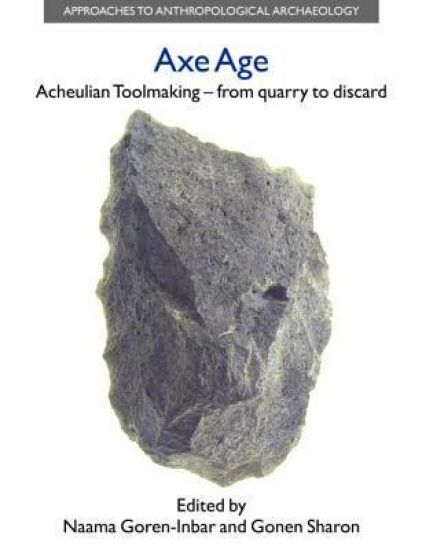
Axe Age

Axe Age

Naama Goren-Inbar; Sharon Gonen

Equinox Publishing Ltd
2006
sidottu
"Axe Age" is dedicated to the Acheulian, a unique cultural phenomenon with the longest duration and the widest distribution in the history of humanity. The Acheulian lasted over 1 million years and is well known over three continents (Africa, Europe and Asia). This stone tool tradition is characterized by its hallmark bifacial tools, which include handaxes and cleavers. Though this prehistoric culture has been investigated extensively for over a century, countless questions have remained unanswered. Many of them are addressed in this volume. The volume, of interest to both scholars and students, presents original contributions that expand the scope of our understanding of this intriguing cultural entity. The contributions cover a vast geographic terrain and a large array of issues expressing hominin cognitive abilities and behavioral modes, such as landscape exploitation, production of bifacial tools and their classification, regional diversity, transmission of knowledge, transportation and discard patterns. Of the many authors, some are eminent scholars of worldwide reputation in Acheulian research, while others are young scholars reporting on their original research data. All of them contribute to gaining an improved understanding of the Acheulians and their culture.
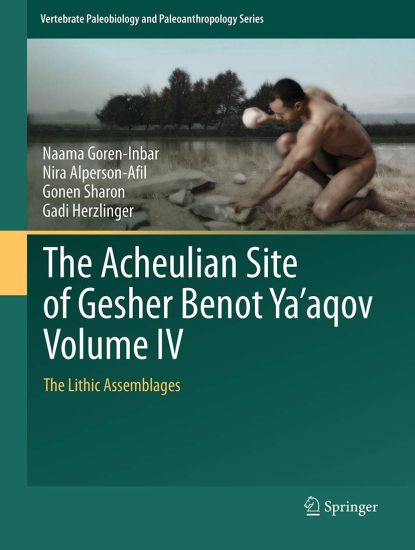
The Acheulian Site of Gesher Benot Ya‘aqov Volume IV

The Acheulian Site of Gesher Benot Ya‘aqov Volume IV

Naama Goren-Inbar; Nira Alperson-Afil; Gonen Sharon; Gadi Herzlinger

Springer Nature Switzerland AG
2019
nidottu
This manuscript is the 4th Volume of the Gesher Benot Ya‘aqov (GBY) monograph sub-series. The goal of the book is to publish the lithic assemblages originating in the excavations of the Acheulian site at Gesher Benot Ya‘aqov (GBY), Israel. The authors provide the readers with detailed descriptions of the lithic assemblages, illustrations (maps, photographs, drawings) and complete inventory of the artifacts that were excavated during the seven field seasons of 1989-1997 (two in 1997) under the directorship of Prof. Naama Goren-Inbar. This manuscript includes the classification of Large Cutting Tools (bifaces: handaxes and cleavers), Cores and Core Tools, and Flake Tools made of three different raw materials (flint, basalt and limestone). This major classification system enables, in addition to the characterization of the assemblages, intra and inter assemblage analyses and comparisons. It forms the foundation and means with which the GBY cultural sequence can be investigated and compared with other Levantine, African and Asian Acheulian entities. From a methodological perspective the authors apply a detailed attribute analysis to all lithic items, a method that integrates morpho-technoogical and stylistic observations culminating in better understanding of the Acheulian realm as documented by the analysis. This analysis is aimed to refine and improve the understanding beyond that of types and their technology and to allow describing the reduction sequence (chaîne opératoire) of some of the major components of the lithic asemblages. The unique record of diverse data from GBY provides insight into hominin behavior (through time) along the margins of the paleo-Lake Hula, and sheds light on processes that led to the colonization of other parts of Eurasia. The book will be of interest to academics and students in all disciplines of Quaternary studies, and to archaeologists using GIS for intra-site spatial analysis.
The Acheulian Site of Gesher Benot Ya‘aqov Volume IV

The Acheulian Site of Gesher Benot Ya‘aqov Volume IV

Naama Goren-Inbar; Nira Alperson-Afil; Gonen Sharon; Gadi Herzlinger

Springer International Publishing AG
2018
sidottu
This manuscript is the 4th Volume of the Gesher Benot Ya‘aqov (GBY) monograph sub-series. The goal of the book is to publish the lithic assemblages originating in the excavations of the Acheulian site at Gesher Benot Ya‘aqov (GBY), Israel. The authors provide the readers with detailed descriptions of the lithic assemblages, illustrations (maps, photographs, drawings) and complete inventory of the artifacts that were excavated during the seven field seasons of 1989-1997 (two in 1997) under the directorship of Prof. Naama Goren-Inbar. This manuscript includes the classification of Large Cutting Tools (bifaces: handaxes and cleavers), Cores and Core Tools, and Flake Tools made of three different raw materials (flint, basalt and limestone). This major classification system enables, in addition to the characterization of the assemblages, intra and inter assemblage analyses and comparisons. It forms the foundation and means with which the GBY cultural sequence can be investigated and compared with other Levantine, African and Asian Acheulian entities. From a methodological perspective the authors apply a detailed attribute analysis to all lithic items, a method that integrates morpho-technoogical and stylistic observations culminating in better understanding of the Acheulian realm as documented by the analysis. This analysis is aimed to refine and improve the understanding beyond that of types and their technology and to allow describing the reduction sequence (chaîne opératoire) of some of the major components of the lithic asemblages. The unique record of diverse data from GBY provides insight into hominin behavior (through time) along the margins of the paleo-Lake Hula, and sheds light on processes that led to the colonization of other parts of Eurasia. The book will be of interest to academics and students in all disciplines of Quaternary studies, and to archaeologists using GIS for intra-site spatial analysis.
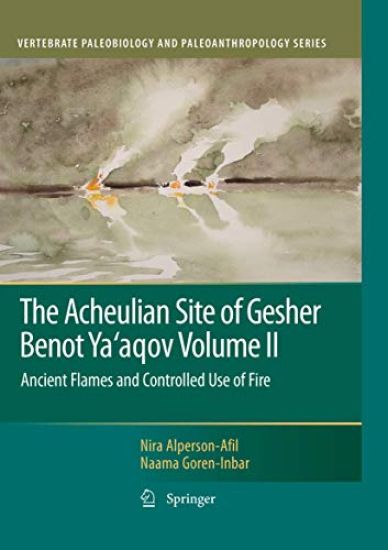
The Acheulian Site of Gesher Benot Ya’aqov Volume II

The Acheulian Site of Gesher Benot Ya’aqov Volume II

Nira Alperson-Afil; Naama Goren-Inbar

Springer
2010
sidottu
A View from Western Europe Most archaeologists would agree that the emergence of stone tool manufacture and the m- agement of fre are the two most signifcant events in the cultural evolution of early humans. The oldest known stone artifacts are securely dated to 2. 6–2. 5 Ma at several localities in Ethiopia; their association with ungulate remains and observations of cut marks prove that one of their main functions was for butchery (Domínguez-Rodrigo et al. 2005). The record of early stone tools from a number of sites in the time span 2. 5–2. 0 Ma is unequivocal; tool use and manufacture were a regular activity with evidence of planning, foresight and considerable technical skills (Delagnes and Roche 2005). In contrast, the timing of the human control of fre is not fully resolved and the antiquity of its habitual use has been debated until now. This book provides very strong evidence of the habitual use of fre by early humans at the Acheulian site of Gesher Benot Ya‘aqov (Israel). The sedimentary sequence at the site is 34 m thick, and it represents different depositional environments, mainly beaches along the margins of a paleo-lake. The Matuyama-Brunhes chron boundary, dated to 0. 78 Ma, occurs in the lower part of the sequence.
The Acheulian Site of Gesher Benot Ya’aqov Volume II

The Acheulian Site of Gesher Benot Ya’aqov Volume II

Nira Alperson-Afil; Naama Goren-Inbar

Springer
2012
nidottu
A View from Western Europe Most archaeologists would agree that the emergence of stone tool manufacture and the m- agement of fre are the two most signifcant events in the cultural evolution of early humans. The oldest known stone artifacts are securely dated to 2. 6–2. 5 Ma at several localities in Ethiopia; their association with ungulate remains and observations of cut marks prove that one of their main functions was for butchery (Domínguez-Rodrigo et al. 2005). The record of early stone tools from a number of sites in the time span 2. 5–2. 0 Ma is unequivocal; tool use and manufacture were a regular activity with evidence of planning, foresight and considerable technical skills (Delagnes and Roche 2005). In contrast, the timing of the human control of fre is not fully resolved and the antiquity of its habitual use has been debated until now. This book provides very strong evidence of the habitual use of fre by early humans at the Acheulian site of Gesher Benot Ya‘aqov (Israel). The sedimentary sequence at the site is 34 m thick, and it represents different depositional environments, mainly beaches along the margins of a paleo-lake. The Matuyama-Brunhes chron boundary, dated to 0. 78 Ma, occurs in the lower part of the sequence.
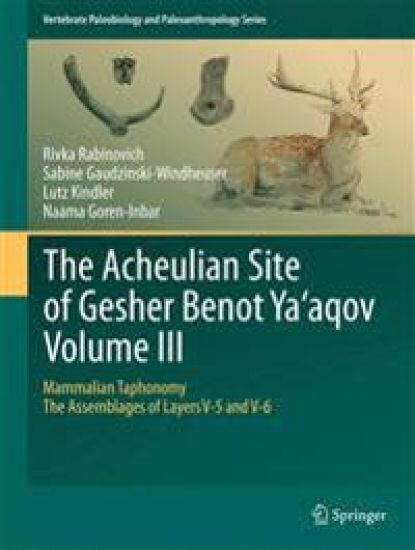
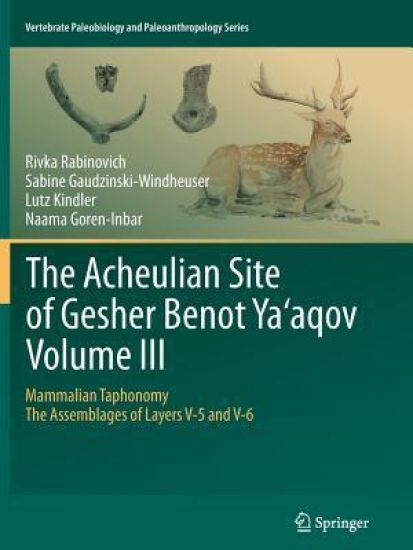
The Acheulian Site of Gesher Benot  Ya‘aqov  Volume III

The Acheulian Site of Gesher Benot Ya‘aqov Volume III

Rivka Rabinovich; Sabine Gaudzinski-Windheuser; Lutz Kindler; Naama Goren-Inbar

Springer
2011
sidottu
Multidisciplinary research on the Early-Middle Pleistocene site of Gesher Benot Ya‘aqov has yielded abundant climatic, environmental, ecological and behavioral records. The 15 archaeological horizons form a sequence of Acheulian occupational episodes on the shore of the paleo-Lake Hula. These enable us to reconstruct numerous aspects of the survival and adaptation of ancient hominins, leading to a better understanding of their evolution and behavior. This book presents the faunal analyses of medium-sized and large mammals, providing taxonomic, taphonomic and actualistic data for the largest faunal assemblages. The study of modes of animal exploitation reveals valuable information on hominin behavior.
The Acheulian Site of Gesher Benot  Ya‘aqov  Volume III

The Acheulian Site of Gesher Benot Ya‘aqov Volume III

Rivka Rabinovich; Sabine Gaudzinski-Windheuser; Lutz Kindler; Naama Goren-Inbar

Springer
2014
nidottu
Multidisciplinary research on the Early-Middle Pleistocene site of Gesher Benot Ya‘aqov has yielded abundant climatic, environmental, ecological and behavioral records. The 15 archaeological horizons form a sequence of Acheulian occupational episodes on the shore of the paleo-Lake Hula. These enable us to reconstruct numerous aspects of the survival and adaptation of ancient hominins, leading to a better understanding of their evolution and behavior. This book presents the faunal analyses of medium-sized and large mammals, providing taxonomic, taphonomic and actualistic data for the largest faunal assemblages. The study of modes of animal exploitation reveals valuable information on hominin behavior.
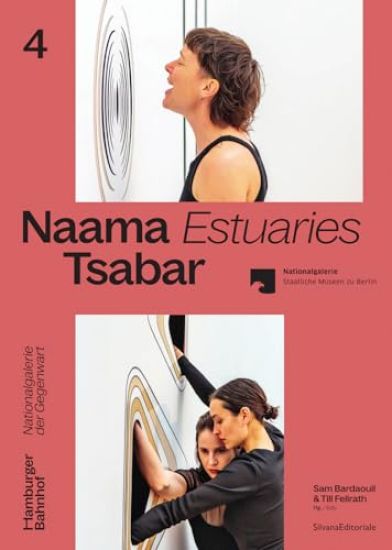
Naama Tsabar
Naama Tsabar’s art overcomes the boundaries of sculpture, music, performance and architecture: Hamburger Bahnhof presents the installation and performance artist with her first institutional solo exhibition in Germany. The exhibition Estuaries focuses on four bodies of work with wall and floor pieces that also function as musical instruments and can be activated by the audience. The performance, created especially in the exhibition, is developed in close collaboration with a group of female identifying or gender non-confirming musicians and dancers from Berlin, New York and Los Angeles and will be premiered on the opening weekend. The exhibition presents on about 420 sqm four series of over twenty works that correspond with each other both visually and sonically throughout the exhibition space. Naama Tsabar reveals hidden spaces and systems in her interactive works, re-defining gendered narratives and shifting the viewing experience to a moment of active participation. This is the fourth in a series of publications accompanying solo exhibitions of contemporary artists at Hamburger Bahnhof – Nationalgalerie der Gegenwart. It comprises a curatorial text by Ingrid Buschmann, an interview with the artist, and a contribution by Fiona McGovern that situates Naama Tsabar’s work within a larger context. Text in English and German.
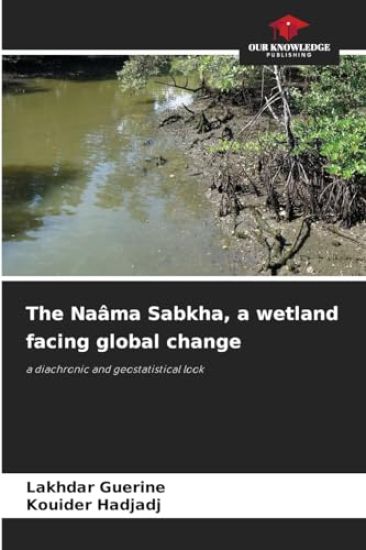
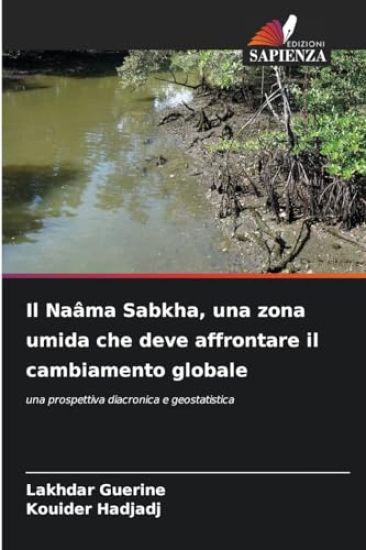
The Naâma Sabkha, a wetland facing global change

The Naâma Sabkha, a wetland facing global change

Lakhdar Guerine; Kouider Hadjadj

Our Knowledge Publishing
2024
pokkari
This study focuses on the past (1985) and current (2018) evolution of the Sabkha of Na ma, with particular emphasis on crucial parameters such as salinity, vegetation, and water status. The main objective is to provide essential data for the conservation of the biodiversity of this region. The results obtained through representative sampling, including 136 soil samples at two distinct depths (4 cm and 30 cm), are at the heart of this analysis. Salinity analyzes reveal maximum values reaching 115.3 g/l at 4 cm depth and 80.3 g/l at 30 cm. As for conductivity, the highest values are 198.4 mS at 4 cm and 141.89 mS at 30 cm, respectively. Furthermore, the results highlight a variation in the pH of the Sabkha soil, oscillating between weakly alkaline and strongly alkaline. The diachronic approach, based on the analysis of the NDVI of satellite images Landsat_5, Landsat_8, and Sentinel_2, offers a fascinating insight of the evolution of vegetation over a period of 33 years. Using the NDWI over the same period highlights the growing water deficit in the region over time.
Il Naâma Sabkha, una zona umida che deve affrontare il cambiamento globale
Questo studio si concentra sull'evoluzione passata (1985) e attuale (2018) del Sabkha di Na ma, con particolare enfasi su parametri cruciali come la salinit , la vegetazione e lo stato dell'acqua. L'obiettivo principale fornire dati essenziali per la conservazione della biodiversit di questa regione. I risultati ottenuti attraverso un campionamento rappresentativo, comprendente 136 campioni di terreno a due distinte profondit (4 cm e 30 cm), sono al centro di questa analisi. Le analisi della salinit rivelano valori massimi che raggiungono 115,3 g/l a 4 cm di profondit e 80,3 g. /l a 30 cm. Per quanto riguarda la conduttivit , i valori pi alti sono rispettivamente 198,4 mS a 4 cm e 141,89 mS a 30 cm. Inoltre, i risultati evidenziano una variazione del pH del suolo Sabkha, che oscilla tra debolmente alcalino e fortemente alcalino. L'approccio diacronico, basato sull'analisi dell'NDVI delle immagini satellitari Landsat_5, Landsat_8 e Sentinel_2, offre uno spaccato affascinante del pH. evoluzione della vegetazione in un periodo di 33 anni. L'utilizzo dell'NDWI nello stesso periodo evidenzia il crescente deficit idrico nella regione nel corso del tempo.
O Naâma Sabkha, uma zona húmida que enfrenta as alterações globais

O Naâma Sabkha, uma zona húmida que enfrenta as alterações globais

Lakhdar Guerine; Kouider Hadjadj

Edicoes Nosso Conhecimento
2024
pokkari
Este estudio se centra en la evoluci n pasada (1985) y actual (2018) del Sabkha de Na ma, con especial nfasis en par metros cruciales como la salinidad, la vegetaci n y el estado del agua. El objetivo principal es proporcionar datos esenciales para la conservaci n de la biodiversidad de esta regi n. Los resultados obtenidos mediante muestreos representativos, que incluyen 136 muestras de suelo a dos profundidades distintas (4 cm y 30 cm), son el n cleo de este an lisis. Los an lisis de salinidad revelan valores m ximos que alcanzan 115,3 g/l a 4 cm de profundidad y 80,3 g. /l a 30 cm. En cuanto a la conductividad, los valores m s altos son 198,4 mS a 4 cm y 141,89 mS a 30 cm, respectivamente. Adem s, los resultados ponen de relieve una variaci n en el pH del suelo de Sabkha, que oscila entre d bilmente alcalino y fuertemente alcalino. El enfoque diacr nico, basado en el an lisis del NDVI de las im genes de sat lite Landsat_5, Landsat_8 y Sentinel_2, ofrece una visi n fascinante del suelo. Evoluci n de la vegetaci n durante un per odo de 33 a os. El uso del NDWI durante el mismo per odo resalta el creciente d ficit de agua en la regi n a lo largo del tiempo.
Sikandar-Naama (Novel) (Editionfirst)
Sikandar-Naama is the story of a fool named 'Sikandar' from the city of Budaun (Uttar Pradesh State), which Salma Siddiqui has presented not only with brilliance but also with colors of sincerity and compassion. Along with interest and charm, it also reflects the color of deep humanity. The fool lives in a world of opportunism, but he does not adopt opportunism himself. Even in an environment of hypocrisy, the fool speaks the truth without any hesitation. The fool has a bitter and harsh tongue and a sincere and sweet heart. A fool is never a great man, but a fool is not a bad man either./سکندرنامہ علاقہ بدایوں کے ایک بدھو کی کہانی ہے جسے سلمٰی صدیقی نے صرف روشنائی سے نہیں بلکہ خلوص اور ہمدردی کے رنگوں کے ساتھ پیش کیا ہے۔ اس میں دلچسپی اور دلکشی کے ساتھ گہری انسانیت کا رنگ بھی جھلکتا ہے۔ بدھو موقع پرستی کی دنیا میں رہتا تو ہے مگر خود موقع پرستی اختیار نہیں کرتا۔ ریاکاری کے ماحول میں بھی بدھو بےاختیار سچ بول دیتا ہے۔ بدھو زبان کا کڑوا اور کھردرا اور دل کا کھرا اور میٹھا ہے۔ بدھو کبھی بڑا آدمی نہیں ہوتا مگر بدھو برا آدمی بھی نہیں ہوتا۔
Die Sabkha von Naâma, ein Feuchtgebiet im Angesicht des globalen Wandels

Die Sabkha von Naâma, ein Feuchtgebiet im Angesicht des globalen Wandels

Lakhdar Guerine; Kouider Hadjadj

Verlag Unser Wissen
2024
pokkari
Diese Studie konzentriert sich auf die vergangene (1985) und aktuelle (2018) Entwicklung des Sabkha von Na ma, mit besonderem Schwerpunkt auf entscheidenden Parametern wie Salzgehalt, Vegetation und Wasserzustand. Das Hauptziel besteht darin, wesentliche Daten f r die Erhaltung der Artenvielfalt dieser Region bereitzustellen. Die Ergebnisse einer repr sentativen Probenahme, darunter 136 Bodenproben in zwei unterschiedlichen Tiefen (4 cm und 30 cm), stehen im Mittelpunkt dieser Analyse. Salzgehaltsanalysen zeigen H chstwerte von 115,3 g/l in 4 cm Tiefe und 80,3 g /l bei 30 cm. Bei der Leitf higkeit liegen die h chsten Werte bei 198,4 mS bei 4 cm bzw. 141,89 mS bei 30 cm. Dar ber hinaus verdeutlichen die Ergebnisse eine Variation des pH-Werts des Sabkha-Bodens, der zwischen schwach alkalisch und stark alkalisch schwankt. Der diachrone Ansatz, der auf der Analyse des NDVI der Satellitenbilder Landsat_5, Landsat_8 und Sentinel_2 basiert, bietet einen faszinierenden Einblick in die Entwicklung der Vegetation ber einen Zeitraum von 33 Jahren. Die Verwendung des NDWI ber denselben Zeitraum verdeutlicht das im Laufe der Zeit wachsende Wasserdefizit in der Region.
10979 shrii keishavaadi chaturvin'shati naama kiirtanalu

10979 shrii keishavaadi chaturvin'shati naama kiirtanalu

Shrii Sudarshanadaasaakhya Kavi

Hutson Street Press
2025
sidottu
10979 shrii keishavaadi chaturvin'shati naama kiirtanalu is a collection of devotional songs composed by shrii sudarshanadaasaakhya kavi. Written in Telugu, these hymns are dedicated to Shri Kesava and encompass twenty-four names associated with the deity. This work offers a glimpse into early 20th-century Telugu religious literature and provides valuable insights into Hindu devotional practices. The compositions are intended for liturgical use and reflect the rich tradition of keertanas in South Indian religious expression. Scholars and devotees alike will find this collection a valuable resource for understanding the cultural and spiritual landscape of the time. This work has been selected by scholars as being culturally important, and is part of the knowledge base of civilization as we know it. This work was reproduced from the original artifact, and remains as true to the original work as possible. Therefore, you will see the original copyright references, library stamps (as most of these works have been housed in our most important libraries around the world), and other notations in the work. This work is in the public domain in the United States of America, and possibly other nations. Within the United States, you may freely copy and distribute this work, as no entity (individual or corporate) has a copyright on the body of the work. As a reproduction of a historical artifact, this work may contain missing or blurred pages, poor pictures, errant marks, etc. Scholars believe, and we concur, that this work is important enough to be preserved, reproduced, and made generally available to the public. We appreciate your support of the preservation process, and thank you for being an important part of keeping this knowledge alive and relevant.