Kirjojen hintavertailu. Mukana 11 213 693 kirjaa ja 12 kauppaa.

Kirjahaku

Etsi kirjoja tekijän nimen, kirjan nimen tai ISBN:n perusteella.

262 tulosta hakusanalla Nabeel Hamdi

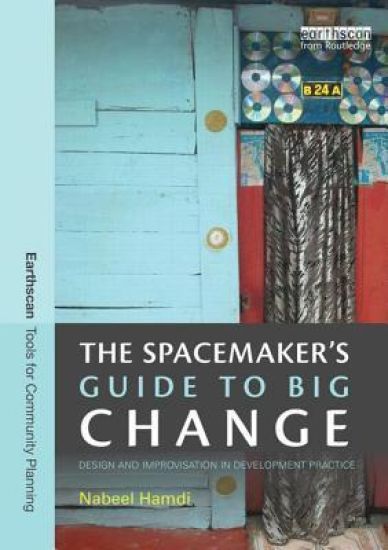
The Spacemaker's Guide to Big Change
This book gives definition to participatory practice as a necessary form of activism in development planning for cities. It gives guidance on how practice can make space for big and lasting change and for new opportunities to be discovered. It points to ways of building synergy and negotiating our way in the social and political spaces ‘in between’ conventional and often competing ideals – public and private interests, top down and bottom up, formal and informal, the global agendas which outsiders promote and the local needs of insiders, for example. It offers guidance on process, designed to close gaps and converge worlds which we know have become divisive and discriminatory, working from the detail of everyday life in search of beginnings that count, building out and making meaningful locally, the abstractions of the global causes we champion – poverty alleviation, environmental sustainability, resilience.Practice – the collective process by which decisions are negotiated, plans designed and actions taken in response to needs and aspirations, locally and globally – we will see, is not just about being practical, but more. Its purpose is to give structure to our understanding of the order and disorder in our cities today, then to disturb that order when it has become inefficient or inequitable, even change it. It is to add moral value to morally questionable planning practice and so build "a social economy for the satisfaction of human need." Practice in these spaces ‘in-between’ redraws the boundaries of expectation of disciplinary work and offers a new high ground of moral purpose from which to be more creative, more integrated, more relevant, more resourceful – more strategic.
The Spacemaker's Guide to Big Change
This book gives definition to participatory practice as a necessary form of activism in development planning for cities. It gives guidance on how practice can make space for big and lasting change and for new opportunities to be discovered. It points to ways of building synergy and negotiating our way in the social and political spaces ‘in between’ conventional and often competing ideals – public and private interests, top down and bottom up, formal and informal, the global agendas which outsiders promote and the local needs of insiders, for example. It offers guidance on process, designed to close gaps and converge worlds which we know have become divisive and discriminatory, working from the detail of everyday life in search of beginnings that count, building out and making meaningful locally, the abstractions of the global causes we champion – poverty alleviation, environmental sustainability, resilience.Practice – the collective process by which decisions are negotiated, plans designed and actions taken in response to needs and aspirations, locally and globally – we will see, is not just about being practical, but more. Its purpose is to give structure to our understanding of the order and disorder in our cities today, then to disturb that order when it has become inefficient or inequitable, even change it. It is to add moral value to morally questionable planning practice and so build "a social economy for the satisfaction of human need." Practice in these spaces ‘in-between’ redraws the boundaries of expectation of disciplinary work and offers a new high ground of moral purpose from which to be more creative, more integrated, more relevant, more resourceful – more strategic.
INTELLIGENT PRACTICE AND PRACTISING INTELLIGENCE
What exactly is 'small change'? Build a bus stop in an urban slum and a vibrant community sprouts and grows around it - that is the power of small changes that have huge positive effects. This book is an argument for the wisdom of the street, the ingenuity of the improvisers and the long-term, large-scale effectiveness of immediate, small-scale actions. Written by Nabeel Hamdi, the guru of urban participatory development and the master of the art, Small Change brings over three decades of experience and knowledge to bear on the question 'what is practice'?. Through an easy-to-read narrative style, and using examples from the North and South, the author sheds light on this question and the issues that stem from it - issues relating to political context, the lessons of the 'informal city', and the pursuit of learning that challenges convention. The result is a comprehensive, yet imaginative, guide to the forms of knowledge, competencies and ways of thinking that are fundamental to skilful practice in urban development. This is powerful, informed, critical and inspiring reading for practitioners in the field, students and teachers of urban development, those who manage international aid and everyone looking to build their community.
Small Change

Small Change

Nabeel Hamdi

Earthscan Ltd
2004
sidottu
What exactly is 'small change'? Build a bus stop in an urban slum and a vibrant community sprouts and grows around it - that is the power of small changes that have huge positive effects. This book is an argument for the wisdom of the street, the ingenuity of the improvisers and the long-term, large-scale effectiveness of immediate, small-scale actions. Written by Nabeel Hamdi, the guru of urban participatory development and the master of the art, Small Change brings over three decades of experience and knowledge to bear on the question 'what is practice'?. Through an easy-to-read narrative style, and using examples from the North and South, the author sheds light on this question and the issues that stem from it - issues relating to political context, the lessons of the 'informal city', and the pursuit of learning that challenges convention. The result is a comprehensive, yet imaginative, guide to the forms of knowledge, competencies and ways of thinking that are fundamental to skilful practice in urban development. This is powerful, informed, critical and inspiring reading for practitioners in the field, students and teachers of urban development, those who manage international aid and everyone looking to build their community.
The Placemaker's Guide to Building Community
From the author of Small Change comes this engaging guide to placemaking, packed with practical skills and tools that architects, planners, urban designers and other built environment specialists need in order to engage effectively with development work in any context. Drawing on four decades of practical and teaching experience, the author offers fresh insight into the complexities faced by practitioners when working to improve the communities, lives and livelihoods of people the world over. This title shows how these complexities are a context for, rather than a barrier to, creative work. The Placemaker's Guide to Building Community also critiques the single vision top down approach to design and planning. Using examples of successful professional practice across Europe, the US, Africa, Latin America and post-tsunami Asia, the author demonstrates how good policy can derive from good practices when reasoned backwards, as well as how plans can emerge in practice without a preponderance of planning. Reasoning backwards is shown to be a more effective and inclusive way of planning forwards with significant improvements to the quality of process and place. Nabeel Hamdi offers a variety of methods and tools for analyzing the issues, engaging with communities and other stakeholders for design and settlement planning and for improving the skills of all involved in placemaking. Ultimately the book serves as an inspiring guide, and a distillation of decades of practical wisdom and experience. The resulting practical handbook is for all those involved in doing, learning and teaching placemaking and urban development world-wide.
The Placemaker's Guide to Building Community
From the author of Small Change comes this engaging guide to placemaking, packed with practical skills and tools that architects, planners, urban designers and other built environment specialists need in order to engage effectively with development work in any context. Drawing on four decades of practical and teaching experience, the author offers fresh insight into the complexities faced by practitioners when working to improve the communities, lives and livelihoods of people the world over. This title shows how these complexities are a context for, rather than a barrier to, creative work. The Placemaker's Guide to Building Community also critiques the single vision top down approach to design and planning. Using examples of successful professional practice across Europe, the US, Africa, Latin America and post-tsunami Asia, the author demonstrates how good policy can derive from good practices when reasoned backwards, as well as how plans can emerge in practice without a preponderance of planning. Reasoning backwards is shown to be a more effective and inclusive way of planning forwards with significant improvements to the quality of process and place. Nabeel Hamdi offers a variety of methods and tools for analyzing the issues, engaging with communities and other stakeholders for design and settlement planning and for improving the skills of all involved in placemaking. Ultimately the book serves as an inspiring guide, and a distillation of decades of practical wisdom and experience. The resulting practical handbook is for all those involved in doing, learning and teaching placemaking and urban development world-wide.
Housing without Houses

Housing without Houses

Nabeel Hamdi

Practical Action Publishing
1995
nidottu
This book presents a wide range of innovative ideas and practical methods for housing, together with illustrative examples and actual projects. Its methods are targeted to housing production in places where resources are scarce, demand is high, urgency is acute, and where change and uncertainty are a way of life. The book shows that, under these conditions, efficient practice depends on methods that promote rather than hinder local action and are based on spontaneity, improvization and incremental development.
Educating for Real

Educating for Real

Nabeel Hamdi

Practical Action Publishing
1996
nidottu
Emerging trends in development practice place new demands on planning, engineering and building design. Changes in global political and economic systems, rapid demographic changes, protracted ethnic conflict, political and economic reforms all compound already strained national development agendas. Added to these complex issues are the current commitments to the environment, gender, appropriate technology and human well-being. How should education respond? Are today's approaches to research and teaching appropriate to the realities in the field? How best can students be equipped, technically, methodologically, and intellectually? Why study in the 'developed' countries at all? This interdisciplinary selection of 12 essays explores topics central to the education of development professionals; in particular planners, urban designers, engineers, and architects.
Urban Futures

Urban Futures

Nabeel Hamdi

Practical Action Publishing
2005
nidottu
Poverty and economic growth are intrinsically related but are not always synonymous. Human wellbeing is as important to economic growth as growth is to wellbeing. Poverty is multi-dimensional, encompassing both income and non-income related factors. Mobility, aspiration, dignity, respect, knowledge, information and savvy feature importantly in our understanding of the dynamics of poverty. This book brings together a collection of essays from around the world on urban development and poverty. The book reviews current international research in respect to some of the major themes that contribute to improving the equity and efficiency of urban systems. Importantly, it explores and sets out methodologies for understanding qualitatively the dynamics of poverty and urban development. Organized into three parts, the book adopts as its principal theme poverty and the eradication of extreme poverty. Part 1 The Dynamics of Poverty and Urban Poverty Research offers a framework for understanding poverty and a methodology for research. Part 2 The Dynamics of Urban Systems includes a selection of country specific essays each focused on an aspect of urban development and its relation to poverty.Part 3 Urban Futures reviews the principal themes emerging from the chapters and offers a basis for future work.
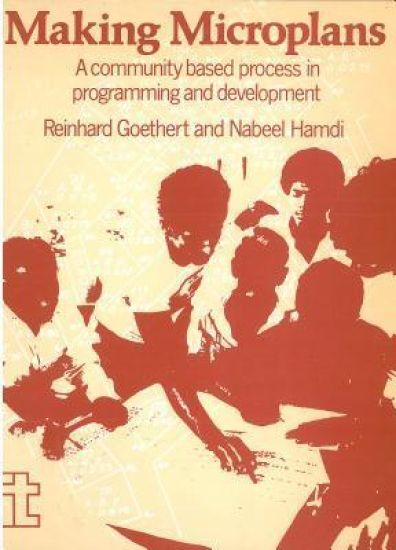
Making Microplans

Making Microplans

Nabeel Hamdi; Reinhard Goethert

Practical Action Publishing
1988
nidottu
Microplanning is a community-based process which enables local people to prepare and implement programmes for settlement upgrading. Local participants contribute to both the content and structure of programmes. Case studies from Chile and Sri Lanka.
Partnerships in Urban Planning

Partnerships in Urban Planning

Nabeel Hamdi; Michael Majale

Practical Action Publishing
2006
nidottu
Based on a three-year project in Kenya, this booklet examines the key features in understanding the development of participatory urban planning strategies and approaches that will assist in safeguarding of the position of poor and vulnerable. The book aims to help readers to understand power relations, and comparative advantage as a basis for deciding on partners; safeguard the poor and vulnerable in partnership formation; decide the type of partnership in relationship to purpose; decide the kind of organization to which the partnership will lead; ensure partnerships create organizational identity whilst safeguarding the distinctive identity of individual partners; sort out levels of partner relations in pursuit of both practical and strategic agendas; understand partnership capacities interests and priorities as a basis for partner selection; assess the advantages of participation and partnership and evaluate risk; and utilise participatory action planning methods in order to converge the interests of stakeholders and pool resources.
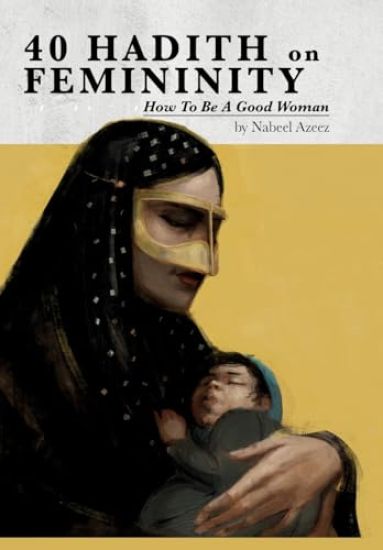
40 Hadith on Femininity

40 Hadith on Femininity

Nabeel Azeez

Nabeel Azeez
2024
sidottu
For hundreds of years, scholars of Islam have written books which compile and expound on 40 hadith. Now Nabeel Azeez, in consultation with Dr. Salah Sharief, has curated 40 Hadith on Femininity: How to Be a Good Woman, a compilation of the most authentic hadith of Prophet Muhammad ﷺ on the subject of femininity, along with translation and commentary.Our approach is to understand the pure, unadulterated teachings of the Messenger of Allah ﷺ, free of any anachronisms or ideological baggage.This book covers topics like Womanliness, Grace, Chastity, Sisterhood, Motherhood, and much more.Our goal is to be like the Prophet Muhammad ﷺ or get as close to this ideal as Allah wills.And we want to help other Muslim women do the same.
Nabeel's Song: A Family Story of Survival in Iraq
NABEEL'S SONG is an epic true story of one family's experience of life before, during and after the regime of Saddam Hussein.Nabeel Yasin had an ordinary childhood, in a middle-class neighbourhood in 1950s Baghdad. He showed an early gift for poetry and as a young man became famous for it. But by the end of the 1970s Saddam's rise to power was encroaching on his life, and that of his family. Nabeel's brothers were arrested and he himself was denounced as an enemy of the state and fled Iraq in 1980. NABEEL'S SONG tells his story, and that of the family that he left behind; his matriarch of a mother Sabria, his four brothers and their rebellion against Saddam's regime, and his two sisters - all ordinary people living in extraordinary and difficult times. This is a moving family story of exile and endurance.'Jo Tatchell's moving narrative, from Nabeel's mouth, tells of endurance, literary resistance and the courage of a loving, close-knit family opporessed by tyranny and war' The Times
Sounds English

Sounds English

Nabeel Zuberi

University of Illinois Press
2001
sidottu
Popular music culture serves as an arena for debates on English and British national identity in this lively discussion of English popular music of the 1980s and 1990s. Against the background of his own upbringing as a Pakistani Brit, Nabeel Zuberi deftly combines a detailed account of the development of this music with a sophisticated assessment of its relation to the politics of cultural identity in Britain. Zuberi looks at how the sounds, images, and lyrics of English popular music generate and critique ideas of national belonging, recasting the social and even the physical landscapes of cities like Manchester and London. The Smiths and Morrissey play on romanticized notions of the (white) English working class, while the Pet Shop Boys map a "queer urban Britain" in the AIDS era. The techno-culture of raves and dance clubs incorporates both an anti-institutional do-it-yourself politics and emergent leisure practices, while the potent mix of technology and creativity in British black music includes local conditions as well as a sense of global diaspora. British Asian musicians, drawing on Afrodiasporic and South Asian traditions, seek a sense of place in Britain as commercial interests try to pin down an image of them to market. Sounds English shows how popular music complicates cherished notions of Englishness as it activates cultural outsiders and taps into a sense of not belonging. Alert and readable, Zuberi's wide-ranging discussion includes the performers Oasis, Blur, Tricky, Massive Attack, Goldie, A Guy Called Gerald, Roni Size, Bally Sagoo, Funˆdaˆmental, Echobelly, Cornershop, Talvin Singh, and others.
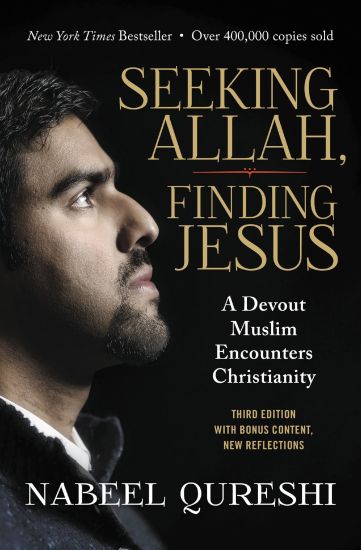
Seeking Allah, Finding Jesus

Seeking Allah, Finding Jesus

Nabeel Qureshi; Lee Strobel

Zondervan
2018
nidottu
NEW YORK TIMES BESTSELLER • 2015 Christian Book Award winner • Nabeel Qureshi describes his dramatic journey from Islam to Christianity in this expanded edition with new bonus content and reflections. "My friend Nabeel Qureshi was courageous enough to chase down the truth with intellectual integrity, no matter the personal cost," --Lee Strobel, bestselling author of The Case for Christ.Providing an intimate view into a loving Muslim home, Qureshi shares how he developed a passion for Islam before discovering, almost against his will, evidence that Jesus rose from the dead and claimed to be God. Unable to deny the arguments but not wanting to deny his family, Qureshi struggled with an inner turmoil that will challenge Christians, Muslims, and all those who are interested in two of the world's greatest religions and the quest for truth.Qureshi--with great courage and intimacy--wrote this book with three major purposes in mind:To tear down walls between two of the world's major religions by giving non-Muslim readers an insider's perspective into a Muslim's heart and mind.To equip the reader with facts and knowledge, showing the strength of the case for the gospel contrasted with the case for Islam.To portray the immense inner struggle of Muslims grappling with the gospel, including all the sacrifices and doubts that rise up along the way.Seeking Allah, Finding Jesus is more than the memoir of a man's pursuit of answers to the most important issues of life and faith. Ultimately, it's the story about the transformative grace and mercy of the one true God.This edition has been expanded to include:A revised foreword and introductionA new afterword by apologist Mark Mittelberg and a reflection by Nabeel's wifeA substantially extended epilogue that shares how Nabeel told his friend David of his decision to follow Christ, how his parents found out, and moreExpert contributions from scholars and ministry leaders on each section of the book, contributions previously included only in the ebook editionAn appendix with a topical table of contents (for teaching from Seeking Allah, Finding Jesus)An appendix tackling the objection that Ahmadi Muslims--the Islamic movement that Qureshi was raised in--are not true MuslimsAnd a sneak peek prologue from Nabeel's book, No God but One: Allah or Jesus?
Seeking Allah, Finding Jesus Study Guide plus Streaming Video
This Study Guide includes access to streaming video sessions and develops in further detail the objections to Islam and the case for Christianity that Qureshi introduced in his bestseller Seeking Allah, Finding Jesus.Building on his personal experiences with two of the world's largest religions and the powerful Christian apologetics he developed in his book, Nabeel Qureshi and co-author Kevin Harney deepen their focus on how to share Christ and the good news of the Gospel with Muslims in this complete study course. This study guide includes eight sessions in which Qureshi explores:Muslim cultureThe most common Muslim objections to ChristianityThe core doctrines upon which Islam stands or fallsCompassionate and clear, the Seeking Allah Finding Jesus Study Guide is a useful training tool for pastors, outreach leaders, and any believers who want to winsomely engage Muslim neighbors in spiritual conversations.This accessible course is complete with free access to streaming videos, video teachings notes, questions for group discussion and personal reflection, definitions of common Muslim terms, passages from both the Bible and the Quran, and other learning tools for classes, small groups and independent learners alike.This study guide has everything you need for a full personal or group experience.The study guide itself—with thoughtful introductions, questions for personal reflection and application, and discussion questions for leading a group or teamAn individual access code to stream all video sessions online. (You don’t need to buy a DVD!)Sessions and video run times:Understanding Muslims (26 min)Testing the New Testament (26 min)Coming to the Crux (26 min)Jesus: Mortal Messiah or Divine Son of God? (32 min)The Case for the Gospel (34 min)The Truth About Muhammad (26 min)The Holiness of the Quran (29 min)Reaching Your Muslim Neighbor (30 min)Streaming video access code included. Access code subject to expiration after June 17, 2030. Code may be redeemed only by the recipient of this package. Code may not be transferred or sold separately from this package. Internet connection required. Void where prohibited, taxed, or restricted by law. Additional offer details inside.
No God but One: Allah or Jesus?

No God but One: Allah or Jesus?

Nabeel Qureshi

Zondervan
2016
nidottu
Having shared his journey of faith in the New York Times bestselling Seeking Allah, Finding Jesus, Nabeel Qureshi now examines Islam and Christianity in detail, exploring areas of crucial conflict and unpacking the relevant evidence.In this anticipated follow-up book, Nabeel reveals what he discovered in the decade following his conversion, providing a thorough and careful comparison of the evidence for Islam and Christianity--evidence that wrenched his heart and transformed his life.In Seeking Allah, Finding Jesus, Nabeel Qureshi recounted his dramatic journey, describing his departure from Islam and his decision to follow Christ. In the years that followed, he realized that the world’s two largest religions are far more different than they initially appeared.No God but One: Allah or Jesus? addresses the most important questions at the interface of Islam and Christianity: How do the two religions differ? Are the differences significant? Can we be confident that either Christianity or Islam is true? And most important, is it worth sacrificing everything for the truth?Nabeel shares stories from his life and ministry, casts new light on current events, and explores pivotal incidents in the histories of both religions, providing a resource that is gripping and thought-provoking, respectful and challenging.Both Islam and Christianity teach that there is No God but One, but who deserves to be worshiped, Allah or Jesus?