Kirjahaku
Etsi kirjoja tekijän nimen, kirjan nimen tai ISBN:n perusteella.
1000 tulosta hakusanalla Nana Blik

Born to drunken parents in the slums of Paris, Nana lives in squalor until she is discovered at the Théâtre des Variétés. She soon rises from the streets to set the city alight as the most famous high-class prostitute of her day. Rich men, Comtes and Marquises fall at her feet, great ladies try to emulate her appearance, lovers even kill themselves for her. Nana's hedonistic appetite for luxury and decadent pleasures knows no bounds - until, eventually, it consumes her. Nana provoked outrage on its publication in 1880, with its heroine damned as 'the most crude and bestial sort of whore', yes the language of the novel makes Nana almost a mythical figure: a destructive force preying on a corrupt society.
'She was the golden beast, an unconscious force, the very scent of her could bring the world to ruin.' Nana, daughter of a drunk and a laundress, is the Helen of Troy of Paris. A sexually magnetic high-class prostitute and actress, she becomes a celebrity, rapidly conquering society, ruining all men who fall under her spell-especially Count Muffat, Chamberlain to the Empress. Nana herself meets a terrible fate, consumed by her own dissipation and extravagance, just as the disastrous war with Prussia is declared. Nana is the ninth instalment in the twenty volume Rougon-Macquart series. The novel opens in 1867, the year of the World Fair, when Paris, thronged by a cosmopolitan élite, was la Ville Lumière, the glittering setting-and object-of Zola's scathing denunciation of society's hypocrisy and moral corruption. Nana comes to symbolize the Second Empire regime itself in all its excesses; but in the final chapters, the narrator seems to suggest that the coming disaster is not so much a result of the corruption of the Empire, as of rampant female sexuality.

J'ai enfin tout ce dont je r vais - un mari d vou , une maison de r ve et la promesse d'un b b . Mais toutes les bonnes choses ont une fin... Alors que je m'installe dans ma nouvelle vie, la fa ade de normalit commence s'effriter. Mon mari autrefois aimant devient de jour en jour plus froid, je sens que les voisins cachent des secrets. Pourtant, c'est Nana, la voisine excentrique avec un pass troublant et un penchant pour la violence, qui projette l'ombre la plus longue sur mon existence. D'une mani re ou d'une autre, je me retrouve plong e dans une descente effroyable faite de mensonges, de trahisons et de ce sentiment inqui tant d'un danger imminent. Je me sens engloutie par ce chaos implacable qui me consume, et je me demande si je pourrai m'en sortir... ou si l' chappatoire deviendra de plus en plus insaisissable. Nana est un remarquable thriller psychologique autonome de C.L Sutton qui met en sc ne des th mes sombres, des motions brutes et de superbes rebondissements.

Considered one of the masterpieces of world-renowned naturalist Emile Zola, "Nana" is his finely written work on the demimonde of France's failing Second Empire. A symbolically compounded novel, it follows the rise and fall of Nana, a street-walking prostitute who becomes an actress at the Th tre des Vari t s. Though apparently independent and self-confident in her role of 'high-class cocette', Nana envies the material possessions of the people around her, and the series of besotted men, and occasionally women, whom she betrays and ruins are a testament to her selfishness and vanity. What is surprising is Zola's genius in creating the strength and generosity of Nana, the elemental goodness in an unintelligent woman who can't seem to prevent herself from initiating chaos. Though she advances through society, she ultimately only manages to fall from greater heights, taking on an almost mythical quality even as she remains eminently realistic. This edition is printed on premium acid-free paper and follows the translation of Burton Rascoe.


Das Buch war bei Erscheinen ein Skandal: Nana arbeitet sich von einem armseligen Dasein als Stra endirne empor in die vornehme Pariser Gesellschaft. Die blonde Venus ist so verf hrerisch, da sie Macht ber alle Repr sentanten der Regierung und der Presse gewinnt und Einsicht in die Lasterhaftigkeit und Verlogenheit der h heren St nde. Der au erordentlich spannende und lebendig geschriebene Roman ist Zolas schonungslose Abrechnung mit einer korrupten Gesellschaft und ein Hauptwerk des Naturalismus'.

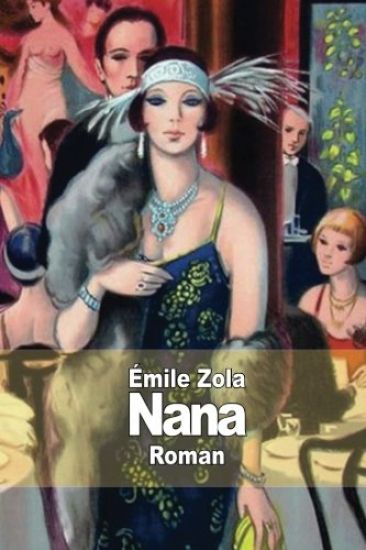
N e en 1852 dans la mis re du monde ouvrier, Nana est la fille de Gervaise et de Coupeau dont l'histoire est narr e dans L'Assommoir. Le d but du roman la montre dans la g ne, manquant d'argent pour lever son fils Louiset qu'elle a eu l' ge de seize ans d'un p re inconnu, elle se prostitue, faisant des passes pour arrondir ses fins de mois. Ceci ne l'emp che pas d'habiter un riche appartement o l'un de ses amants, un riche marchand de Moscou, l'a install e. Son ascension commence avec un r le de V nus qu'elle interpr te dans un th tre parisien: elle ne sait ni parler ni chanter, mais son d hanchement affole tous les hommes, qui r vent de la poss der...
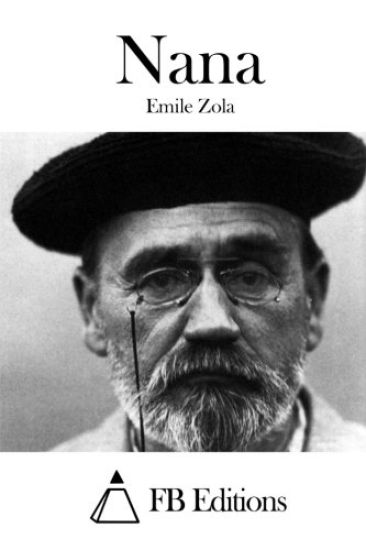
"Nana" de Emile Zola. Romancier fran ais (1840-1902).
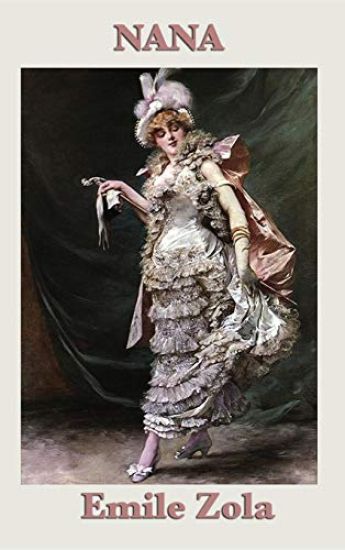
This work has been selected by scholars as being culturally important, and is part of the knowledge base of civilization as we know it. This work was reproduced from the original artifact, and remains as true to the original work as possible. Therefore, you will see the original copyright references, library stamps (as most of these works have been housed in our most important libraries around the world), and other notations in the work.This work is in the public domain in the United States of America, and possibly other nations. Within the United States, you may freely copy and distribute this work, as no entity (individual or corporate) has a copyright on the body of the work.As a reproduction of a historical artifact, this work may contain missing or blurred pages, poor pictures, errant marks, etc. Scholars believe, and we concur, that this work is important enough to be preserved, reproduced, and made generally available to the public. We appreciate your support of the preservation process, and thank you for being an important part of keeping this knowledge alive and relevant.

Nana est l'une des oeuvres les plus repr sentatives de l' crivain Emile Zola, auteur fran ais du naturaliste du XIXe si cle et p re du plus grand exposant de ce mouvement. Nana a t publi en 1880. Le titre de l'oeuvre fait r f rence au nom que l'on donne la protagoniste, Anne Copeau, descendant de la ligne de Macquart de la famille, appartenant la branche ill gitime de la famille, qui est influenc e par le les d fauts et les d fauts de l'h ritage g n tique, comme indiqu par la pens e d terministe. Ce roman appartient la Les Rougon-Macquart, qui rassemble 20 oeuvres de cet auteur, dont les plus importants sont, c t de lui, B te humaine et germinal s rie tant celle-ci qui est plus important. Le th me principal du jeu est les aventures protagoniste dans lequel pr domine une grande personnalit qui vit dans la prostitution. L'auteur essaie de transmettre la situation de l' poque travers le travail et l'importance pour le protagoniste de l'argent au lieu d'un v ritable amour travers le personnage principal.
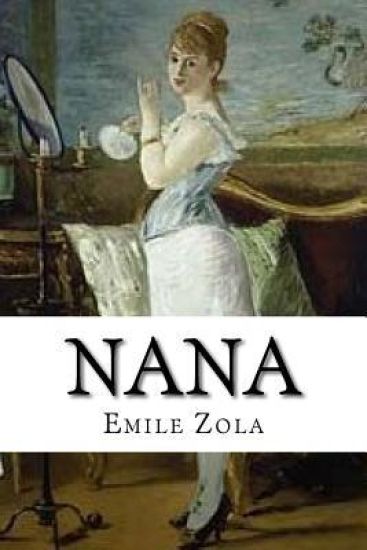
Nana is a novel by the French naturalist author mile Zola. Completed in 1880, Nana is the ninth installment in the 20-volume Les Rougon-Macquart series, which was to tell "The Natural and Social History of a Family under the Second Empire." The novel was an immediate success. Le Voltaire, the French newspaper that was to publish it in installments from October 1879 on, had launched a gigantic advertising campaign, raising the curiosity of the reading public to a fever pitch. When Charpentier finally published Nana in book form in February 1880, the first edition of 55,000 copies was sold out in one day.
Nana is a novel by the French naturalist author mile Zola. Completed in 1880, Nana is the ninth installment in the 20-volume Les Rougon-Macquart series, which was to tell "The Natural and Social History of a Family under the Second Empire." The novel was an immediate success. Le Voltaire, the French newspaper that was to publish it in installments from October 1879 on, had launched a gigantic advertising campaign, raising the curiosity of the reading public to a fever pitch. When Charpentier finally published Nana in book form in February 1880, the first edition of 55,000 copies was sold out in one day. Flaubert and Edmond de Goncourt were full of praise for Nana. On the other hand, a part of the non-reading public, spurred on by some critics, reacted to the book with outrage. While the novel is held up as a fine example of writing, it is not especially true to Zola's touted naturalist philosophy; instead, it is one of the most symbolically complex of his novels, setting it apart from the earthy "realism" of L'Assommoir or the more brutal "realism" of La Terre (1887). However, it was a great deal more authentic than most contemporary novels about the demimonde.
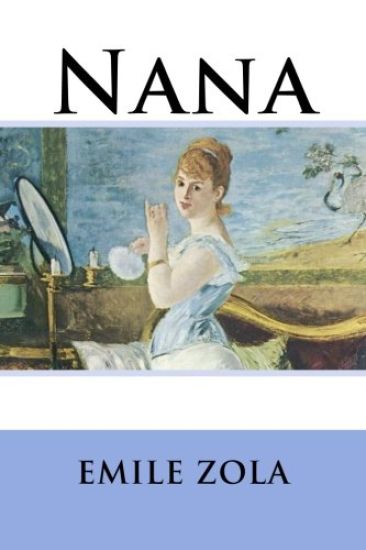
Nana is a novel by the French naturalist author mile Zola. Completed in 1880, Nana is the ninth installment in the 20-volume Les Rougon-Macquart series, which was to tell "The Natural and Social History of a Family under the Second Empire."The novel was an immediate success. Le Voltaire, the French newspaper that was to publish it in installments from October 1879 on, had launched a gigantic advertising campaign, raising the curiosity of the reading public to a fever pitch. When Charpentier finally published Nana in book form in February 1880, the first edition of 55,000 copies was sold out in one day. Flaubert and Edmond de Goncourt were full of praise for Nana. On the other hand, a part of the non-reading public, spurred on by some critics, reacted to the book with outrage. While the novel is held up as a fine example of writing, it is not especially true to Zola's touted naturalist philosophy; instead, it is one of the most symbolically complex of his novels, setting it apart from the earthy "realism" of L'Assommoir or the more brutal "realism" of La Terre (1887). However, it was a great deal more authentic than most contemporary novels about the demimonde.Nana is especially noted for the crowd scenes, of which there are many, in which Zola proves himself a master of capturing the incredible variety of people. Whereas in his other novels -- notably Germinal (1885) -- he gives the reader an amazingly complete picture of surroundings and the lives of characters, from the first scene we are to understand that this novel treads new ground.