

Kirjahaku
Etsi kirjoja tekijän nimen, kirjan nimen tai ISBN:n perusteella.
1000 tulosta hakusanalla Nancy J. Eshelman

The United Irish Movement of the 1790s launched a tradition of revolutionary republicanism in Ireland which continues to this day. This book examines the origin, context, nature and practices of the republican nationalist movement from its inception in 1791 to its defeat in the Great Rebellion of 1798. Nancy Curtin explores its ideology, propaganda, social composition, and mobilization, and shows how these threads were woven together by an emerging liberalism not usually associated with the republican tradition and which only fitfully survived the demise of the radical movement. She shows how class and religious tension contributed to United Irish failure, but at the same time highlights its successes. Her analysis of United Irish mobilization, both ideologically and organizationally, is placed within the fluid context of revolution and counter-revolution in late eighteenth-century Ireland. `This book is a thoroughly researched and beautifully written analysis . . . Nancy Curtin goes further than any previous historian in her detailed analysis of the United Irishmen in Ulster. . . . It is confident without being abrasive and will significantly reshape historical thinking about a period so crucial in the unfolding of modern Irish history.' Marianne Elliott, The Irish Times `In what is in many respects a path-breaking work, she offers fresh argument on the revolutionary nature of the United Irishmen . . . fresh insights into their relationship with the Defenders, fresh information on their social composition . . . and fresh discussion of their `literary mischief . . . this book will be placed high on the select list of works dealing with the United Irishmen.' Irish Historical Studies `clear sighted, stimulating, and authoritative. This book is an excellent example of what revisionist Irish history. . . ought to be about. American Historical Review `exceedingly well-written . . . she produces a picture that is comprehensive and multifaceted. . . . While avoiding biography she conveys a clear sense of who the United Irishmen were and what they were after. History

Dutch painter Piet Mondrian died in New York City in 1944, but his work and legacy have been far from static since then. From market pressures to personal relationships and scholarly agendas, posthumous factors have repeatedly transformed our understanding of his oeuvre. In "The Afterlife of Piet Mondrian", Nancy J. Troy explores the controversial circumstances under which our conception of the artist's work has been shaped since his death, an account that describes money-driven interventions and personal and professional rivalries in forthright detail. Troy reveals how collectors, curators, scholars, dealers and the painter's heirs all played roles in fashioning Mondrian's legacy, each with a different reason for seeing the artist through a particular lens. She shows that our appreciation of his work is influenced by how it has been conserved, copied, displayed, and publicized, and she looks at the popular appeal of Mondrian's instantly recognizable style in fashion, graphic design, and a vast array of consumer commodities. Ultimately, Troy argues that we miss the evolving significance of Mondrian's work if we examine it without regard for the interplay of canonical art and popular culture. A fascinating investigation into Mondrian's afterlife, this book casts new light on how every artist's legacy is constructed as it circulates through the art world and becomes assimilated into the larger realm of visual experience.
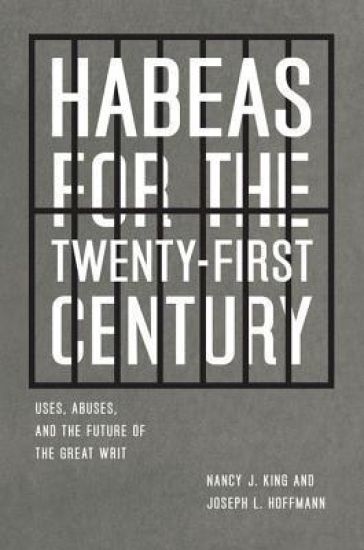
Habeas for the Twenty-First Century
Nancy J. King; Joseph L. Hoffmann
University of Chicago Press
2011
sidottu
For centuries, the writ of habeas corpus has served as an important safeguard against miscarriages of justice, and today it remains at the center of some of the most contentious issues of our time - among them terrorism, immigration, crime, and the death penalty. Yet, in recent decades, habeas has been seriously abused. In this book, Nancy J. King and Joseph L. Hoffmann argue that habeas should be exercised with greater prudence. Through historical, empirical, and legal analysis, as well as illustrative case studies, the authors examine the current use of the writ in the United States and offer sound reform proposals to help ensure its ongoing vitality in today's justice system. Comprehensive and thoroughly grounded in a modern understanding of habeas corpus, this informative book will be an insightful read for legal scholars and anyone interested in the importance of habeas corpus for American government.

Atlas of True Crime: A Worldwide Guide to Murderers and Thieves, Kidnappers and Con Men
Nancy J Hajeski
FIREFLY BOOKS LTD
2024
sidottu
“Crime is a fact of the human species, a fact of that species alone.” —Georges Bataille, French philosopher Interest in criminal behaviour continues to flourish. The worse the crime, and the greater the notoriety of the perpetrator, the more the public yearns to digest every detail. Atlas of True Crime offers a wide-ranging perspective of the criminal underworld from the 1850s to the present, providing illustrated histories of dozens of infamous individuals who have left their mark on society — in the darkest ways possible. Here are the apex serial killers: Gacy, Bundy, Berkowitz; the cannibals: Dahmer, Gein and Albert Fish; and spree killers like Richard Speck, Charles Whitman and Charles Manson — plus murderers and cannibals from around the world. There are gang leaders, spouse killers, parents who took the lives of their children and children who targeted other children, poisoners, kidnappers, gangs that pull off massive robberies and swindles by smoothly impressive con men. Contents include: Crimebusters and the history of policing; The advent of forensic science; Bootleggers and bank robbers; Top Crime Bosses of the past century; Unsolved murders and Hollywood homicides; Romance gone wrong; The minds of serial killers; British, Asian, European and South American killers; Cannibals and kidnappers; Big robberies and grand theft; White collar criminals and embezzlers. Filled with striking archival photos in a full colour design and full colour maps, this will fascinate true-crime buffs everywhere.
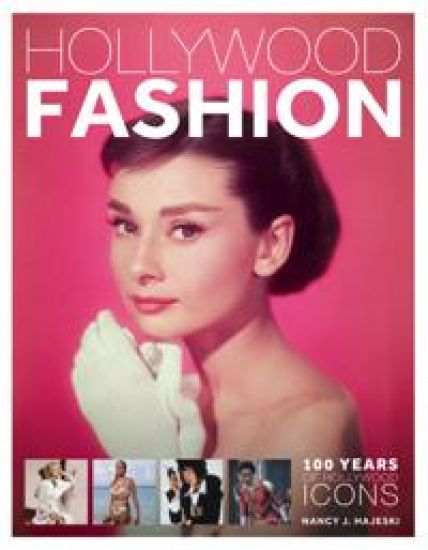
This engaging picture-and-text book explores the art and legacy of the cinematic costume designer, starting with the birth of the modern motion picture industry on a prime piece of California real estate known as Hollywood. Readers will discover how film clothing evolved from actors selecting items from their home wardrobes… to outfits customized for their roles: Everything from suits of armour to ball gowns to office attire to lingerie, created by a studio designer and a dedicated staff of costumers. They will also encounter the actress from each decade who displayed a distinct fashion sense, on and off the screen, women who made a costumer’s job less demanding by embodying the character and evoking the time, place and circumstances the designer wishes to portray. “Feature spreads” throughout the chronological chapters include: Style makers, offering closeup biogs of the legendary designers and showcasing their most outstanding creations; Style trends, exploring the social movements and cultural phenomena that affected movie costumes and further influenced how the world — dressed; Album of trendsetters highlighting Oscar fashions and introducing the fans’ favourite Blondes, Brunettes and Redheads; Men of the Decade shows how male actors used fashion — contemporary, historical or futuristic — to create a character or enhance ambience. Ultimately, Hollywood Fashion will leave readers with a wider understanding of film costuming and an increased appreciation for the men and women who clothed the stars — and made the spellbinding world of the Hollywood cinema memorable.

Nancy J. Holland turns to the thought of Martin Heidegger to help understand an age-old philosophical question: Is there a split between the body and the mind? Arguing against philosophical positions that define human consciousness as an overarching phenomenon or reduce it to the brain or physicality, Holland contends that consciousness is relational and it is this relationship that allows us to inhabit and negotiate in the world. Holland forwards a complex and nuanced reading of Heidegger as she focuses on consciousness, being, and what might constitute the animal or, more broadly, other-than-human world. Holland engages with the depth and breadth of Heidegger's work as she opens space for a discussion about the uniqueness of human consciousness.
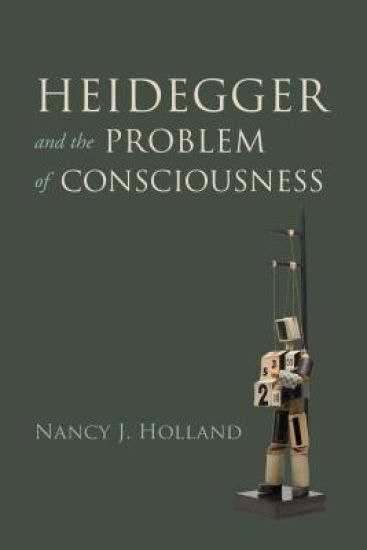
Nancy J. Holland turns to the thought of Martin Heidegger to help understand an age-old philosophical question: Is there a split between the body and the mind? Arguing against philosophical positions that define human consciousness as an overarching phenomenon or reduce it to the brain or physicality, Holland contends that consciousness is relational and it is this relationship that allows us to inhabit and negotiate in the world. Holland forwards a complex and nuanced reading of Heidegger as she focuses on consciousness, being, and what might constitute the animal or, more broadly, other-than-human world. Holland engages with the depth and breadth of Heidegger's work as she opens space for a discussion about the uniqueness of human consciousness.
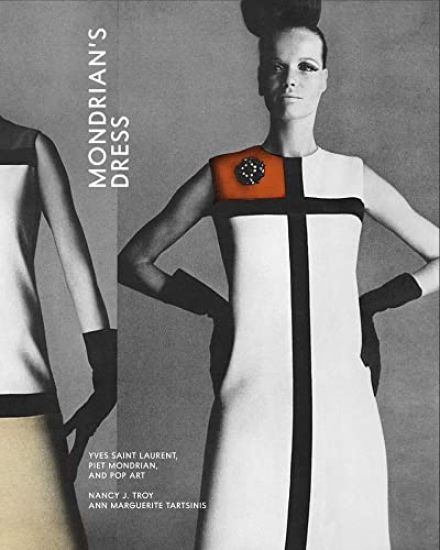
An extraordinary look at how the style of Piet Mondrian’s abstract paintings was posthumously appropriated by 1960s fashion, Pop art, and consumer culture.Yves Saint Laurent’s 1965 Mondrian dresses are among the twentieth century’s most celebrated and recognizable fashions, but the context of their creation involves much more than meets the eye. In Mondrian’s Dress, Nancy J. Troy and Ann Marguerite Tartsinis offer a fresh approach to the coupling of Piet Mondrian’s interwar paintings with Saint Laurent’s couture designs by exposing the rampant merchandising and commodification that these works experienced in the 1960s. The authors situate the consolidation of Saint Laurent’s fashion brand alongside the work of such Pop artists as Roy Lichtenstein, Andy Warhol, and Tom Wesselmann, and show how conventional understandings of Mondrian’s avant-garde abstractions were transformed by the mass circulation of his signature style. Beyond its attention to 1960s fashion, Pop art, and consumer culture, Mondrian’s Dress offers critical assessments of Saint Laurent’s so-called dialogue with art, the remarkable art collection that he built with his partner Pierre Berge, and the crucial role that photography plays in the marketing of couture. The first book-length study of its kind, Mondrian’s Dress is a provocative reevaluation of how art, commerce, and fashion became fundamentally intertwined in the postwar period.

An account that analyzes the dynamic reasoning processes implicated in a fundamental problem of creativity in science: how does genuine novelty emerge from existing representations?How do novel scientific concepts arise? In Creating Scientific Concepts, Nancy Nersessian seeks to answer this central but virtually unasked question in the problem of conceptual change. She argues that the popular image of novel concepts and profound insight bursting forth in a blinding flash of inspiration is mistaken. Instead, novel concepts are shown to arise out of the interplay of three factors: an attempt to solve specific problems; the use of conceptual, analytical, and material resources provided by the cognitive-social-cultural context of the problem; and dynamic processes of reasoning that extend ordinary cognition.Focusing on the third factor, Nersessian draws on cognitive science research and historical accounts of scientific practices to show how scientific and ordinary cognition lie on a continuum, and how problem-solving practices in one illuminate practices in the other. Her investigations of scientific practices show conceptual change as deriving from the use of analogies, imagistic representations, and thought experiments, integrated with experimental investigations and mathematical analyses. She presents a view of constructed models as hybrid objects, serving as intermediaries between targets and analogical sources in bootstrapping processes. Extending these results, she argues that these complex cognitive operations and structures are not mere aids to discovery, but that together they constitute a powerful form of reasoning-model-based reasoning-that generates novelty. This new approach to mental modeling and analogy, together with Nersessian's cognitive-historical approach, make Creating Scientific Concepts equally valuable to cognitive science and philosophy of science.
A cognitive ethnography of how bioengineering scientists create innovative modeling methods. In this first full-scale, long-term cognitive ethnography by a philosopher of science, Nancy J. Nersessian offers an account of how scientists at the interdisciplinary frontiers of bioengineering create novel problem-solving methods. Bioengineering scientists model complex dynamical biological systems using concepts, methods, materials, and other resources drawn primarily from engineering. They aim to understand these systems sufficiently to control or intervene in them. What Nersessian examines here is how cutting-edge bioengineering scientists integrate the cognitive, social, material, and cultural dimensions of practice. Her findings and conclusions have broad implications for researchers in philosophy, science studies, cognitive science, and interdisciplinary studies, as well as scientists, educators, policy makers, and funding agencies. In studying the epistemic practices of scientists, Nersessian pushes the boundaries of the philosophy of science and cognitive science into areas not ventured before. She recounts a decades-long, wide-ranging, and richly detailed investigation of the innovative interdisciplinary modeling practices of bioengineering researchers in four university laboratories. She argues and demonstrates that the methods of cognitive ethnography and qualitative data analysis, placed in the framework of distributed cognition, provide the tools for a philosophical analysis of how scientific discoveries arise from complex systems in which the cognitive, social, material, and cultural dimensions of problem-solving are integrated into the epistemic practices of scientists. Specifically, she looks at how interdisciplinary environments shape problem-solving. Although Nersessian's case material is drawn from the bioengineering sciences, her analytic framework and methodological approach are directly applicable to scientific research in a broader, more general sense, as well.

This is a thought-provoking look at Native American stories, cultural institutions, and ways of knowing, and what they can teach us about living sustainably.

This is a thought-provoking look at Native American stories, cultural institutions, and ways of knowing, and what they can teach us about living sustainably.

Argentina’s repressive 1976–83 dictatorship, during which an estimated thirty thousand people were “disappeared,” prompted the postauthoritarian administrations and human rights groups to encourage public exposure of past crimes and traumas. Truth commissions, trials, and other efforts have aimed to break the silence and give voice to the voiceless. Yet despite these many reckonings, there are still silences, taboos, and unanswerable questions.Nancy J. Gates-Madsen reads between the lines of Argentine cultural texts (fiction, drama, testimonial narrative, telenovela, documentary film) to explore the fundamental role of silence—the unsaid—in the expression of trauma. Her careful examination of the interplay between textual and contextual silences illuminates public debate about the meaning of memory in Argentina—which stories are being told, and, more important, which are being silenced. The imposition of silence is not limited to the military domain or its apologists, she shows; the human rights community also perpetuates and creates taboos.

Argentina's repressive 1976?83 dictatorship, during which an estimated thirty-thousand people were ""disappeared,"" prompted the postauthoritarian administrations and human rights groups to encourage public exposure of past crimes and traumas. Truth commissions, trials, and other efforts have aimed to break the silence and give voice to the voiceless. Yet despite these many reckonings, there are still silences, taboos, and unanswerable questions.Nancy J. Gates-Madsen reads between the lines of Argentine cultural texts (fiction, drama, testimonial narrative, telenovela, documentary film) to explore the fundamental role of silence?the unsaid?in the expression of trauma. Her careful examination of the interplay between textual and contextual silences illuminates public debate about the meaning of memory in Argentina?which stories are being told, and, more important, which are being silenced. The imposition of silence is not limited to the military domain or its apologists, she shows; the human rights community also perpetuates and creates taboos.
Essays discuss the relations among gender, self, and society, the significance of women's mothering for gender personality and gender relations, and how the psychodynamics of gender create and sustain individualism
In the middle of the twentieth century, leading cultural critics and visionaries—Erik Erikson, Lionel Trilling, Herbert Marcuse, and many others—turned to psychoanalysis as a measure of human personal and cultural fulfillment. Now, as we enter a new millennium, Nancy J. Chodorow, well known as a feminist theorist and psychoanalyst, takes her place in this line of eminent thinkers and revitalizes their project. Psychoanalysis, she claims, offers in its clinical goals and its vision of possibility insight into the nature of subjectivity and the quality of good relations with others. It continues centuries of reflection and imagination about the good life.In this pathbreaking book, Chodorow draws upon her broad knowledge and background in social theory, her feminism, and her experience as a psychoanalyst. In extensively elaborated chapters on psychoanalytic theory, she argues that a psychoanalysis that takes as its starting point the immediacy of unconscious fantasy and feeling found in the clinical encounter can illuminate our understanding of individual subjectivity and potentially transform all sociocultural thought. Creating a dialogue between feminism, anthropology, and psychoanalysis, she holds that feminism, anthropology, and other cultural theories require that psychoanalysts take seriously how cultural meanings help to constitute psychic life. At the same time, psychoanalysis demonstrates that contemporary theories of meaning cannot neglect the unconscious realm, which has just as much power as culture does to create meaning for the individual. Chodorow acknowledges postmodern accounts of the decentering and fragmentation of individuality but argues that psychoanalysis gives us an account of subjectivity that incorporates forms of wholeness and depth of experience, without which we cannot have a meaningful life.
Feminist scholars have been remaking the landscape in political theory, and in this important book some of the most important feminist political theorists provide reconstructions of those concepts most central to the tradition of political philosophy. The goal is nothing less than the construction of a blueprint for a positive feminist theory.Many
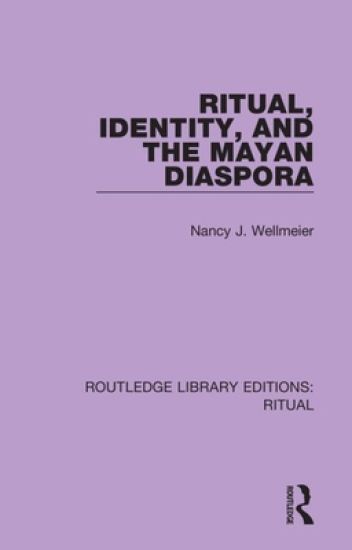
Originally published in 1998, Ritual, Identity, and the Mayan Diaspora examines the lives and the continuing ritual traditions of the Mayas in the United States. The book focuses on a predominantly Maya town in rural Florida and shows how members of this ancient Central American civilization use their religious tradition to maintain their ethnic identity in an unfamiliar environment. Bringing together studies of Mesoamerican fiesta or cargo systems, religious ritual and migration studies, this interdisciplinary work describes the religious traditions of indigenous Guatemala, the crisis migration of the 1980s, and the Mayas' daily life in the United States, including Maya women's reflections on their new challenges. The book is unique in its focus on the transfer of the fiesta cycle to the diaspora and its analysis of the behind-the-scenes aspects of ritual. The rise of leadership contested interpretations of ethnic identity, choices about symbolic representation, and maintenance of ties to villages of origin all take place in the context of organizing public ritual events. This book will be of interest to academics of anthropology, history and sociology.
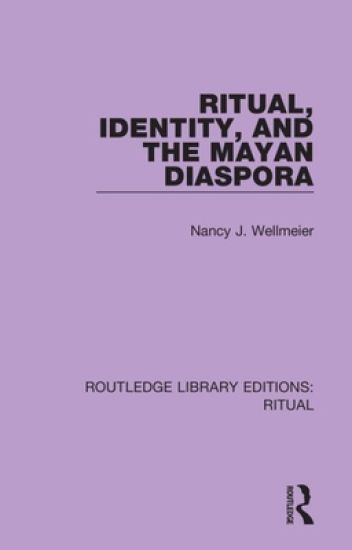
Originally published in 1998, Ritual, Identity, and the Mayan Diaspora examines the lives and the continuing ritual traditions of the Mayas in the United States. The book focuses on a predominantly Maya town in rural Florida and shows how members of this ancient Central American civilization use their religious tradition to maintain their ethnic identity in an unfamiliar environment. Bringing together studies of Mesoamerican fiesta or cargo systems, religious ritual and migration studies, this interdisciplinary work describes the religious traditions of indigenous Guatemala, the crisis migration of the 1980s, and the Mayas' daily life in the United States, including Maya women's reflections on their new challenges. The book is unique in its focus on the transfer of the fiesta cycle to the diaspora and its analysis of the behind-the-scenes aspects of ritual. The rise of leadership contested interpretations of ethnic identity, choices about symbolic representation, and maintenance of ties to villages of origin all take place in the context of organizing public ritual events. This book will be of interest to academics of anthropology, history and sociology.