Kirjojen hintavertailu. Mukana 11 238 995 kirjaa ja 12 kauppaa.

Kirjahaku

Etsi kirjoja tekijän nimen, kirjan nimen tai ISBN:n perusteella.

1000 tulosta hakusanalla Nancy P. James

Year 2000

Year 2000

Nancy P. James

GLOBE PEQUOT PRESS
2024
pokkari
The new millennium. The Year 2000. Beyond Mayan prophecies, a more immediate danger loomed: Two-digit year date fields had been used by software programmers to conserve expensive computer storage space for decades. As a consequence, legacy systems reading “00” on January 1, 2000 would most probably interpret the date as 1900. Infrastructurescritical to civilization—including heat, electricity, water and sanitation—were at risk, all complete unknowns. There was fear of an accidental nuclear arms deployment. There was fear of monetary systems being jeopardized, infrastructure collapse, internet securities failures, and lapse of government-provided social programs. Banks experienced runs and law firms worked overtime to develop never-before-seen litigation plans. Year 2000: The Inside Story of Y2K Panic shares the untold story of the actors operating on the global stage responsible for managing computer hardware and software for Year 2000 compliance, thus keeping national infrastructures, finance, and commerce functioning. It turned out that the world did not end January 1, 2000. In fact, most people rang in the new year with the perception that nothing happened at all. This positive outcome was not a stroke of luck, nor was it because people overestimated or exaggerated Y2K risk. It was only possible because people across industries, from legal clerks to programmers to President Bill Clinton himself, worked tirelessly to offset disaster. But the millennium did not pass by completely harmlessly: it turns out that the United States, for a brief period, lost all satellite reconnaissance at 7:00 PM EST, midnight GMT, December 31, 1999.As a leading consultant and speaker on the challenges of Y2K during the lead-up to the new millennium, author Nancy P. James was directly involved in planning for Y2K on the local and global stage. Using first-person experience, primary source documents outlining Y2K fears, and the actions, influences, opinions, and strategies of those involved, James reveals the untold story of the behind-the-scenes scrambling that made Y2K – seemingly – come and go, and offers stark lessons on how the global community can unite to face problems that challenge our world at large.
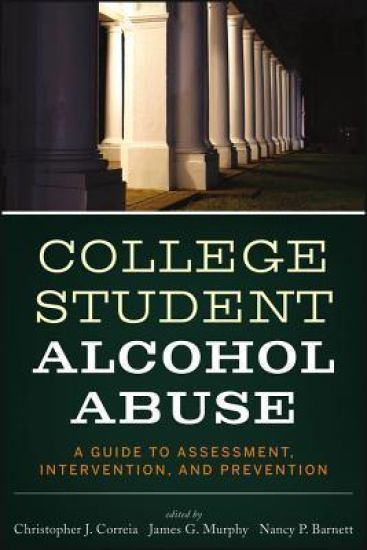
College Student Alcohol Abuse

College Student Alcohol Abuse

Christopher J. Correia; James G. Murphy; Nancy P. Barnett

John Wiley Sons Inc
2012
nidottu
Essential evidence-based strategies for the prevention and reduction of alcohol abuse among college students With contributions from notable substance abuse researchers, this practical guide presents clear strategies for prevention of and interventions for alcohol abuse in the college-age population. Ranging from community-based prevention programs to individual, motivational, and interview-based approaches, College Student Alcohol Abuse explores: The leading theories used to conceptualize college student drinking and related problems, with an emphasis on the clinical implications of each perspectiveEpidemiology of student drug use?including illicit drugs and nonmedical use of prescription drugsThe spectrum of empirically supported prevention programs with a focus on best practices and materialsHow to conduct assessments and create intervention programs for students with substance abuse problems A must-have resource for every college administrator, resident staff member, and addiction counselor who works with this unique population, College Student Alcohol Abuse translates the latest research findings and interventions into clear and evidence-based strategies for assessing and treating college students who are abusing alcohol.
The Ascent to God

The Ascent to God

Thomas P Kuffel; Nancy Carol James; Chad Zielinski

Wipf Stock Publishers
2022
pokkari
Called as pope, St. John Paul II emerged onto St. Peter's balcony proclaiming, ""Do not be afraid "" What theology and mystery inspired this surprising proclamation? John Paul II's quest for holiness was grounded in the mystical insight that we participate in God. We seek the Beatific Vision, the Face of God, through which we are transformed in theosis or divinization. This infusion of grace perfects and unites us. In this book readers will find engaging theology intermixed with spiritual direction and lectio divina meditations. Utilizing Aquinas' method of scriptural interpretation, we are offered ways of seeking spiritual fulfillment to behold the Beatific Vision. Fr. Tom Kuffel shares personal experiences from his time studying and working in Rome, Nebraska, and Alaska. Reflecting on his own priesthood, his fascinating narratives encourage our own spiritual growth. Readers find fresh ways of engaging Scripture through St. John Paul II's New Pentecost, encouraging new interpretations of Vatican II.
The Ascent to God

The Ascent to God

Thomas P Kuffel; Nancy Carol James; Chad Zielinski

Wipf Stock Publishers
2022
sidottu
Called as pope, St. John Paul II emerged onto St. Peter's balcony proclaiming, ""Do not be afraid "" What theology and mystery inspired this surprising proclamation? John Paul II's quest for holiness was grounded in the mystical insight that we participate in God. We seek the Beatific Vision, the Face of God, through which we are transformed in theosis or divinization. This infusion of grace perfects and unites us. In this book readers will find engaging theology intermixed with spiritual direction and lectio divina meditations. Utilizing Aquinas' method of scriptural interpretation, we are offered ways of seeking spiritual fulfillment to behold the Beatific Vision. Fr. Tom Kuffel shares personal experiences from his time studying and working in Rome, Nebraska, and Alaska. Reflecting on his own priesthood, his fascinating narratives encourage our own spiritual growth. Readers find fresh ways of engaging Scripture through St. John Paul II's New Pentecost, encouraging new interpretations of Vatican II.
The Narcotic Farm

The Narcotic Farm

Nancy D. Campbell; James P. Olsen; Luke Walden; Sam Quinones

The University Press of Kentucky
2021
sidottu
From 1935 until 1975, just about every junkie busted for dope went to the Narcotic Farm. Equal parts federal prison, treatment center, farm, and research laboratory, the Farm was designed to rehabilitate addicts and help researchers discover a cure for drug addiction. Although it began as a bold and ambitious public works project, and became famous as a rehabilitation center frequented by great jazz musicians among others, the Farm was shut down forty years after it opened amid scandal over its drug-testing program, which involved experiments where inmates were being used as human guinea pigs and rewarded with heroin and cocaine for their efforts.Published to coincide with a documentary to be aired on PBS, The Narcotic Farm includes rare and unpublished photographs, film stills, newspaper and magazine clippings, government documents, as well as interviews, writings, and anecdotes from the prisoners, doctors, and guards that trace the Farm's noble rise and tumultuous fall, revealing the compelling story of what really happened inside the prison walls.
Jury Ethics

Jury Ethics

John Kleinig; James P. Levine; Jeffrey B. Abramson; B. Michael Dann; Shari Seidman Diamond; Norman J. Finkel; Paula Hannaford-Agor; Valerie P. Hans; Julie E. Howe; Nancy J. King

Paradigm
2005
sidottu
Trial by jury is one of the most important aspects of the U.S. legal system. A reflective look at how juries actually function brings out a number of ethical questions surrounding juror conduct and jury dynamics: Do citizens have a duty to serve as jurors? Might they seek exemptions? Is it acceptable for jurors to engage in after-hours research? Might a juror legitimately seek to "nullify" the outcome to express disapproval of the law? Under what conditions might jurors make a valid choice to hold out against or capitulate to their fellow jurors? Is it acceptable to form alliances? After trial, are there problems with entering into publishing contracts? Unfortunately, questions such as these have received scant attention from scholars. This book revives attention to these and other issues of jury ethics by collecting new and insightful essays along with responses from leading scholars in the field of jury studies. Is it acceptable for jurors to engage in after-hours research? Might a juror legitimately seek to "nullify" the outcome to express disapproval of the law? After trial, are there problems with entering into publishing contracts? Unfortunately, questions such as these have received scant attention from scholars. This book revives attention to these and other issues of jury ethics by collecting new and insightful essays along with responses from leading scholars in the field of jury studies. Contributors: Jeffrey Abramson, B. Michael Dann, Shari Seidman Diamond, Norman J. Finkel, Paula Hannaford-Agor, Valerie P. Hans, Julie E. Howe, Nancy J. King, John Kleinig, James P. Levine, Candace McCoy, G. Thomas Munsterman, Maureen O'Connor, Steven Penrod, Alan W. Scheflin, Neil Vidmar
Jury Ethics

Jury Ethics

John Kleinig; James P. Levine; Jeffrey B. Abramson; B. Michael Dann; Shari Seidman Diamond; Norman J. Finkel; Paula Hannaford-Agor; Valerie P. Hans; Julie E. Howe; Nancy J. King

Paradigm
2007
nidottu
Trial by jury is one of the most important aspects of the U.S. legal system. A reflective look at how juries actually function brings out a number of ethical questions surrounding juror conduct and jury dynamics: Do citizens have a duty to serve as jurors? Might they seek exemptions? Is it acceptable for jurors to engage in after-hours research? Might a juror legitimately seek to "nullify" the outcome to express disapproval of the law? Under what conditions might jurors make a valid choice to hold out against or capitulate to their fellow jurors? Is it acceptable to form alliances? After trial, are there problems with entering into publishing contracts? Unfortunately, questions such as these have received scant attention from scholars. This book revives attention to these and other issues of jury ethics by collecting new and insightful essays along with responses from leading scholars in the field of jury studies. Is it acceptable for jurors to engage in after-hours research? Might a juror legitimately seek to "nullify" the outcome to express disapproval of the law? After trial, are there problems with entering into publishing contracts? Unfortunately, questions such as these have received scant attention from scholars. This book revives attention to these and other issues of jury ethics by collecting new and insightful essays along with responses from leading scholars in the field of jury studies. Contributors: Jeffrey Abramson, B. Michael Dann, Shari Seidman Diamond, Norman J. Finkel, Paula Hannaford-Agor, Valerie P. Hans, Julie E. Howe, Nancy J. King, John Kleinig, James P. Levine, Candace McCoy, G. Thomas Munsterman, Maureen O'Connor, Steven Penrod, Alan W. Scheflin, Neil Vidmar
Natures Past

Natures Past

Peluso Nancy Lee; McNeill J.; Acheson James M.; Steinberg T.; Perdue P.; Hoffman R.; Zimmer O.; Howe N.; McCann John T.; Sivaramakrishnan K.

The University of Michigan Press
2006
sidottu
At the beginning of the twenty-first century environmental change is a pressing public issue, and not just in the rich countries of the northern hemisphere. "Natures Past" seeks to lend some historical depth to current debates about modifications of ecological processes and systems, and also to explore the global dimensions of the dynamic. The ten essays in "Natures Past" bridge the chasm between orthodox environmental history and other novel approaches to understanding the place of human communities in past biophysical environments. Discussions of malaria-bearing mosquitoes, Maine lobster fishing, Bornean durian husbandry, and American lawn mowing, among other things, suggest how ecology, culture, and market interact to change the fate, and the value, of nature in each context. This collection, comprised of contributions by anthropologists, foresters, historians, and literature specialists, shows that long before the twentieth century humans caused, worried about, and endured changes in the natural world they inhabited. "Natures Past" thus creates better, more nuanced, richer, and more complex understandings of the longstanding dialectic between people and their environments, and introduces to readers the wealth of perspectives and insights that a careful consideration of past interactions between people and their natural environments makes possible.
Cyber Bullying

Cyber Bullying

Samuel C. McQuade III; James P. Colt; Nancy Meyer

Praeger Publishers Inc
2009
sidottu
Before the advent of the widespread use of the internet, bullying was confined to school grounds, classrooms, and backyards. Now, the virulence of bullying has taken on new meaning, as bullies take to the web to intimidate, harrass, embarrass, and offend others. Through email, cell phones, text messaging, and social networking sites, bullies can carry out their bullying in many cases without ever having to confront their victims, and often without consequence. Whereas the audiences for humiliation in the past was often limited to those who witnessed the bullying and perhaps talked to others about it, now, bullying takes place in cyberspace, where images and audio can be posted online for whole school communities to witness, discuss, and comment on. The social, psychological, and sometimes economic trauma experienced by victims can be devastating, and in some cases, cyber bullying has crossed the line and became a criminal act. Because just about anyone can be the victim of cyber bullying, and because it often goes unreported, there are precious few resources available to victims, parents, teachers, and others interested in combatting this new form of bullying. This book provides, however, a thoroughly developed, well-researched analysis of cyber bullying - what it is, how it is carried out, who is affected, and what can and should be done to prevent and control its occurrence in society. The book captures the sensational, technological, and horrific aspects of cyber bullying while balancing these with discussion from perspectives about social computing, various academic disciplines, possibilities for public policy and legislation formulation, education, and crime prevention strategies. Using case examples throughout, readers will come away with a new sense of indignation for the victims and a better understanding of the growing problem and how to combat it.
Evidence-Based Treatment with Older Adults

Evidence-Based Treatment with Older Adults

Nancy P. Kropf; Sherry Cummings

Oxford University Press Inc
2017
nidottu
Evidence Based Treatment with Older Adults: Theory, Practice, and Research provides a detailed examination of five research-supported psychosocial interventions for use with older adults: cognitive behavioral therapy, motivational interviewing, life review/reminiscence, problem solving therapy, and psychoeducational/social support approaches. These interventions address the diversity of mental health conditions and late-life challenges that older adults and their family members experience. Detailed explanations of the approaches, skills, and strategies employed in each intervention are provided, as are adaptions for use of the interventions with older adults. Vignettes are also used to demonstrate the use of specific practice skills and techniques with older clients. The theory undergirding each approach and the historical development of the interventions is explained, and provides the reader with a rich understanding of background and context of each therapy. In addition, the distinct issues such as depression, anxiety, substance abuse/misuse for which evidence exists are highlighted. Research support for application of the interventions in community-based, acute care, and long-term care settings and in individual and group formats is also discussed. Finally, implementation issues encountered in therapeutic work with older adults are described as are accommodations to enhance treatment efficacy. In sum, this book provides a comprehensive overview of evidence based psychosocial interventions for older adults; it is ideal for students and mental health professionals interested in clinical work with older adults and their families.
The Celebration of the Saints in Byzantine Art and Liturgy
The studies in this volume all deal with images and texts that relate to the veneration of the saints in Byzantium after the 9th century. Some papers are devoted to the church calendar and the annual commemorations of hundreds of saints through liturgical poetry and sequences of isolated images in fresco, icon painting and illuminated manuscripts. Others are concerned with the longer and rarer, narrative cycles devoted to the life of a single saint, cycles found mainly in fresco and on the so-called vita icons that first appear in the East in the late 12th century. Additional studies deal with the developing role of icons in liturgical ceremonies, and with images of a saint being approached by a supplicant or patron. A final section is devoted to places made holy by the saints, and to their holy relics.
Amber

Amber

Nancy P. S. Hopp

Schiffer Publishing Ltd
2009
nidottu
The fascinating history of amber, an ancient and unusual stone, along with identification methods, origins, amber products, carving techniques, and care tips. Take a trip through the ages and the world to uncover a unique stone with amazing properties. In this well-researched book, readers discover amber and the products made from it, especially jewelry. The easy-to-read format and over 320 color photographs and drawings make it both informative and appealing. The fascinating history of this ancient and unusual stone is explained, and identification methods, origins, amber products, carving techniques, and care tips are among the invaluable information included. Interesting mysteries, concerns, and triumphs about amber and a discussion of its cost are presented. Mineral and rock collectors, history buffs, and jewelry lovers all will enjoy this freshly compiled and up-to-date reference.
Muddied Waters

Muddied Waters

Nancy P. Appelbaum

Duke University Press
2003
sidottu
Colombia’s western Coffee Region is renowned for the whiteness of its inhabitants, who are often described as respectable pioneer families who domesticated a wild frontier and planted coffee on the forested slopes of the Andes. Some local inhabitants, however, tell a different tale-of white migrants rapaciously usurping the lands of indigenous and black communities. Muddied Waters examines both of these legends, showing how local communities, settlers, speculators, and politicians struggled over jurisdictional boundaries and the privatization of communal lands in the creation of the Coffee Region. Viewing the emergence of this region from the perspective of Riosucio, a multiracial town within it, Nancy P. Appelbaum reveals the contingent and contested nature of Colombia’s racialized regional identities.Nineteenth- and twentieth-century Colombian elite intellectuals, Appelbaum contends, mapped race onto their mountainous topography by defining regions in racial terms. They privileged certain places and inhabitants as white and modern and denigrated others as racially inferior and backward. Inhabitants of Riosucio, however, elaborated local narratives about their mestizo and indigenous identities that contested the white mystique of the Coffee Region. Ongoing violent conflicts over land and politics, Appelbaum finds, continue to shape local debates over history and identity. Drawing on archival and published sources complemented by oral history, Muddied Waters vividly illustrates the relationship of mythmaking and racial inequality to regionalism and frontier colonization in postcolonial Latin America.
Muddied Waters

Muddied Waters

Nancy P. Appelbaum

Duke University Press
2003
pokkari
Colombia’s western Coffee Region is renowned for the whiteness of its inhabitants, who are often described as respectable pioneer families who domesticated a wild frontier and planted coffee on the forested slopes of the Andes. Some local inhabitants, however, tell a different tale-of white migrants rapaciously usurping the lands of indigenous and black communities. Muddied Waters examines both of these legends, showing how local communities, settlers, speculators, and politicians struggled over jurisdictional boundaries and the privatization of communal lands in the creation of the Coffee Region. Viewing the emergence of this region from the perspective of Riosucio, a multiracial town within it, Nancy P. Appelbaum reveals the contingent and contested nature of Colombia’s racialized regional identities.Nineteenth- and twentieth-century Colombian elite intellectuals, Appelbaum contends, mapped race onto their mountainous topography by defining regions in racial terms. They privileged certain places and inhabitants as white and modern and denigrated others as racially inferior and backward. Inhabitants of Riosucio, however, elaborated local narratives about their mestizo and indigenous identities that contested the white mystique of the Coffee Region. Ongoing violent conflicts over land and politics, Appelbaum finds, continue to shape local debates over history and identity. Drawing on archival and published sources complemented by oral history, Muddied Waters vividly illustrates the relationship of mythmaking and racial inequality to regionalism and frontier colonization in postcolonial Latin America.
The Celebration of the Saints in Byzantine Art and Liturgy

The Celebration of the Saints in Byzantine Art and Liturgy

Nancy P. Sevcenko

Ashgate Publishing Limited
2013
sidottu
The studies in this volume all deal with images and texts that relate to the veneration of the saints in Byzantium after the 9th century. Some papers are devoted to the church calendar and the annual commemorations of hundreds of saints through liturgical poetry and sequences of isolated images in fresco, icon painting and illuminated manuscripts. Others are concerned with the longer and rarer, narrative cycles devoted to the life of a single saint, cycles found mainly in fresco and on the so-called vita icons that first appear in the East in the late 12th century. Additional studies deal with the developing role of icons in liturgical ceremonies, and with images of a saint being approached by a supplicant or patron. A final section is devoted to places made holy by the saints, and to their holy relics.