
Kirjahaku
Etsi kirjoja tekijän nimen, kirjan nimen tai ISBN:n perusteella.
120 tulosta hakusanalla Nanjing Lectures (2016-2019)
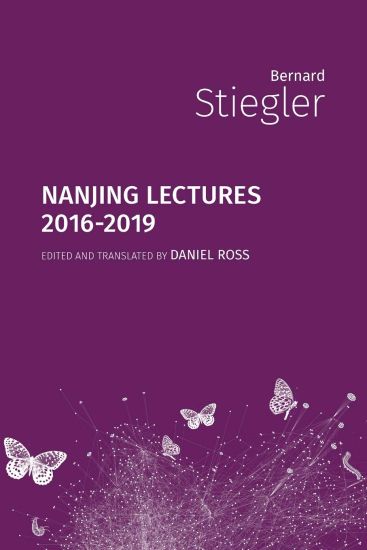
French philosopher Bernard Stiegler began his annual lecture series at Nanjing University in 2016, offering eight lectures per year. The first four years of these lectures are included in this volume and amount to a distillation of the movement of his work in this period as well as an engagement with China at a time when its place in the questions about the global future is becoming increasingly central. This movement and this engagement are in fact conjoined, because since 2014 Stiegler's questions have been increasingly concerned with global problems, that is, with thinking the so-called Anthropocene at a profound level and in relation to the philosophical failure to reckon with the manifold and indeed "cosmic" consequences of the entropic and thermodynamic revolution. The first year's lectures introduce these questions via Stiegler's concept of automatic society and technological and speculative questions emerging from the work of Heidegger and Marx. The 2017 lectures begin with the decision of Oxford Dictionaries to make "post-truth" the word of the year, taking this as an opportunity to understand the implications for Heidegger's "history of being", "history of truth" and Gestell, before entering into a lengthy and original consideration of the relationship between Socrates and Plato (and of tragic Greece in general) and its meaning for the history of Western philosophy. The 2018 lectures traverse a path from Foucault's biopower to psychopower to neuropwer, and then to a critique of neuroeconomics, conducted through Stiegler's revision of the Husserlian account of retention to focus on the irreducible connection between human memory and technological memory, culminating in reflections on the significance of neurotechnology in platform capitalism. The 2019 lectures introduce the concept of hyper-matter as necessary for an epistemology that escapes the trap of opposing the material and the ideal, in order to respond to the need for a new critique of the notion of information and technological performativity (of which Moore's law both is and is not an example) in an age when the biosphere has become a technosphere.

Set on the eve of the Rape of Nanjing-when Japanese troops invaded the historic capital city, massacred hundreds of thousands, and committed thousands of rapes-Nanjing 1937 is a tender and humorous story of an impossible love and a lively, detailed historical portrait of a culture on the verge of rupture. The novel centers on the life of Ding Wenyu, a privileged, womanizing, narcissistic professor of languages, and traces the course of the affair that transforms him from outlandish rake to devoted lover. Throughout the story, Ding's often comically unabashed "romantic offensive" toward a much younger woman, Ren Yuyuan (with whom he brazenly falls in love on the day of her wedding to another man), echoes the acts of war unfolding around him as the Japanese close in, even as he himself remains largely oblivious to the coming onslaught. Known for his stylistic innovation, Ye Zhaoyan creates tragic and endearing characters while vividly capturing the daily life of 1930s wartime China. "I find myself unable to truly understand that history that historians call history," Ye has observed. "All I see are shattered pieces and broken fragments, and a handful of melancholic stories destined to come to naught, all quietly playing out upon the grand stage of history." This historiography of despair achieved its most poignant expression in 1996 with the Chinese publication of Nanjing 1937: A Love Story, which immediately became a bestseller, hailed by critics as a masterpiece of contemporary Chinese literature. Now translated into English for the first time, informed by meticulous historical research and tinged with the author's unique brand of humor, Nanjing 1937: A Love Story is a work of fiction unlike any ever seen. This epic story of a man and a woman who discover love in a time of fear and uncertainty announces the arrival of major voice on the international literary scene.

The award-winning author of "Waiting "and "War Trash" returns to his homeland in a searing new novel that unfurls during one of the darkest moments of the twentieth century: the Rape of Nanjing. In 1937, with the Japanese poised to invade Nanjing, Minnie Vautrin--an American missionary and the dean of Jinling Women's College--decides to remain at the school, convinced that her American citizenship will help her safeguard the welfare of the Chinese men and women who work there. She is painfully mistaken. In the aftermath of the invasion, the school becomes a refugee camp for more than ten thousand homeless women and children, and Vautrin must struggle, day after day, to intercede on behalf of the hapless victims. Even when order and civility are eventually restored, Vautrin remains deeply embattled, and she is haunted by the lives she could not save. With extraordinarily evocative precision, Ha Jin re-creates the terror, the harrowing deprivations, and the menace of unexpected violence that defined life in Nanjing during the occupation. In Minnie Vautrin he has given us an indelible portrait of a woman whose convictions and bravery prove, in the end, to be no match for the maelstrom of history. At once epic and intimate, "Nanjing Requiem" is historical fiction at its most resonant. "From the Hardcover edition."
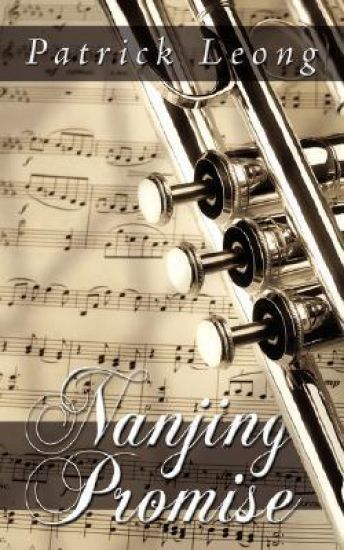
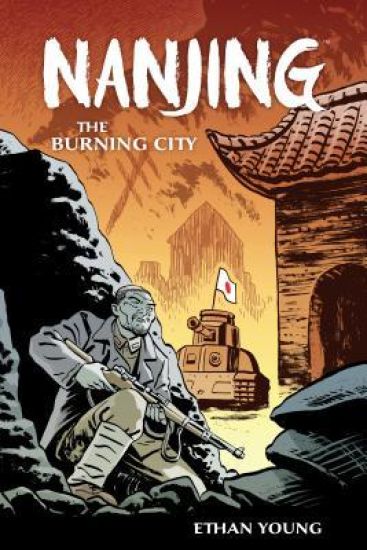
2016 REUBEN AWARD WINNER - BEST GRAPHIC NOVEL After the bombs fell and shook the walls of Nanjing, the Imperial Japanese Army entered and seized the Chinese capital. Through the dust of the demolished buildings, screams echo off the rubble. Two abandoned Chinese soldiers are trapped and desperately outnumbered inside the walled city. What they'll encounter will haunt them. But in the face of horror, they'll learn that resistance and bravery cannot be destroyed by the enemy. Ethan Young (Tails) delves into World War II's forgotten tragedy, the devastating Japanese invasion of Nanjing, and tells a heart-wrenching tale of war, loss, and defiance. Beautifully illustrated in black and white. "In Nanjing, cartoonist Ethan Young tells an intimate story against an epic landscape. Bold, heart-breaking, and gorgeously rendered." --Eisner and Printz Award-winner Gene Luen Yang (Boxers & Saints, American Born Chinese) "Young's decision not to glorify violence or titillate the reader in any way avoids a common pitfall and heightens the drama. This is stunning, stirring historical fiction by a creator at the height of his craft." (Starred review) --Publishers Weekly "Young's is just one chapter in an overwhelmingly grievous episode of the 20th century. The specifics might be fictional amidst a historical backdrop, but in creating names, depicting individual faces both living and dead, Young conjures a haunting microcosm amidst a horrifying event of epic proportions." --Smithsonian APAC Bookdragon "A rugged black and white style ... a little Kubert, a little Tardi." --The Beat "Nanjing: The Burning City deserves a spot alongside not only historical comics, but wartime prose and non-fiction as well. It's not often that an author can so skillfully evoke powerful emotion while telling a complex and long-forgotten story and this book is an excellent, necessary addition to the genre." --The A.V. Club "Haunting and powerful, Nanjing is a moving tribute to an event which needs to be remembered, as much as we'd like to forget it." --Eisner and Harvey Award-winning author Derek Kirk Kim (Same Difference, Tune) "Young's expressive, thoughtful line work takes full advantage of comics' power. Nanjing reads effortlessly while begging the eyes to savor each page. A triumph at the very soul of the medium, a perfect marriage of Toth and Tatsumi." --Eisner Award-winning writer/artist Nate Powell (March, Swallow Me Whole)
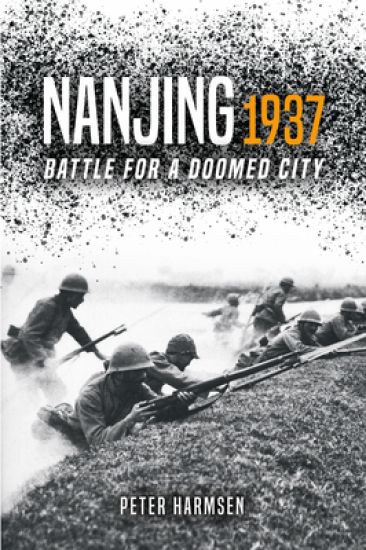
The infamous Rape of Nanjing looms like a dark shadow over the history of Asia in the 20th century, and is among the most widely recognized chapters of World War II in China. By contrast, the story of the month-long campaign before this notorious massacre has never been told in its entirety. Nanjing 1937 by Peter Harmsen fills this gap. This is the follow-up to Harmsen's best-selling Shanghai 1937: Stalingrad on the Yangtze, and begins where that book left off. In stirring prose, it describes how the Japanese Army, having invaded the mainland and emerging victorious from the Battle of Shanghai, pushed on toward the capital Nanjing in a crushing advance that confirmed its reputation for bravery and savagery in equal measure. While much of the struggle over Shanghai had carried echoes of the grueling war in the trenches two decades earlier, the Nanjing campaign was a fast-paced mobile operation in which armor and air power played mayor roles. It was blitzkrieg two years before Hitler's invasion of Poland. Facing the full might of modern, mechanized warfare, China's resistance was heroic, but ultimately futile. As in Shanghai, the battle for Nanjing was more than a clash between Chinese and Japanese. Soldiers and citizens of a variety of nations witnessed or took part in the hostilities. German advisors, American journalists and British diplomats all played important parts in this vast drama. And a new power appeared on the scene: Soviet pilots dispatched by Stalin to challenge Japan's control of the skies. This epic tale is told with verve and attention to detail by Harmsen, a veteran East Asia correspondent who consolidates his status as the foremost chronicler of World War II in China with this path-breaking work of narrative history.
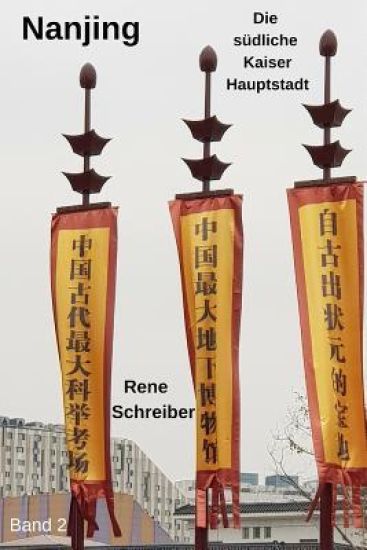
Nanjing ist die Nachbarstadt von Ma'anshan (Band 1). Im Kaiserreich China und unter der Guomindang war die Stadt das Zentrum der Macht. Ich m chte Ihnen in diesem Reisef hrer die Stadt etwas n herbringen. Reisen wir gemeinsam durch die s dliche Hauptstadt des Kaisers.
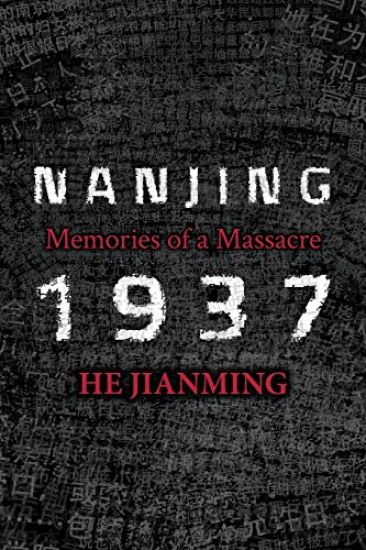
13 December 1937. The Japanese army storms Nanjing, the capital of China at the time. What follows is one of the most violent and controversial periods in history, its consequences still affecting Sino-Japanese relations to this day. Some even deny that it ever happened. Appalled by such reactions and fearing that the horrors of the massacre may be forgotten, author He Jianming sets out to chronicle the truth behind the many war crimes. These include the massacre of every captured Chinese man under the guise of ‘mopping up’ defeated soldiers, the widespread plague of rape and murder that terrorised the female population of the city, and the looting of cultural relics and a national fortune. He compiles records from Chinese, Japanese and international sources, from those who witnessed, survived and committed the atrocities, In the hope that the Nanjing Massacre will never be forgotten.
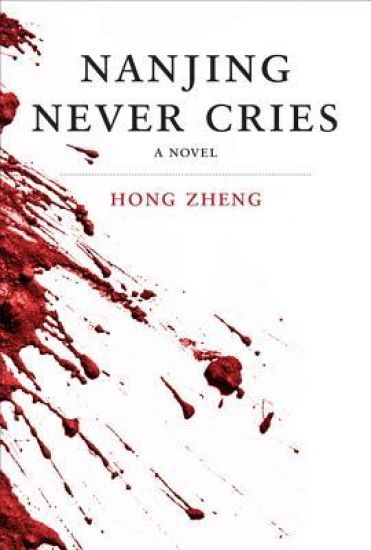
Set in the city of Nanjing during the time of the Sino-Japanese war (1937--1945), this novel tells the story of four people caught up in the violence and tumult of these years: John Winthrop and his MIT classmate, the brilliant Chinese physicist Calvin Ren (Ren Kewen); Judy, Calvin's Chinese-American wife; and the beautiful and determined young woman Chen May. John and Calvin take up positions at Nanjing's National Central University and collaborate on a top-secret project to design and build warplanes to enable the Chinese to defend themselves against Japanese bombers. Meanwhile, John enjoys his new life in Nanjing. He helps the lovely May with her English, falling a little in love with her; he shops for antiques; meets with Chiang Kai-Shek and Madame Chiang; and once attends an evening's entertainment at one of Nanjing's notorious Wine Houses. But when the Japanese invade, there is no safe place in the city. The Japanese murder, torture, and rape indiscriminately. (The invasion and occupation were described by the historian Iris Chang as "the forgotten holocaust.") May sees her own family killed; John works in a shelter for women and children; Calvin's family flees the city while Calvin, weakened by overwork, stays behind to work on the warplane project. Each tries to survive against the odds. May vows to hunt down the soldier who murders her father. When the war is over, she finds him sweeping Nanjing streets as a war prisoner. The story then ends with the force of an explosion.Vivid and disturbing, Nanjing Never Cries offers a compelling story of the horror of war and the power of love and friendship.

Nanjing: Historical Landscape and Its Planning from Geographical Perspective
Yifeng Yao
Springer Verlag, Singapore
2016
sidottu
This book studies the historical changes of the cityscape of Nanjing from the point of view of geographical systems. Nanjing is a city located along the Yangtze River, originated 2500 years ago, after which ten dynasties established their capital dependent on the geographical conditions. The book focuses on the analysis of the characteristics of mountain and river systems in the various historical periods, and provides investigations of historical sites along with these systems. This enables the search for the laws of historical evolution and spatial structure changes, which is also the research of the relationship between man and nature. It extends the traditional preservation and cityscapes planning to that of geographical landscape system. Readers working in the area of geography, history, urban and landscape planning will benefit from it.

Nanjing: Historical Landscape and Its Planning from Geographical Perspective
Yifeng Yao
Springer Verlag, Singapore
2018
nidottu
This book studies the historical changes of the cityscape of Nanjing from the point of view of geographical systems. Nanjing is a city located along the Yangtze River, originated 2500 years ago, after which ten dynasties established their capital dependent on the geographical conditions. The book focuses on the analysis of the characteristics of mountain and river systems in the various historical periods, and provides investigations of historical sites along with these systems. This enables the search for the laws of historical evolution and spatial structure changes, which is also the research of the relationship between man and nature. It extends the traditional preservation and cityscapes planning to that of geographical landscape system. Readers working in the area of geography, history, urban and landscape planning will benefit from it.
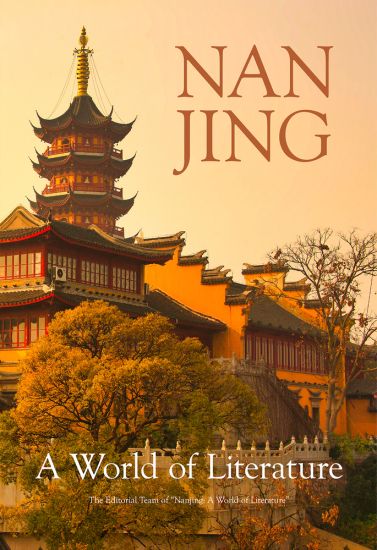
Embark on a journey through Nanjing's rich history and vibrant literary tradition, a UNESCO City of Literature, with Nanjing: A World of Literature. This captivating book takes you on a journey through time, exploring the city's deep cultural roots and its evolution as a renowned literary hub. Discover how Nanjing's enchanting natural beauty and profound historical significance have shaped its identity as a literary center, producing countless renowned figures and masterpieces. Uncover the fascinating stories of the city's iconic literary figures, from ancient scribes like Wang Xianzhi and Li Bai to modern luminaries like Pearl S. Buck and Lu Xun. Witness the contemporary landscape of Nanjing's literary scene as the city nurtures a thriving community of writers, readers, and cultural institutions. Learn about the initiatives that have solidified Nanjing's place as a leading city in publishing, literary awards, and public reading programs. Nanjing: A World of Literature is an essential guide for anyone seeking to understand this storied city's remarkable literary history and contemporary landscape. This book offers an intimate look at the heart of Chinese and global literature through exquisite prose and striking imagery, making it a must-have treasure for literature enthusiasts and lovers of cultural historians alike.
Nanjing Nights. Life is a Story - story.one
story.one publishing
2025
sidottu
Nanjing the Story of a Chinese City???:???
China National Publications Import Export C
2022
pokkari
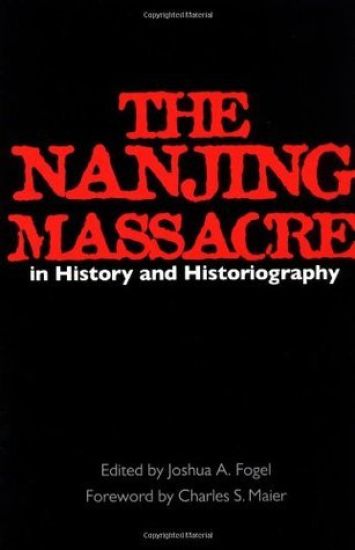
The Nanjing Massacre in History and Historiography
Charles S. Maier
University of California Press
2000
pokkari
The Rape of Nanjing was one of the worst atrocities committed during World War II. On December 13, 1937, the Japanese army captured the city of Nanjing, then the capital of wartime China. According to the International Military Tribunal, during the ensuing massacre 20,000 Chinese men of military age were killed and approximately 20,000 cases of rape occurred; in all, the total number of people killed in and around the city of Nanjing was about 200,000. This carefully researched, intelligent collection of original essays considers the post-World War II treatment in China of the Nanjing Massacre and Japan. The book examines how the issue has developed as a political and diplomatic controversy in the five decades since World War II. In his introduction, Joshua A. Fogel raises the significant moral and historiographical issues that frame the other essays. Mark Eykholt then provides an account of postwar Chinese responses to the massacre.Takashi Yoshida assesses the attempts to downplay the incident and its effects, providing a revealing analysis of Japanese debates over Japan's role in the world and the continuing ambivalence of many Japanese toward their defeat in World War II. In the concluding essay, Daqing Yang widens the scope of the discussion by comparing the Nanjing historiographic debates to similar debates in Germany over the nature of the Holocaust.

The Nanjing Massacre: A Japanese Journalist Confronts Japan's National Shame
Katsuichi Honda; Frank Gibney; Karen Sandness
Routledge
1998
sidottu
This book is based on four visits to China between 1971 and 1989 by Honda Katsuichi, an investigative journalist for Asahi Shimbun. His aim is to show in pitiless detail the horrors of the Japanese Army's seizure and capture of Nanjing in December 1937. Unvarnished accounts of the testimony - Chinese victims and Japanese perpetrators - to the rape and slaughter are juxtaposed with public relations announcements of the Japanese Army as printed in various Japanese newspapers of the time. The bland announcements of triumphant victories stand in bitter contrast to the atrocities that actually took place on the scene. The story unfolds with horrible detail as we watch the triumphant progress of the Japanese army whose troops were bent on rape and killing in the so-called "heat of battle." Yet by recalling the testimony of Japanese soldiers and reporters who were on the scene, as well as reproducing dispatches by Japanese Army authorities at the time, Honda makes it clear that the atrocities were part of a studied effort directed by the Japanese high command to impress the Chinese people with the power of its army and the folly of resistance to it - the estimate of 300,000 killed in these "military operations" is no exaggeratoin. Honda has worked with other Japanese journalists and scholars who have attempted to reveal the truth of the Nanjing massacre, provoked by the efforts of right-wing Japanese, including, sadly, many government officials, to whitewash the whole incident, even to the point of contending that a "massacre" never happened. This gripping account of the atrocities and cover-up joins other exposes - Chinese and now German - in keeping alive the memory of this shameful event.

The Nanjing Massacre: A Japanese Journalist Confronts Japan's National Shame
Katsuichi Honda; Frank Gibney; Karen Sandness
Routledge
1998
nidottu
This book is based on four visits to China between 1971 and 1989 by Honda Katsuichi, an investigative journalist for Asahi Shimbun. His aim is to show in pitiless detail the horrors of the Japanese Army's seizure and capture of Nanjing in December 1937. Unvarnished accounts of the testimony - Chinese victims and Japanese perpetrators - to the rape and slaughter are juxtaposed with public relations announcements of the Japanese Army as printed in various Japanese newspapers of the time. The bland announcements of triumphant victories stand in bitter contrast to the atrocities that actually took place on the scene. The story unfolds with horrible detail as we watch the triumphant progress of the Japanese army whose troops were bent on rape and killing in the so-called "heat of battle." Yet by recalling the testimony of Japanese soldiers and reporters who were on the scene, as well as reproducing dispatches by Japanese Army authorities at the time, Honda makes it clear that the atrocities were part of a studied effort directed by the Japanese high command to impress the Chinese people with the power of its army and the folly of resistance to it - the estimate of 300,000 killed in these "military operations" is no exaggeratoin. Honda has worked with other Japanese journalists and scholars who have attempted to reveal the truth of the Nanjing massacre, provoked by the efforts of right-wing Japanese, including, sadly, many government officials, to whitewash the whole incident, even to the point of contending that a "massacre" never happened. This gripping account of the atrocities and cover-up joins other exposes - Chinese and now German - in keeping alive the memory of this shameful event.
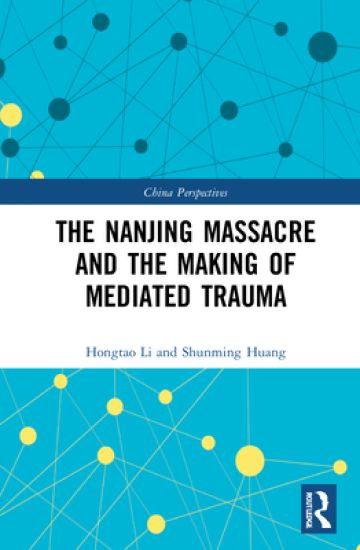
The Nanjing Massacre and the Making of Mediated Trauma
Hongtao Li; Shunming Huang
Taylor Francis Ltd
2021
sidottu
Drawing on cultural trauma theory, this book investigates how collective memory of the Nanjing Massacre is fashioned in China and how the mass media, political power and public praxis jointly shape the politics and culture of memory in contemporary China. Allowing for the dimensions of history and different mediating spaces, the authors first conduct textual analysis of news reports from traditional media since the event took place, revealing that the significance of the Massacre was initially portrayed as a local incident before its construction as a national trauma and finally a collective memory. In a study of physical and online memorial spaces, including the Memorial Hall, commemorative activities on the Internet and new media platforms, the book unveils the production and reproduction of trauma narratives as well as how these narratives have been challenged. The final part further studies the interactions between media and other institutional settings while exploring issues of global memory and reconciliation in East Asia.The title will be an essential read for anyone interested in memory studies, media and communication, and particularly the collective memory of the Nanjing Massacre.