

Kirjahaku
Etsi kirjoja tekijän nimen, kirjan nimen tai ISBN:n perusteella.
95 tulosta hakusanalla Naphtali Levy


Naphtali; Or, a True and Short Deduction of the Wrestlings of the Church of Scotland for the Kingdom of Christ; From the Beginning of the Reformation Unto the Year 1667
James Stewart
Gale Ecco, Print Editions
2010
pokkari

Naphtali; or, a True and Short Deduction of the Wrestlings of the Church of Scotland for the Kingdom of Christ; From the Beginning of the Reformation Unto the Year 1667
James Stewart
Gale Ecco, Print Editions
2018
sidottu
The 18th century was a wealth of knowledge, exploration and rapidly growing technology and expanding record-keeping made possible by advances in the printing press. In its determination to preserve the century of revolution, Gale initiated a revolution of its own: digitization of epic proportions to preserve these invaluable works in the largest archive of its kind. Now for the first time these high-quality digital copies of original 18th century manuscripts are available in print, making them highly accessible to libraries, undergraduate students, and independent scholars.The Age of Enlightenment profoundly enriched religious and philosophical understanding and continues to influence present-day thinking. Works collected here include masterpieces by David Hume, Immanuel Kant, and Jean-Jacques Rousseau, as well as religious sermons and moral debates on the issues of the day, such as the slave trade. The Age of Reason saw conflict between Protestantism and Catholicism transformed into one between faith and logic -- a debate that continues in the twenty-first century.++++The below data was compiled from various identification fields in the bibliographic record of this title. This data is provided as an additional tool in helping to insure edition identification: ++++British LibraryT084517Anonymous. By Sir James Stewart and James Stirling. With a final subscription list. With horizontal and some vertical chain-lines.Edinburgh: printed by D. Paterson, 1761. 510, 6]p.; 8


A Survey of the Insolent and Infamous Libel, Entituled, Naphtali &c.
Andrew Honyman
Hansebooks
2018
nidottu

The notion that rituals, like natural languages, are governed by implicit, rigorous rules led scholars in the last century, harking back to the early Indian grammarian Patañjali, to speak of a "grammar", or "syntax", of ritual, particularly sacrificial ritual. Despite insightful examples of ritual complexes that follow hierarchical rules akin to syntactic structures in natural languages, and ambitious attempts to imagine a Universal Grammar of sacrificial ritual, no single, comprehensive "grammar" of any ritual system has yet been composed. This book offers the first such "grammar." Centering on S--the idealized sacrificial system represented in the Priestly laws in the Pentateuch--it demonstrates that a ritual system is describable in terms of a set of concise, unconsciously internalized, generative rules, analogous to the grammar of a natural language. Despite far-reaching diachronic developments, reflected in Second Temple and rabbinic literature, the ancient Israelite sacrificial system retained a highly unchangeable "grammar," which is abstracted and analysed in a formulaic manner. The limits of the analogy to linguistics are stressed: rather than categories borrowed from linguistics, such as syntax and morphology, the operative categories of S are abstracted inductively from the ritual texts: zoemics--the study of the classes of animals used in ritual sacrifice; jugation-the rules governing the joining of animal and non-animal materials; hierarchics-the tiered structuring of sacrificial sequences; and praxemics--the analysis of the physical activity comprising sacrificial procedures. Finally, the problem of meaning in non-linguistic ritual systems is addressed.

This is an open access title available under the terms of a CC BY-NC-ND 4.0 International licence. It is free to read on Oxford Academic and offered as a free PDF download from OUP and selected open access locations. Two Models of Biblical Purity investigates the ancient Israelite and early Jewish purity system, proposing a framework that distinguishes between two conceptual approaches to ritual pollution: the qualitative and quantitative models. In the qualitative model, forms of pollution differ fundamentally by type, like distinct illnesses with unique symptoms and treatments. The quantitative model, on the other hand, views pollution as varying in intensity or degree, similar to temperature, where different sources simply make one “more” or “less” impure. The book argues that the Hebrew Bible primarily reflects a qualitative model, where impurities are categorized by nature rather than severity. Through careful philological analysis, the study develops “litmus tests” to detect these models within biblical and Second Temple texts, showing a gradual shift toward quantitative thought in later Jewish sources. Each chapter applies these methods to pivotal texts, including the Priestly literature, the Temple Scroll, and other late Second Temple and rabbinic writings, revealing the complex evolution of purity laws. This approach provides insights into the inner logic and diachronic development of ritual systems, offering a foundational perspective for comparative studies across diverse ritual traditions. Finally, it examines the historical contexts that may have instigated the shift and considers the advantages of the “fundamental science” approach to the study of biblical purity.
Roman Civilization: Selected Readings
Naphtali Lewis; Meyer Reinhold
Columbia University Press
1990
pokkari
Naphtali Lewis and Meyer Reinhold's Roman Civilization is a classic. Originally published by Columbia University Press in 1955, the authors have undertaken another revision which takes into account recent work in the field. These volumes consist of selected primary documents from ancient Rome, covering a range of over 1,000 years of Roman culture, from the foundation of the city to its sacking by the Goths. The selections cover a broad spectrum of Roman civilization, including literature, philosophy, religion, education, politics, military affairs, and economics. These English translations of literary, inscriptional, and papyrological sources, many of which are available nowhere else, create a mosaic of the brilliance, the beauty, and the power of Rome.
Naphtali Lewis and Meyer Reinhold's Roman Civilization is a classic. Originally published by Columbia University Press in 1955, the authors have undertaken another revision which takes into account recent work in the field. These volumes consist of selected primary documents from ancient Rome, covering a range of over 1,000 years of Roman culture, from the foundation of the city to its sacking by the Goths. The selections cover a broad spectrum of Roman civilization, including literature, philosophy, religion, education, politics, military affairs, and economics. These English translations of literary, inscriptional, and papyrological sources, many of which are available nowhere else, create a mosaic of the brilliance, the beauty, and the power of Rome.
Naphtali Lewis and Meyer Reinhold's Roman Civilization is a classic. Originally published by Columbia University Press in 1955, the authors have undertaken another revision which takes into account recent work in the field. These volumes consist of selected primary documents from ancient Rome, covering a range f over 1,000 years of Roman culture, from the foundation of the city to its sacking by the Goths. The selections cover a broad spectrum of Roman civilization, including literature, philosophy, religion, education, politics, military affairs, and economics. These English translations of literary, inscriptional, and papyrological sources, many of which are available nowhere else, create a mosaic of the brilliance, the beauty, and the power of Rome.


In this fascinating collection of texts, Julius Caesar and his time come alive, as ancient writers vividly portray his rise to power, the stunning assassination itself, and the after effects which changed the Mediterranean world.
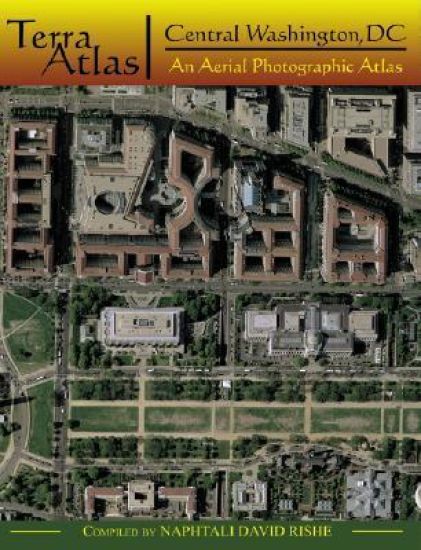
A collection of atlases of high quality aerial photography that features selected venues from the American landscape. Central Washington, DC incorporates an area 5.68 miles north-south and 5.08 miles east-west, or some 28.84 square miles, in Washington, DC, and Arlington County, Virginia. The aerial photography reproduced in this atlas was taken in 2002 by the US Geological Survey. The atlas includes 35 pages of photographs presented at a scale of 1:7000, each titled with the name of a prominent neighborhood or landscape feature located on the page. A grid divides each of these 35 images into 72 cells; each cell measures 0.1 mile on a side and is uniquely identifiable by a letter and number located on the left and bottom side of the grid, respectively. The atlas concludes with nine pages of indexes, of which four pages are devoted to street names and five pages to selected other place names. Place names, other than streets, included in this atlas are representative of categories of places that appear on the images.Generally, the places listed include those of historical, cultural, and natural significance; international, national, state, district, and local government properties; educational institutions; and more prominent hospitals, hotels and motels, and religious sites.
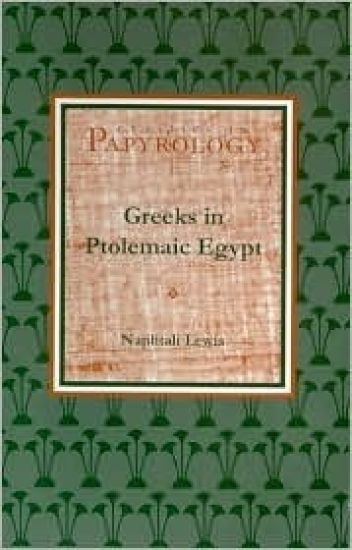
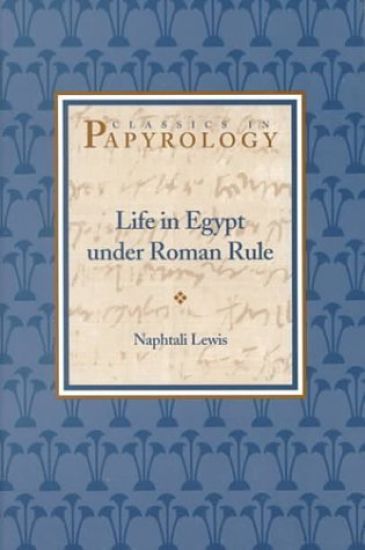
This is a reprint of Naphtali Lewis' important book on the uses of papyrus records reconstructing life in ancient Egypt. Published in 1986, the first edition of Greeks in Ptolemaic Egypt complemented `Life in Egypt under Roman Rule' (reprinted in 1999 as `Classics in Papyrology 1') by providing a perspective on the earlier period. The author presents a series of portraits, describing the lives of inhabitants ranging from the grand (like the Strategos Diophanes) to the humble (like the village clerk, Menkhes). He sets these figures against a prosperous, busy backdrop which he terms 'Eldorado on the Nile'.

Lebermann, N: Belisar In Der Litteratur Der Romanischen Und
Naphtali Lebermann
KESSINGER PUBLISHING, LLC
2010
nidottu


Cohn, N: Vorschriften Betreffend Die Zaraath Nach Dem Kitab
Naphtali Cohn
KESSINGER PUBLISHING, LLC
2010
nidottu