Kirjojen hintavertailu. Mukana 11 244 527 kirjaa ja 12 kauppaa.

Kirjahaku

Etsi kirjoja tekijän nimen, kirjan nimen tai ISBN:n perusteella.

650 tulosta hakusanalla Nassim Nicholas Taleb

Aphorisms and Comments: on Nassim Nicholas Taleb's Incerto

Aphorisms and Comments: on Nassim Nicholas Taleb's Incerto

Maximilian Hirner

Independently Published
2019
nidottu
The inspiration for this book came from the best aphorists of world history: Lichtenberg, Montaigne, Goethe, Nietzsche, Karl Kraus, and of course Nassim Nicholas Taleb.If you want to dig deeper into Taleb's concepts, I hope these comments may help you a bit with it.What I did isn't much - I just applied his concepts to the world and the thoughts other people had about it (and said thoughts), but still managed to come to some interesting conclusions, and have some ideas of my own.Since I am too lazy to do more work, I decided to write a book of aphorisms, delivering as much information to you as possible in a text as short as possible.In 2014, I discovered Taleb's books (starting with "Antifragile"); in 2016, I contacted him via the social networks; in 2018, I decided to write my first book, inspired by him.Maestro Taleb is with little doubt the greatest living philosopher and polymath. He changed my way of thinking, and catalysed it. For all I learned from him, I owe him a lot. This book shall pay some of this intellectual debt, among other tings.That's it.
Aphorismen und Kommentare: zu Nassim Nicholas Taleb's Incerto

Aphorismen und Kommentare: zu Nassim Nicholas Taleb's Incerto

Maximilian Hirner

Independently Published
2019
nidottu
Die Inspiration f r dieses Buch kam von den besten Aphoristikern der Weltgeschichte: Lichtenberg, Montaigne, Goethe, Nietzsche, Karl Kraus, und nat rlich Nassim Nicholas Taleb.Wer tiefer in Nassim Nicholas Taleb's Konzepte eintauchen will, dem werden diese Kommentare hoffentlich eine Hilfe sein.Eigentlich habe ich nicht viel getan - ich habe nur seine Konzepte auf die Welt und die Gedanken, die andere Leute dar ber (und ber diese Gedanken) hatten, angewendet, bin so aber trotzdem zu einigen interessanten Schlussfolgerungen und eigenen Ideen gekommen.Weil ich zu faul bin, um mehr zu tun, habe ich mich entschieden, ein Aphorismen-Buch zu schreiben, um mit sowenig Text wie m glich soviel Information wie m glich zu transportieren.2014 hatte ich Taleb's B cher entdeckt (angefangen mit "Antifragilit t"); 2016 habe ich den Kontakt zu ihm ber die sozialen Netzwerke aufgenommen; 2018 habe ich mich entschieden, ein von ihm inspiriertes Buch zu schreiben.Maestro Taleb ist ohne Zweifel der gr te lebende Philosoph und Universalgelehrte. Er hat ver ndert, wie ich denke, und mein Denken katalysiert. Ich schulde ihm sehr viel f r das, was ich von ihm gelernt habe. Dieses Buch soll auch etwas von dieser intellektuellen Schuld zur ckzahlen.Und das war's.
An Analysis of Nassim Nicholas Taleb's The Black Swan

An Analysis of Nassim Nicholas Taleb's The Black Swan

Eric R. Lybeck

Macat International Limited
2017
nidottu
One of the primary qualities of good creative thinking is an intellectual freedom to think outside of the box. Good creative thinkers resist orthodox ideas, take new lines of enquiry, and generally come at problems from the kinds of angles almost no one else could. And, what is more, when the ideas of creative thinkers are convincing, they can reshape an entire topic, and change the orthodoxy for good. Nassim Nicholas Taleb’s 2007 bestseller The Black Swan: The Impact of the Highly Improbable is precisely such a book: an entertaining, polemical, creative attack on how people in general, and economic experts in particular view the possibility of catastrophic events. Taleb writes with rare creative verve for someone who is also an expert in mathematics, finance, and epistemology (the philosophy of knowledge), and he martials all his skills to turn standard reasoning inside out. His central point is that far from being unimportant, extremely rare events are frequently the most important ones of all: it is highly improbable, but highly consequential occurrences – what he calls Black Swans – that have shaped history most. As a result, Taleb concludes, improbability is not a reason to act as if a possible event does not matter. Rather, it should inspire the opposite reaction.
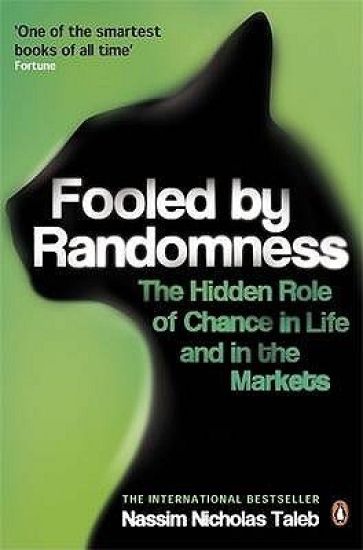
Fooled by Randomness

Fooled by Randomness

Nassim Nicholas Taleb

Penguin Books Ltd.
2007
pokkari
Everyone wants to succeed in life. But what causes some of us to be more successful than others? Is it really down to skill and strategy - or something altogether more unpredictable? This book intends to change the way you think about business and the world.
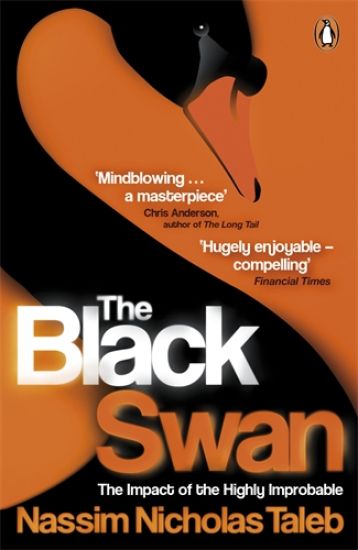
Black Swan

Black Swan

Nassim Nicholas Taleb

Penguin Books Ltd.
2008
pokkari
The phenomenal international bestseller that shows us how to stop trying to predict everything - and take advantage of uncertainty What have the invention of the wheel, Pompeii, the Wall Street Crash, Harry Potter and the internet got in common? Why are all forecasters con-artists? Why should you never run for a train or read a newspaper? This book is all about Black Swans: the random events that underlie our lives, from bestsellers to world disasters. Their impact is huge; they're impossible to predict; yet after they happen we always try to rationalize them. 'Taleb is a bouncy and even exhilarating guide ... I came to relish what he said, and even develop a sneaking affection for him as a person' Will Self, Independent on Sunday 'He leaps like some superhero of the mind' Boyd Tonkin, Independent
Antifragile

Antifragile

Nassim Nicholas Taleb

Penguin Books Ltd.
2013
pokkari
'Really made me think about how I think' - Mohsin Hamid, author of Exit West Tough times don't last. Tough people do. In The Black Swan, Taleb showed us that highly improbable and unpredictable events underlie almost everything about our world. Here Taleb stands uncer tainty on its head, making it desirable, even necessary. The antifragile is beyond the resilient or robust. The resil ient resists shocks and stays the same; the antifragile gets better and better. Just as human bones get stronger when subjected to stress and tension, many things in life benefit from stress, disorder, volatility, and turmoil. What Taleb has identified and calls antifragile are things that not only gain from chaos but need it in order to survive and flourish. Antifragile is a blueprint for living in a Black Swan world. Erudite, witty, and iconoclastic, Taleb's message is revolutionary: the antifragile, and only the antifragile, will make it. 'The hottest thinker in the world' Bryan Appleyard, Sunday Times
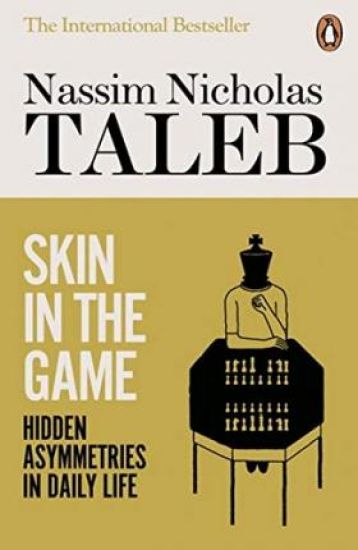
Skin in the Game

Skin in the Game

Nassim Nicholas Taleb

Penguin Books Ltd.
2019
pokkari
Why should we never listen to people who explain rather than do? Why do companies go bust? How is it that we have more slaves today than in Roman times? Why does imposing democracy on other countries never work?The answer: too many people running the world don't have skin in the game. In his inimitable, pugnacious style, Nassim Nicholas Taleb shows that skin in the game applies to all aspects of our lives. It's about having something to lose and taking a risk. Citizens, lab experimenters, artisans, political activists and hedge fund traders all have skin in the game. Policy wonks, corporate executives, theoreticians, bankers and most journalists don't.As Taleb says, "The symmetry of skin in the game is a simple rule that's necessary for fairness and justice, and the ultimate BS-buster," and "Never trust anyone who doesn't have skin in the game. Without it, fools and crooks will benefit, and their mistakes will never come back to haunt them".
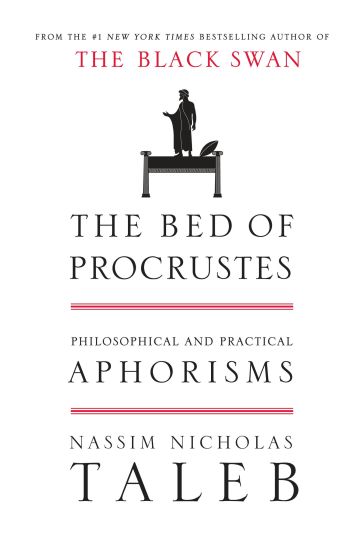
The Bed of Procrustes

The Bed of Procrustes

Nassim Nicholas Taleb

Penguin Books Ltd
2016
pokkari
A condensed guide to life, Nassim Nicholas Taleb's The Bed of Procrustes is an invaluable collection of aphorisms to help you navigate the modern world.Second edition, revised and expandedWhy are we so often unwilling to accept that life is unpredictable? In this brilliant book Nassim Nicholas Taleb distils his idiosyncratic wisdom to demolish our illusions, contrasting the classical values of courage, elegance and erudition against modern philistinism and phoniness. Only by accepting what we don't know, he shows, can we see the world as it really is.
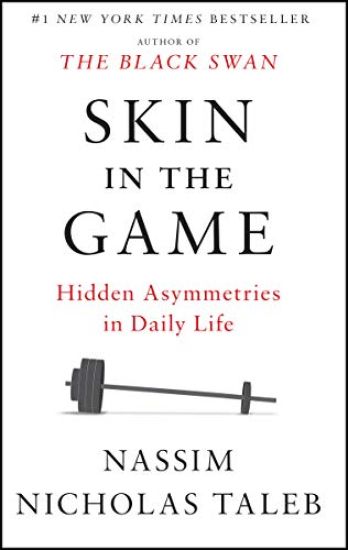
Skin in the Game: Hidden Asymmetries in Daily Life

Skin in the Game: Hidden Asymmetries in Daily Life

Nassim Nicholas Taleb

Random House
2018
sidottu
#1 NEW YORK TIMES BESTSELLER - A bold work from the author of The Black Swan that challenges many of our long-held beliefs about risk and reward, politics and religion, finance and personal responsibility In his most provocative and practical book yet, one of the foremost thinkers of our time redefines what it means to understand the world, succeed in a profession, contribute to a fair and just society, detect nonsense, and influence others. Citing examples ranging from Hammurabi to Seneca, Antaeus the Giant to Donald Trump, Nassim Nicholas Taleb shows how the willingness to accept one's own risks is an essential attribute of heroes, saints, and flourishing people in all walks of life. As always both accessible and iconoclastic, Taleb challenges long-held beliefs about the values of those who spearhead military interventions, make financial investments, and propagate religious faiths. Among his insights: - For social justice, focus on symmetry and risk sharing. You cannot make profits and transfer the risks to others, as bankers and large corporations do. You cannot get rich without owning your own risk and paying for your own losses. Forcing skin in the game corrects this asymmetry better than thousands of laws and regulations. - Ethical rules aren't universal. You're part of a group larger than you, but it's still smaller than humanity in general. - Minorities, not majorities, run the world. The world is not run by consensus but by stubborn minorities imposing their tastes and ethics on others. - You can be an intellectual yet still be an idiot. "Educated philistines" have been wrong on everything from Stalinism to Iraq to low-carb diets. - Beware of complicated solutions (that someone was paid to find). A simple barbell can build muscle better than expensive new machines. - True religion is commitment, not just faith. How much you believe in something is manifested only by what you're willing to risk for it. The phrase "skin in the game" is one we have often heard but rarely stopped to truly dissect. It is the backbone of risk management, but it's also an astonishingly rich worldview that, as Taleb shows in this book, applies to all aspects of our lives. As Taleb says, "The symmetry of skin in the game is a simple rule that's necessary for fairness and justice, and the ultimate BS-buster," and "Never trust anyone who doesn't have skin in the game. Without it, fools and crooks will benefit, and their mistakes will never come back to haunt them."
Skin in the Game: Hidden Asymmetries in Daily Life

Skin in the Game: Hidden Asymmetries in Daily Life

Nassim Nicholas Taleb

Random House Trade
2020
nidottu
A bold work from the author of The Black Swan that challenges many of our long-held beliefs about risk and reward, politics and religion, finance and personal responsibility In his most provocative and practical book yet, one of the foremost thinkers of our time redefines what it means to understand the world, succeed in a profession, contribute to a fair and just society, detect nonsense, and influence others. Citing examples ranging from Hammurabi to Seneca, Antaeus the Giant to Donald Trump, Nassim Nicholas Taleb shows how the willingness to accept one's own risks is an essential attribute of heroes, saints, and flourishing people in all walks of life. As always both accessible and iconoclastic, Taleb challenges long-held beliefs about the values of those who spearhead military interventions, make financial investments, and propagate religious faiths. Among his insights: - For social justice, focus on symmetry and risk sharing. You cannot make profits and transfer the risks to others, as bankers and large corporations do. You cannot get rich without owning your own risk and paying for your own losses. Forcing skin in the game corrects this asymmetry better than thousands of laws and regulations. - Ethical rules aren't universal. You're part of a group larger than you, but it's still smaller than humanity in general. - Minorities, not majorities, run the world. The world is not run by consensus but by stubborn minorities imposing their tastes and ethics on others. - You can be an intellectual yet still be an idiot. Educated philistines have been wrong on everything from Stalinism to Iraq to low-carb diets. - Beware of complicated solutions (that someone was paid to find). A simple barbell can build muscle better than expensive new machines. - True religion is commitment, not just faith. How much you believe in something is manifested only by what you're willing to risk for it. The phrase skin in the game is one we have often heard but rarely stopped to truly dissect. It is the backbone of risk management, but it's also an astonishingly rich worldview that, as Taleb shows in this book, applies to all aspects of our lives. As Taleb says, The symmetry of skin in the game is a simple rule that's necessary for fairness and justice, and the ultimate BS-buster, and Never trust anyone who doesn't have skin in the game. Without it, fools and crooks will benefit, and their mistakes will never come back to haunt them.
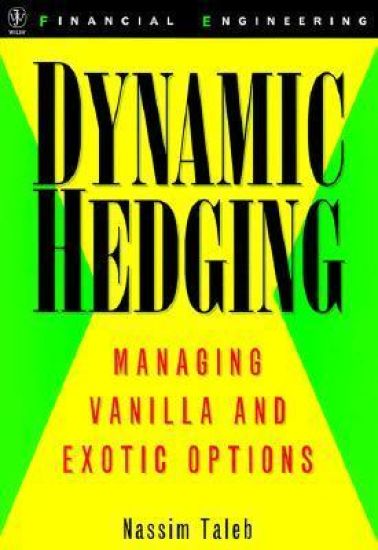
Dynamic Hedging

Dynamic Hedging

Nassim Nicholas Taleb

John Wiley Sons Inc
1997
sidottu
Dynamic Hedging is the definitive source on derivatives risk. It provides a real-world methodology for managing portfolios containing any nonlinear security. It presents risks from the vantage point of the option market maker and arbitrage operator. The only book about derivatives risk written by an experienced trader with theoretical training, it remolds option theory to fit the practitioner's environment. As a larger share of market exposure cannot be properly captured by mathematical models, noted option arbitrageur Nassim Taleb uniquely covers both on-model and off-model derivatives risks. The author discusses, in plain English, vital issues, including: *The generalized option, which encompasses all instruments with convex payoff, including a trader's potential bonus. *The techniques for trading exotic options, including binary, barrier, multiasset, and Asian options, as well as methods to take into account the wrinkles of actual, non-bellshaped distributions. *Market dynamics viewed from the practitioner's vantage point, including liquidity holes, portfolio insurance, squeezes, fat tails, volatility surface, GARCH, curve evolution, static option replication, correlation instability, Pareto-Levy, regime shifts, autocorrelation of price changes, and the severe flaws in the value at risk method. *New tools to detect risks, such as higher moment analysis, topography exposure, and nonparametric techniques. *The path dependence of all options hedged dynamically Dynamic Hedging is replete with helpful tools, market anecdotes, at-a-glance risk management rules distilling years of market lore, and important definitions. The book contains modules in which the fundamental mathematics of derivatives, such as the Brownian motion, Ito's lemma, the numeraire paradox, the Girsanov change of measure, and the Feynman-Kac solution are presented in intuitive practitioner's language. Dynamic Hedging is an indispensable and definitive reference for market makers, academics, finance students, risk managers, and regulators. The definitive book on options trading and risk management "If pricing is a science and hedging is an art, Taleb is a virtuoso." —Bruno Dupire, Head of Swaps and Options Research, Paribas Capital Markets "This is not merely the best book on how options trade, it is the only book." —Stan Jonas, Managing Director, FIMAT-Société Générale "Dynamic Hedging bridges the gap between what the best traders know and what the best scholars can prove." —William Margrabe, President, The William Margrabe Group, Inc. "The most comprehensive, insightful, intuitive work on the subject. It is instrumental for both beginning and experienced traders."— "A tour de force. That rare find, a book of great practical and theoretical value. Taleb successfully bridges the gap between the academic and the real world. Interesting, provocative, well written. Each chapter worth a fortune to any current or prospective derivatives trader."—Victor Niederhoffer, Chairman, Niederhoffer Investments
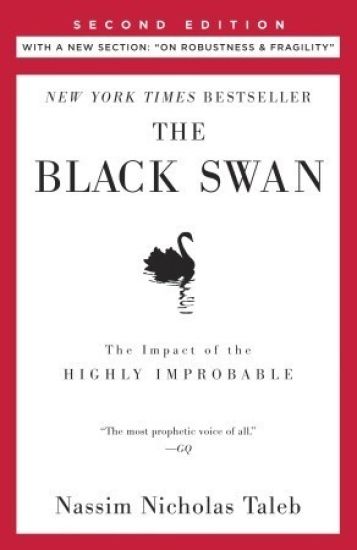
The Black Swan: Second Edition: The Impact of the Highly Improbable: With a New Section: On Robustness and Fragility
A black swan is a highly improbable event with three principal characteristics: It is unpredictable; it carries a massive impact; and, after the fact, we concoct an explanation that makes it appear less random, and more predictable, than it was. The astonishing success of Google was a black swan; so was 9/11. For Nassim Nicholas Taleb, black swans underlie almost everything about our world, from the rise of religions to events in our own personal lives.Why do we not acknowledge the phenomenon of black swans until after they occur? Part of the answer, according to Taleb, is that humans are hardwired to learn specifics when they should be focused on generalities. We concentrate on things we already know and time and time again fail to take into consideration what we don't know. We are, therefore, unable to truly estimate opportunities, too vulnerable to the impulse to simplify, narrate, and categorize, and not open enough to rewarding those who can imagine the impossible.For years, Taleb has studied how we fool ourselves into thinking we know more than we actually do. We restrict our thinking to the irrelevant and inconsequential, while large events continue to surprise us and shape our world. In this revelatory book, Taleb will change the way you look at the world, and this second edition features a new philosophical and empirical essay, On Robustness and Fragility, which offers tools to navigate and exploit a Black Swan world.Taleb is a vastly entertaining writer, with wit, irreverence, and unusual stories to tell. He has a polymathic command of subjects ranging from cognitive science to business to probability theory. Elegant, startling, and universal in its applications, The Black Swan is a landmark book-itself a black swan.
Fooled by Randomness

Fooled by Randomness

Nassim Nicholas Taleb

Random House USA Inc
2005
pokkari
" Taleb is] Wall Street's principal dissident. . . . Fooled By Randomness] is to conventional Wall Street wisdom approximately what Martin Luther's ninety-nine theses were to the Catholic Church."-Malcolm Gladwell, "The New Yorker" Finally in paperback, the word-of-mouth sensation that will change the way you think about the markets and the world.This book is about luck: more precisely how we perceive luck in our personal and professional experiences. Set against the backdrop of the most conspicuous forum in which luck is mistaken for skill-the world of business-Fooled by Randomness""is an irreverent, iconoclastic, eye-opening, and endlessly entertaining exploration of one of the least understood forces in all of our lives.
Antifragile: Things That Gain from Disorder

Antifragile: Things That Gain from Disorder

Nassim Nicholas Taleb

Random House Trade
2014
nidottu
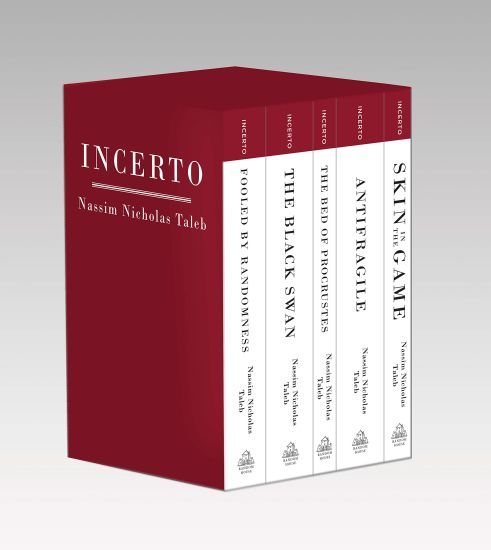
Antifragile is a standalone book in Nassim Nicholas Taleb's landmark Incerto series, an investigation of opacity, luck, uncertainty, probability, human error, risk, and decision-making in a world we don't understand. The other books in the series are Fooled by Randomness, The Black Swan, Skin in the Game, and The Bed of Procrustes. Nassim Nicholas Taleb, the bestselling author of The Black Swan and one of the foremost thinkers of our time, reveals how to thrive in an uncertain world. Just as human bones get stronger when subjected to stress and tension, and rumors or riots intensify when someone tries to repress them, many things in life benefit from stress, disorder, volatility, and turmoil. What Taleb has identified and calls "antifragile" is that category of things that not only gain from chaos but need it in order to survive and flourish. In The Black Swan, Taleb showed us that highly improbable and unpredictable events underlie almost everything about our world. In Antifragile, Taleb stands uncertainty on its head, making it desirable, even necessary, and proposes that things be built in an antifragile manner. The antifragile is beyond the resilient or robust. The resilient resists shocks and stays the same; the antifragile gets better and better. Furthermore, the antifragile is immune to prediction errors and protected from adverse events. Why is the city-state better than the nation-state, why is debt bad for you, and why is what we call "efficient" not efficient at all? Why do government responses and social policies protect the strong and hurt the weak? Why should you write your resignation letter before even starting on the job? How did the sinking of the Titanic save lives? The book spans innovation by trial and error, life decisions, politics, urban planning, war, personal finance, economic systems, and medicine. And throughout, in addition to the street wisdom of Fat Tony of Brooklyn, the voices and recipes of ancient wisdom, from Roman, Greek, Semitic, and medieval sources, are loud and clear. Antifragile is a blueprint for living in a Black Swan world. Erudite, witty, and iconoclastic, Taleb's message is revolutionary: The antifragile, and only the antifragile, will make it. Praise for Antifragile "Ambitious and thought-provoking . . . highly entertaining."--The Economist "A bold book explaining how and why we should embrace uncertainty, randomness, and error . . . It may just change our lives."--Newsweek
The Bed of Procrustes: Philosophical and Practical Aphorisms
The author of the modern classics The Black Swan, Fooled by Randomness, and Antifragile, Nassim Nicholas Taleb expresses major ideas in ways you least expect in this collection of aphorisms and meditations--now expanded with fifty percent more material than the hardcover. The Bed of Procrustes takes its title from the Greek myth of a man who made his visitors fit his bed to perfection, either by stretching them or by cutting their limbs. It represents Taleb's view of modern civilization's hubristic side effects--modifying humans to satisfy technology, blaming reality for not fitting economic models, inventing diseases to sell drugs, defining intelligence as what can be tested in a classroom, and convincing people that employment is not slavery. Playful and irreverent, these aphorisms will surprise you by exposing self-delusions you have been living with but never recognized. With a rare combination of pointed wit and potent wisdom, Taleb plows through human illusions, contrasting the classical values of courage, elegance, and erudition with the modern diseases of nerdiness, philistinism, and phonies.
The Black Swan: Second Edition: The Impact of the Highly Improbable: With a New Section: On Robustness and Fragility
Examines the role of the unexpected--the Black Swan--in both life and human history, explaining how the phenomenon and its applications affect every aspect of the world in which we live, why humans are unable to anticipate a Black Swan, and how we rationalize the phenomenon to make it appear less random. 50,000 first printing.
Antifragile: Things That Gain from Disorder

Antifragile: Things That Gain from Disorder

Nassim Nicholas Taleb

Random House
2012
sidottu
Antifragile is a standalone book in Nassim Nicholas Taleb’s landmark Incerto series, an investigation of opacity, luck, uncertainty, probability, human error, risk, and decision-making in a world we don’t understand. The other books in the series are Fooled by Randomness, The Black Swan, Skin in the Game, and The Bed of Procrustes.Nassim Nicholas Taleb, the bestselling author of The Black Swan and one of the foremost thinkers of our time, reveals how to thrive in an uncertain world.Just as human bones get stronger when subjected to stress and tension, and rumors or riots intensify when someone tries to repress them, many things in life benefit from stress, disorder, volatility, and turmoil. What Taleb has identified and calls “antifragile” is that category of things that not only gain from chaos but need it in order to survive and flourish. In The Black Swan, Taleb showed us that highly improbable and unpredictable events underlie almost everything about our world. In Antifragile, Taleb stands uncertainty on its head, making it desirable, even necessary, and proposes that things be built in an antifragile manner. The antifragile is beyond the resilient or robust. The resilient resists shocks and stays the same; the antifragile gets better and better. Furthermore, the antifragile is immune to prediction errors and protected from adverse events. Why is the city-state better than the nation-state, why is debt bad for you, and why is what we call “efficient” not efficient at all? Why do government responses and social policies protect the strong and hurt the weak? Why should you write your resignation letter before even starting on the job? How did the sinking of the Titanic save lives? The book spans innovation by trial and error, life decisions, politics, urban planning, war, personal finance, economic systems, and medicine. And throughout, in addition to the street wisdom of Fat Tony of Brooklyn, the voices and recipes of ancient wisdom, from Roman, Greek, Semitic, and medieval sources, are loud and clear.
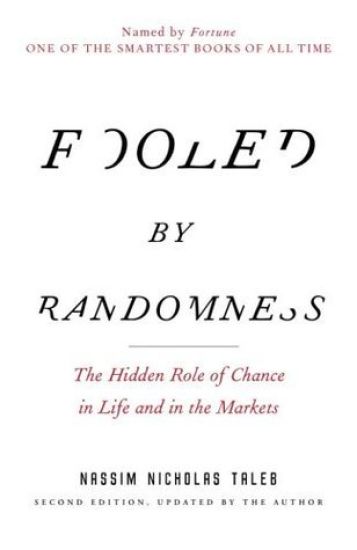
Fooled by Randomness: The Hidden Role of Chance in Life and in the Markets
Fooled by Randomness is a standalone book in Nassim Nicholas Taleb's landmark Incerto series, an investigation of opacity, luck, uncertainty, probability, human error, risk, and decision-making in a world we don't understand. The other books in the series are The Black Swan, Antifragile, Skin in the Game, and The Bed of Procrustes. Now in a striking new hardcover edition, Fooled by Randomness is the word-of-mouth sensation that will change the way you think about business and the world. Nassim Nicholas Taleb-veteran trader, renowned risk expert, polymathic scholar, erudite raconteur, and New York Times bestselling author of The Black Swan-has written a modern classic that turns on its head what we believe about luck and skill. This book is about luck-or more precisely, about how we perceive and deal with luck in life and business. Set against the backdrop of the most conspicuous forum in which luck is mistaken for skill-the world of trading-Fooled by Randomness provides captivating insight into one of the least understood factors in all our lives. Writing in an entertaining narrative style, the author tackles major intellectual issues related to the underestimation of the influence of happenstance on our lives. The book is populated with an array of characters, some of whom have grasped, in their own way, the significance of chance: the baseball legend Yogi Berra; the philosopher of knowledge Karl Popper; the ancient world's wisest man, Solon; the modern financier George Soros; and the Greek voyager Odysseus. We also meet the fictional Nero, who seems to understand the role of randomness in his professional life but falls victim to his own superstitious foolishness. However, the most recognizable character of all remains unnamed-the lucky fool who happens to be in the right place at the right time-he embodies the "survival of the least fit." Such individuals attract devoted followers who believe in their guru's insights and methods. But no one can replicate what is obtained by chance. Are we capable of distinguishing the fortunate charlatan from the genuine visionary? Must we always try to uncover nonexistent messages in random events? It may be impossible to guard ourselves against the vagaries of the goddess Fortuna, but after reading Fooled by Randomness we can be a little better prepared. PRAISE FOR FOOLED BY RANDOMNESS Named by Fortune One of the Smartest Books of All Time A Financial Times Best Business Book of the Year " Fooled by Randomness] is to conventional Wall Street wisdom approximately what Martin Luther's ninety-five theses were to the Catholic Church." -Malcolm Gladwell, author of Blink "The book that rolled down Wall Street like a hand grenade." -Maggie Mahar, author of Bull A History of the Boom, 1982--1999 "Fascinating . . . Taleb will grab you." -Peter L. Bernstein, author of Capital Ideas Evolving "Recalls the best of scientist/essayists like Richard Dawkins . . . and Stephen Jay Gould." -Michael Schrage, author of Serious Play: How the World's Best Companies Simulate to Innovate "We need a book like this. . . . Fun to read, refreshingly independent-minded." -Robert J. Shiller, author of Irrational Exuberance "Powerful . . . loaded with crackling little insights and] extreme brilliance." -National Review
The Bed of Procrustes: Philosophical and Practical Aphorisms
The Bed of Procrustes is a standalone book in Nassim Nicholas Taleb's landmark Incerto series, an investigation of opacity, luck, uncertainty, probability, human error, risk, and decision-making in a world we don't understand. The other books in the series are Fooled by Randomness, The Black Swan, Antifragile, and Skin in the Game. By the author of the modern classic The Black Swan, this collection of aphorisms and meditations expresses his major ideas in ways you least expect. The Bed of Procrustes takes its title from Greek mythology: the story of a man who made his visitors fit his bed to perfection by either stretching them or cutting their limbs. It represents Taleb's view of modern civilization's hubristic side effects--modifying humans to satisfy technology, blaming reality for not fitting economic models, inventing diseases to sell drugs, defining intelligence as what can be tested in a classroom, and convincing people that employment is not slavery. Playful and irreverent, these aphorisms will surprise you by exposing self-delusions you have been living with but never recognized. With a rare combination of pointed wit and potent wisdom, Taleb plows through human illusions, contrasting the classical values of courage, elegance, and erudition against the modern diseases of nerdiness, philistinism, and phoniness. "Taleb's crystalline nuggets of thought stand alone like esoteric poems."--Financial Times