Kirjojen hintavertailu. Mukana 12 390 323 kirjaa ja 12 kauppaa.

Kirjahaku

Etsi kirjoja tekijän nimen, kirjan nimen tai ISBN:n perusteella.

1000 tulosta hakusanalla Natalie L. M. Petesch

Duncan's Colony

Duncan's Colony

Natalie L. M. Petesch

Swallow Press
1982
sidottu
“During the nineteen sixties, following the missile crisis and during the Vietnam War, communitarian societies began to reappear in the United States. Those who were of an invincibly optimistic nature gathered together in agrarian or utopian communes reminiscent of the nineteenth century. Others who believed that these crises and wars augured the end of modern civilization by nuclear warfare, gathered together for a brief season of love in colonies where they hoped to survive the destruction of the world. This is the story of eight people who lived together for nearly a year in such a colony: Duncan's Colony…" - From the Introduction Duncan's Colony is the story of four men and four women, strangers who have joined together, in the desert of the American Southwest, in the hope of surviving a nuclear holocaust they fear is inevitable. Though they have come together to survive the world's destruction, they seem to be dying, one by one, picked off by their emotions. And so, as they rehearse the death of the planet, the colonist learn also the rage to live.
Duncan's Colony

Duncan's Colony

Natalie L. M. Petesch

Swallow Press
1982
pokkari
“During the nineteen sixties, following the missile crisis and during the Vietnam War, communitarian societies began to reappear in the United States. Those who were of an invincibly optimistic nature gathered together in agrarian or utopian communes reminiscent of the nineteenth century. Others who believed that these crises and wars augured the end of modern civilization by nuclear warfare, gathered together for a brief season of love in colonies where they hoped to survive the destruction of the world. This is the story of eight people who lived together for nearly a year in such a colony: Duncan's Colony…" - From the Introduction Duncan's Colony is the story of four men and four women, strangers who have joined together, in the desert of the American Southwest, in the hope of surviving a nuclear holocaust they fear is inevitable. Though they have come together to survive the world's destruction, they seem to be dying, one by one, picked off by their emotions. And so, as they rehearse the death of the planet, the colonist learn also the rage to live.
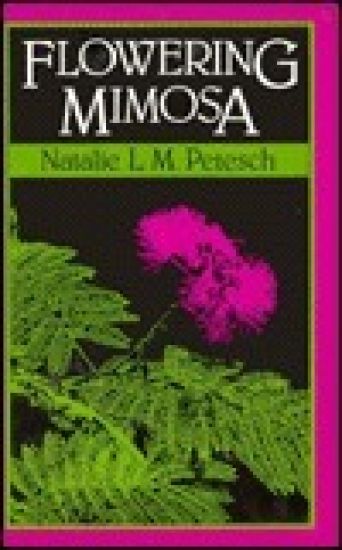
Flowering Mimosa

Flowering Mimosa

Natalie L. M. Petesch

Swallow Press
1987
sidottu
Flowering Mimosa is a story of lost innocence and coming of age among the disinherited of America in the 1980s. Against a backdrop of social and economic disruption in the American southwest, Petesch traces the fates of the Wingfield family, who have lost their Texas farm and moved to a mining town in Silver Valley, Idaho. As various tensions threaten to break the family apart, Tamsen Wingfield reacts most strongly. She cannot accept her new stepmother, married too soon after her mother's death. She cannot accept the new life of her father--once a strong, confident Texas farmer, now a lead miner working miles below the surface in a strange territory her high school textbooks cannot explain. Her flight from family and country is both an illusory attempt to recapture her youth and a courageous act of survival. Flowering Mimosa has the scope of all truly great fiction, combining a sense of history with a vision of the future. Petesch's acute sense of place and detail bring the small towns of Silver Valley (Idaho), of Texas, and of central Mexico alive, and her strong lyric gifts create, especially in Tamsen and her precarious escape with a lover, perhaps the most memorable of what the Chicago Sun-Times has called “her Steinbeck-like children.” In Tamsen, Petesch dramatizes those political and social concerns which led the Times Literary Supplement to comment, “what is impressive is Petesch's ability … to give a sense of what it was like, how it felt, to be an American … .”
Flowering Mimosa

Flowering Mimosa

Natalie L. M. Petesch

Swallow Press
1987
pokkari
Flowering Mimosa is a story of lost innocence and coming of age among the disinherited of America in the 1980s. Against a backdrop of social and economic disruption in the American southwest, Petesch traces the fates of the Wingfield family, who have lost their Texas farm and moved to a mining town in Silver Valley, Idaho. As various tensions threaten to break the family apart, Tamsen Wingfield reacts most strongly. She cannot accept her new stepmother, married too soon after her mother's death. She cannot accept the new life of her father--once a strong, confident Texas farmer, now a lead miner working miles below the surface in a strange territory her high school textbooks cannot explain. Her flight from family and country is both an illusory attempt to recapture her youth and a courageous act of survival. Flowering Mimosa has the scope of all truly great fiction, combining a sense of history with a vision of the future. Petesch's acute sense of place and detail bring the small towns of Silver Valley (Idaho), of Texas, and of central Mexico alive, and her strong lyric gifts create, especially in Tamsen and her precarious escape with a lover, perhaps the most memorable of what the Chicago Sun-Times has called “her Steinbeck-like children.” In Tamsen, Petesch dramatizes those political and social concerns which led the Times Literary Supplement to comment, “what is impressive is Petesch's ability … to give a sense of what it was like, how it felt, to be an American … .”
Justina of Andalusia and Other Stories

Justina of Andalusia and Other Stories

Natalie L. M. Petesch

Swallow Press
1991
sidottu
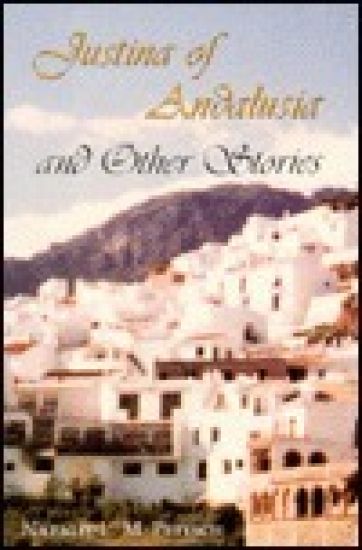
This collection of stories is, like Petesch’s previous work, distinguished by its brilliant lyrical intensity and by characters who are stunningly alive. It is a powerful collection about impassioned cultural conflicts in present-day Spain and Mexico; it is also a book about ourselves—how we have failed to love the Earth and have squandered our resources. In the title story, it is Justina Olivia who breaks the moral law of her village in an unforgettable love story. In “Senior Coloma’s Class,” a mother of grown children learns to read, and learns, too, that the Tree of Knowledge bears unpredictable fruit. In a story set in Monterrey, Mexico, Dr. Melindez Gutierrez dedicates his life to the barrios of the poor, while in another story also set in Monterrey, “Manolo’s Secret,” an Indian street beggar shares her life with a young immigrant from Spain. These remarkable characters can only add to Petesch’s wide reputation not only for creating people out of pathos and courage, but also for a prose style throughout that is luminous and captivating. Justina of Andalusia and Other Stories is well suited to American literature classes, to Women’s Studies courses, Latin American Studies programs, and to American Studies programs in the United States and abroad. It would be particularly useful as a text in cross-cultural programs.
The Immigrant Train

The Immigrant Train

Natalie L. M. Petesch

Swallow Press
1996
sidottu
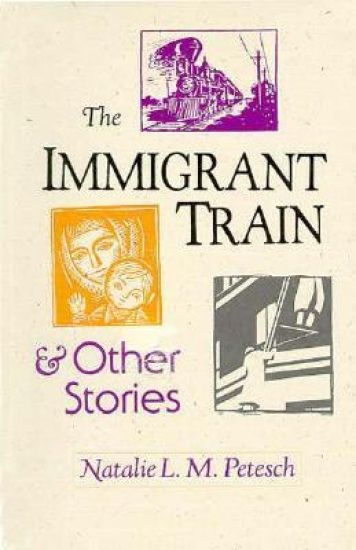
In this short story collection, acclaimed author Natalie Petesch reaffirms for us our enduring debt to millions of immigrants who helped build America. Inspired by her own parents' journey at the turn of the century, Petesch spins these tales of immigration in a spare and lyrical prose that assures our involvement: a political fugitive threatened with imprisonment reaches a long-sought mining town in Minnesota; as Polish immigrant Witold Dobrynski realizes his dream of owning a farm in Texas, a spiritual crisis changes his life; fourteen-year-old Stasio Wolski quickly becomes a man in the underworld of a big city but is haunted by the loss of his Polish identity: a beekeeping bachelor's pre-occupation with the social life of the hive is seamlessly interwoven with the colorful tapestry of early twentieth-century Pittsburgh. This visionary collection sustains Petesch's well-established reputation as one of the country's finest writers.
The Immigrant Train

The Immigrant Train

Natalie L. M. Petesch

Swallow Press
1996
pokkari
In this short story collection, acclaimed author Natalie Petesch reaffirms for us our enduring debt to millions of immigrants who helped build America. Inspired by her own parents' journey at the turn of the century, Petesch spins these tales of immigration in a spare and lyrical prose that assures our involvement: a political fugitive threatened with imprisonment reaches a long-sought mining town in Minnesota; as Polish immigrant Witold Dobrynski realizes his dream of owning a farm in Texas, a spiritual crisis changes his life; fourteen-year-old Stasio Wolski quickly becomes a man in the underworld of a big city but is haunted by the loss of his Polish identity: a beekeeping bachelor's pre-occupation with the social life of the hive is seamlessly interwoven with the colorful tapestry of early twentieth-century Pittsburgh. This visionary collection sustains Petesch's well-established reputation as one of the country's finest writers.
The Confessions of Señora Francesca Navarro and Other Stories
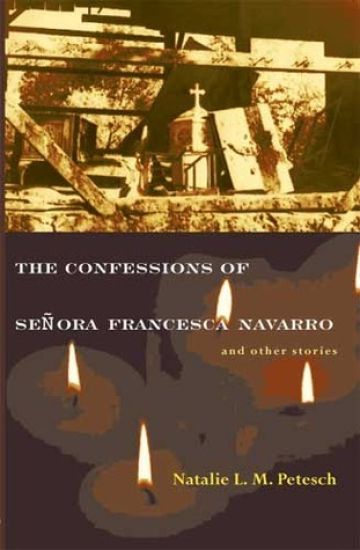
"Memory, of course, is sometimes like a bucking horse, sometimes a runaway one, and one must control the reins until finally it stops, snorting with exhausted relief," writes Natalie L. M. Petesch in her haunting new collection, The Confessions of Señora Francesca Navarro and Other Stories. Petesch immerses readers in the lives of people caught up in the 1936–39 Spanish Civil War, which left more than five hundred thousand dead. She captures the hand-to-mouth existence on the streets of Madrid of two war orphans; an old soldier's memories of a fallen militiawoman; the dilemma of Franco's laundress as she seeks to duplicate a stolen religious icon she finds in his home; and a man's struggle to find his bride among thousands of Republican refugees waiting for ships to evacuate them before Franco's Fascists arrive to kill them. In the title novella, an elderly woman describes to her granddaughter how the families of Franco's officers fighting against Republican militiamen endured hunger, filth, and danger in an underground fortress. Petesch conveys the humiliating details of war through the sensibility of a cultured woman who recalls only too vividly latrines made of laundry tubs, the smell of unwashed humans, and the stench of death. Brilliant in its imaginative power and heartbreaking in its access to the bottomless well of human tears, The Confessions of Señora Francesca Navarro and Other Stories is the work of a mature artist able to convey a particular world so vividly that we know these people as our own.
The Confessions of Señora Francesca Navarro and Other Stories
"Memory, of course, is sometimes like a bucking horse, sometimes a runaway one, and one must control the reins until finally it stops, snorting with exhausted relief," writes Natalie L. M. Petesch in her haunting new collection, The Confessions of Señora Francesca Navarro and Other Stories. Petesch immerses readers in the lives of people caught up in the 1936–39 Spanish Civil War, which left more than five hundred thousand dead. She captures the hand-to-mouth existence on the streets of Madrid of two war orphans; an old soldier's memories of a fallen militiawoman; the dilemma of Franco's laundress as she seeks to duplicate a stolen religious icon she finds in his home; and a man's struggle to find his bride among thousands of Republican refugees waiting for ships to evacuate them before Franco's Fascists arrive to kill them. In the title novella, an elderly woman describes to her granddaughter how the families of Franco's officers fighting against Republican militiamen endured hunger, filth, and danger in an underground fortress. Petesch conveys the humiliating details of war through the sensibility of a cultured woman who recalls only too vividly latrines made of laundry tubs, the smell of unwashed humans, and the stench of death. Brilliant in its imaginative power and heartbreaking in its access to the bottomless well of human tears, The Confessions of Señora Francesca Navarro and Other Stories is the work of a mature artist able to convey a particular world so vividly that we know these people as our own.
Thunderous

Thunderous

M.L. Smoker; Natalie Peeterse

Curiosity Ink Media
2022
nidottu
If Aiyana hears one more traditional Lakota story, she'll scream! More interested in her social media presence than her Native American heritage, Aiyana is shocked when she suddenly finds herself in a magical world-with no cell coverage!Pursued by the trickster Raven, Aiyana struggles to get back home, but is helped by friends and allies she meets along the way. Her dangerous journey through the Spirit World tests her fortitude and challenges her to embrace her Lakota heritage. But will it be enough to defeat the cruel and powerful Raven?
ReSearch

ReSearch

Teresa M. Evans; Natalie Lundsteen; Nathan L. Vanderford

Academic Press Inc
2017
nidottu
ReSearch: A Career Guide for Scientists is a career planning guide and practical tool for graduate students and postdocs. This book provides step-by-step processes for the assessment of career goals and the actions that can be taken in order to achieve them. ReSearch includes chapters on the basics of career planning, determining unique selling points, and navigating work-life concerns. This book also includes narratives from a number of perspectives to showcase the variety of career options available. ReSearch is written by experts with inside knowledge of how to effectively leverage skills in order to take that next step in your career, whether you are a recent graduate or are interested in transitioning into something new. This book is also a valuable resource for advisors and careers counselors who mentor students and postdocs about their career plans.
Measuring and Monitoring Children’s Well-Being

Measuring and Monitoring Children’s Well-Being

Asher Ben-Arieh; Natalie Hevener Kaufman; Arlene Bowers Andrews; Robert M. George; L. J. Aber

Springer
2001
sidottu
Today, any regular newspaper reader is likely to be exposed to reports on manifold forms of (physical, emotional, sexual) child abuse on the one hand, and abnormal behavior, misconduct or offences of children and minors on the other hand. Occasionally reports on children as victims and children as offenders may appear on the same issue or even the same page. Rather seldom the more complex and largely hidden phenomena of structural hostility or indifference of society with a view to children are being dealt with in the press. Such fragmentary, ambiguous, incoherent or even contradictory perception of children in modem society indicates that, firstly, there is a lack of reliable information on modem childhood, and secondly, children are still treated as a comparatively irrelevant population group in society. This conclusion may be surprising in particular when drawn at the end of The Century of the Child proclaimed by Ellen Key as early as 1902. Actually, there exist unclarities and ambiguities about the evolution of childhood in the last century not only in public opinion, but also in scientific literature. While De Mause with his psycho-historic model of the evolution of childhood, comprising different stages from infanticide, abandonment, ambivalence, intrusion, socialisation to support, underlines the continuous improvement of the condition of childhood throughout history and thus rather confirms Key's expectations, Aries, with his social history of childhood, seems to hold a more culturally pessimistic view.
Measuring and Monitoring Children’s Well-Being

Measuring and Monitoring Children’s Well-Being

Asher Ben-Arieh; Natalie Hevener Kaufman; Arlene Bowers Andrews; Robert M. George; L. J. Aber

Springer
2010
nidottu
Today, any regular newspaper reader is likely to be exposed to reports on manifold forms of (physical, emotional, sexual) child abuse on the one hand, and abnormal behavior, misconduct or offences of children and minors on the other hand. Occasionally reports on children as victims and children as offenders may appear on the same issue or even the same page. Rather seldom the more complex and largely hidden phenomena of structural hostility or indifference of society with a view to children are being dealt with in the press. Such fragmentary, ambiguous, incoherent or even contradictory perception of children in modem society indicates that, firstly, there is a lack of reliable information on modem childhood, and secondly, children are still treated as a comparatively irrelevant population group in society. This conclusion may be surprising in particular when drawn at the end of The Century of the Child proclaimed by Ellen Key as early as 1902. Actually, there exist unclarities and ambiguities about the evolution of childhood in the last century not only in public opinion, but also in scientific literature. While De Mause with his psycho-historic model of the evolution of childhood, comprising different stages from infanticide, abandonment, ambivalence, intrusion, socialisation to support, underlines the continuous improvement of the condition of childhood throughout history and thus rather confirms Key's expectations, Aries, with his social history of childhood, seems to hold a more culturally pessimistic view.
12 Hours to a Great Marriage

12 Hours to a Great Marriage

Howard J. Markman; Scott M. Stanley; Susan L. Blumberg; Natalie H. Jenkins; Carol Whiteley

Jossey-Bass Inc.,U.S.
2003
nidottu
For the past twenty-five years, the internationally renowned marital researchers from the Center for Marital and Family Studies at the University of Denver have been helping couples around the globe replace loneliness with connection, frustration with understanding, fear with confidence, instability with commitment, revenge with forgiveness, and monotony with passion. Their program is called PREP®, short for the Prevention and Relationship Enhancement Program, and it's been so successful that its creators have been featured on Oprah, The Today Show, and 20/20, and its benefits have been documented in The New York Times, USA Today, Woman s Day, and Redbook. Until now the only way you could experience this winning twelve-hour program was to attend a weekend workshop. But now, with 12 Hours to a Great Marriage, you can discover the simple, effective strategies that have helped thousands of couples— happily married, having issues, or planning to marry— to develop and protect their love, easily and at your own pace. Each chapter covers one of the key ingredients of the program, like Being Best Friends, Having Fun Together, and Protecting and enhancing Your Love Life, and shows you how to take the steps that research shows are the basis for a long-term, healthy, loving marriage. By practicing the simple skills, taking the thought-provoking self-tests, doing the fun and innovative exercises, and reading real-life couples' inspiring and informative stories, you'll find that in twelve short hours you'll be well on your way to having that great marriage you've always dreamed of.
Implicancias del Derecho Previsional actual

Implicancias del Derecho Previsional actual

Natalia L Pagotto; Francisco M Illia; Julieta Tejedor

Editorial Academica Espanola
2018
pokkari
La idea principal del presente trabajo es dejar planteados al menos los principales problemas con que el derecho previsional se encuentra actualmente, desde quienes somos sus int rpretes y protagonistas; intentando en algunos casos brindar respuestas desde el plano jur dico actual. Intentamos no exponer cuestiones pol ticas o partidistas sino simplemente una descripci n objetiva principalmente de las cuestiones que se plantean y sobretodo una mirada constitucionalista, desde el derecho administrativo y procesal.
Stolen Truth

Stolen Truth

Nathalie M.L. Romer

Emerentsia Publications
2020
nidottu
Far in the north there is a city untouched by the Wolf Riders. But it has its own battles to fight, its own history to unravel. Alagur only knows it as the "North City." Marrida has never heard of it.
Stolen Truth

Stolen Truth

Nathalie M.L. Romer

Emerentsia Publications
2020
sidottu
Far in the north there is a city untouched by the Wolf Riders. But it has its own battles to fight, its own history to unravel. Alagur only knows it as the "North City." Marrida has never heard of it.